Pages

Friday, February 16, 2018

The Immortal Heights - Sherry Thomas (Elemental Trilogy #3)

The Immortal Heights (The Elemental Trilogy, #3)So, I've finally come to the end of this trilogy.  Though perhaps "finally" isn't the best word for it, because it didn't actually take me that long and it's not like I had to wait for any of the book to come out or anything.  The second book had left me somewhat disappointed; the world-building and timeline seemed scattered and there seemed to be a lot of contradictions embedded in the story that were not addressed.  Fortunately, most of those are dealt with here in one way or another.  Unfortunately, the way that most of them were resolved was just by making the main characters too short-sighted to see most of the things I had picked up on a long time ago.

The story itself picks up right where The Perilous Sea left off: with Iolanthe, Titus, Kashkari, and a bunch of rebels facing down the Bane's forces in the Sahara.  The battle and subsequent flight takes up a bit of the book and then it's a scramble on to Atlantis with a couple of very foreboding prophecies hanging in the near future, including several deaths.

I'm not sure there's really a lot to say about this one.  I liked it better than the second, because it didn't feel quite so trite; there was no "let's give everyone amnesia to drag things out!" here.  Instead, it actually felt like there was a lot of motion and not a lot of dithering, which was good.  Also, the Crucible makes a larger appearance in this book than it did in the second.  Considering that one of the things that I disliked about the second book was the lack of Crucible, and it was also one of the strongest parts of the first book, seeing its return was great.  The supporting characters were also great, Kashkari in particular.  He is definitely deserving of being a main character in his own right, and it's kind of a pity that he got shoved to the role of sidekick here.

However, a few gaps really remained here.  One of the biggest ones was the portals associated with the Crucible.  Before, it had been put out that the exit portals to the Crucible were in different places, but in this case, the characters re-traced an earlier path and came out somewhere different; shouldn't the final portal have been in that really dangerous canyon that they encountered briefly in the second book?  Did I miss something here?  Some of the timelines, such as Iolanthe's birth, also seem like they remained scattered and then were just disregarded because they seemed like they were too complicated or inconvenient.  While this did tie things up, it didn't seem like it really worked and felt more lazy than anything else.

The ending was ultimately satisfactory, but had a few weird bits to it, as well.  I'm not entirely sure that I agree with how Thomas went about it, because it seems like more difficulties would be encountered for Iolanthe, and it read kind of like a "where are they now" ending, which I hate, but it was still okay.  I think the rest of the book basically made up for it.

Overall, I really enjoyed this trilogy.  It was a fun fantasy, making use of a lot of elements that I really enjoyed and a time period that, while increasingly common, is still underutilized in fantasy.  I'd definitely be interested in more of Thomas' fantasy in the future, though I'd like see some of her minority characters in main roles instead of just being stuck as sidekicks!

4 stars out of 5.

Wednesday, February 14, 2018

Lost Girls - Robert Kolker

Lost Girls: An Unsolved American MysteryI watch a lot of Criminal Minds.  While I know it's all highly dramatized, moves much faster than any real investigation ever would, etc., it utterly fascinates me.  And so, when I needed a true crime book for my reading challenge, Lost Girls, about an unsolved serial killer case, was an obvious choice.

That said, while this is a true crime book, the crime is--again--unsolved.  That means that the perpetrator isn't know, so there's no way to really dive into the killer, his psychology, etc.  With that in mind, Kolker's focus is very much on the victims and their families and not the investigation itself.  While some information about the investigation is given, it seems like much is still kept under wraps, making reporting on it difficult and necessitating a "bulking out" of the book by talking to the families, relating Facebook drama of the victims' relatives, etc.  So, if you're looking for a true crime book heavy on the police procedural part, this probably is not the book for you.  But if the personal aspect of the victims draws you in, as well as the nasty little secrets and webs of small communities, you'll probably like this one.

So here's the focus: on Long Island, from 1996 to the time the book was written, five young women who worked as escorts and prostitutes vanished.  Following the very loud disappearance of the last one, an investigation was finally launched, and four bodies were discovered--but not the one of the girl whose screaming woke up a community and caused several 911 calls.  With the stage set, Kolker steps backwards, lining up the lives of the victims--Maureen, Melissa, Megan, Amber, and Shannan--including their often-troubled backgrounds, how they ended up as sex workers in New York, and in some cases how they ended up at Oak Beach, the small and insular community that may just be hiding a serial killer.  The cases are also potentially intertwined with a string of other unsolved cases attributed to a serial killer in Manorville, but there's no concrete proof of that and opinion on the matter seems to waffle.  So these five are the core.  Based on interviews with the people who knew these women before their disappearances and dealt with the questions and grief after, Kolker's work has a stronger tilt toward escorts on Craigslist than it does towards bodies in the sand, but until the case is solved, I'm not sure how it could be skewed in the other direction without delving into some very unresponsible reporting and conjecture.

As a study in psychology and spirals, I found this book fascinating.  I really enjoyed Kolker's writing and really felt for these women and their families.  I can't say this was an enjoyable read, because how can a read like this, without a solid resolution, ever really be enjoyable?  But it was riveting.  It's thrown out there that by some studies, the number one cause of death for prostitutes is murder.  Seriously.  Murder.  Not accidents.  Not suicide.  Not any form of disease.  If you're a sex worker, you're more likely to be killed, probably by a client, than you are to be hit by a car.  That is absolutely insane.  And as Kolker points out, a missing girl is only missing to the people who notice, and while these four women had people to notice, those people had a hard time getting authorities to believe them.  People don't care about missing and murdered prostitutes, something Kolker addresses along with the healthy dose of victim-blaming that was handed down by the police once they became involved.

This is not a fun story, and it is one that lacks a satisfying ending--but it is an important one, about how easy it is for people to be lost in the gaps of society, to be pushed aside and forgotten and blamed for their own murders.  Hopefully one day the truth will come out and the guilty party will be held responsible here--but that hope is, of necessity, a slim one, because as Kolker illustrates again and again, the women found at Gilgo Beach aren't exactly high-priority.

4 stars out of 5.

Monday, February 12, 2018

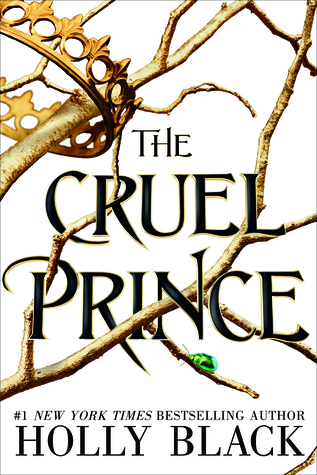
The Cruel Prince - Holly Black (Folk of the Air #1)

The Cruel Prince (The Folk of the Air, #1)Holly Black, as far as I'm concerned, is the Queen of Faerie, or at least of writing it.  Her book Tithe is one of my favorites in the paranormal and urban (or suburban, as Black calls it) fantasy genres.  Seeing her return to this world, in a different capacity, was a thrill, and waiting for this book to come in from the library was a form of torture.

Unlike Tithe and its sequels, which weave in and out of Faerie and the mortal world, The Cruel Prince takes place almost entirely in Faerie, in the High Court which has slowly been subsuming other Courts.  The main character is Jude, who saw her parents murdered by the redcap general Madoc when she was seven and spirited away, along with her sisters, to live in Madoc's home and be raised as one of the Faerie Gentry, though Jude is keenly aware that she is not and will never be fae herself.

This is a book of shades of gray.  No character here is wholly good or bad.  Jude's tangle of emotions form the core of the story, driving her to take risks that plunger her into the center of a dangerous and changing Court.  Her desire to be fae and to be better them, her love for Madoc and her hate for him, her longing to be one with her twin sister and to stand on her own, to stand out and to fit in--all of these are a swirl of conflict within her, and they drive her to become a spy and try to untangle the slowly-tightening web surrounding the changing of the High Court's ruler.  And while all of that is going on, she's enmeshed in another ongoing conflict, with Cardan, the youngest of the High Court's princes, who hates Jude and leads his merry band of followers on a campaign of all-out war against her, without ever letting her die.  And then there's Locke, who presents a reprieve and a dilemma all his own.

I love Black's writing.  She writes complicated teenage girls very, very well, and her depictions of Faerie continue to be marvelous.  It is beautiful and cruel, lush and dangerous, magical and menacing.  All of this is very apparent, and the world that it all contributes to is breathtaking.  There are also appearances from several familiar faces, though I found myself scouring my brain for some sign of a few of them--Kaye and Roiben are easy to place, of course, but I couldn't pin down Severin, who I think must be from The Darkest Part of the Forest, which I haven't yet read.  But while these familiar characters are a delight to see and important to the plot, Black doesn't let them take over the actual story, and it would have been very easy for that to happen.

The actual plot here isn't hard to puzzle out; all of the pieces are laid out for us, and it's fairly easy to see the conclusion before Jude herself reaches it.  Jude isn't stupid, she just allows herself to be blinded by her own desires--something that she herself admits when everything comes undone.  But she's also a budding master strategist, and while this one wasn't hard to puzzle out, I'm interested in seeing where her machinations go in the future books of this series.  Which we have to two years for.  Well, one for the second, but two for the third and final!  Aaaargh.  Well, at least I'll have The Darkest Part of the Forest to turn to, now, and I think I need to reread the dark and glowing jewel that is Tithe as well.

4.5 stars out of 5.

Friday, February 9, 2018

The Perilous Sea - Sherry Thomas (Elemental Trilogy #2)

The Perilous Sea (The Elemental Trilogy, #2)Ah, the second book in a trilogy.  A difficult hurdle to overcome, indeed.  The characters and their motivations have already been established; the conflict has begun but the big battle isn't going to happen until the final book.  So what do you do to propel them from the end of the first book to the beginning of the third book?

You give your characters amnesia, of course.  Well, not "of course."  There are plenty of trilogies that go about without anyone getting amnesia.  But when your two main characters have already fallen in love and are well on their way to taking down the Big Bad, what easier way to set them back than to dump them in the desert and wipe their memories?

And so we find our heroes at the beginning of The Perilous Sea.  Don't get me wrong, it's not all amnesia here.  The book is actually divided into two parts: the "amnesia in the desert" part and the part that preceded it, with chapters alternating between the two.  Titus and Iolanthe are then simultaneously stuck in the Sahara with the agents of Atlantis closing in on them and with no idea who they are or why they're there, and also struggling with revelations regarding Titus' fellow Exile Wintervale, who appears to have become a powerful elemental mage in his own right and might be poised to take Iolanthe's spot as Chosen One from her, which throws a bit of a wrench into the dynamic between her and Titus.  Awkward.

Overall, though, I don't think this was quite as tight as The Burning Sky was.  Much of the action here was dispersed in little segments that took about three minutes to read, and were broken up by longer chunks in which Iolanthe and Titus sniped at each other or made out.  The awesome world of the Crucible was largely absent until the end of the book, and while I got a handle on what was up with Wintervale fairly early on, not much happened with it until the end when everything started to come together.  There also appeared to be some gaps left hanging at the end; for example, if Titus was related to the person who made the blood circle and yet Iolanthe was not, doesn't that mean that who made it wasn't actually who they thought it was?  Why were Titus and Iolanthe's memories wiped, since it doesn't seem like Titus could have met the contact threshold that the memory spell required and Iolanthe probably couldn't have either?  There seemed to be several conflicts within the logic here, and unless I missed something bit, it seems like there were holes that were never resolved but were made out to be to the characters' satisfaction, which doesn't seem to sit right in my head.

Titus and Iolanthe also fall into the insta-love category in this book with their memories wiped, which was a little eye-roll worthy.  In the first book, they were definitely attracted to each other but actual love took longer.  This time, they basically lay eyes on each other and want to make out even though neither can be sure the other isn't trying to kill them.  For a while I pondered the possibility that Titus wasn't actually Titus and there was going to be a third party throwing a wrench into things, but nope.

This didn't necessarily feel like a middle book in a trilogy.  Things still happened and while the pacing wasn't necessarily even, it definitely wasn't stalled in place like many second books.  But the book was definitely flawed, though in different ways than the first one.  Still, it ended on a resounding note and I'm really looking forward to reading the third and final book in this trilogy.

3.5 stars out of 5.

Wednesday, February 7, 2018

Do You Want to Start a Scandal - Tessa Dare (Spindle Cove #5, Castles Ever After #4)

Do You Want to Start a Scandal (Spindle Cove, #5, Castles Ever After, #4)
Our tune is that great Disney anthem, "Do You Want to Build a Snowman?"  So sing it with me now: "Do you want to start a scandal?"  The answer is, of course, yes.  Yes I do, though the characters here would probably respond with a resounding "NO!"

When I read Say Yes to the Marquess back in 2016, one of my main comments was that I didn't particularly like the main couple, and wished instead that the book had been about the hero's brother, Piers, and his quest for love after losing his fiance to his younger brother (the hero of SYTTM).  Well, it looks like I got my wish, because that is exactly what this book is.  Tying together Dare's Spindle Cover series (which I haven't read) and her Castles Ever After series (which I have), this incorporates characters from both, though I think it's probably more heavily Spindle Cove than Castles Ever After, particularly as the heroine, Charlotte, is not in possession of a castle, which was a main marker of Castles Ever After.

One night at a house party, Charlotte sneaks off in pursuit of Piers to let him know that she does not plan on marrying him, despite whatever her mother might do to throw them together over the course of the party.  Unfortunately for her, she's soon stuck with Piers behind some draperies as another, unknown couple proceeds to have sex on the desk in the library just feet away.  When Charlotte and Piers finally find a chance to make their escape, they're caught--by the son of the house, an eleven-year-old who insists Piers was trying to murder Charlotte but who gives a pretty good impression of sex sounds to an audience, including Charlotte's mother.  So Piers says he'll marry her.  But Charlotte really doesn't want to marry him, because she wants to marry for love, and becomes determined to clear her good name by finding the mystery couple before their engagement can be announced.  And the game is afoot.

The one word that I find myself using again and again in speaking of Dare's books is "charming," and this book is exactly that.  It is charming.  I love stories that take place at house parties, and this was a good example of that, though even for a house party involving a lot of guests and at least two weeks of free time, the main characters seemed to find a remarkable amount of time to have sex in obvious places--like, you know, the heroine's room that half the house has access too.  But they are never caught, of course.  But the reality of their supervised status (or lack thereof) is not the point here.  The point is that the banter is lovely and Piers is a true honorable gentleman, even when he insists that he is not.  Charlotte is clever and good at figuring things out, though Dare didn't always do the best job of showing us her train of thought and so she seems to make leaps quite a bit, though they end up being accurate.  And while Piers wants to protect Charlotte, he also ultimately acknowledges her talents, which is high praise considering that Piers is (not a spoiler) a spy.

My biggest disappointment here was that the mystery didn't end up being one.  It came down to, "Oh, it was just a misunderstanding!" when it seemed like there was going to be something truly dramatic going on in the background.  While this makes it a cozy mystery, and cozy mysteries aren't bad, it just seemed to veer dramatically from the setup that was pursued for most of the book.  A little genuine intrigue could have gone a long way to spice things up, without veering too far into outright ridiculousness, such as that one historical romance that ends with an attempted assassination by terrorists--and whose title I have evidently blacked out of my mind.  Also, I was really hoping that Frances, the bitchy sister of Charlotte's best friend, would end up getting her comeuppance, which never happened.  Maybe Delia will get her own book and it will happen there?  I would love to read a book about Delia, she seems to be imminently deserving of her own love story.

So, I enjoyed this quite a bit, a good deal more than Say Yes to the Marquess.  Was it flawless?  No.  I'm definitely not raving about it.  But it was quite good, a fun read that only took up a couple of hours, and I would recommend it for people who like light romance and cozy mysteries.

3.5 stars out of 5.

Monday, February 5, 2018

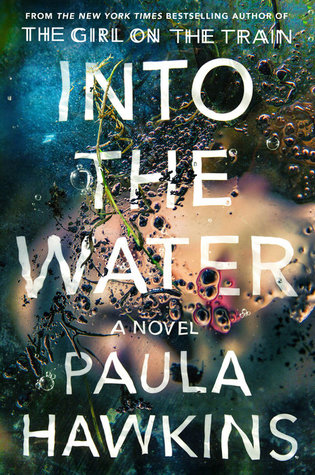
Into the Water - Paula Hawkins

Into the WaterOne of my reading challenge categories this year is a Goodreads Choice Awards Winner, and Into the Water won the category of "Mystery & Thriller" for 2017.  I also already had it as a Book of the Month extra, since I had enjoyed The Girl on the Train

The story here centers around a pair of drownings in a small English town.  Told from the perspectives of a multitude of characters, the plot tries to unravel what really happened with these drownings, who is responsible, etc.

This was not as good a book as The Girl on the Train.  While the central premise--the Drowning Pool, a place both for suicides and to get rid of difficult women--is hypnotic, there are too many point-of-view characters running around to easily keep straight.  Additionally, despite this being a mystery, there's not really a mystery here.  Why?  Because we're pretty much told who is responsible for the events here early on in the book, practically bludgeoned over the head with it for the duration of the story, and GASP!  It's supposed to be a big reveal!  Of course, there is a little twist at the end, but it was nothing earth-shaking or life-shattering.

One thing that Hawkins does get right here is atmosphere.  The small town, the rain, the river, the pool, the way that Jules speaks to her dead sister, the creepy and decrepit mill house--all of it combines for a very spooky feeling.  This would be a good rainy day read.  Or maybe one for when it's storming and the power goes out and you're reading by candlelight.  None of the characters are very likable, either, which also adds to this.  Now, I don't think that characters necessarily need to be likable for a book to be good, but if you feel differently, you might not like this very much.  The pace is slow, which I think suits the story, though the frenzy of characters sometimes makes it feel faster than it really is.

But ultimately, if this book is supposed to be a suspense or mystery novel, it fails.  As I mentioned before, the end is put out there very early on, and the little "twist" can easily be inferred from what we're outright told.  With that in mind, the book is too long by far, because we spend all of it watching the characters bumble around going "Whaaaat?" and wanting to smack them upside the head for their blindness.  By the time someone finally put it together, I was ready to drown the lot of them in the same river that was causing all of the problems.

Overall, not as good, shocking, or suspenseful as I had hoped.  The atmosphere was strong, but not strong enough to sustain the book as a whole.

2 stars out of 5.

Friday, February 2, 2018

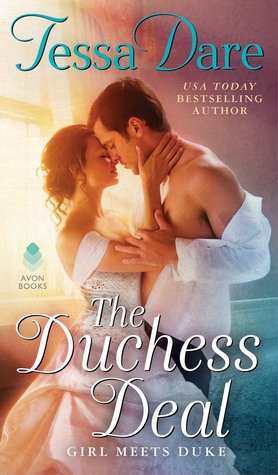
The Duchess Deal - Tessa Dare (Girl Meets Duke #1)

The Duchess Deal (Girl Meets Duke, #1)Way back in November, The Duchess Deal was the pick for the Unapologetic Romance Readers' monthly read.  Except I was number sixty-something on the wait list at the library, so I definitely didn't get it in November.  It finally came through recently, and I absolutely devoured it.  Dare's "Castles Ever After" series is so cute and romantic and all-over wonderful, so I'm not terribly surprised that this other work of hers is just as delightful.

The two main characters here are Emma, the daughter of a vicar who has been working as a seamstress after becoming estranged from her father; and "Ash," real name George, but he's the Duke of Ashbury, so his friends call him Ash.  At least they would if he had any friends.

Emma and Ash's paths cross when she turns up at his house wearing the wedding dress that she made for his fiancee from a now-broken engagement, because said fiancee has refused to pay for it and Emma's going to be turned out of her lodgings if she can't pay her rent.  Ash, disfigured by an exploding rocket at the Battle of Waterloo, sees that his marriage prospects slim, so when Emma turns up in a wedding gown, it seems like a sign from Fate.  He offers to marry her, telling her that once she gives him an heir, she never needs to deal with him again.  Emma agrees for a few reasons, and not only for her own benefit, but she adds a few conditions of her own--like he has to have dinner with her every night, and she gets to pick something to call him, encompassing ridiculous pet names.  The chemistry is of course there and the two grow closer at a good clip, though it's not instant and the relationship is definitely hindered by the issues that both have lingering from their pasts.

There are other awesome aspects here.  Several other young women enter the picture, presumably the heroines of future "Girl Meets Duke" books, and since sincere female friendships are so rare in books in general but in romance in particular, their instant embrace of Emma and the great dynamic the women had between them was a real highlight.  I also really enjoyed Emma's Scarlett O'Hara moment--you know, the one with the curtains.  The banter is spot-on.

Of course, there are the usual miscommunications a refusals to communicate here.  They are endemic to the genre.  There is a really hackneyed subplot that had me rolling my eyes--the one where Ash goes stalking about after dark as the Monster of Mayfair and is eventually accused of murder.  I guess Dare felt like he needed something to do, but meh.  Trevor was fun, though, and overall the book is just such a lovely, fast read that the issues are pretty minor.  I really enjoyed it and would definitely read it again.

4 stars out of 5.