Pages

Monday, March 17, 2014

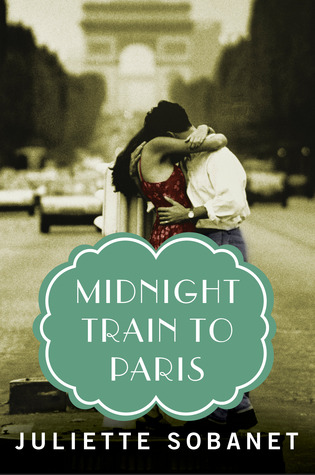
Midnight Train to Paris - Juliette Sobanet (Paris Time Travel #1)

Midnight Train to Paris (A Paris Time Travel Romance)This book baffled me, and not in a good way.  It's not like I went in with crazy expectations or anything, but when it comes to time travel, I do have some expectation that it's going to be handled in a logical manner.  At least, as logical a manner as time travel can allow.  Sobanet never actually explained how her time travel works--it apparently just has something to do with a magic ring that only works on the main characters, even though someone else wears it at one point--but you know what, I'll give her that one.

What I can't give her is all of the other ridiculous happenings in this book.  Like how, in the middle of running away from kidnappers and murderers, the two main characters decide to stop and have sex.  Or how one of them suddenly gains magical powers.  Or how an "immense" castle in the French Alps has apparently gone completely undetected for more than seventy-five years.  Or how the link between twins--which the plot relies on, heavily--is inconsistently used and comes and goes at the Sobanet's whim.

Let's talk about that last one for a minute.  The book's plot revolves around two twins, Isla and Jillian.  Isla has been abducted off the titular "midnight train to Paris," the train in question being the Venice-Simplon Orient Express.  Jillian's former CIA agent ex-boyfriend shows up to give her the news, as he now works for a private investigation company which specializes in finding missing people and has been hired by Isla's fiance to find her.  Jillian insists on going with him, and from then on they rely on her "twin bond" with Isla to solve the mystery.  Oh, and Jillian and Isla also have a Dark Past.  Jillian insists that she can always sense when Isla is in danger, with an event in the Dark Past serving as one example and some others in the plot serving as others.  But...if that were true, wouldn't Jillian have sensed that Isla was in trouble when the events of the Dark Past started, and prevented them?  Wouldn't she have sensed when her sister was abducted and almost killed, instead of needing someone else to show up and tell her?  Shouldn't she have been "connected" to Isla for this entire book, rather than the bond just coming and going?  One would think.

And can I return to how horribly Sobanet handled the whole time-travel aspect?  Jillian and Samuel (the ex-boyfriend and love interest) actually change the past significantly, at least for a select group of people, and yet it has little effect on the future.  Never mind that they make it so that Jillian's grandparents never meet and Jillian shouldn't even exist.  Instead, they just get a hunky-dory ending that makes it so that Jillian's Dark Past--you know, the events that defined her as a person--never happened.  What?  Whatwhatwhat?  Never mind that they should have opened like a bajillion time paradoxes.  No, Sobanet doesn't worry about any of that, because apparently her characters' actions don't have consequences.

I didn't mind the actual writing that much.  It did bother me at first, because it's rather tell-y instead of show-y, and instead of writing an actual, emotional scene or dialogue about the Dark Past, Jillian just info-dumps it all.  But you get used to the writing style and stop noticing it after awhile.  The characters were okay, I guess.  I would have liked to see Samuel fleshed out more; he would have made a more interesting POV character than Jillian, in all likelihood.  Jillian was a complete moron who apparently doesn't have logical thought processes despite her career as an ace reporter, but whatever.  I could get past that.  It was Sobanet's awful handling of the plot itself that I couldn't get around.

Oh, and what was the point of the inclusion of the Senator Williams storyline?  I get the Dark Past purposes, but it felt the "modern" story of him could have been separated from this one and used in a separate book or something.  It just didn't fit well with the time-traveling abduction story.

1.5 to 2 stars out of 5.

Friday, March 14, 2014

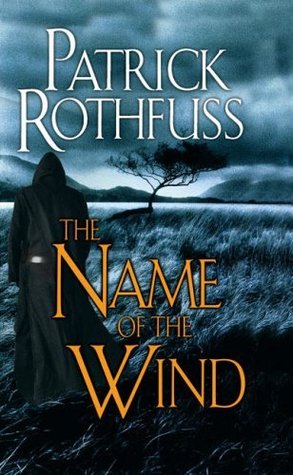
The Name of the Wind - Patrick Rothfuss (Kingkiller Chronicle #1)

The Name of the Wind (The Kingkiller Chronicle, #1)I had very high expectations going into The Name of the Wind.  It was strongly recommended to me by several friends whose opinions I trust implicitly, and of course this has a very high rating on Goodreads, really the highest of every rating I've ever seen.  So...I was kind of let down that it didn't live up to those expectations.

Don't get me wrong.  The Name of the Wind is a good book.  I enjoyed reading it.  That said, I don't think it's the five-star book everyone I know made it out to be.  It's a bit unusual in that the "plot" of the story has already taken place; it's all in the past, and the hero, Kvothe, is telling his story to a scribe.  This makes it read kind of like the autobiography of a self-proclaimed hero.  This format, while unusual, didn't actually lend itself to plot extraordinarily well.  It's mostly just Kvothe going from place to place and doing stuff, most of which isn't really connected.  He's with his family.  His family gets killed, he lives as a street rat in a city.  Then he goes to the University to become an arcanist.  All enjoyable to read, but there's not compelling plot behind them.  The thing that could most easily be construed as plot, his desire for revenge against the semi-mythical Chandrian, only really comes to the surface twice in the almost seven hundred page book.  Really, all the parts I would have liked to know more about--the Chandrian, Elodin the Master Namer, the story of Taborlin the Great--were discarded almost as soon as they came up.

There is also a surplus of characters in this book, and I don't think it's well-served by it.  While several characters do come back after their initial comings and goings, most are discarded as soon as Kvothe moves on.  While this isn't exactly unrealistic, I would have liked to see a more tightly-knit cast of characters, in which everyone served more than one purpose and made multiple appearances.

As for the world...I liked it.  I didn't love it.  I thought there were some neat elements, like the Chandrian, but they weren't fully explored in this book.  Rothfuss probably comes back to them in the later books, but really, if you want to hook my attention, you have to give me more than just two mentions of the central plot-drivers.  Other than that, though, this was a very typical fantasy world.  The University reminded me of several other fantasy academic settings.  In physical form, it was reminiscent of Jordan College from Philip Pullman's The Golden Compass, a huge structure that just keeps growing in a rambling manner.  In character, it reminded me mostly of Greenlaw College and Glasscastle from Caroline Stevermer's A College of Magics and A Scholar of Magics, respectively.  The Archives had the flavor of the library of the Clare in Garth Nix's Lirael.  The magic system was interesting, but also not revolutionary.  There are actually what seem to be two concurrent systems: naming and sympathy.  Naming is nothing new in the fantasy genre at all, and sympathy--binding things to effect each other, using a weird form of belief called "Alar"--wasn't that new either, though it did go by a new name.

Also, the happenings in the present time kind of come across as more interesting.  The small town where the "present" timeline takes place is being invaded by scrael, demon-like creatures that...I don't even know.  Rothfuss doesn't explain it.  He presumably wants to keep us hanging until later books, which is extremely pretentious.  Don't mention something in the first five pages if you don't expect to explain it until a thousand pages later--three hundred pages of which aren't even included in the book you mentioned it in.

Again, that's not to say that this is a bad book.  It's quite an enjoyable read, and I would be interested in reading the second and as-of-yet unpublished third books.  However, I won't be rushing out to buy them, and I don't think it's the amazing, earth-shattering five-star book so many people think it to be.

3 stars out of 5.

Thursday, March 13, 2014

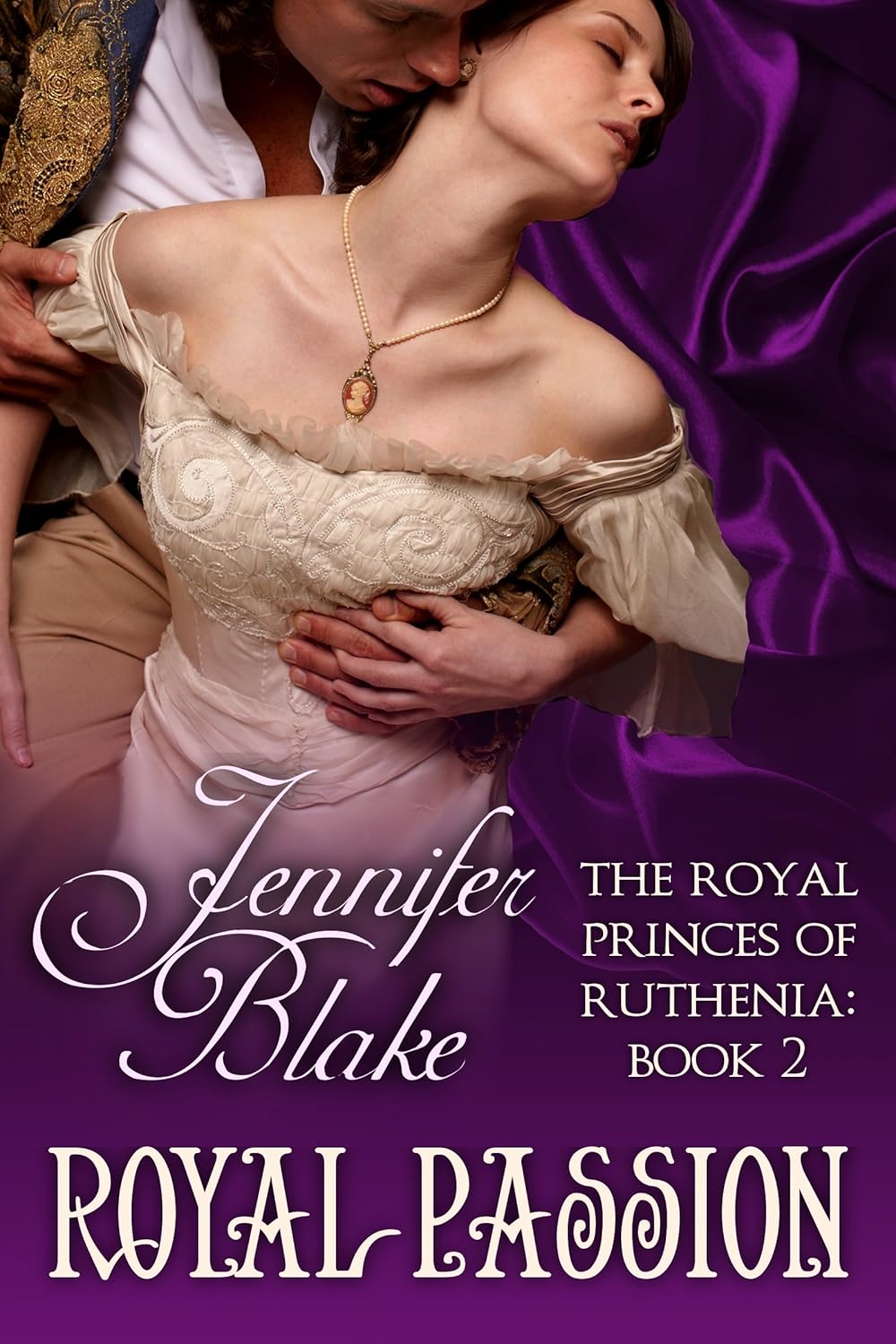
Royal Passion - Jennifer Blake (Royal Seduction #2)


Royal Passion has much to offer over the first book in the set, Royal Seduction.  However, I was still less than pleased with it as a whole.  The plot follows Mara, a young woman from Louisiana who goes to France with her grandmother following a bout of depression.  While there, her grandmother gets into some trouble and Mara is conned into bargaining away her "services" in order to get them out of their sticky situation.  Those services?  Seduce the prince of Ruthenia and make sure he's in a certain place at a certain time.

Roderic, the prince in this book, is the son of Rolfe, the prince from the first book who is now King of Ruthenia.  Roderic is much less rapey than his father, which is good, but I still didn't really like him.  He was extremely manipulative, and at the end of the book I still wasn't sure if he was being truthful and sincere with Mara or not, and consequently his emotional investment in their relationship came across as a bit...blah.  Mara was extremely stubborn, to the point of it being unbelievable; she made some choices that I doubt even the most stubborn young lady would make, especially in the middle of the nineteenth century.  The cadre is present again in this story, though of course sporting a different bunch of characters.  They were all very enjoyable, as was Roderic's sister.  It was hard keeping track of them at some points, but they lent a good deal of comedic effect to the story.

I'm not sure what the whole point of the "gypsy" characters was.  It was kind of random, and didn't actually really ever tie together satisfactorily.  The explanation given--that the kings of Ruthenia were some kind of patrons to the gypsies--was half-baked at best.  And considering how little they actually played into the plot, I think the book could have been serviced just as well by Mara simply stumbling into a camp of Roderic and the cadre, rather than a camp of Roderic, the cadre, and the gypsies.

And now let us get to the part that really bothered me.  The politics.  Blake spends an awful portion of the book info-dumping on politics in France at the time of the story.  She attempts to weave the fictional country of Ruthenia into all of this, but it doesn't take exceptionally well.  Instead, it diverts attention from the primary, romantically-oriented plot and onto this weird, boring subplot.  I found myself skipping large chunks of the book when this happened, and really would have been much happier without that whole plot.  I feel like the manipulation aspect could have been just as easily implemented if the subplot focus had been on something other than politics on a massive scale.  This really, really took away from the book for me; I shouldn't have to skim huge chunks of a romance novel in order to get to the romance plot.  Overall, probably at least a hundred pages of this book could have been chopped.

2 stars out of 5.

Friday, March 7, 2014

Eternal Vows - Chrissy Peebles (The Ruby Ring #1)

Eternal Vows (The Ruby Ring, #1)Twenty-four-year-old Sarah Larker is a Bigfoot hunter whose sister went missing years ago.  Sarah's conducting research in the same area, suspecting that Bigfoot might have had something to do with her sister's disappearance.  In the process, she goes into a cave and wakes up in another world, where's she's mistaken for one Princess Gloria.  Not only that, but an immortal king wants to marry her (because he thinks she's the princess) and agreeing to wed him might be her only chance to get back home.  Once she's got the ring, she decides to stick around in hopes of finding her lost sister.

I'm honestly not sure whether this was supposed to be a satire or a serious fantasy novel.  It takes itself a bit too seriously to be a satire, and it's a bit too light to be real "epic" fantasy.  The writing is okay, but not fabulous.  It's not terribly engaging, and I found myself skimming a lot.  Peebles relies too heavily on Sarah's own internal dialogue to convey her emotions and reactions, which results in the rest of the narrative coming off as a bit flat.  Had she more fully integrated Sarah with the other characters, instead of just with herself, I think the story could have benefited from it.  Also, the dialogue isn't particularly well done.  It goes from extremely stiff to extremely informal, and the characters in the "medieval" world use modern slang too much for them to be really believable.  There's also a ton of "Is it real? Yes.  No.  Yes.  No."  That gets old really, really quick.  I know that Peebles is trying to portray the reaction of the two "real world" characters who find themselves in a fantasy world, but it quickly became annoying.  At some point you have to drop the disbelief and move into the "suspension of disbelief" territory, where the actual plot occurs.

Some more about the characters.  Frank and Victor are both controlling bastards.  At least Victor is a fantastical, immortal controlling bastard, which makes him a little more unusual than Frank.  Honestly, the whole story probably would have been better without Frank in it.  I would have actually liked to see some romance between Sarah and Victor, with Victor teaching her how to use her immortal powers, or Sarah learning on her own while trying to escape and exploring the new world--without Frank.  He was SO annoying that even his good intentions couldn't redeem him.  Additionally, most of the "modern" character had the exact same personality, the exact same sense of humor...they were virtual carbon copies of each other.  Not only that, but instead of wanting to focus on the actual problems at hand, all anyone wants to talk about is Frank and Sarah's relationship, if it can be called that.  The only person I was actually interest in was Victor, and we got to see shockingly little of him considering he married our heroine and was magically bonded to her.  Honestly, if you're going to create a magical bond between two characters, I expect you to actually use it well, not just here and there.  It's not realistic.  I mean, supposedly Sarah and Victor could feel everything the other experienced, but Sarah wasn't even aware Victor was following them until he told her himself.  Seriously?!

There are also a few situations that just couldn't happen.  While I'm willing to suspend a lot of disbelief in fantasy stories, there was one part where Sarah & Co. jump off what is described as a sixty-foot cliff into a river.  They would have died.  Plain and simple.  Only very experienced cliff divers can handle a jump from that height, and it has to be done under the utmost precision in pretty much ideal conditions.  While Sarah might have been able to survive this because she was immortal at this point, the rest of her crew would have been dead, end of story.  And just assuming that Princess Gloria will be loyal to Sarah...  What?  Why should she be?  That doesn't make any sense!  Sarah is the cause of half of her problems!

Overall, this was a frustrating book that just wandered from place to place with a vague plot but no good execution in pulling it off.

2 stars.

Thursday, March 6, 2014

Banished: Surviving My Years in the Westboro Baptist Church - Lauren Drain and Lisa Pulitzer

Banished: Surviving My Years in the Westboro Baptist Church Banished is a complicated book in that it is often contradictory, doesn't make sense, and is at once appalling and intriguing. Much of that can be explained in that it's about a real person, not a made-up character, and real people are often contradictory, don't make sense, and are at once appalling and intriguing in ways that fictional characters are not. With that in mind, I can excuse Drain's weird, mixed-up statements about much of what the church does, because she's a real person who honestly doesn't seem to have come to one conclusion about her experiences yet. Maybe she never will. It was still an interesting look into the psychology of someone who was in the church and then kicked out.

What I can't excuse is the writing. It's juvenile, at best, using words like "superaccomodating," which isn't even real word, and sentences like, "The whole thing was so lame," to describe an instance in which her father forced her to lie about his abuse. She uses "really" and "very" far too much. The sentences aren't complex at all, and I felt like a middle school student could have written this book. The writing was not at all engaging, and really stunted what I think this memoir could have been.


2 stars out of 5.

The Salzburg Connection - Helen MacInnes

The Salzburg ConnectionHelen MacInnes has been labeled "the queen of suspense" by some, and I think I would probably agree with that based on my impressions of The Salzburg Connection.  The plot revolves around a box hidden in an Austrian lake, and all of the people who are trying to find it or prevent it from being found.  This results in there being a lot of moving parts, but MacInnes handles it well.  She's also rather unique in the world of cold war spy novelists in that she actually has strong female characters.  Lynn adapts remarkably well to the adverse conditions she finds in Zurich and proves to be a good person to have on hand.  And Elissa... Oh, what to say about Elissa without ruining anything?  Well, she's definitely a clever character, and she does not in any way fall into the trope of the "Bond girl" that is so common throughout spy novels.

This is a somewhat dated book, having been published in 1968, but that doesn't diminish its reading quality.  It is devoid of the slick gadgets found in so many spy novels, probably because the primary characters are not spies themselves, and this makes it a much more believable narrative.  Mathison, a lawyer who is also the main character of the novel--he is the main character, despite his relatively late appearance--is just trying to figure out what he's gotten himself into and help someone out.  He doesn't want to be a spy, and he doesn't really engage in that much spy-like activity.  That's all left to other characters, making Mathison extremely engaging.  Because we experience the story mostly through his perspective, we get the real experience of what he's going through, rather than jumping right into the shocking doings of the underworld.

MacInnes also has a wonderful layering effect going on throughout the novel.  As said before, there are a lot of moving parts, and just when you think you have all of their paths figured out, she adds another dimension--some of which aren't revealed until the very end.  They aren't huge twists that will completely change the plot for you, but they do add a lot of "oomph" to the experience and make it seem a much more "full" narrative.  I didn't really buy into the romance subplot, because I felt it wasn't worked enough to be really engaging, but that wasn't the main point of the book so I can let it go.  Overall, I would definitely recommend this to anyone who likes spy stories, mysteries, Nazis, or novels about the complicated relations of the cold war.

4 out of 5 stars.

Saturday, February 15, 2014

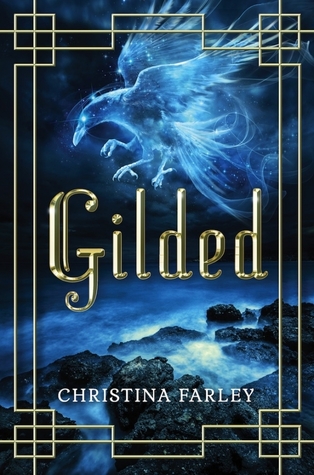
Gilded - Christina Farley (Gilded #1)

Gilded (Gilded, #1)So, apparently if you have a Kindle and Amazon Prime (actually, I'm not so sure about the Prime part...) there's a program where you can get a book to read a month before it's actually released the public.  Pretty cool, right?  I mean, it's not an ARC or anything, but it's still fun getting your hands on something so new the general populace doesn't have it yet.  Anyway, that's how I got Christina Farley's debut young adult novel Gilded.

Generally, I really like young adult fiction.  It's easy to read and stuff happens at a much faster pace than in most "adult" books I've picked up.  Gilded falls into these parameters.  Stuff starts happening almost right away, which means we aren't left looking for the plot for 60% of the the book.  That's a good thing.  What's also good is that...wait for it...Gilded is different!  Oh my gosh.  That was awesome to find out.  Let me tell you why.

Overall, it's the story of a teenage girl with a destiny determined by a curse that's been haunting her family for generations.  That sounds pretty typical, and it is, but Farley managed to do a great job with it because a) she infused the entire story with Korean folklore, which is something I haven't really seen done all that much, and b) the protagonist herself is an American-Korean.  Both her parents were from Korea, from what I gathered, so she has a lot of connection to Korea even though she's lived most of her life in Los Angeles.  The story, by the way, takes place in Seoul, where Jae and her father have recently moved for her father's job; it's this move, and Jae's presence in Korea, which activates the curse.  It's pretty cool having a non-white protagonist, though Jae is pretty "American" in most senses.  I can only list a handful of other books that have "ethnic" protagonists, so this was a nice addition.

I thought this was fairly well done.  The characters are believable, for the most part.  The story can be a bit melodramatic at parts, but then again, it's also about teenagers, who are pretty melodramatic as a rule, so I can let that go.  Jae did frustrate me at times by not picking up on things as quickly as I thought she should, especially toward the end when she should have had enough experience to recognize what was going on around her.  I liked Marc, the love interest, though his role wasn't what I thought it would be.  I thought he was going to be like the human form of Haechi or something, but he wasn't.  That would have been cool, but I'm not exactly an expert in Korean mythology, so I'm not sure if it would have worked.  The main character I had an issue with was Jae's father.  He thinks all of the stuff that's going on with Jae isn't real, and I feel like something had to give here.  Either something should have happened much earlier in the novel to convince him of the reality of Jae's situation (and was he even convinced at the end?  I'm not sure) or he probably should have had his daughter committed to a mental institution.  Which might have been interesting, come to think of it.

The ending of this did feel a bit rushed.  A ton of stuff happened that wasn't exactly tied in earlier in the story, making it seem a bit disjointed.  I think some of this could have been cut for the sake of streamlining the novel, and I think that it probably wasn't because Farley wanted to show how much Jae could go through.  It kind of worked, kind of not; I mean, yes, it made Jae seem stronger, but like I said, it also came off as disjointed and hurried.  Some of these later plot points (a fox spirit, the weird orb thing) could have been cut or possibly reserved as points for future books, because Gilded is very obviously the start of a series.  It's not a cliffhanger, though, so you can read it without fearing for your sanity at the end.  Overall, this was an enjoyable, quick read suitable for pretty much any audience.

3.5 stars.