Pages

Showing posts with label women in stem. Show all posts

Monday, May 28, 2018

Chemistry - Weike Wang

ChemistryOh, books that you just keep around and never read, despite having been interested when you bought them.  This particular one lived under my bed for almost a year, where I would glimpse it every time I went looking for misplaced bottles of lotion, nail files, hair brushes, etc.  I finally pulled it out, really for lack of anything better to read--I've been reading, but I feel like I'm in a slump--and went to it, which was easy, because it was short.

This is one of those books that wants to be artsy, because it doesn't have a named narrator or any dialogue punctuation, so it all kind of just blends together and it's sometimes hard to tell when someone is talking or just thinking.  Oi.  The story itself is a very simple one: the unnamed narrator is a young woman in chemistry PhD program in Boston, until she has a breakdown after not making any progress on her thesis, is put on a medical leave, and finds herself in tough straights with her fellow chemistry PhD student boyfriend, who wants to marry her but whom she's not sure she wants to marry.  It's a tale of self-discovery in the wake of all of this, and of coming to terms not only with her parents' expectations of her but what she really wants for herself.

There is some lovely prose in here, descriptions of Boston and of chemistry.  There's some good introspection, into aspects of this narrator's life; for example, how she's expected to go into science because of her parents and has always been the "smart Asian kid' but doesn't really want to be, and is actually more interested in teaching, or how she struggles with being a woman in science while her boyfriend sails through with no obstacles, or how she wants a relationship but she doesn't want to entirely lose herself to it, or be expected to give up a professional life to be someone's wife.  These are all important aspects of the narrator's (I hesitate to call her a heroine, it's not really that type of book, nor would I call a man in this role a hero) life and struggles, both internal and external...however, none of them are particularly interesting.  One thing I did find interesting was the role that language played in the narrator's life, as it draws so many connections and divisions between cultures very clearly and helps to illuminate the struggles of the narrator and those around her in a way that I don't think most books hit upon--or even can hit upon, because they're not from this same perspective.

This is one of those books that just drifts from place to place, from thought to thought.  It's not stream of conscience, thankfully--a style I can't stand--but there is not a lot of structure.  The narrator is just drifting through life, and the book of course reflects that.  There is not really a plot, there is not really a pace.  It just kind of is.  While the premise is strong, I felt like it just wasn't really a great read.  This book had a lot of buzz when it came out, but it just didn't capture me as much as I had hoped.  A book can have a lot of wonderful, important things in it--but still not be a good book for everyone, and I think that's the category this hit upon for me.

2 stars out of 5.

Friday, April 13, 2018

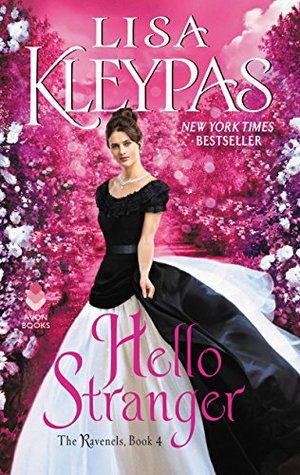
Hello Stranger - Lisa Kleypas (Ravenels #4)

Hello Stranger (The Ravenels, #4)For some reason I keep going back to Lisa Kleypas, even though none of her recent works have really intrigued me.  The Ravenels series hasn't been strong, and I've found myself let down time and time again.  That was also the case here, with the fourth book Hello Stranger.  However, I do think this was stronger than the preceding three books.

Our heroine here is Garrett Gibson, the female doctor who has been a side character in the previous Ravenel books.  The hero is Ethan Ransom, who we've also seen briefly in passing.  How is this a Ravenel book, you might ask, when neither character is a Ravenel?  Ah.  Well, there's a clear answer there, but if you haven't figured it out yet, I'll let it come out in the reading.

Garrett is wrapped up in her career doctoring those less fortunate than she when she finds herself in a spot of trouble with some sailors while returning home one night.  Armed with a trusty cane, she's pretty confident that she can handle things--but Ethan, who's been following her (creepy much?) steps in and helps out.  He offers to teach her some self defense, after which he says he'll never see her again, but he just keeps coming back, and the pair's attraction only grows.

My big issue with this book is the pacing.  What seems like it really should have been the climactic event happens about halfway through the book, and then the part where they bop around in the country really seems to drag on and on and on.  Garrett is of course a woman ahead of her time--working with sterilization of medical supplies and practitioners and early blood transfusions--but even watching her wield her abilities can't help the struggling pace.  And as the romance is kind of on hold at that point, too, due to Ethan's condition...well.  It's slow.  Very slow.  There's a slight uptake in pace when they return to London, but it's not enough to save the long and dragging part.

Garrett and Ethan's attraction is definitely of the instant, or at least close to instant, variety.  And yet their relationship takes time progress, indicating some issues with pacing consistency here, as well.  That said, I liked Garrett and Ransom, individually and together, more than I liked the main characters of previous books.  Garrett has all the ambition of Pandora but none of the flightiness.  She is smart and steadying but doesn't decry love in favor of her career, and instead embraces that she can have both--after all, she's already broken barriers professionally, so why not personally?  And then there's Ethan.  I kind of feel like I shouldn't like Ethan, and yet I did.  He has a shady background, to be sure, but there's never even the slightest indication that he would hurt Garrett, even through attempting to shield her, which is important.  Additionally, Ethan's profession means that, for once, Kleypas' subplot makes sense.  She continues to have a spy/murder plot shoved into a romance book, something that very rarely works and hasn't worked in her past books, but at least with Ethan being so involved in it, it fits and builds throughout the book without being shoehorned in at the last minute as a way to reconcile the lovers.

Oh, and it was nice to see a historical romance in which neither of the two main characters is wielding a title as part of their attraction.  (No, that does not count.)

Is this Kleypas' most dazzling work?  No.  And honestly, at this point I don't have super high hopes for the last two books in this series.  However, this was stronger than the previous books in the series, having better main characters, a decent romance, and a subplot that, while not the strongest, at least made sense.  It did suffer from pacing issues on both the relationship and subplot sides, however, and so it's not escalating up into favorite romances of the year any time soon.

3 stars out of 5.

Wednesday, April 11, 2018

A Vision of Light - Judith Merkle Riley (Margaret of Ashbury #1)

A Vision of Light (Margaret of Ashbury, #1)I am a bad book club member.  I was so busy waiting to catch up on Ivan Ilych that I completely forgot I was supposed to read A Vision of Light for the beginning of March.  Oops.  And Vision, while not a doorstop, also isn't short, and it's not the fly-through-it type of book, either.

Set during the middle ages, the story follows Margaret of Ashbury, a young woman who hears a Voice telling her to write a book about her experiences.  She recruits Brother Gregory, a rather pretentious wanna-be monk, to do the actual writing for her as she is illiterate.  As Margaret's story unfurls through her telling to Brother Gregory, their relationship slowly evolves from contentious almost-enemies to something more closely resembling friendship with an air of debate about it.

This is a time period that we don't see a lot of historical fiction from, and particularly not a lot of stories featuring a female main character.  Fantasy in a medieval-inspired setting is fairly common, but not straight-up medieval fiction.

Overall, I liked this story.  It's somewhat slow and doesn't always seem to have a point.  It gets off to a particularly slow beginning, with Margaret's childhood in the village of Ashbury.  Some period remain more intriguing than others--while her time at the castle is good, her ramblings with the performers can get to be a little long-winded, for example.

Brother Gregory is an interesting character.  He wants to be a monk, despite coming from a noble house and having a fighting background.  He pursues enlightenment and spends his time reveling in qualities he doesn't actually possess, like humility.  Initially, it comes across as him being extremely pretentious and unlikable, particularly as he's very opposed to Margaret writing a book and only takes the job on because he's literally starving from poverty.  However, as the book goes on, we can see him exactly as Margaret does: as well-intentioned but slightly blind to his own character, and as a character of comedy rather than opposition or frustration.  It's this shifting of view that allows Gregory to come to be a friend and sparring partner rather than an outright antagonist.  Additionally, while Gregory can be stubborn and full of himself, he also starts to accede points to Margaret as the story progresses, even if he doesn't always acknowledge them aloud, and this allowance of understanding helps him develop as a sympathetic character as well.

There are a bevy of personable (and not so personable) supporting characters in this book.  Margaret's eventual mentor is one, her first husband another.  Most of them are Margaret's "supporters," who believe in her unusual abilities and help her through hard times, and her "opponents," who decry her as a witch and try to have her tried and executed for various reasons.

I was initially very skeptical about this book.  From the cover and the premise--woman hears the voice of God, really?--I did not think that I was going to like it.  However, I found myself pleasantly surprised.  While there are some problems with pacing, I found the characters well-composed and seeing them evolve was one of the charms of this book.  Its unusual setting and featuring of a female main character, and a midwife no less (one of the earliest forms of women in STEM) made for a strong story, and I'm interested in seeing where the next one picks up.

3.5 stars out of 5.

Monday, April 9, 2018

A Hope Divided - Alyssa Cole (Loyal League #2)

A Hope Divided (The Loyal League #2)Alyssa Cole is a relatively recent discovery for me, as I've only read the first Loyal League book prior to this, but she's got some good stuff coming out.  A Hope Divided intrigued me as soon as I finished reading An Extraordinary Union, and she also recently put out a modern romance, A Princess in Theory, that looks wonderful as well.  She has heroines who are in interesting fields--spying, medicine, science--and who are women of color, which are rare in mainstream romance and rarer still in historical romance.  And while I had liked An Extraordinary Union, something about A Hope Divided just seemed like it would strike me better.

And it did.

An Extraordinary Union was definitely a historical romance.  A Hope Divided I would classify as a historical fiction with a strong romantic thread.  The relationship between Marlie and Ewan is important to the story, yes--but equally so is the emphasis that Cole places on the non-combatant participants in the Civil War, those who didn't join up with the Confederate or Union armies, but fought in their own ways.  This might have been running slaves, escaped Union prisoners, or others trying to get away through the Underground Railroad, it might have been Quakers refusing to fight, it might have been spies, it might have been farmers sending food to Union prisoners.  Marlie, our heroine, is a biracial woman.  Growing up with her mother in a rural area, she's not very aware of her background, until a white woman, Sarah Lynch, shows up offering to take Marlie and give her the life that she, as a Lynch, deserves.  Marlie's mother agrees that's best, and off Marlie goes, against her will.  Though she finds herself living a mostly-respectable life--even as a Lynch, the color of her skin and her strange heterochromatic eyes keep people aware of who she is--she also holds onto her roots, brewing medicines for those in need, though she maintains that she relies on medicine and science rather than magic, folklore, or witchcraft like people said about her mother.

Enter Ewan, the brother of An Extraordinary Union's hero.  He's a Union prisoner hiding his identity, because his specialty was torturing information out of Confederate soldiers, and one of the men roaming in the area in charge of the nefarious Home Guard is one of the last men he encountered before being taken prisoner and he...somewhat lost his composure during the "interrogation."  Ewan has anger problems, stemming from his childhood with a drunk and abusive father, but he's worked hard to suppress them.  Torturing people, however, doesn't exactly lend itself to that.  In Marlie, who he encounters when she brings food and books to the prison, he finds peace, and also attraction--not just to her body, but to her mind.  But of course they can never be together...until he's holed up in a hidden room in Marlie's suite at Lynchwood, having escaped from prison.

There are some really nefarious people here, far so more than in the first book, and it's Marlie's interactions with them as well as the people in her community and those she meets when she leaves that make this a work of historical fiction with a romance bend rather than the other way around.  In traditional historical romance novels, the setting is kind of wallpaper, just designed to make the characters look good.  In A Hope Divided, the setting thrums with life.  It lives and breathes and is a character in its own right.  This sense of place contributes so much to the story and really grounds it in a strong historical fiction background instead of only romance.

Overall, I liked this more than the first book.  It's less of a spy story or a romance, but I think the other aspects added in balance well and make it a stronger story overall.

4.5 stars out of 5.

Monday, February 19, 2018

Not Quite a Husband - Sherry Thomas (Marsdens #2)

Not Quite a HusbandHaving read Sherry Thomas' YA fantasy trilogy, the logical next step was to try one of her historical romances.  I picked Not Quite a Husband because I'd seen it on a few friends' reading lists, and it was also available from the library.  It was a quick read, only about two and a half hours, which made it a perfect book for a Saturday afternoon.

Heroine Bryony fell immediately and madly in love with Leo Marsden when he appeared in London one Season, reappearing from a past in which she knew him as a child.  Despite being focused on her career and having no plans to marry, she proposes to him in quick order, he accepts, they marry--and the marriage falls apart almost before it has even begun.  Time jump after the prologue to Bryony living in a remote area of India, serving as a doctor to a missionary community and hiding from the scandal that the annulment of her marriage caused.  Until Leo shows up, having been sent by Bryony's sister to find her based on a claim that her father--from whom Bryony is estranged--is dying.  And so begins a trip back across India while a rebellion brews in the background.

This struck me because I was simultaneously finishing up The Far Pavilions, which also takes place (mostly) in India, though in both books it's an India pre-partition, which means that the geography also includes modern-day Pakistan, so keep that in mind while you're trying to keep things straight in your head.

Watching the initial relationship here was, to me, more interesting than watching Bryony and Leo come back together.  Seeing those little snippets of them growing up, encountering each other again in London, and then the dissolution of that relationship...that was the fascinating part.  I do think their reunion could have been fascinating, however, I wasn't entirely convinced by it.  The sex was definitely of the "dubious consent" variety, which kind of squicked me out (and so was a lot of the sex during their marriage, which, what?  THAT IS SO CREEPY, LEO), and rapey heroes are so not my thing.  Just because someone gets physical pleasure from sex doesn't mean they want it, let's remember.  Then, the entire impetus of the relationship is basically adrenaline in the face of near-death experiences, which is fun, except that's basically the entire thing, no other supporting emotional incidents.

Overall, I was disappointed by this.  The initial premise and the setting had such promise, but the relationship really soured to me because of Leo's actions.  If he wasn't so rapey I think I would have liked him--I think I even could have forgiven him the discretion, maybe--but the combination was just too much to me.  I didn't hate Leo with a fiery passion (a la Greg from Happily Ever Ninja) but he creeped me out and I found myself wondering why it too Bryony so long to get away from him in the first place.  (Yes, yes, Victorian norms.  I know.  But that can totally be skirted in a modern book.)

Additionally, this is marked as the second book in a series, so I've denoted that, but looking at the so-called first book, I'm not sure what the connection actually is.

2 stars out of 5--for the setting and premise, and also for Bryony, because female doctors in historical fictions are awesome.

Friday, January 12, 2018

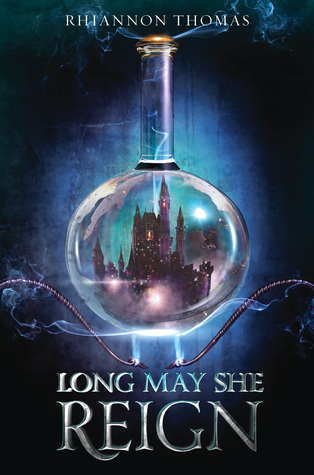
Long May She Reign - Rhiannon Thomas

Long May She ReignAn intriguing cover and a promising premise--about a young woman who is twenty-third in line for the throne and only wants to become a scientist, but finds herself queen when most of the nobility is poisoned and everyone in the succession before her abruptly dies--this has been on my radar for quite a while.  Of course, it's also been on quite a few other people's radar, since I was number eighty-something on the hold list at the library and it took quite a while for me to actually get the book to read it.

 I will say that I expected this to be a sci-fi book, maybe a space opera with a monarchy in place, something like Empress of a Thousand Skies.  Nope.  This is a fantasy world, one in which all innovations were supposedly left behind by a race called the Forgotten and one in which apparently Freya, our heroine, is the only person in the entire kingdom with the intelligence and desire to do something related to science.  Literally.  The hopes of the kingdom rest on her not because she's queen, but because she's apparently the only person who can figure out a test to detect arsenic and the only person who actually wants to figure out who killed the vast majority of the court.  Of course she has some communists (ish) to win over to her side as well as higher-born political enemies and the public at large.  And a love interest in the form of the illegitimate son of the king, who might want the throne for himself!  Gasp!

This was fairly well-written for what it was.  Despite the thin plot and overall a lack of action--Freya spends most of the book looking for a way to detect arsenic/figure out who poisoned the court and waffling about her duties as queen and letting other style her appearance for her--it was a fun teenage court drama.  Having a heroine interested in STEM is always a good thing, even if her being the only person is somewhat suspicious; an easy way to make her the best, perhaps?  Because of course if a girl is ever going to be good at something in a book/movie/show, she has to be the best or it doesn't count.  See: Celaena Sardothien, Alanna the Lioness, etc.  I did like how Thomas handled the romance; things go south (of course), and at the end it's not all happily ever after.  Freya admits things are on shaky ground and it will take work to repair the relationship, whether it ultimately ends in romance or just friendship.  This was a nice change from the "we are teenagers but must be in love forever" vibe that most young adult books put out.

Additionally, the book was a bit surface-level but Freya wasn't stupid.  Of course, you might say.  She's a scientist, after all.  But you'd be surprised.  What I mainly mean is that I didn't want to slap Freya upside the head.  She can sometimes get wrapped up in her own thoughts, but for the most part, she thought things through and acted accordingly, based on the information she had available to her.  I approve!  Additionally, it seems like Thomas neatly wrapped this up in one book and won't be drawing it out for a whole series.  Young adult stand-alones are so rare in the fantasy genre that I feel like I have to give this book a point just for that.

One thing that I do feel like I have to mention was the world building.  There was some stuff that seemed really intriguing here, but then it was never expounded upon.  Why is Epria so isolated from "the continent"?  What the heck is up with the Forgotten?  It seems to be implied that they're not real, but where did all of this other stuff come from?  Because this isn't a series, these seem like aspects that will never be explored fully, and consequently there are holes left in the fabric of the world.

Still, overall an enjoyable book.  Not an extraordinary one, but a solid young adult fantasy that can stand on its own and with a heroine better than most.

3.5 stars out of 5.

Wednesday, November 29, 2017

When Dimple Met Rishi - Sandhya Menon

When Dimple Met RishiWhen Dimple Met Rishi was one of my most-anticipated reads for Fall 2017.  It seemed like it had so many things going for it: main characters who aren't white (diversity matters), a young woman in a STEM field (Dimple has a passion for coding), and a romance plot with an arranged marriage--or rather, a hopefully arranged engagement, since Dimple isn't actually aware of the fact that her parents are trying to hook her up with an Ideal Indian Husband, though she knows her mother wants her to get married.  Unfortunately, I felt like this book ultimately fell short of my expectations.

The story follows the two title characters as they attend Insomnia Con, a six-week app-coding bootcamp, the summer before they enter their freshman years of college.  Dimple dreams of being a coder.  It is her passion, and attending Insomnia Con and winning the app-coding competition for a chance to work with her idol seems like a coup that she won from her reserved parents, especially considering the thousand-dollar fee that she knows is a stretch for her family to afford.  Rishi, on the other hand, is resigned to being an engineer like his CEO father, though his true passion is drawing comic art.  He attends Insomnia Con mainly to get to know Dimple, as his parents and Dimple's parents know each other and think the two would be an ideal match.  Unfortunately, Dimple has not been made aware of this, and their first encounter ends with her throwing an iced coffee at him and fleeing the crazy guy who apparently thinks she's going to marry him.

Unfortunately, this didn't end up being a story of "getting know you while building world-changing app."  Despite their rocky first encounter and Dimple's determination to not get attached to anyone, Dimple and Rishi fall in love with each other pretty much right away, and only the barest minimums of the actual Insomnia Con competition are mentioned.  Instead of working on their app, Dimple and Rishi appear to spend most of their time swanning about San Francisco, eating out (can't blame them on that one) and practicing for a bizarrely-inserted talent show in which they perform a Bollywood dance.  No wonder the competition comes to the end it does--though of course, we're supposed to see that clearly they are the rightful winners!  (Why?)  The two have chemistry, but it was disappointing to have the conception that Dimple basically just ditched her app programming.  I don't think we're supposed to think this, but there's about three sentences of Dimple working on it in the book, so it really doesn't feel like she's as focused as we're supposed to believe she is.  And Rishi doesn't seem to know anything about coding, so it's hard to see how he got into Insomnia Con at all!

Watching the characters struggle against the expectations and preconceptions of their families was interesting, I'm not convinced that it was enough to propel the entirety of the story because ultimately, it doesn't end up being much of a struggle.  The parents cave pretty easily into wanting their children to be happy as soon as the children actually, explicitly push back.  So not much drama there, despite the "big deal" the characters make it out to be.  It ended up being a story that overall lacked dimension, with things seeming to come to the characters very easily on all fronts with only about five minutes of suspense in wondering if things will work out happily.  I think there were a lot of good concepts and themes in here, but none of them were worked to the degree they could have been, and should have been if this was to be a truly great book.

3 stars out of 5; I enjoyed reading it, but I'm not sure I would go for it again.