Pages

Thursday, October 29, 2015

Compulsion - Martina Boone (Heirs of Watson Island #1)

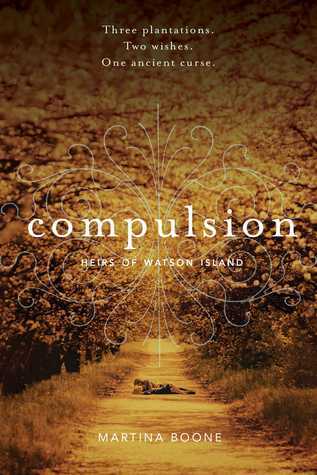
Compulsion (The Heirs of Watson Island, #1)If you're a fan of young adult fiction, I heartily recommend signing up for PulseIt, a website that weekly posts free books and extended excerpts of books that you can read online.  The site is run by Simon & Schuster, which means all of the books posted are published by that house, but they still cover a wide variety of genres within the young adult sub-set.  They've recently lengthened the postings from one week to two, doubling the amount of time you have to read a title, but still post weekly so that, at any time, you have two books and two (or sometimes more!) extended excerpts to look at.  I found Poison Princess and the rest of the Arcana Chronicles, which I've really enjoyed, through this site, along with some frustrating titles, but I still think it's worth looking at.

Compulsion was a book that middle in quality.  It had great potential out of the gate, but I think it fizzled later on and never really lived up to it.  I expected it to be a sort of teen southern Gothic, maybe something like Servants of the Storm, which I thought was wonderfully written but fell agonizingly flat at the end.  I thought that Barrie, moving to Watson Island, South Carolina from her mother's home in San Francisco, would face some sort of lurking menace in her new abode, something that would utterly change her life, but she really didn't.

So, as I said, Barrie moves to Watson Island.  This comes in the wake of her mother's death.  Her mother, Lula, was seriously disfigured in a fire while pregnant with Barrie, and remained a shut-in for the rest of her life, often applying the same rules to Barrie, who's rather sheltered as a result.  Barrie's caretaker, Mark, was diagnosed with cancer and was going into hospice care, so Barrie couldn't stay with him anymore.  Instead, she moves to Watson's Landing on Watson Island to live with the aunt she never knew she had.  At the beginning of the book, she's not look forward to it, which is fair because I imagine few people savor moving for their final year of high school.  On top of that, the move doesn't exactly go well.  Her aunt doesn't pick her up from the airport, and when Barrie takes a cab to the family plantation, she finds that Aunt Pru might be a little bit crazy.  And on top of that, the house is apparently trying to kill Barrie, and her special ability--that to find lost things, which she's always had--starts going haywire.  On the bright side, there's a really cute guy she's attracted to and who's attracted to her, and now Barrie has a family that she never even knew existed.

Not too far into the book, Barrie meets her cousin, Cassie.  There's a lot family intrigue going on between the families of Barrie, Cassie, and Eight, who is Barrie's love interest.  Basically, it all boils down to their ancestors being a group of pirates, and while Barrie and Eight's families got gifts (the Watsons can find what is lost, the Beauchamps or Beauregards or whatever the heck they're called know what people want) Cassie's got a curse.  Cassie wants Barrie's help to break the curse by finding a family treasure that was buried during the Civil War, though how that's supposed to help I'm not quite sure.  The gifts and curses supposedly stem from the Fire Carrier, a Cherokee witch who trapped evil spirits on Watson Island, which is also interesting because the Cherokees didn't have territory along the Carolina coast.  Meddling with Native American customs, including "magic," is a tricky business, and while I can't really say if Boone did her research on it or not because I don't know enough on the subject to call her out on any errors, I hope she tread carefully regarding that aspect of the story.  But, historical accuracy aside, let me talk about Fire Carrier for a moment.  At the beginning of the book, he's made out to be very menacing.  As the book goes on, he gets more benevolent.  That's fine; character development and all, though he's not really a main actor.  At least, he's not a main actor until the very end, when he neatly wraps up the book's main conflict on his own in a very deus-ex-machina moment.

My main complaint with the book was Barrie.  I liked her as a character in general.  I thought her gift was unusual enough to be interesting and that her adaptation to the new situation was realistic.  What I didn't like about Barrie was that she's completely incapable of doing anything for herself.  Whenever she gets into any sort of situation, whether it's finding a secret room, going into town, or escaping the boat of her wicked drug-dealing uncle, she can't get out of it on her own.  She always has to be rescued, usually by Eight but once by Fire Carrier.  It's hard to view her as a capable person when she can get into trouble, but she can't get out of it, not even the most mediocre sort.  And she does this even after Eight points out that she's doing it.

The southern Gothic air I expected in this book was also lacking.  It was there at the beginning--spooky plantation, weird powers, family secrets and intrigue, etc.  But then the menacing shadows became cute little sidekicks, the family intrigue turned out to be not-so-intriguing, and the weird powers didn't end up packing that much punch.  The spooky plantation underwent a makeover to become just another charming southern locale.  It seemed like Boone lost a lot of her atmosphere and momentum in having Barrie try to improve her surroundings, and the entire book suffered for it.  The writing was beautiful, and I can only imagine what Boone could have done with a properly creepy atmosphere, but she gave up that opportunity way too early on for it to add to the book as a whole.

Finally, the title.  The title and the book's description both describe the abilities of the families as "compulsions."  Except a compulsion means that you have to do something.  Barrie likes finding things that are lost, because she gets a headache if she doesn't, but she certainly doesn't have to.  It doesn't eat away at her sanity if she doesn't.  She just gets a headache.  Compulsive disorders are a serious mental condition, and I can't help but feel that Boone trivialized that in how she worded and structured her novel.

I'm mildly interested in the sequel to this, Persuasion, but I'm not sure I'll be picking it up.  Barrie didn't really grow much as a character, other than deciding that she liked Watson Island.  Which is good, considering that she's stuck there in more ways than one.  It would have been interesting to see her struggle more, and with things just working out for her so easily, I'm not sure how compelling of a read the sequel will be.

2.5 stars out of 5.

Wednesday, October 28, 2015

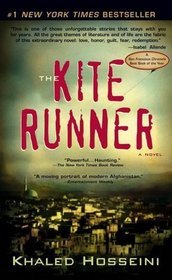
The Kite Runner - Khaled Hosseini

The Kite RunnerI feel like I'm one of a rare group of readers who didn't jump on The Kite Runner back when it came out.  I remember people reading it when I was in high school, but it didn't really intrigue me.  I did read A Thousand Splendid Suns, which focuses on a mainly female cast in Afghanistan, a premise I found much more interesting because of how women's situation in Afghanistan has changed so much over such a relatively short period.  However, the Popsugar Reading Challenge has a category for "A banned book," and I thought this would fit nicely.  We don't actually have banned books in the US, so I think this is a silly category to include at all, but some institutions (especially schools, and especially religious private schools) often take issue with books and ban them from the curriculum and libraries.  The Kite Runner often falls into the "banned" category in institutions for a few reasons, including swearing, but let's be honest: it's the parents who don't want their kids reading about Muslim and homosexual characters who push for the ban.  I'm a huge proponent of letting kids read what they want, because widening your worldviews is good and reading a book can't hurt you, but some people apparently feel differently and that leads to books like The Kite Runner being banned.

So, the plot.  The book is narrated in first-person by Amir, the son of a wealthy businessman who spends his days with a servant his age, Hassan.  Hassan is the son of a man who Amir's father considers to be family, and so Hassan is also considered family.  He was born with a harelip, and for his birthday one year, Amir's father pays to have it fixed.  Amir's father includes Hassan in everything, which leads Amir to be jealous of Hassan, who he considers more than a servant but not quite a friend or brother.  Amir craves his father's love and approval, which often seem to be lacking, for himself, and sometimes wants to exclude Hassan so he can have his father's attention.  It's a complicated relationship, with a lot of complicated feelings behind it.  The reasons for these come out later in the book (which I did not see coming; clearly I am out of the loop) and make a lot of sense, and I think Hosseini did a really good job building up to it and tying it all together, making it logical and not just a "Hah!  Gotcha!" moment.

Every winter in Amir's neighborhood, there is a kite fighting competition.  The kids try to battle each other's kites out of the sky, and other kids chase down the falling kites, which are viewed as trophies--especially the last kite to fall.  One winter, Amir and Hassan win the competition and are the last kite flying; while Amir celebrates, Hassan takes off to "run" and retrieve the second-place kite, which they knocked out.  When he doesn't return quickly, Amir goes looking for him.  He finds him cornered by a bunch of bullies who have harassed Amir and Hassan for years.  Amir wants to help Hassan, but he also doesn't; he doesn't want to get in the middle, and he has always been a self-admitted coward.  Torn, he ends up standing by as Hassan is raped by the bullies.  Ashamed of his actions, he avoids Hassan from then on, and eventually drives Hassan and his father Ali away.  Some time after, Amir and his father flee war-torn Afghanistan for San Francisco, where they start up a new life, one that Amir welcomes because it's free of the taint of shame that followed him in Afghanistan.  However, decades later the shame comes back when a friend from Afghanistan requests that Amir return to see him before he dies, and tells Amir that there is a way to make things right.

The book is both Amir's fall from grace and his path to redemption, and all of the threads tie together in a way that makes a wonderfully-woven whole.  It's a depressing book, at times, the very picture of "bad things happen to good people," but it also includes villains getting what's coming from them.  There's no "happily ever after" here, and Amir admits he doesn't know if there will be one at all, but the book ends on an overall hopeful note, with the suggestion that, even though Amir cannot fix the past, he might be able to atone for some of his sins and help pave the way toward a brighter future.  I didn't find this a riveting book, one I couldn't put down, but it has lovely language and development, and I can certainly see why it's so popular.  I think that some of the people who insist this book be banned could actually benefit greatly from reading and understanding it, but that's probably too much to hope for.

4 stars out of 5.

Sunday, October 25, 2015

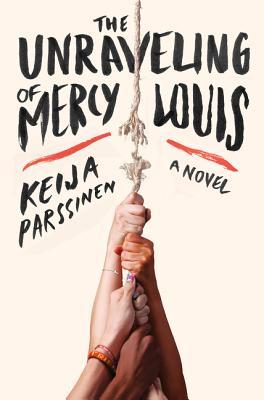
The Unraveling of Mercy Louis - Keija Parssinen

The Unraveling of Mercy Louis: A NovelIn my quest to finish the Popsugar Reading Challenge, I needed to fulfill the category "A book set in high school."  Or something along those lines.  I'd planned to read Perks of Being a Wallflower to finish the category, but for some reason none of the libraries in my university's circle would give it to me.  One of them had it on hold because, apparently, it's used in a class.  At another, the book had been lost and they never replaced it.  As for the rest...well, who knows?  At any rate, I couldn't get it from the university library, didn't feel like going to get a public library card, and didn't want to buy it, so I started looking for alternatives.  In the meantime, I found The Unraveling of Mercy Louis on the popular reading shelf at the library and picked it up because I'd read a good review of it...somewhere.  I thought it was over at The Armchair Librarian, but if that was it, now I can't find it.  So maybe it was somewhere else.  Anyway, as I flipped through my Kindle a day later, I found that I already had the book, because apparently I'd purchased it at some point.  I must have really wanted to read it!  I returned the library copy so someone else could get it and started reading the Kindle one.

The story is told in a first-person narrative by the titular character, Mercy, and in third-person from the perspective of one of Mercy's classmates, Illa.  The setting is Port Sabine, Texas--a small town that is still recovering from an explosion at the local oil refinery three years earlier.  The year is 1999, and between the explosion a few years before, a dead baby found in a dumpster, and her prophetic visions, Mercy's grandmother thinks that the Rapture is coming.  Mercy, raised by her grandmother, follows closely in her beliefs, and wants to live out the remainder of the days before the end of the world enjoying her final summer vacation, playing at least part of the basketball season of her senior year--the world's supposed to end partway through it--and staying out of trouble so she can go to Heaven.  Over the summer, though, things start to fall apart.  Mercy and her best friend Annie have a disagreement, and Annie refuses to speak to Mercy.  Mercy speaks in tongues and delivers orders to find the baby's killer at church.  And then, as she tries to find her basketball groove again in the wake of a terrible game during States in the schoolyear, she runs into Travis and gets herself a boyfriend, something her grandmother has strictly forbidden.

Illa, meanwhile, is an anorexic who wants to shrink herself down to nothing, and to be friends with Mercy above anything else.  Illa spends most of her time in the summer taking care of her mother, who was seriously injured in the refinery fire and is now confined to a wheelchair.  Illa resents her mother for not trying hard enough and tries to escape through photography and managing the Lady Rays, the varsity basketball team that Mercy and Annie play on.  Through her outsider's eyes, Illa sees things and asks questions that Mercy isn't able to, being so wrapped up in her own life.  And so Illa is the one who manages to piece some things together and help when Mercy begins to unravel in earnest.

The book goes through the summer and into the school year, when Mercy, Annie, and other girls in the school are suddenly struck by a mysterious illness that leaves them trembling and making strange sounds.  No one knows how or why it's happening.  Meanwhile, the quest to find who killed the baby continues.  It's a mess, a big mysterious mess, and no one is entirely sure of anything.

I loved the language of this book.  It was beautifully written, and I think it managed to really encapsulate the feeling of being young and having everything suddenly fall apart, and not understanding why.  Illa is a young woman struggling with her bisexuality, which I thought was also a lovely touch; she's bisexual and figuring it out, not knowing if she wants to kiss Lennox or Mercy, but Parssinen doesn't make that the entire focus of her character like so many authors might be tempted to do.  Instead, it's just something that adds dimension and focus to her character, something that makes her more real, just like her anorexia.  Mercy and Illa are both extraordinarily flawed, but you still can't help but like them and want things to work out for them in some way.

On that note... Do things work out?  It's hard to say for Mercy, easier to do so for Illa.  This book has an extraordinarily ambiguous ending.  There's hope in it, on some fronts, but a complete lack of resolution on others.  I appreciate that Parssinen apparently trusts us to figure out what's important, but at the same time, I still want to know more about the not-so important stuff.  I guess it's supposed to be a lesson, that in life we don't always get all the answers--but I already knew that.  I didn't need to read a book to learn it, and I think that if the author trusts us to know what's important, she should also trust us to know that life is unfair without her having to tell us.  It was a beautiful book, but it lacked a bit of cohesion at the end, leaving too many loose threads to even having a pleasantly ambiguous ending.

3 stars out of 5.

Saturday, October 24, 2015

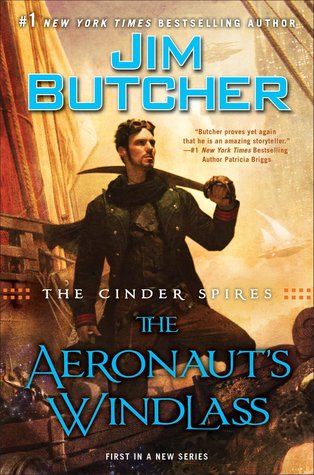
The Aeronaut's Windlass - Jim Butcher (Cinder Spires #1)

The Aeronaut's Windlass (The Cinder Spires, #1)Some people are rabid Jim Butcher fans.  I'm not.  I read Storm Front, the first book in his best-selling Dresden Files series, and while it was good, it wasn't really my thing and I didn't read further.  But when I saw The Aeronaut's Windlass, the first book in his new Cinder Spires series, I was intrigued.  Windlass is a steampunk-inspired fantasy, which is the best sort of steampunk in my view.  I like the fantastical elements that crystals (a la "Atlantis: The Lost Empire") and talking cats and the warriorborn and weird and deadly creatures can add to the mix.

Let me tell you this: I can see Butcher's genius here.  In Windlass, he sets up a mystical world in which humanity lives in a series of far-flung towers called the Spires, each one a state in and of itself.  Captain Grimm is a privateer for Spire Albion, which has long been locked in a trade war with Spire Aurora.  As the book begins, we see a young noblewoman named Gwen march off to join the Spirearch's Guard, and then the trade war with Aurora suddenly turns into a hot war, as Albion is attacked.  Joining Captain Grimm on the page are Gwen, her cousin Benedict, another member of the Guard named Bridget who is technically an aristocrat but doesn't seem to know it, and the cat Rowl.  Turning up a little later are a pair of etherialists, people who can see and manipulate the fantastic energies that power airship, provide light, and generate electricity: Ferus, the master, and his apprentice Folly.  This bunch of misfits teams up to hunt down an invading Auroran force, a story which is both compelling in and of itself and which sets up a future path of conflicts hinted at by Folly's prophetic dreams.

The narrative moves between the main characters, though given that the book's description focuses only on Grimm, I'm moved to believe that he's the character who will be the main in the entire series.  All of the chapters are third-person, and of them I liked Gwen and Bridget best, though I might just be biased towards female main characters.  I liked Rowl's chapters the least; while I found the set-up and idea of intelligent cats interesting, I didn't really like Rowl as a point-of-view character.  He annoyed me more than any other character.

The thing I liked least about this book was the Enemy.  It's set up pretty early on that the group, and Spire Albion in general, is going up against some Big Bad.  The Big Bad is a concept that I really don't like in any book.  I want villains who are multi-faceted and have clear motives other than just "being evil," but that was all Butcher provided in this book.  It's clearly a setup for future books, but he gave me no reason to believe that the villain is a character who will gain any real amount of depth as the series go on.  I hope I'm mistaken, because having a Big Bad as a main antagonist (even if there are other antagonists with their own motives sprinkled throughout, as there are here) tends to remove reality from the story.  All of the biggest and baddest people in history had real, human motives for what they did; Hitler might have hated Jews, gays, gypsies, and a lot of other people, but he also had a genuine desire to improve the lives of the people he viewed as "his."  As we all know, that didn't exactly go well for anyone involved, but still: it is what it is.  Granted, it seems that Butcher's Big Bad might not be exactly human, and therefore it could be argued that he/she/it isn't subject to human motives and emotions, but still.  I hope there's some dimension there than "it's big and bad and wants to destroy humanity" in the future.

There are a few inconsistencies here, too.  The most obvious one that came to mind was when Folly, a character who for the duration of the book had only been able to communicate with people by speaking to a jar of crystals instead, suddenly began talking directly to Grimm with no explanation at all.  Is this going to be something that's explored further?  Folly's mad, and Butcher said so blatantly at several points that her madness should only get worse.  So where does this sudden ability to speak like a normal person come from?  Little things like this don't necessarily ruin the story, but they are a bit jarring when they go directly against what has already been established without any apparent reason for the about-face.

I really like Butcher's new world and look forward to reading about it more, though I imagine it'll be a while until the next book comes out.  Despite its flaws, it seems to be a very unique setting and premise in the current world of fantasy, and I hope he can maximize its potential.

3.5 stars out of 5.

Tuesday, October 20, 2015

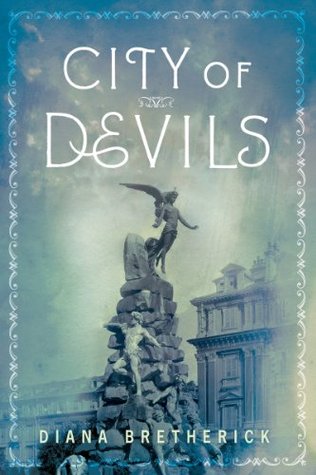
City of Devils - Diana Bretherick

City of Devils: A NovelThis book won an award and I cannot, for the life of me, figure out why.  City of Devils is a historical mystery placed in Turin.  Murray (whose first name I cannot remember--James?) shows up to apprentice himself to Professor Lombroso, who is the pretty much the authority on criminology.  Coinciding with his arrival is a string of murders, with the victims all having an association with Lombroso and found holding notes that say "A Tribute to Lombroso."  Lombroso himself doesn't want to investigate; one faction of the police wants to pin the murders on him, the other feels he's innocent.  To figure out what's what, Murray and his fellow apprentice Ottolenghi decide to join the investigation of Tullio, the man who believes Lombroso is innocent or at least wants to investigate the matter scientifically.
 
As a murder mystery, I found this one juvenile.  It didn't engage my interest at all, it wasn't particularly twisty or turny, and while the murderer isn't entirely obvious, neither is it entirely surprising.  The writing was entirely bland.  None of the characters are really fleshed out.  I feel the most realistic one was Sophia, who at least had an interesting character background, but who seems to have been included solely because Bretherick wanted a sexy love interest for Murray.  She brings nothing by mysterious babble to the story itself.  If you're going to have a sexy love interest in a mystery, at least give her something useful to do other than play damsel in distress.  Even Dan Brown's Heroine-Of-The-Book usually has something to do with the mystery other than look sexy and hint at things that she knows but doesn't care to reveal.
 
The investigators themselves, Murray included, were a bunch of bumbling idiots.  Lombroso's brand of criminology is one that is laughable nowadays, which makes him hard to empathize with because it's clear that he's just making stuff up, and that Ottolenghi, Murray, and company buy into it makes it hard to take them seriously.  They stagger about, every now and then asking someone a few questions, but ultimately never figure anything out.  Nothing would have ever been figured out if the killer hadn't chosen to reveal himself.  Indeed, the story would probably have ended very much the same whether Murray was involved or not.
 
Bretherick is clearly setting this up as the first in a series of books, but I have absolutely no interest in reading the rest of them.  This one was barely tolerable, and I'm astounded it's gotten the acclaim that it has.

1.5 stars out of 5.

Monday, October 19, 2015

Dead of Winter - Kresley Cole (Arcana Chronicles #3)

Dead of Winter (The Arcana Chronicles, #3)So, after finishing Endless Knight, I rushed off and bought Dead of Winter to continue devouring the series.  I had to know what happened between Evie and Death!  What would she do?  Would she allow him to coerce her?  Would he go through with it?  I had to know.  Well, I certainly found out.

Unlike the connection between Poison Princess and Endless Knight, there is a gap of several days between the end of Endless Knight and the beginning of Dead of Winter, and we don't immediately find out what happened between Evie and Death--though we can gather that, because Evie's riding off to join her alliance alone, it didn't go too well.    She arrives at the newly-built Fort Arcana to find Selena and Finn severely injured, Matthew crazy as ever, and Joules' alliance also in residence.  She immediately sets about planning for how to rescue Jack from the camp of the Army of the Southeast.  The army, as we learned last time, is led by Vincent and Violet, otherwise known as the Lovers, the Duke and Duchess most perverse--our newest cards.  The Archpriestess is also nearby, waiting to pull people down to the depths of a newly-formed river, and poses her own problems.  Still, Evie embarks on the rescue mission, and they (of course) get Jack back...just in time for Death to show up in pursuit of Evie.  And this is where the love triangle gets intense.

Oh boy.  I was going to count Endless Knight for my "love triangle" book for the Popsugar reading challenge, but I feel like it needs to be counted in conjunction with Dead of Winter because it's so much more intense in this one.  Death and Jack have to work together, or it's predicted that Evie will die.  To make matters worse, Vincent and Violet kidnap Selena, and they have to rescue her.  The twins are the main enemy for this book, and the group spends most of the story trying to reach them.  Along the way, Death and Jack snipe for Evie's attention, because she's agreed to choose one of them when they get back to base.  The other one will leave her alone.  You can imagine how well this goes, and you can imagine even more when Evie's interactions are heavily weighted toward Jack, with a single one-on-one interaction with Death on the other side.  Which was terribly, terribly disappointing, because Death is such a better character than Jack is.

Again, the pacing in this one is intense--one thing after another after another, which makes it a very fast read.  I tore through it in just a couple of hours, and I feel the quality was much better than the first two books, because the character development is infinitely better.  We get to see Jack and Death actually grow as characters, something that they--particularly Jack--had been severely lacking until now.  Finally seeing some of this is great, and it made the conflict between Evie and Jack and Death more real...though Death is still better.  I'm totally Team Death on that one.  He's just so much better in pretty much every way.

And again, this one ends in a cliffhanger, with the emergence of a new card and a new crisis.  I'm very upset that the next one isn't out yet, because this new card--the Emperor--is hinted to be Evie's arch-nemesis in the series, and I just can't wait to see how this one pans out.

4.5 stars out of 5, because Jack is seriously still a contender?  Seriously?

Sunday, October 18, 2015

Endless Knight - Kresley Cole (Arcana Chronicles #2)

Endless Knight (The Arcana Chronicles, #2)In the sequel to Poison Princess, Kresley Cole continues on with Evie, the Empress of the tarot deck, as she struggles in a post-apocalyptic world while also trying to survive a game in which a number of teenagers try to kill each other to be "the last card standing."  This one picks up right were the last one left off, with Evie having defeated Arthur and being still a little blood-crazy, and with Jack not knowing what the hell to do with this girl who has very suddenly turned out to be something supernatural.
Now, I linked to my review of Poison Princess because I brought up a few points in it that I would like to re-address here, mostly dealing with Jack.  First, I was interested in how Jack's Catholicism would mix in with what is, quite frankly, a very pagan world and game.  And to answer that...they don't.  While Evie wonders about the issue a bit, Cole pretty much just brushes the whole issue aside and never really addresses it.  Jack just loves Evie for Who She Is.  I think this could have really been an interesting conflict, and I'm very disappointed that it was so quickly abandoned.  Second, let's talk Jack again.  Jack isn't in the picture for a lot of this book, because Evie gets kidnapped by Death.  That said, in the first part Jack is...weird...and in the second part, revelations about him reveal him to be just as controlling and stalker-like as he was in the first book.  Not that Death is much better, though he is at least a little more forthright in his intentions.  
Still, putting forth Death and Jack as Evie's two romantic interests feels a little...weird.  She doesn't have a genuinely nice, if forceful, guy to choose.  She just has Jack and Death, neither of whom is a model citizen and both who seem to want Evie for all the wrong reasons.  Jack just wants her, but doesn't actually seem to care about her beyond that, for all that he says he does.  He doesn't trust her and he feels the need to steal things, like her boyfriend's phone or the tape Arthur made of her life, in order to learn about her, because he can't be bothered to ask her, or he won't believe her if she does tell him--because it's so bad that she didn't tell him she's a total supernatural freak, right?  And Death wants her dead, obviously, except he doesn't, and it's all...weird.  His reasons are better than Jack's, but his behavior often isn't.

As the book goes on, more Arcana are introduced, all of whom are weird in their own ways and most of whom want to kill the others.  We get to see the Hierophant, who heads up a bunch of cannibals, as well as the Tower, the World, Justice, the Devil, and Strength.  And Death, of course, who is...awesome.  I loved Death.  I think his backstory is much more complex than Jack's, which made his actions much more realistic, and while he was manipulative, he was blatantly so.  He was up front with Evie, even as he was manipulating her, and I liked him a hell of a lot more for that than I liked Jack, who was just an asshole.

As for plot, Cole dives into this one and goes.  It moves a hell of a lot faster than Poison Princess did.  There's no mucking about with a third of the book being in high school.  Instead, this just goes from one thing to the next to the the next, until Evie ends up at Death's castle, at which point it slows down significantly to allow Death and Evie to get to know each other.  That part did not go quickly, at all, and I didn't really buy the development of their relationship, which didn't really happen until the book was pretty much over.  Cole definitely leaves this one as a cliffhanger, which made me glad the third one was already out, because I rushed straight off, bought it, and devoured it in one setting.

So, overall?  Trash.  But delicious trash.  God, I hate it when they do this to me...

3.5 stars out of 5.