Pages

Thursday, August 27, 2015

Landline - Rainbow Rowell

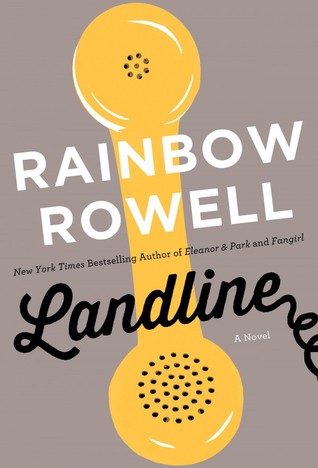
LandlineWhen I went to pull the cover art for this from Goodreads, a book that I recognized popped up under the "Readers Also Enjoyed" section: Isla and the Happily Ever After by Stephanie Perkins.  For a moment, I was perplexed; Isla is a decidedly young adult book and Landline, while not explicit, is definitely aimed at a more adult audience.  But after a bit of reflection, I saw the connection.  Both of these books deal with the building and disassembling of relationships, with life just getting in the way, and of the couple--sometimes one party more than another--striving to make things right, often in each other's absence.

In Landline, Georgie is a comedy writer on the verge of a big break.  She and her long-time writing partner, Seth, have the opportunity to finally create the show they've been working on for nearly two decades.  The problem with this?  They need to do a massive amount of work to get it off the ground, and they need to do it when Georgie is supposed to be going to her mother-in-law's house for Christmas with her husband and two daughters.  Georgie has a habit of putting work before her family, and this is one straw much.  Her husband, Neal, packs up the girls and goes without her, leaving Georgie alone in Los Angeles.  Georgie throws herself into work, but the rift between her and Neal eats away at her, especially because Neal isn't answering her calls.  When her own cellphone dies--as it does whenever it's not plugged in--she calls Neal's mother's house from an old rotary phone she bought while she was still living with her mother, and gets a surprise.  While she can talk to Neal, it's not her Neal that she's talking to--it's Neal from almost two decades ago.  And so Georgie wonders if this is a sign: is she supposed to use her connection to past-Neal to change their relationship before it becomes too late?

This is a sweet novel.  It's set up very well to allow the story to flow while also filling in all of the background information that you really need in order to emotionally connect with the characters.  The current timeline is interspersed with long periods of Georgie thinking about earlier times in the relationship--not necessarily flashbacks, because they still read like real narrative, but definitely backstory.  This lets us see how Neal and Georgie have changed as time went on, and how they've come to grow apart, as well as how they used to--and still do--fit together.

I will have to say, though, that I'm not entirely satisfied with the ending here.  The "magical phone to the past" thing is never explained--possibly because how do you explain something like that, but still, I would have liked a stab at it.  And then...I'm not necessarily sure that Georgie and Neal should be together, and the sickly-sweetness of the ending turned my stomach a little.  I think I would have liked a more bittersweet ending on this one; it would have fit the overall tone of the novel better.  One of those "I hate it but I love it" endings, you know?  Anyway, I did really like this overall; it's a light, fast read, but one that still had plenty of emotion, and I'd definitely read Rowell's other books.

4 stars out of 5.

Tuesday, August 25, 2015

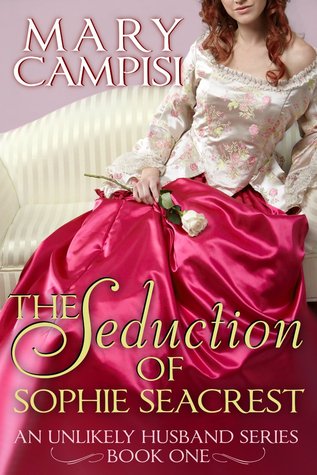
The Seduction of Sophie Seacrest - Mary Campisi (An Unlikely Husband #1)

The Seduction of Sophie Seacrest (An Unlikely Husband, #1)This was a terribly frustrating historical romance.  I did not like it.  Here's why.

It's about Holt, a long-vanished heir to an earldom that has returned after his father's death.  However, he's not yet sure that he wants to take his position as earl.  What he does want to do is mend the rift between his family and the Seacrests; currently they're in the midst of a feud that might very well destroy Holt's family's business.  On his first day out and about, though, he runs into Sophie and they immediately have a tryst--though no sex.  And so Holt gets sucked into her charm...

I feel like Campisi didn't know where she wanted the plot of this to go.  It starts out like the feud is going to be a central point of the plot when Holt's brother alleges the Seacrest family has paid people to burn several of Holt's family's ships.  Holt immediately inserts himself into the Seacrest family as a business partner, and helps them mend the business.  The feud is never really mentioned again.  Instead, a different feud emerges--one that alleges that Holt's mother and Sophie's father had an affair, and that is what has caused the argument.  And then there's some lady creeping around in the shadows--but not until two-thirds of the way through the book--who wants Holt for herself for some really weird reasons.  And then there's a bunch of other convoluted stuff going on that seems like it wants to be Jane Eyre-gothic but instead it just comes across as muddled and confused.

Sophie was sweet, Holt made me want to punch him.  He claims that Sophie can't be a virgin, because no virgin reacts to amorous situations like she does.  He says mean, hateful things and then just abandons her after coercing her into marrying him.  And then, just a few pages later, he's all possessive and he loves her and blah-blah-blah.  He's a psycho.  Which, given his mother, makes sense.  Geeze.

The pacing here was also very strange.  It goes from zero to sixty and back to zero--nothing happens, and then there's suddenly a tryst with no build up at all, and then they're back to almost ignoring each other until the next tryst, which again comes out of nowhere.  And once everything seems like it's resolved, it feels like Campisi felt like the book just wasn't long enough, so she tacked another plot onto the end which hadn't really been present throughout the rest of the book.  And then there's Francie!  Why was she even included?  She had no impact on the plot at all; the process and outcome were exactly the same as they would have been if she hadn't been featured at all.  And why did every appearance of hers have to feature her having sex with her husband?  I get it, it's a historical romance and those are known for their steamy scenes, but it seems that the focus of those should have remained on the main couple (and those scenes were pretty good!), not some superfluous extras that were just tacked on to the side.

This book was a hot mess.  I liked Jason and would like to know his story, but I don't think I'm quite intrigued enough to brave Campisi's plot constructions again.

1.5 to 2 stars out of 5.

Monday, August 24, 2015

Delicious! - Ruth Reichl

Delicious!
When Billie Breslin moves to New York after dropping out of college, she interviews for the position of executive assistant to the editor of Delicous! which is one of the oldest food magazines in the business.  She's ecstatic to get the job and move into the world of food writing, because it's common knowledge that the editor gives his assistants writing assignments.  However, her dream comes crashing down all too soon when Delicious! is shut down.  Everyone is let go--everyone except Billie, who's left behind to maintain the Delicious! Guarantee, which is that every recipe works or your money back.  Alone in the massive Timbers Manor, Billie answers letters and phone calls relating to the guarantee and explores the long-locked library, where she and a former coworker discover a store of letters from WWII that open a whole new world of knowledge.  Meanwhile, Billie works weekends at an Italian specialty food store and interacts with a host of other colorful characters.

I really, really liked this book.  I'm not normally a huge fan of first-person narratives, but I found Billie very personable and thought it was easy to connect with her.  Figuring out the whole Genie thing was an intriguing little side mystery--you can tell something's up there, but there are a few possibilities and it's not glaringly obvious which one is the real answer until it's actually brought up.  I was able to piece together some of it, but not all of it.  I enjoyed the side characters, too.  Sal, Rosalie, Mr. Complainer/Mitch, Sammy...all of them were great.  They all had distinct personalities and roles, and while they were all supporting characters, they really did lend support instead of just being there for no apparent reason.

There's a mystery here, but it's not a murder/suspense mystery.  Instead, it's a quirky little historical mystery, one that's cute instead of nerve-wracking.  I don't really enjoy reading letters in novels, but most of the ones included in Delicious! were short enough to not be trying on the nerves.  The letter-mystery plot did feel like it was originally intended to go in a different direction, but didn't, which left me feeling a little disjointed.  And I wish that more of the recipes that had been mentioned were included!  The recipe for Billie's gingerbread cake, which features throughout the book, is included in the back, but none of the other delicious-sounding (Delicious.  Hahahaha.) recipes were listed.  Still, this was a book that I couldn't put down, because it was just good.  Wholesome, enjoyable, with a great cast of characters, a minor love story (nothing to impede the plot, just to boost it) and a little bit of mystery--just enough to keep it intriguing.

4 solid stars out of 5!

Sunday, August 23, 2015

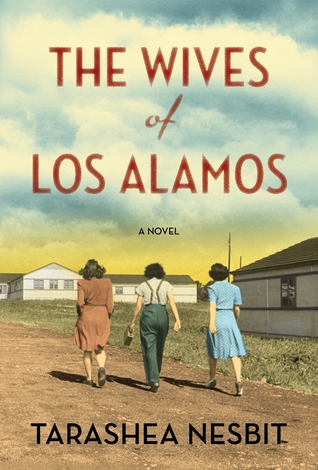
The Wives of Los Alamos - Tarashea Nesbit

The Wives of Los AlamosThis seems to be a contentious book for one reason and one reason only: it's written in first-person plural.  Pretty much every review about it begins that way, and if I had read them before I requested the book from the library, I probably wouldn't have picked it up.  It doesn't have a solid core narrative.  It doesn't have real, distinct characters; different women are mentioned by name at several points, but no one is ever really given the chance to develop because of the amorphous "we" talking about "our" sometimes contradictory experiences.  I understand why this device was used; it's supposed to give you a feel for the lives of the women of Los Alamos as a whole, instead of just picking or making up one or two to flesh out more fully and stand in for the rest.  It's meant to capture a wider range of experiences.  Is it successful?  I didn't really think so.  Some of the women are so obviously outsiders that they're clearly not contained within the "we," and that means that their experiences are completely left out of the book. 

Each chapter has a theme, such as "Children" or "Foreigners," and the snippets that compose each chapter--because each chapter is composed of a series of one-paragraph snippets, instead of a more traditional narrative--adhere to that theme.  It's a sort of experimental style, and while some people loved it, I didn't.  I didn't hate it.  I did hate it to begin with, but as with most writing, I got used to it after a while, and it didn't grate on my nerves so much.  But I never really liked it, and was left feeling like Nesbit could have offered a much richer picture of Los Alamos if she had just been fuller in her telling.  I guess that's just my preference; I like books with real characters and central narratives, even if those narratives don't move quickly and are more character-driven than anything else.  An amorphous, ever-changing central figure who isn't even one figure but a conglomerate of many left me feeling like I was reading about a hive mind, which is kind of demeaning to a group of women who no doubt went through a lot of hardships to support their husbands.

By choosing the narrative style she did, Nesbit avoided a great deal of detail.  This probably saves her from being savaged by people who are sticklers for historical accuracy, but I felt it distanced me more than intrigued me, and I felt left out more than anything else.  A novel needs to draw readers in and connect them with the characters, and I felt that wasn't accomplished here; looking at other reviews, some people clearly disagree, but hey, that's the nature of personal preferences, and I guess we'll have to agree to disagree on this one.  To me, this was an okay book, with a really good premise--I feel like these women haven't had a lot of historical fiction written about them, and they are truly fascinating subjects--but it just fell flat because of its strange delivery.  Experimental styles, I feel, are sometimes better left to subjects that have already been widely explored in more traditional mediums, as then the new style brings a new light to the subject.  I'm not sure this particular subject, these women and this place and time, were quite ready for being experimented with before we were better acquainted.

2 stars out of 5.

Saturday, August 22, 2015

Popsugar Reading Challenge Updates!

Hellooooo out there!  Since the last time we've chatted about this, I've knocked out a few more categories in the Popsugar 2015 Reading Challenge.  You can view my original progress here.  Since then, I've finished the following categories, and updated a few more that are still to go!

Completed
-A book a friend recommended.  My friend Vilhelmina tore through Sarah J. Maas' A Court of Thorns and Roses a few weeks ago, and when I saw that she'd rated it pretty highly, I said I'd have to read it soon--to which she gave an emphatic Yes so that we could discuss it!  I liked it, a lot, but it left me a little bit nervous about the next book in the series.

-A book that made you cry.  This was, unintentionally, How To Start a Fire.  Oh, Malcolm...

-A book you own but have never read.  As I intended, I finished this one with The Martian, reading it after owning it for about six months without ever reading it.  It's very realistic science fiction, a great intro to the genre for those who are interested in the concept but find the more space-opera-y stories too out there.

-A book based on or turned into a TV show.  Again, as intended, I read Dead Until Dark, the book that started the series that became the HBO show TrueBlood.  One of my absolute favorite books, Neil Gaiman's Neverwhere, is the novelization of a mini-series of the same name that Gaiman worked on, but I wanted to include all new books in this challenge (with the exception of a book from my childhood) so I had to go for something a little different.

-A book set somewhere you've always wanted to visit.  I hadn't decided on something to fill this category originally, but I've decided to use The Signature of All Things for it.  This boot is set partially in Tahiti, a place I would love to visit--and I disliked the book so much that I figure I might as well get something out of it, so I'm counting it for this category.


With those out of the way, it leaves a few (well, a bunch) of categories still to be filled...

Still To Go
-A classic romance.  I picked up Anna Karenina at a used bookstore a while back, so I'm going to use that one.

-A book that became a movie.  I'll be filling this one with The Monuments Men, which has been on my Kindle for ages but I haven't opened yet.  I don't actually read a lot of books that become movies, so this one was a harder category to find a candidate for.

-A book written by someone under 30.  Oh, this was a hard one to find a candidate for, because all of the authors I thought were really young are actually older than I thought!  Oi.  So, very reluctantly, I have decided to take up Veronica Roth's Divergent.  I've avoided it until now, but now it seems to have become unavoidable.

-A popular author's first book.  I wanted to go with a big author for this one, and because Terry Pratchett died recently, I've settled on The Carpet People.

-A book from an author you love but haven't read yet.  Well, I absolutely adore Tamora Pierce, but for some reason I haven't read Battle Magic yet, so that will fill this category.

-A Pulitzer Prize-winning book.  Like pretty much everyone else out there, I'm going to knock this one out with All the Light We Cannot See.

-A book based on a true story.  I think I'm going to go with Seabiscuit for this one.  I think that counts.  The "based on" bit confuse me somewhat.

-A book at the bottom of your to-read list.  My to-read list is in a constant state of flux and doesn't really have a concrete "bottom," so at some point I'll just pick the most recently added book (which is, by default, at the bottom) and read that.

-A book your mom loves.  As my mother drunkenly told an Australian tourist while we were in Venice for my sister's wedding, her favorite book is The Thorn Birds, so I guess I'll be reading that for this category!

-A book that scares you.  I have no idea for this one, honestly.  Horror books don't actually scare me, so I think I might have to go with some nonfiction that's terrifyingly true.  We'll see where that goes.

-A book more than 100 years old.  Well, common domain books make this easy, and I think I'll continue my study of the classics with 20000 Leagues Under the Sea.

-A book you were supposed to read in school but didn't.  I was a good student and read the books I was assigned, and I could only think of one exception that wasn't an actual textbook: Affairs of Honor.  It's apparently about early congressmen, senators, etc. being bitchy to each other, so it shouldn't be too bad of a read.

-A book with antonyms in the title.  I honestly don't know.  I'll have to look for something, nothing comes to mind right away.

-A book that came out the year you were born.  I looked up a list of books published in 1991 and discovered that's the year that Outlander was originally published in that year!  This is great, because I recently bought the entire series when it was obscenely cheap on Amazon a couple of weeks ago.

-A book with bad reviews.  I haven't decided yet on this one, either, but I'm dreading it...

-A book from your childhood.  The obvious one that comes to mind is Harry Potter and the Sorcerer's Stone.  This might finally give me the excuse to order that new box set I've been eyeing up...

-A book with a love triangle.  I've gotta fill this one with Endless Knight, Kresley Cole's sequel to Poison Princess.  I loved Princess (review here), but haven't cracked Endless yet.  But it has definitely got a love triangle.

-A book set in high school.  Pretty sure that Perks of Being a Wallflower is going to flesh out this category.  I kind of hate books set in high school, but Perks is supposed to be great, so I hope it won't let me down!

-A graphic novel.  Sharaz-de is a graphic novel inspired by 1001 Arabian Nights, and I've been eyeing it up for a while now.  Plus, Scheherazade is pretty much my favorite fairy tale ever.

-A book that takes place in your hometown.  Well, despite some Googling, I couldn't find anything that takes place in Erie, PA, so I'm going with my second hometown here.  I'll be reading The Dressmaker, which, according to my research, takes place at least partially in Washington, DC.

-A play.  I haven't decided on this yet, though I'll probably keep it basic and do Shakespeare.

-A banned book.  Well, books in the US are never actually banned by the government, but according to a list of frequently challenged books, The Kite Runner fits this category.  I read A Thousand Splendid Suns, also by Hosseini, several years ago and liked it, so this should be a good contender.

-A book you started but never finished.  I swear to year, this is the year I finally take down Vellum, which I have started multiple times but have never been able to complete.  But this time, I will do it!
Friday, August 21, 2015

Dead Until Dark - Charlaine Harris (Southern Vampire Mysteries #1)

Dead Until Dark (Sookie Stackhouse, #1)I admit it.  I only read this book because it fulfilled a category for the Popsugar 2015 Reading Challenge--a book that was turned into a TV series.  I briefly considered Wizard's First Rule, which was turned into the brief-lived "Sword of Truth" series, but that book starts off a series that seems to never end, and if I liked the book I wanted there to be an end in sight, so it got discarded in favor of Dead Until Dark.  Which...isn't my type of book at all.  Unfortunately.  Vampire romances always kind of skeeve me out, because I mean, necrophilia, anyone?  Gross on so many levels.  But this had been turned into TrueBlood, so off I went to fulfill the category.

It was okay.

The plot, in a large sense, isn't half bad.  The story takes place at some point in time after vampires have "come out of the coffin" and are now public knowledge to pretty much the entire world.  Sookie Stackhouse lives in a small town in Louisiana and dreams of seeing a vampire, just to mix things up.  One night, she gets her wish.  Vampire Bill Compton shows up at Merlotte's the bar where Sookie works, and she ends up saving his life from a couple of people who want to drain his blood to sell as drugs.  From there on, Bill and Sookie are very closely linked, and you can probably guess the rest.  However, a string of murders is occurring in Bon Temps, and Sookie might be on the list--if she can't use her telepathic abilities to find the killer first.  Oh, and every vampire (and shape-shifter...and most humans...) wants a piece of her, too.

I wasn't a huge fan of Harris' writing style, which was very tell-y for a good chunk of the book, and I had some issues with Sookie as a main character.  First, she falls into the category of "pretty much everyone loves me for no real reason."  She's  nice girl, sure, and pretty, but almost every man in the book feels a need to drool all over her every time she turns around.  This got very old, very fast, especially because a few characters (JB, anyone?) existed simply to confirm how attractive Sookie was to everyone she met.  And over the course of the book, she only gets more attractive.  Dear lord, this girl has to be a goddess by the end of the series.  Second, Sookie had some weird vibes going on with other women--like she needlessly hated them but wanted to act like she didn't.  Anyone who remotely looked at a man other than Sookie and her friend Arlene was pretty much immediately deemed a slut (and Arlene, having been married several times, seems to be treading the slut-line in Sookie's head) and anyone who is attracted to vampires is not only a slut but a fang-banger, which seems like an awfully derogatory term for Sookie to be using (even if other people use it) considering that she's dating a vampire for most of the book and the relationship is most decidedly not celibate.  Third, she also has this weird balance of wanting Bill to be a complete old-fashioned gentleman but not wanting him to treat her like she's super fragile and all that--when she is compared to him.  Sookie is a frustrating woman, and it made her hard to empathize with, even if I didn't actively dislike her.  It's a woman's prerogative to change her mind, but it's everyone else's prerogative to not put up with her shit when she continues to do so beyond all reason.

I also didn't find the "romance" here particularly romantic.  It was just kind of...meh.  I didn't think that Sookie and Bill had any real chemistry on the page, and felt that many other paranormal authors (Rachel Caine comes to mind immediately) did the romance aspects of their books much better.

Overall, this was okay.  I liked it, kind of, but I doubt I'll be reading the rest of them.

2.5 to 3 stars.

Monday, August 17, 2015

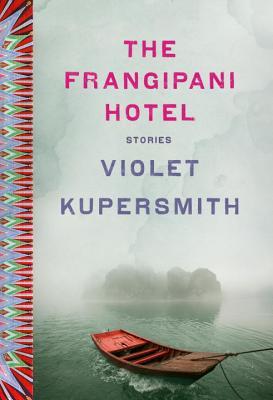
The Frangipani Hotel - Violet Kupersmith

The Frangipani HotelIf you've been reading this blog somewhat regularly, you might have noticed I've struggled with short stories recently.  I've gone through a slew of collections that left me feeling like I just wasn't getting it, and I often pondered just giving up on short-form literature entirely.  But then I'd remember several collections that I really, really liked (The Civilized WorldWhat the World Will Look Like When All the Water Leaves Us, and The Thing Around Your Neck immediately come to mind) so I persisted.  I kept reading those collections, even though they left me so frustrated.  And now, now it has all paid off, because I found another collection that I really, really enjoyed.

The Frangipani Hotel reminded me a great deal of What the World Will Look Like When All the Water Leaves Us.  The latter has supernatural or paranormal occurrences spattered throughout--nothing massive, but just enough to rise the hairs on the back of the characters' necks and let you know that not everything is quite what it seems, that there are monsters lurking under the bed and on every street corner.  As one character says, "Our muddy patch of the world was already shadowy and blood-soaked and spirit-friendly long before the Americans got here.  There's ancient and ugly things waiting to harm you in that darkness.  Yes, of course they're there in daylight, to--they're just harder to spot" (80).

Let me be clear: these are not scary stories.  They will not have you checking under the bed and booby-trapping your closet door before you go to sleep.  However, they are creepy because they show the skewed perceptions people can have of the world around them, and how something that seems like it's one thing can very easily be something completely different.  I really loved that aspect.  Some of them are creepier than others; "The Frangipani Hotel" and "Little Brother" were definitely a little more out-there than "Guests," for example.  In "The Frangipani Hotel," a strange girl shows up who isn't officially staying at the hotel, and she's perpetually thirsty--and possibly far older than she seems.  In "Little Brother," a man agrees to give a ride to a dying boy, only to be warned by a nurse not to talk to the passenger--and if he must talk, don't tell the boy his name.  Both of these contained distinct notes of menace that were largely absent in "Guests," where the strangest things that happen are a coincidence with a cat and a messed-up manicure.  But story collections always vary in quality, and the misses here weren't total flops.  They didn't really impact my enjoyment of the collection as a whole.

Oh, one more thing--this collection is focused around Vietnam.  Some of the stories take place there, some of them take place in the US but focus on characters who are Vietnamese or Vietnamese-American.  I don't really know anything about Vietnamese mythology, so I have no authority on the subject of whether or not these have any real "authenticity" about them, but I really enjoyed them.  They have a good feel to them, and they don't require a lot of outside knowledge in order to be understood.  They didn't leave me feeling stupid or like I didn't get it.  They're not meant to be "brainy," which I feel is a common problem with short stories--the authors feel like they have to prove something, and the stories come off pretentious as a result.  That wasn't the case here.  These were just good, and accessible to the average reader.  They don't require an entire college literature course to break them down and understand them.  Some of them--most of them, really--leave the climactic action off the page, after the end of the story, leaving you to imagine the menaces waiting after the words end.  That's probably a good stylistic choice--what's scarier than your own imagination, after all?

I highly recommend this one.  The stories are creepy but not scary, and very easy to read.  I devoured this just like Thuy devoured her banh mi.

4 stars out of 5.