Pages

Showing posts with label sarah j. maas. Show all posts

Monday, March 26, 2018

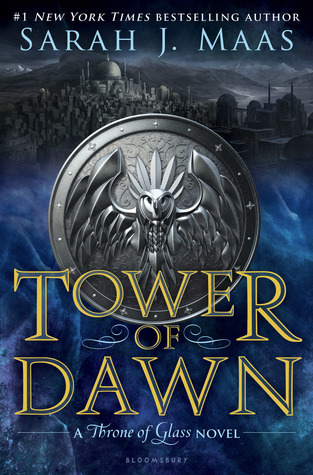
Tower of Dawn - Sarah J. Maas (Throne of Glass #6)

Tower of Dawn (Throne of Glass, #6)Upon reading this book, I had to immediately go back to my reviews of former Throne of Glass books.  This is a strange volume--a book that was supposed to be a novella and ended up at nearly seven hundred pages, taking place concurrently with the prior book in the series, Empire of Storms.  In this, Maas tries to fill in the Chaol-shaped hole that was left in EoS, something that I had mentioned in my review of that book, but I was looking for something else.  The sentence fragments.  Dear lord, did the other books have these sentence fragments?  I don't seem to have mentioned them in my reviews, if they did, and I know I mentioned the use of this "convention" in another book that it drove me crazy in, The Rose and the Dagger.  Either way, whether they were used so blatantly in the other books or not, it is not an excuse, this is a terrible convention and should be abandoned.  Seriously.  The sentence fragments that run amok here continuously yanked me out of the story and had me pounding my head against my Kindle.  Seriously, Maas, did sentence subjects and verbs hurt you as a child?

Now, with that out of the way...

This book dumps Chaol and his traveling companion/kind-of-girlfriend Nesryn on the southern continent of the Throne of Glass world, in Antica, the city of thirty-six gods and the capital of an empire.  If you were looking for a foil to the white, European-based Adarlan, Antica is your answer to it.  With a variety of races and cultures, it's definitely different from Adarlan, in a good way.  Chaol is hoping that the healers who live on the southern continent can fix the paralysis caused by his injuries in the fight against Adarlan's king two books ago.  The healer he is assigned apparently hails from another novella, which I have not read--Yrene Towers.  She is, of course, the most talented and most beautiful healer evah.  While we're on the topic, is Antica not allowed to have people who are the best?  Yrene, from the north, is the best healer.  Nesryn, from the north--her father is from Antica, but Nesryn herself is from the north--is the best archer.  Our absent characters, Aelin and company, are the best at assorted other things.  No one in Antica is apparently the best, and if they are, I'm sure one of those northern characters will soon become interested in that skill and master it and be the best instead.  So, yes, maybe still some subtle racist contexts here.  Hmm...

Anyway.  Chaol gets a hot healer, and Nesryn gets a hot royal who rides a giant bird and thinks she's da bomb, so there goes that relationship.  At first I was onboard with the relationship swapping in this series; after all, few people in real life spend their entire lives with their first romantic partner.  But at this point...just get on with it already.  Anyway (again) Chaol and Nesryn soon split up, Nesryn going off in search of info on the menace that might have followed them to Antica and Chaol...staying put because he's paralyzed, which is a bummer for him, though of course the gorgeous Yrene helps to ease his sorrows.

Remember how Harry Potter spent the entire book in Half Blood Prince angsting over Sirius' death?  This is that book for Chaol.  Except, whereas Harry had faced a very real loss (even if it was still a bit overblown) Chaol was angsty over all kinds of things that, really, he just needed to get over and should have been over already.  This sounds extremely callous of me, I know.  And some of the things, yes, he could feel guilty over, even if they were not directly his fault.  But when the person who is literally going to restore your ability to walk tells you, "Hey, I can do this, but you need to work through what is holding you back.  I will help you do this, but you need to make the effort," and you still refuse to make the effort, well, you lose some of the sympathy factor.  And beyond the healing, there is really not much that goes on for Chaol in this book.  Nesryn only has slightly more action.  There's not a lot of pep in these pages.

Now.  This was not necessarily a bad book.  I liked aspects of it quite a bit--I did like Antica, and the ruks, and Yrene and the Tower.  It's just that this book, and this series, is getting a bit, well, tired.  Repetitive, if I dare say so.  There are only so many times you can try to throw in the same twist before people start calling it, and I saw all of them coming from a mile away--which does not bode well for the one volume remaining.  I'm betting it's going to be pretty much a direct copy of the finale of A Court of Wings and Ruin, because Maas' bread and butter seems to be presenting the same book again and again.  They have fun aspects; they are light and fast and enjoyable to read.  And this same critique could be said of many other authors and genres (romance, anyone?).  Buuuuut you can only write the same story so many times before you lose interest, you know?  Also, there are questions raised that I'm not sure Maas can properly answer at this point, because they seem to be running contrary to what has been set up in other books--like the whole spiders thing?  Why are they not allied in all kinds of different ways with the bad forces running about?  And Maeve?  Really?  That's the route you're taking?

Whatever.  I'm over it.

I'm in this for the long haul, I guess, since there's only one book left.  But it had better be a doozy, because I'm getting kind of tired of this.

2.5 stars out of 5.

Friday, June 2, 2017

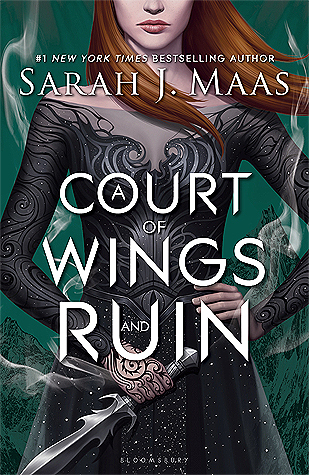
A Court of Wings and Ruin - Sarah J. Maas (A Court of Thorns and Roses #3)

A Court of Wings and Ruin (A Court of Thorns and Roses, #3)Well, the time has finally come: the conclusion of Sarah J. Maas' A Court of Thorns and Roses trilogy.  This one picks up pretty much just where the last one left off: with heroine Feyre acting as a spy in the fae Spring Court, home of her former lover and almost-husband and hero of the first book in the series, Tamlin, who has sold out all of the island of Prythian and the human lands beyond it in order to retrieve Feyre from her new love and fated mate, the High Lord of the Night Court, Rhysand.  Are we all caught up?  Good.

Then let me just say that a lot happens in this book, despite it being off to a slow start.  Much like the second book, I was skeptical going in.  It just starts so slowly.  Feyre is going around the Spring Court acting so meek and broken while secretly sowing chaos, but honestly, we know there are bigger things afoot, and I wanted them to get on with afooting!  Luckily, the first part of the book isn't that long, and things pick up in the second and third parts, as Feyre and her family and allies prepare for war and then eventually go to it.

We have a large cast of supporting characters by this point, but Maas still manages to keep them all separate, distinct, and important, even with the addition of Feyre's sisters as newly-fae residents of the Night Court, and the re-appearance of Lucien as a bigger player, despite him having been absent for most of book two.  (At one point, Lucien vanishes for a long time and doesn't appear to have done much while he was gone; Maas has already said that she plans on writing more books about this world, so I'm betting the focus of one of them will be him, another possibly on Tamlin, and one definitely on the Swan Lake-like setup involving another side character.)  Two new relationships were kind of promised in this book, and they don't really develop much, which was a bit disappointing.  Also disappointing was the amount of info Maas revealed and then didn't expound upon--granted, she's said she'll write more about this world, as I mentioned before, but still.  This was the last book in the trilogy so it seemed like maybe not the best place to be leaving loose ends.  None of them were major...but still.

She also brings back old characters that I thought we probably wouldn't see again, such as the Bone Carver and the Weaver, and weaves (haha) them more fully into the narrative, which seemed well done.  Some big reveals were also reserved for this book--such as what the heck, really, is Amren?  Well, we finally find out.  Sort of.  Enough.  Also added in are several characters who are gay or bisexual, which was nice, because one wouldn't necessarily think of fae as being confined to binary sexualities, especially if we measly humans aren't.  However, this reveal might throw a wrench in her "mating bonds" trope--do they still have mating bonds if they're not heterosexual, and so won't be producing children?  It's said that bonds aren't always about love or even emotional compatibility but sometimes are just more about pairs that would create good offspring.  And if that's the case and these characters do find themselves permanently bound to people that they otherwise can't find attractive...well, that kind of sucks.

It's hard to say much about this book without spoilers, and it also doesn't have anything either rant-worthy or rave-worthy in it, at least not to my eye.  So, instead of prattling on, I'll just wrap it up and say that I liked this one, but I didn't love it.  It didn't pull me in as much as A Court of Mists and Fury did.  But it was still enjoyable, and has the added bonus of, I think, giving us a glimpse of what's probably coming up, to some degree, in Maas' other series, the Throne of Glass series, because she paralleled elements of the two very closely.  Which probably isn't very masterful writing but definitely makes the wait for the last Throne of Glass novel--not out until 2018!--easier, because this is basically a preview of how it will all be written and wrap up.

4 stars out of 5.

Monday, June 13, 2016

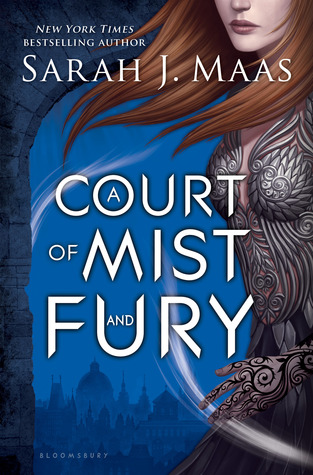
A Court of Mist and Fury - Sarah J. Maas (A Court of Thorns and Roses #2)

A Court of Mist and Fury (A Court of Thorns and Roses, #2)Wow.  What to say about this book?  Well, let me put it this way: I think Maas has a knack for frustrating first books that she turns around in the sequels.  While I wasn't disappointed with A Court of Thorns and Roses, the first book in this trilogy, I was frustrated with a couple of aspects of it.  First, it was based off a fairy tale, you know, with a supposed "happily ever after," but it was pretty clearly set up to introduced a love triangle in the second book.  Second, Tamlin, Feyre's love interest, was...kind of a controlling bastard.  A very sexy controlling bastard who I let get away with a lot of things because he was cursed, and who really knows how much of all that stuff was the curse, anyway?

Well, let me say this: I should not have let Tamlin off the hook.  He is a royal ass in this book, and you can really see how those controlling behaviors were not just part of the curse, but something inherent in his character.  Not cool.  That makes the whole "love triangle" thing much less of an issue, because it's not actually a love triangle: it's Feyre walking away from an abusive relationship and finding one that's better for her, which is a really interesting dynamic and one that I don't think gets seen a lot in young adult books (though, honestly, this is not young adult; it's marketed as such, but there's some pretty darn adult content in here) let alone fantasy books.  Feyre's feelings on the matter also seem realistic; she blames herself, for a myriad of things, including being interested in someone new so soon after walking away from Tamlin, and for her actions Under the Mountain, though she only did it to save herself and the rest of Prythian.

The other main plot, besides the romance (With Rhysand, who totally grew on me; I get it now, guys, I get it, and that slow burn--ahhhhhh!) deals with the threat pressing down on Prythian in the wake of Amarantha's defeat.  The King of Hybern clearly wants Prythian, and possibly everything else, and Rhysand and Feyre, along with the rest of Rhysand's inner circle, are trying to find a way to stop him.  This book takes us to both of Rhysand's courts and to the Summer Court, and there is some beautiful imagery involved in both.  Feyre is also coming to terms with her new fae-ness, including a startling array of abilities that seem to stem from being "created" by all seven High Lords like she was.  She is, apparently, one of three fae who were "created," though I can't figure out why the other two don't have this same range of abilities, because wouldn't they have to be created in the same way?  Maybe this will come more to light in the third book.  It's definitely hinted that the third created person will have to come into play, given the dynamics there... We'll see.  I'm very intrigued, and think Maas will probably tie this up pretty well.  Maybe.  But the romance and the adventure here hold each other up, and while I was originally frustrated that Maas was subverting the very tales she'd based the first book on, that has since grown on me--the idea that there's another side to the story, and maybe it's even better than the side we know.

That said, this book got off to a bad start.  It's basically Feyre whining about planning a wedding and having a lot of sex with Tamlin.  After the wonderful start of A Court of Thorns and Roses, where Feyre kills the faerie wolf that kicks off the whole chain of events, it was a very weak and frustrating start.  In fact, I almost didn't read this book because of how bad the start was.  Did it get better?  Yes.  Definitely.  But it was a really rough beginning, and while I think the rest of the book ultimately made up for it, those first several chapters were a real struggle to get through, especially because they featured so much of Feyre just submitting to Tamlin's abusive behavior.  It was hard to read, and I put the book down for several weeks before returning to it because of that.  It also features some typical Maas stamps that I really wish she would diversify upon: the blond, kick-butt heroine who loves to read (Feyre learns to read in record time here) and to listen to music and who gains magical powers from pretty much nowhere.  Honestly, it would take only a few nudges to push her entirely into Celaena/Aelin territory, so I hope that Maas manages to keep them unique...but I fear they edge closer together all the time.

It's pretty clear that Maas has grown a lot as a writer from her first book, Throne of Glass, and from when she began writing A Court of Thorns and Roses, which was substantially before A Court of Mist and Fury came out.  In that time, it seems that she's gotten a real knack for plot twists and building up both characters and worlds, and I think that really shows here.  I loved ACOTAR when I read it, but in retrospect it had some issues.  I think ACOMAF resolved a lot of those while having very few of its own (in the large scale), and the third (and final) book in the series has a lot going for it.  I just hope it lives up to that potential.

5 stars out of 5.

Wednesday, April 20, 2016

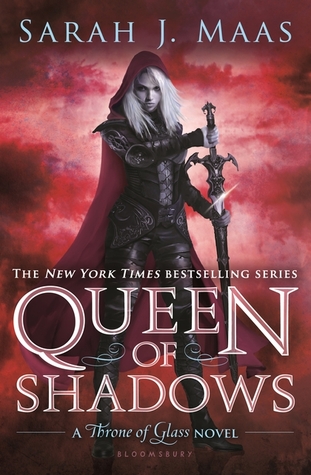
Queen of Shadows - Sarah J. Maas (Throne of Glass #4)

Queen of Shadows (Throne of Glass, #4)So, as you can find in my reviews or pretty much anywhere else on the internet that deals in book reviews, the Throne of Glass series got off to a rough start.  Throne of Glass introduced us to hidden princess/kick-butt assassin Celaena Sardothien, who despite being entered into a competition to fight for her life spent most of her time playing piano, wearing pretty dresses, and eating sweets that just appeared in her room.  You know, despite the fact that people wanted her dead...  There were some cool fantasy aspects to it, but overall it was rather lackluster.  However, the general consensus has been that the series has drastically improved over time--and I have to agree.

The third book in the series, Heir of Fire, ended with Celaena (now known by her real princess/queen name of Aelin, by which I will refer to her from now on) heading back to Adarlan after gaining control over her magical abilities in the realm of Wendlyn and getting a kick-butt blood-sworn fae companion in the form of Rowan.  Now, Aelin is actually back, and she has a list of things to accomplish.  First, she needs to rescue her cousin Aedion from certain death.  Second, she needs to get back a Wyrdkey which is currently in possession of her former master, Arobynn Hamel, the King of Assassins.  Third, she needs to either save or kill Dorian, who has been possessed by a demon, courtesy of his father.  Fourth, she needs to free magic, and kill the king, and...uh, list keeps going on.  But Aelin is now equipped to handle it, with or without magic, because of the events of Heir of Fire.  She's now a heroine who I can actually root for, and a heroine who very obviously starts to become not just an assassin or a lost princess, but a queen.

Meanwhile, the Blackbeak witch Manon is going out of her mind with frustration and boredom in Morath, where she and her witches await orders.  But as they wait, sinister things start to arise at Morath--things that impact the witches.

Queen of Shadows is a book in which things come together.  Manon and Aelin encounter each other, Rowan comes to Adarlan, Chaol and Aelin must work together once again, and Aelin's path to reclaiming her realm starts to become clear.  But that doesn't mean that everything is resolved.  Nope.  In fact, Maas drops a real bombshell at the climax of the book, revealing that all of the troubles up until this point have only really been the tip of the iceberg.  I have mixed feelings about this, because on one hand, it's very cool and very clear that things are about to go to hell in a handbasket quite quickly from here on out.  But on the other hand, I think that revelation could have pretty much been cut out, along with the bits about what's going on in Morath, and we still could have had a pretty satisfying conclusion to the series.

Now, the other thing that bothered me about this book: the ending dragged so much.  The last ten or so chapters all seemed like they could have been satisfying final chapters for this book, but they just kept on appearing.  Every character needed two or three chapters to wrap up what happened to them, which seemed excessive.  I think some of those could have easily been trimmed, or maybe shifted to the start of the next book instead.  As it was, I kept thinking the book was over, but it wasn't, and it kind of soured the end a bit for me.  It's like with the movie Lincoln.  You know, that amazing shot where he puts on his hat and walks down the White House stairs to go off to see the performance at Ford's Theater, that shot that would have been such a lovely, dignified ending, because we all know what happened afterward.  But that shot wasn't the ending: it then had to go on for another then minutes of his kid screaming and shots of him dead on a bed, which were completely unnecessary because it wasn't a movie about Lincoln's assassination.  This book was like that.  It was great, until the end, which then just went on way too long.

Finally, let me briefly speak about Rowan and Aelin, who seem to be a point of some contention among Throne of Glass fans.  I like Rowan.  He is awesome.  I totally support him and Aelin (Though that kiss at the end; what?  You built it all up for just THAT?).  That said, I still like Chaol and I don't hate the idea of him and Aelin together (this is the other main pairing right now, guys) but I do see how they have some serious issues with each other at this point, issues that are going to take two more books to resolve in their entirety if they can be resolved.  Right now, Aelin and Rowan seem like a more solid pair, connected as they are, though it'll be interesting to see how/if Maas resolves the whole "one is immortal and one isn't" thing if they stay together.  That said, I'm not placing all my bets on it, because Aelin has had three love interests in four books so far (and a fourth in the prequel novellas) and I wouldn't be surprised if something happened to introduce another suitor into the fray--though so far most blatant love triangles have been avoided, which I appreciate.

Overall?  A solid book.  It went on a bit too long past the climax, making the ending seem really interminable, but the story itself was great.  Things kept tying back into each other, and more very cool worldbuilding bits were brought up--the bones of the god of truth, anyone?  Still, I think it would have been easy for the series, with a few modifications, to end here, and while I'm sure the final two books will be good, I'm hoping that continuing this storyline doesn't end up being something we regret.

4 stars out of 5.

Monday, March 14, 2016

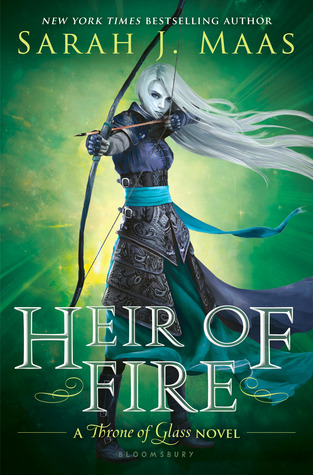
Heir of Fire - Sarah J. Maas (Throne of Glass #3)

Heir of Fire (Throne of Glass, #3)I have to admit, Sarah J. Maas surprised me with this one.

At first, I thought I was going to hate Heir of Fire.  The book starts with heroine Celaena, an unstoppable assassin and secret princess, yadda yadda yadda, basically reduced to the status of a drunk wallowing in her own self-pity.  This is not a flattering depiction, obviously, and since Celaena spent most of the first two books in the series entrenched in a "woe is me" act, I was convinced that I was about to see an escalation of it on a massive scale.  This did not hold much appeal to me, and I actually put the book aside for a bit to read something else because I was so frustrated.  But I've always thought that Celaena's story as a whole had a lot of potential, even if the girl herself was pretty much insufferable, so I went back and started reading again.  And what do you know?  I liked it.

Heir of Fire finds Celaena in Wendlyn, the continent across the ocean from Adarlan.  She's been sent there to kill the royal family and find a way for Adarlan to invade through Wendlyn's supposedly-impenetrable barrier reefs.  Instead, she has decided to wallow in her self-pity for not being able to save her friend and her country and all of the stuff that happened in her childhood and Crown of Midnight.  But then!  But then Rowan, a Fae under the orders of Celaena's many-times-great-aunt Maeve, the Fae queen, shows up and drags Celaena off to meet Maeve herself, who tells Celaena she'll answer her questions, but only once Celaena proves herself worthy by mastering her magical abilities.  Maeve sweeps off, and Rowan starts trying to whip Celaena into shape.  For the most part, this is not an interesting process (which is probably why Maas bulked it out with all the other story lines) but the idea behind it is fascinating, because this is where I think Celaena actually started to become a likable character.  It's like Maas realized how insufferable Celaena was and spent the later half of Crown breaking her down so that, in Heir, she could rebuild her.

Granted, this isn't an entirely successful rebuilding.  When I finally got to the deep, dark thing that Celaena swears will make her snap if she faces it, I was left going, "Huh?  That's it.  Lame.  So many worse things have happened to you, and you've done so many worse things yourself, and that's your dark secret?"  She certainly still has her whiny, bitchy moments, her extreme pettiness that hurts the people around her for really no reason at all.  But for the most part, I think Celaena has actually become a character with potential and who can carry a story all on her own, without the need of a cast of characters supporting her every action--a transformation that was necessary because she was the only main character in Wendlyn.  Everyone else was still back in Adarlan.

Let's talk about those Adarlan people for a minute.  We have Chaol and Dorian, of course, at odds after the events of the second book, but we also have three new characters: Manon, the heir of the Blackbeak clan of Ironteeth witches; Aedion, Celaena's cousin who is now one of the King of Adarlan's prized generals; and Sorcha, a healer who works in the palace.  As things begin to unravel and wind together at the same time, we learn that Manon's job of becoming a wyvren rider, along with the rest of the Ironteeth witches (who were very cool in general) might be revealing her to have more of a heart and conscience than she would like to admit; that Aedion isn't all that she appears; and that Dorian isn't still hopelessly hung up on Celaena, which was nice to see.  I like when characters have relationships that don't work out, and move on to other people, because that's how life is.  In the first two books of this series, I really felt that these other characters were the people who made the story likable in the face of Celaena's awfulness; now, however, I found them to be, overall, pretty boring, and I always wanted to skip ahead to see how Celaena's transformation was going instead.  There were some intriguing bits in Adarlan, mostly at the end, but the Adarlan-based stories weren't nearly as compelling as the process of Celaena actually becoming a heroine.

I also think that this book could have ended about fifty pages sooner, total.  There were some really dull denouement bits at the end for all the story lines, and while some interesting things happened, I think they could have been backed up into the earlier parts of the book and the boring bits chopped without it really suffering any damage at all.  I guess Maas didn't want to leave readers with a cliffhanger, which I respect because cliffhangers are the worst, but I think it could have been worked out to have a conclusion, if maybe an implied one, without all the outright revelations at the end.

Still, I think this book was much stronger than the first two on the basis of Celaena alone.  The story greatly diverged from the Fictionpress version here (which made me a little sad, because I liked poor crazy Cindrillion, who dressed her mice and bird friends by breaking their limbs so that they'd fit into the clothes she made them; disturbing, yes, but also an interesting Cinderella dynamic) but I understand why Maas is going farther and farther away from the draft, still taking a few key things that happened but weaving what's pretty much an entirely new story from them.

I just wonder if the ending will be the same...

4 solid stars out of 5.

Monday, February 15, 2016

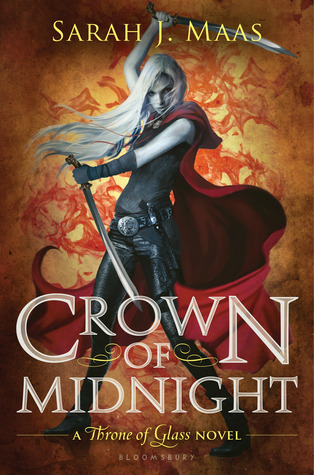
Crown of Midnight - Sarah J. Maas (Throne of Glass #2)

Crown of Midnight (Throne of Glass, #2)I am so torn on this series.  Granted, I'm two books behind everyone else--book five should be coming out in September--but I have a pretty good memory of the original Fictionpress draft, and the similarities and differences continue to confound me.  But even without that, there are things I absolutely love about this book--which I do consider to be better than Throne of Glass--and things which frustrated me to nearly no end.

In Crown of Midnight, we pick up with Celaena in the months after she won the competition to become the King's Champion, which basically means his pet assassin.  Celaena isn't really thrilled at being his pet assassin, but it's better than being a slave, sooooo...  The King has her chasing to and fro all over the country, killing off people he considers to be his enemies.  Except, we quickly learn, she's not actually killing them off, but faking their deaths and allowing them to escape under assumed identities.  And then there's the mystical, dead queen who wants her to figure out the king's source of power and put it to right, and her complicated relationships with Chaol and Dorian, and... Yeah.

So, I'm going to cut to the chase her and throw out my two main frustrations with this series so far, which are both Celaena.  One of them is about her personality--the other is about her in a more abstract sense.  So, first.  Celaena is so stupid.  I can't get over this.  She's made out to be so clever, such an expert at everything she does, but despite all her knowledge, all her training, all her experience, and everything lurking in the past and in the present around her that she is aware of, she continues to make stupid decisions to trust people who are obviously wrong, to ignore things that are right in front of her, and to blunder right into dangerous situations with little to no preparation.  Granted, there are a few situations, such as a rescue, that she went into with the right mindset...but she wouldn't have had to if she'd used her brain a little more in the first place, and she continues to make the stupid decisions going out of it.  Celaena's purported knowledge and expertise and her actual behaviors in the book are completely at odds with each other, which is immensely frustrating.  Oh, and Celaena still hates on all women who aren't herself and Nehemia, which is also very annoying.  Because how dare other women admire the hot, eligible captain of the guard, right?

Second is the concept of Celaena as a larger character.  Here's the problem: she's supposed to be the world's most famous assassin, but she doesn't actually assassinate people.  She does kill a couple of people, but they are people who are completely, indisputably bad.  This means that, for all Celaena is supposed to be a morally ambiguous character, she really isn't.  There is, of course, a larger writing dilemma here: how do you write a character who is a functional assassin, who kills the people she is contracted to kill even if they're good and don't deserve to die, but still have a likable character?  Can you?  I think so.  I think it would be a challenge, but I think it's possible, and that such a character would be compelling in a way that Celaena just isn't.  All of her machinations to preserve people's lives are admirable, but they weaken her claim to being a great assassin because it means that it's all just hype, not fact.  When we can see this, it lessens her claim to greatness and makes her just a phony.

That said, I do admire how much Maas is willing to put Celaena through.  An event that I remembered from the original draft happened in this book, and I am so glad it did, because it really darkened the tone of the series overall.  Watching Celaena being hit by event after event after event is interesting, even if she doesn't ever really learn from them.  I think there's an interesting world lurking here, too, and that there are some good elements Maas can draw on.  The Ironteeth witches are intriguing, in particular, and I hope to see more of them (and maybe the other witch clans) in the later books.  Celaena's romances (while frustrating because everyone loves her) are well-written in the sense that they're absolutely delicious, and Maas isn't afraid to have her go through more than one relationship; there's not (so far) a "one true love" component here, which is the case in so many young adult books.  Celaena was with Dorian in the first book, and broke it off at the end; in this book, Maas builds up her relationship with Chaol.  Dorian is still interested, but it isn't an active love triangle because Dorian takes one for the team and steps aside, so there's no actual competition.  The way the relationships between these three evolve is great, and I really liked seeing how the dynamics changed throughout the book.

So, here's what I'm thinking: I'm going to continue to read the series, but I'm going to cut my losses and presume that Celaena will never be a really compelling main character.  The supporting characters and world are far more interesting than Celaena herself.  Her story is crystal-clear from the beginning, unlike everything else, and it's for those other, unknown elements that I'll keep reading.  Celaena doesn't have the ability to carry a series on her own, but she has a lot of other things going to bolster the books and keep me interested, so I'll continue to read...and ultimately, I guess that's what the author (and the publisher) really care about.

3.5 stars out of 5.

Wednesday, July 8, 2015

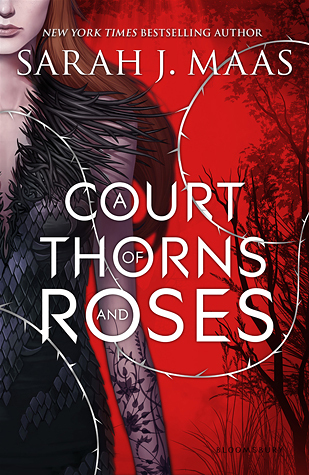
A Court of Thorns and Roses - Sarah J. Maas (A Court of Thorns and Roses #1)

A Court of Thorns and Roses (A Court of Thorns and Roses, #1)I'm a Sarah J. Maas hipster, by which I mean that I liked her before it was cool to like her, back when she had a real doorstop of a book called Queen of Glass posted on Fictionpress.com.  That doorstop is now the best-selling Throne of Glass series.  After reading the first one, I found that I didn't like it as much as I had the original draft, which was much darker (at least in my memory) and, while A Court of Thorns and Roses looked beautiful, I was leery about reading it because I didn't want to be disappointed again.  But then a friend read it and gave it four stars, and so up to the top of my list it went.  And was I disappointed?  No.  No I was not.

The plot follows Feyre, a human girl who is spirited off to the faerie realm of Prythian after she kills a faerie wolf one winter day.  In Prythian, she lives on the estate of Tamlin, a High Fae lord with the power of shapeshifting into the form of a beast.  Feyre aches to return to her village and her family, whom she promised to care for, but slowly becomes sucked into the world of Prythian and into Tamlin's life.  But when a magical blight threatens Prythian and everything beyond it, Feyre is both terribly out of her depth and the world's only hope for stopping the blight before it destroys everything.

A Court of Thorns and Roses is supposedly based off of Beauty and the Beast, and I can see that; however, I think it falls in more closely with another fairytale, East of the Sun and West of the Moon, which features a more active heroine.  In fact, Thorns and Roses reminded me of a lot of my favorite books: the faerie world, so beautiful and terrible, of Holly Black's Tithe, the overall plot structure of Dennis L. McKiernan's Once Upon a Winter's Night (STRONG resemblance there), the same "mortal falls in love with immensely powerful immortal" vibe as N. K. Jemisin's The Hundred Thousand Kingdoms, and an overall feel like that of Kristin Cashore's Graceling and Rae Carson's Girl of Fire and Thorns.  This was a very good thing, because it meant I really liked this book.  Did I absolutely love it?  Well...not quite.  For most of the book, I did.  But I felt like the ending left something to be desired.  It's obviously sequel-bait, and I have a nasty feeling that Maas is setting up the future books to include a love triangle, which I feel doesn't work well with the dynamic established in Thorns and Roses.   I found the plot setup and writing truly lovely, but that ending makes me dock a star.  I don't like eyeing future books with apprehension because of the way one ended, and that's exactly what happened here.  I don't feel like this quite ranked up there with Graceling and Girl of Fire and Thorns, but it was certainly very, very good.

4 stars out of 5.