Pages

Showing posts with label chick lit. Show all posts

Monday, June 11, 2018

The Unimaginable - Dina Silver

The UnimaginableA beautiful cover and convenient timing left me in the mindset that The Unimaginable was going to be something like Station Eleven--not in topic, because the book summary made it very clear that this was nothing like Station Eleven, but for some reason I had it in my mind that this would have the same beautiful writing, construction, and love of life that Station Eleven contained.  Unfortunately, this was not the case.

The story is about Jessica Gregory, who moves to Thailand in the wake of her mother, who she never really got along with.  She has a job teaching English and gets another job at a bar.  After a few months of this she has three weeks of vacation and decides to look for an adventure by crewing on a boat for a long distance sail, despite having no sailing experience or really any sense in her head at all.  She also falls immediately and conveniently in love with a man almost twice her age who really doesn't want anything to do with her, but of course as soon as she bats her eyelashes at him he falls in love with her, too, despite being in mourning for his deceased wife, and takes her on as crew essentially so he can get around to boning her.  And then, of course, come the pirates.

The writing here is sloppy and the romance is eyeroll- and gag-worthy.  I am an avid reader of romance, but this is not good.  The chemistry is nonexistent, the sex scenes sloppy and deserving of nothing more than cringing.  Despite going into detail, it's ultimate unclear whether Jessica--our narrator--even gets to have a decent orgasm.  Poor thing.  The danger, despite being very real, is completely overblown.  And though the entire book builds up to it from a brief--very brief--prologue, it only lasts about fifteen pages and then is over, and the focus of the book is back to Jessica mooning over Grant, in a relationship that seemed more than a little skeevy to me, mainly because Grant just kept putting Jessica off and wouldn't emotionally commit to her, even for a little bit, but was perfectly willing to fuck her all the way across the Indian Ocean.  Ew.

This is also one of those books where the heroine, despite wanting adventure in the great wide somewhere a la Belle, promptly gives up everything when she meets the hero.  This bothers me in any context, but in contemporary books more than in historical ones, because in times like the Regency era women were taught not to have expectations or dreams and, if they did, to give them up to men.  A modern woman should know better than this.  If what Jessica had wanted was to be a wife and nothing else, then fine--that's a woman's prerogative.  But to claim she wanted adventure and to teach and see the world and not be one of the women from her hometown who just got married and gave up on life, and then to immediately abandon everything in favor of mooning over a guy who has literally said three sentences to her.

The pacing is also awful, and the writing itself is terrible.  It's full of sentences like, "And the, on the Imagine, came...the unimaginable.  You can just tell that Silver wants us to gasp and clutch our pearls and be so dismayed by the drama, but I really didn't care about any of the characters and so this ploy was completely unsuccessful.  There is only one remotely dismaying thing that happens in the book, and it has nothing to do with Jessica or Grant.

There is an author's note at the end of the book about where the story--and all of the character names--came from.  While the origins are remarkable, tragic, and worthy of their own story, this particular story did not do them justice, not in any way.  I would not recommend this, nor will I be picking up anything else by this author in the future.

1.5 stars out of 5, and that's only for the setting.

Friday, March 16, 2018

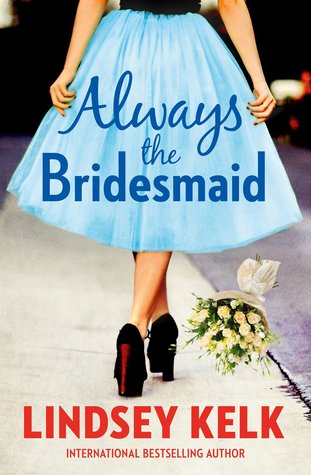
Always the Bridesmaid - Lindsey Kelk

Always the BridesmaidThis is a book that was on my radar for a while because I kept seeing it on the DC library's Overdrive page.  There was always a waitlist and it wasn't something I wanted to use a hold on, so I just waited until it eventually came up as available.  It looked like it was going to be a romance, something along the lines of 27 Dresses--so, light and fluffy but still enjoyable for what it is.

Upon reading, it's actually chick lit.

Oh, chick lit.  It seems like a derogatory title for a category of books, but ultimately, it fits them.  They're basically entirely fluff.  There might be romance and friendships, but none of the emotional connections ever seem to ring true.  It's mostly women who are at a low point in their careers bumbling around and wondering why everyone is doing so much better than they are, wondering why they can't get a man, and so on and so forth.  Don't get me wrong; this can be fun.  They're typically reads that only take a few hours and watching some other person bumble through life can honestly make you feel a little better about yourself.  They are good reads for the pool or the beach with some yummy snacks.  For some reason, the ones that I've encountered also seem to predominantly take place in Britain, which means that there's British slang and they spend a lot of time drinking tea and everyone just seems charming.

Unfortunately, this one really didn't hit the spot.  Mainly because Maddie is an idiot.  (This is, unfortunately, another feature of chick lit books, but it seemed particularly egregious here.)  She meets a guy at a wedding she's working, takes him home for a one-night stand, and then continues to pursue him even when it is gratingly, blindingly clear that he is only interested in her for sex and she is not his girlfriend, as she has deluded herself into believing.  Also, girl appears to be wearing mismatched shoes on the cover, so perhaps her mind-boggling obviousness shouldn't come as that much of a surprise.  She lets literally every single person in her life walk all over her, so she's without much of a spine as well.  Her friends are not friends at all, but rather people who take advantage of her again and again--though she takes advantage of them as well, so maybe all's fair play on that matter.  Either way, it seems like it's not really a group of "friends."  Her family is universally horrible as well.

There's a small actual romance element in this book (other than the hooking up) but it didn't ring true in the slightest.  Maddie talks to him for about fifteen minutes total on a couple of separate occasions and suddenly he's willing to drive miles and miles to pick her up, declares he loves her, etc.  This does not say "romance" so much as it says "unhealthy fixation."

Overall, this was a book of self-centered and selfish people who I wanted to push in front of a double-decker bus for much of the book.  Maddie has a few cute moments, there are a few moments of connection, but they couldn't redeem the slap-worthy behavior taking up most of the pages.

2 stars out of 5.

Wednesday, October 18, 2017

The Loveliest Chocolate Shop in Paris - Jenny Colgan

The Loveliest Chocolate Shop in ParisWhat a quaint book.  With a simple plot and colorful characters, it was a nice and light weekend read.  The story is about Anna, a chocolate taster at a factory in England, who loses two of her toes when a chocolate vat falls on top of her.  While she's recovering, she shares a hospital room with Claire, her former French teacher who once again endeavors to teach her the language.  Claire hooks Anna up with a past acquaintance--or more--of hers who owns a chocolate shop in Paris, and off Anna goes (once she recovers) on a new adventure.

Anna's adventure in Paris working in the chocolate shop of Thierry Girard, which is nothing like the industrial chocolate operation she interacted with in England, is charming.  She repeatedly crosses paths with Thierry's estranged son, Laurent, who is also in the chocolate business.  She deals with her over-the-top coworkers and Thierry's nasty wife.  And interspersed with this story is Claire's story, of going to France for a summer as an au pair when she was a teenager to have some freedom from her overbearing father and meeting Thierry herself.  Claire's story also has a contemporary component, as she fights cancer and ponders returning to Paris one last time before she dies.

The story was quaint and will, of course, make you want to eat chocolates.  However, it is very surface-level.  The cover sports a Sophie Kinsella quote, and this is definitely similar to Kinsella books.  Anna has a newly-deformed foot but, despite admitting that she knows nothing about actually making chocolate--machines did all of that at her previous workplace--she comes to the rescue of the chocolate shop and, while she's not a master, surpasses her two more experienced coworkers very quickly.  She has a romance with Laurent that doesn't seem like it is insta-love, but then at the end it apparently was, even though it wasn't?  Either way, it's still only based on a handful of encounters, only one of which has any real emotion tied to it.  Claire and Thierry seem to have a sizzling romance, but nothing ultimately comes of it and, in the end, it's a bit disappointing.  And of course, Claire's terminal illness means that this book isn't quite as fluffy as one would think from the cover of the book.

There are a handful of recipes included in the back of the book, mostly for different kinds of chocolate cake; I didn't try any of them, but they seemed fine at a quick glance.

Overall, Paris is lovely, the story is quaint, but it's very surface-level and lacks any sort of deep emotion or resonance.  I liked it, but it was nothing extraordinary and won't have me rushing out to buy Colgan's other books.

3 stars out of 5.

Wednesday, August 30, 2017

Heartburn - Nora Ephron

HeartburnThis book is essentially the epitome of chick-lit.  Dating back to the 80s, it's apparently semi-autobiographical; the main character, Rachel, is pregnant when she finds out that her second husband is having an affair, which evidently parallels some points of Ephron's own life.  I've never actually seen a Nora Ephron movie, at least not all the way through, and had no idea who she was before starting this, so this is my first real judgment of her.  And it wasn't pretty.

Heartburn reads not so much as a novel or a story as a long, rant-y journal entry that goes on and on and on about being Jewish, the lack of delicatessens in Washington, DC, hatred for Washington (the city, not the government) in general, and basically about how awesome Rachel is and how scummy her husband and his mistress are.  Rachel writes cookbooks, or books that involve recipes, for a living, and also appears on TV to demo said recipes.  Recipes are spattered throughout the book but the really good-sounding ones, like the bagels and lox and eggs, aren't given; instead she gives recipes for stuff like crispy potatoes.  But the main thing that dragged this book down for me was that I didn't like Rachel.  Yes, being pregnant and finding out that your spouse is cheating on you would suck.  But Rachel knew her husband was a cheater before she even married him; this wasn't the first time he'd had an, erm, indiscretion.  Cheaters gonna cheat, girl, and you should have known what you were getting into--especially because it was the second marriage this had happened to, though she wasn't pregnant in the first one.  And, though I allow that she's upset, she deals with her emotions like a passive-aggressive child rather than a functional adult.  For example, she notes that she and her husband keep their finances separate, all the time, and yet when he doesn't pay for her plane ticket, she gets pissed off at him.

Meryl Streep reads the audiobook edition of this and, while she is an excellent narrator, even she can't make Rachel truly likable.  I was glad that the book ended the way it did, because at least it showed some backbone, but honestly I just didn't like it overall.  Apparently it's also a movie that Meryl Streep stars in as Rachel, which is a good deal better than the book.  I should hope so; the book itself is vapid and eye-roll-worthy and isn't even really good as a trashy beach read, which is what it had been recommended to me as by the folks over at Buzzfeed.  Liars, Buzzfeed.  Liars.  Meryl Streep is too excellent to waste on a vapid movie, so I hope my fellow reviewers are right about the quality of the movie over the book.  It just feels like Ephron wanted to vent about this failing of her marriage--but that doesn't mean she had to put it out there for everyone to read.  Additionally, there's some incredibly racist stuff in here--she actually refers to a Latin American woman as a "refried taco," which is just--really?

2 stars out of 5, and that's mostly for the recipes that were included and how Ephron talks about food in general.

Sunday, February 12, 2017

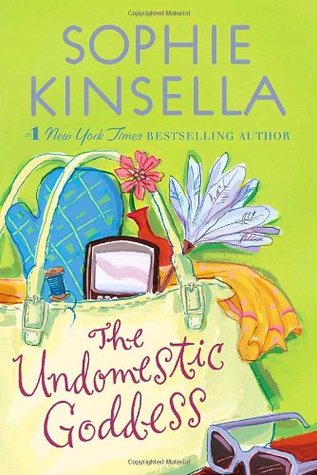
The Undomestic Goddess - Sophie Kinsella

The Undomestic GoddessOkay, so, Sophie Kinsella is pretty much the epitome of the "chick lit" genre.  According to Goodreads, chick lit is "genre fiction which addresses issues of modern womanhood, often humorously and lightheartedly."  But that's a very generous definition and is more like generic women's fiction.  Chick lit more specifically tends to focus heroines without a brain in their heads, who get into all sorts of trouble because they can't communicate adequately, proceed to blame all those problems on other people instead of themselves, and then frequently turn to drinking to "solve" said problems, until they stumble across a hunky guy who sweeps them off their feet and inspires them to fix themselves.  It's often incredibly painful to read.

It's also one of the featured genres in the Unapologetic Romance Readers' 2017 reading challenge (info here).  So, when it came time to put forth nominations for our February book of the month, I tossed Kinsella into the ring.  If I was going to read chick lit, I was going to bring fellow sufferers along for the ride.  And it won!  Apparently others felt the same way, and someone also mentioned that, as far as chick lit goes, Undomestic Goddess isn't that bad--probably aided by the fact that it's a standalone novel and not part of a series, which would just draw out the suffering.

So off I went, along with heroine Samantha Sweeting, a high-powered lawyer at one of London's top law firms.  She's on track to become a partner, the thing she's always dreamed of and has dedicated the last seven years of her life to.  And then, following a terrible birthday, she discovers that she's made a terrible mistake, one that could cost her firm fifty million pounds...and before she can fix it, everyone else has found out, too.  In shock, Samantha flees London and ends up in a little village where, looking for a drink of water and some headache medicine, she's mistaken as an applicant for a housekeeper position for the Geigers.  Trish and Eddy Geiger have a ton of money and not an ounce of sense in their heads.  They're a perfect match for Samantha, who has a ton of money and law sense but not an ounce of common sense.  Seriously.  The woman can't make anything more complicated than toast.  She doesn't know the difference between flour and baking soda.  She can't iron a shirt, or even turn on a washing machine.  I have no idea how she survived to adulthood, honestly.  And yet she, of course, does not enlighten the Geigers to their mistake, and decides she's just going to go along with the whole thing.  Even though she has no idea what she's doing.

Luckily, this entire "completely useless" phase doesn't last too long.  Nathaniel, the Geiger's gardener, quickly figures out that Samantha is faking, and out of the goodness of his heart offers to get his mother to help Samantha figure out what she's doing.  Samantha is evidently actually gifted when it comes to cooking, because she of course learns to cook gourmet meals in the space of two days, in addition to learning to do everything else that she never learned to do as a child or adolescent or even adult.  And of course she gets close to Nathaniel to boot.  But despite Samantha doing her best to let go of her huge mistake and the disaster it left in its wake, she can't help but picking at it, and picking at it, until she finds something that might put an end to her little idyll in the country... But is that a good thing or a bad thing?

So, after Samantha learned to be a functional human being, the book got a lot bigger.  She definitely still made some bad decisions, like not telling anyone the truth about how she got there (instead she lets everyone think she's fleeing an abusive relationship) but, to some degree, I can empathize with her decisions.  I definitely still think they're stupid, but I can totally understand her feeling like the events in London are seen through a fog or feel like a bad dream, and wanting to just not think about it as much as possible.  I think that empathy really helped carry me through the book.  Also, Nathaniel was pretty great.  He's a gardener, but he also has strong ties to a family business, and I think his reactions to Samantha's revelations and decisions later in the book were what they should have been for this book, without being totally unrealistic.  Also, I think Kinsella does a good job of creating the little town that Samantha ends up in (I can't remember the name of it) and making it into an escape...while still showing that it's not all sunshine and daisies.

So, yes.  This book got off to a very rough start.  It had some very over-the-top moments.  But I think its core was a strong story, and it was enjoyable.  Would I read it again?  Hm... Maybe, actually.  But it'd be like a fluffy summer beach read, and I'm not sure it's turned me back onto Kinsella's other works.

3 stars out of 5.

Monday, February 29, 2016

Little Beach Street Bakery - Jenny Colgan (Little Beach Street Bakery #1)

Little Beach Street Bakery (Little Beach Street Bakery, #1)This is a book that undeniably falls into the category of "chick lit."  That is, a category of light, fluffy reads that might have like, two serious moments in them, but feature heroines that charm everybody who meets them and are unfairly trodden upon, but win upon the masses with their spunk and good looks, get the guy, and turn their lives (which typically start in some sort of dead end) into ones that anyone would be jealous of living.  In this case, that heroine is Polly.  She and her boyfriend Chris ran a graphic design company that failed, leaving them bankrupt.  When the bank seizes their assets, including their flat, Polly is left looking for somewhere else to live.  The only place that she can find that's in her price range and isn't absolutely terrible (only a little bit terrible) is in the town of Polbearne, which sits on a quasi-island that's connected to the shore by a causeway at some times and is cut off by the tides at others.  Due to this quirky feature, Polbearne is pretty much deserted.  Polly moves there anyway, hoping for inspiration to make a change in her life, and begins spending all of her time baking breads, which turn out to be illicit because the proprietor of Polbearne's only bakery is also Polly's landlady and isn't very nice about Polly threatening her business.

There are romance plots here, two of them, which Colgan handles by just writing one of them out of the story altogether in what seemed like something a little too convenient and a little too overwrought, something clearly designed to yank at a reader's heartstrings.  The other one isn't really every developed; it's just suddenly there, and then gone, and then there again, and then gone again, and then there again.  All the see-sawing got a little annoying after a while; I didn't see any real point to Polly's stint in America and think the plot would have been better served by eliminating that entirely.  As it was, I was left wishing the characters would just make up their minds already so we could get on with everything else.  The supporting characters in this were charming, though Polly was, in the manner of chick lit heroines, a bit too annoyingly perfect.  All of the problems that came her way were someone else's fault; her bankruptcy was the fault of her boyfriend, her persecution the fault of a bitter old woman (Colgan pretends that other people on in Polbearne treat Polly like an outsider, but they really don't), her second failed relationship the fault of the other party, and so on.  Polly never actually has to take responsibility for her own decisions--but then again, she never makes a bad one!  This is the kind of fluffiness I'm talking about when it comes to chick lit; the few darker moments are just thrown in by outside forces and have minimal lasting effect on the heroine.

As an American, I also can't help but be a little affronted at how Colgan portrayed the American characters in the novel.  Is that what she thinks Americans actually act like?  Is that what she thinks we talk like?  Polly makes light of this at a few moments, but the joke is ultimately beaten to the point of a dead horse, and while the other supporting characters at least have a couple of dimensions to them, the American ones are pretty much cardboard cutouts of stereotypes, which seems a bit unfair to me.

Honestly, the most interesting part of this book was Polly's struggle to do her own thing regarding her bread and then, ultimately, the bakery itself.  This part came across as more realistic than the relationship aspects, and it was absolutely mouth-watering at times, making me want to go off in search of some focaccia myself.  I ultimately had to settle for a rosemary boule and some whipped garlic butter from Whole Foods, but still--I love books with a food aspect, and Polly's breads, while simple, sounded utterly delightful.  Added into the quaint atmosphere of Polbearne, I think this could have been a really strong book without the love triangle pieces--in fact, probably stronger than it was with them.  This book had its charming points, but ultimately I don't think it had a compelling enough story or characters to make me really want to seek out the sequel.

3 stars out of 5.

Monday, March 23, 2015

The Last Original Wife - Dorothea Benton Frank

The Last Original WifeThe cover of this book had me dreaming of tropical locations and days on the beach.  I'd hoped it would read something like Barbara Delinsky's Sweet Salt Air, which was a drama I rather liked.  But it didn't.  And I didn't like it.  We're presented with two narrators, Les and Wes.  Les is unhappy in her marriage, for a lot of reasons, most of them having to do with Wes.  Wes' friends have all recently gotten divorced and remarried (or, in one case, widowed and remarried) and Les hates their new wives.  She calls them Barbies and thinks that they're stupid and sluts.  She thinks Harold is an asshole for cheating on his (now ex) wife and is pissed when it's hinted at that Wes might have cheated on her during a trip to Atlantic City.

So what does Les do?  She goes and does the exact same thing and cheats on Wes.  But apparently we're supposed to think that it's okay for her to cheat on him, because she was unhappy.  It's never okay to cheat on someone, unhappy or not.  If you're unhappy, you either need to work it out or break it off.  Not be a vapid, hypocritical bitch who thinks more about what her brother's dog is wearing than the effect that a divorce might have on her family.  And then it's all tied up in a neat little package, happily ever after, la di da.  What?  No.

I hated everyone in this book except Danette, who was the best person of the bunch.  Everyone else was a bunch of hypocritical, stereotypical bastards.

Oh, and the amount of dialogue drove me crazy.  All Les ever does is complain and shop.  That's it.  There is more to life than that!  Uuuuuuugh!  And there were some great settings that were completely underutilized, too.  Atlanta and Charleston (particularly Charleston) have so much character, and our author just ignored that completely and moved Les around like she she didn't have a single brain cell to her name.  If you want me to root for the main character, there has to be some redeeming quality.  Les had none, and Wes had even fewer.

Completely frustrating.  One star.  This is why "chick lit" has a bad name.