Pages

Showing posts with label j. k. rowling. Show all posts

Saturday, October 7, 2017

Harry Potter and the Goblet of Fire - J. K. Rowling (Harry Potter #4)

Harry Potter and the Goblet of Fire (Harry Potter, #4)Oh, Harry Potter.  So wonderful and yet so full of flaws.  Continuing my re-read of this series, a book at a time when I need something a little different, I've finally gotten to the fourth volume, Harry Potter and the Goblet of Fire.

The third book was somewhat of a break from the direct Harry vs. Voldemort conflict, but Rowling doesn't waste any time getting back to things here, diving right in with a foreboding scene hinting at Voldemort's actual return and his direct targeting of Harry.  But then things recede for a while as Harry returns to school and finds himself inadvertently entered into the Triwizard Tournament, possibly because they want him dead.  The book is padded out with the Quidditch World Cup (to make up for a lack of quidditch as a whole) and a house elf rights campaign by Hermoine.  Oh, and a vicious stream of gossip by Daily Prophet reporter Rita Skeeter.

Overall, this is a fun book.  It's the first "long" Harry Potter book, but before the series takes a darker turn starting in Order of the Phoenix.  The Triwizard Tournament is of course a highlight, particularly because it brings in other schools in the wizarding world, which we didn't know about before this point.  The tasks are new and interesting, and there are a new cast of supporting characters to match them, like Mad-Eye Moody, Viktor Krum, and Fleur Delacoeur, in addition to some of the Weasleys we haven't seen before.  But while Rowling has a fun book and one that works to get the plot back on track after the detour it took in the third book, there are still so many questions that, reading it years after the first (and second, and third) times through, I couldn't dislodge.

Like why is Harry allowed to just run around all year?  If the antagonist lurking in this book wanted to save Harry for Voldy to kill himself, why not just nab him, curse him, whatever, and keep him stashed until the appropriate time?  This is the main thing that dogs me throughout the entire book.  There are so many opportunities for Harry to be "taken care of" that don't require him being in the Tournament at all, and so the Tournament clearly is meant to serve purely as fan service for readers.  In addition, I am baffled by how easily Harry's concerns and stories about Voldemort are dismissed by everyone except his core handful of supporters, namely  Ron, Hermoine, Sirius,and Dumbledore.  Harry has repeatedly been proven to be a reliable source, and yet every gossip column that Rita Skeeter puts out seems to destroy his credibility, even among students at Hogwarts, who should know better.

And why are Slytherins (other than Malfoy, Crabbe, and Goyle) repeatedly characterized as evil?  There doesn't seem to be a point...?  Slytherins are supposed to be cunning, but making them into the "evil" house whereas the others are all "good" really seems to be a very shallow characterization and one that does not fit in with Rowling's other layered pieces of worldbuilding.

However, this is still a good book.  The Harry Potter books are known for delving into issues that resonate strongly in our own world, and this is no exception.  Voldemort is not Hitler, but his policies and actions sometimes bear a close resemblance; racism is a key part of politics in this world, and we can see that even Ron, who is one of the heroes and is a good person, dismisses Hermoine's claims that house elves should have rights just like humans should, and that he views Hagrid and Madame Maxine differently after finding out about their giant heritage.  This is also where we really start to see the consequences of Voldemort's reign that we haven't seen before, like what happened to Neville's parents.  It's a hint at what's to come, but still a rollicking story in and of itself.

I'm rather dreading moving on to Order of the Phoenix, which was always been my least-favorite of the books, but I have it lined up and ready to go.

4 stars out of 5.

Tuesday, April 19, 2016

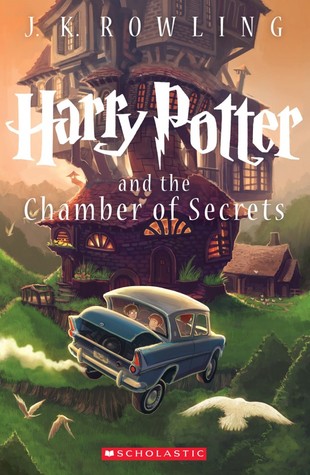
Harry Potter and the Chamber of Secrets - J. K. Rowling (Harry Potter #2)

Harry Potter and the Chamber of Secrets (Harry Potter, #2)As everyone who hasn't been living under a rock since the 1990s is aware, Harry Potter and the Chamber of Secrets is the second book in J. K. Rowling's Harry Potter series, in which the eponymous Harry Potter continues his studies at Hogwarts School of Witchcraft and Wizardry and takes on the dark magic master Lord Voldemort, as is his destiny.  What is there to say about this book that hasn't been said hundreds of times already?  Not much, so I'll make this fast.

Unlike Harry Potter and the Sorcerer's Stone, which was all I remembered it being, I didn't like Chamber of Secrets as much as I did the first time or two I read it; now, granted, the most recent time I read it was six or seven years ago, but still.  It starts off with quite a bit of re-hashing what happened in the first book, which isn't something I'm really a fan of; if you absolutely need to recap things because it's been a while since your last book came out and you can't expect people to re-read it before moving on to the second, I still think you can work in a summary in a manner that's a bit more complex than "This happened.  Now this is happening." 

Anyway.  In Chamber of Secrets, Harry goes on with school while dodging somewhat questionable "rescue" attempts by the house elf Dobby and trying to figure out what's happening to students (and a cat) who keep turning up petrified, all while hearing voices that no one else can hear.  The Defense Against the Dark Arts teacher for the year is Gilderoy Lockheart, who is absolutely fabulous in pretty much every sense of the word; not downright evil on the inside, like Quirrel was, but with his own sinister twist that makes his shiny demeanor all the more interesting.  On the other hand, I didn't like Dobby...at all.  Really.  I honestly don't see what everyone finds so endearing about Dobby.  He has terrible ideas of how to go about saving someone and honestly, nothing in this book would have been any different if Dobby hadn't stepped in; he's a minor inconvenience, at best, not an integral part of the book's structure or plot.

Also befuddling to me is why the Chamber of Secrets go opened at all.  Now, with some spoilers for everyone who has been living under a rock since the 1990s: as the rest of us know, Tom Riddle's diary ends up being one of the seven Horcruxes in which Voldemort put a part of his soul.  Somehow this diary manages to suck the life out of people who write in it, and gives sixteen-year-old Tom Riddle a semblance of life in the process.  Lucius Malfoy plants the book in Ginny Weasely's belongings, and so the whole Chamber of Secrets fiasco gets started when she begins to unwittingly pour her heart out to it.  But what does bringing back a partial, sixteen-year-old version of Voldemort actually accomplish?  Closing Hogwarts?  Was that the end goal here?  Because, honestly, that's a pretty lame end goal.  Was it to destroy Harry?  Because that doesn't really seem like it was ever going to be accomplished without Harry actually going down to the Chamber which was, apparently, not part of the plan.  Was it to bring Voldemort back?  But we know that couldn't work because the Horcrux might keep him from dying entirely, but it can't actually bring him back, we see how that is accomplished in Goblet of Fire and it's quite a bit more complex than getting an eleven-year-old to write in a diary.  I'm completely befuddled at this point.  Honestly, it seems like Lucius Malfoy did it just to be...well, bad.  And impress the Dark Lord who he doesn't even know is still around.  What?  I'm confused.  That doesn't seem like the best use of his evil energies, quite frankly.

Don't get me wrong; we all know that Rowling is a great storyteller and has some wonderful characters and world-building in her head (though sometimes I wonder how much of it was actually planned out in advance and how much she just went along with, and how much we have over-analyzed these books).  But, for this one, I feel like it was just a way to kill Harry's second year while waiting for something more interesting to come along, and that it was worked in much better later in the series than in this book itself.  Still, a quick and enjoyable read, if one that's more palatable in the context of the whole than on its own merits.

3 stars out of 5.

Friday, April 15, 2016

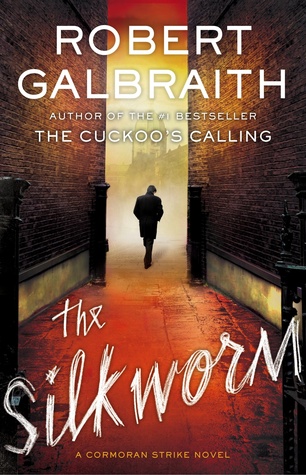
The Silkworm - Robert Galbraith (Cormoran Strike #2)

The Silkworm (Cormoran Strike, #2)Robert Galbraith, aka J. K. Rowling, followed up her first murder-mystery starring Cormoran Strike with another.  In the wake of solving the murder of Lula Landry, Strike has found himself doing much better, business-wise, even if his newfound semi-fame has its drawbacks, like reporters wanting to talk to him and people knowing who he is automatically, and making assumptions based on the Landry case.  But, a few months later, things have settled down some.  Strike is buried in piles of people who want to hire him to prove their partners' infidelities, which he's starting to find rather tedious even if it does pay the bills.  So when Leonora Quine shows up, asking Strike to find her missing husband, he's intrigued.  Owen Quine is a writer who had one good book and then a couple of rather bad ones, and now he's disappeared with the manuscript for his latest work after having a rather public fight with his agent about the book being unpublishable.  Leonora thinks she knows where Quine is, she just wants Strike to confirm it and make him come back.  But Quine isn't at a writer's retreat, like Leonora thought, and as Strike discovers rather quickly, Quine is actually dead, killed in the same manner as the protagonist of his manuscript--which has also been spread all over town and slanders rather a lot of people to boot.

As Strike works toward solving the mystery and protecting Leonora, who becomes the number one suspect in pretty straight order because of the rocky relationship between herself and her deceased husband, other things start to go wrong, of course.  The biggest of them is Robin, his assistant who was so integral to helping with the Lula Landry case and who stayed on with Strike despite numerous, more lucrative job offers elsewhere.  Robin's relationship with her fiance, Matthew, is on the rocks, and largely due to Strike himself.  Strike hasn't actually really done anything to make it this way; Matthew just seems like a jealous, suspicious person, and I did not like him one bit.  Not even when he has to deal with a death in the family.  I still couldn't bring myself to pity him just because of how awful he'd been to Robin the whole time, and Robin is my favorite character, so there wasn't much redeeming him there.  He eventually does start to come around, after he and Robin have a long talk about why she's working for Strike, and tries to be more supportive of her, which was good--but I can't help but feel that's all going to fall apart relatively soon, and he'll be back to being just awful to her all the time.  Meanwhile, Robin finds herself increasingly frustrated with Strike because she wants to be more involved in investigating cases, rather than just being an office administrator, and Strike seems to have dropped this idea despite seeming enthusiastic for it in the first place.

This plot was less convoluted than The Cuckoo's Calling, which I liked.  I didn't feel like there were quite so many angles, and I thought the smaller cast of involved characters really made for a better story.  I didn't figure out the mystery, though I did fall for the rather obvious decoy Galbraith/Rowling put in; I always do.  I would not make a very good investigative officer.  One thing that does bother me about this, though, is how Galbraith/Rowling just neglects to mention things that the point of view characters know in order to keep us in the dark.  Strike, for example, asks a friend to do something, which is basically worded as "He explained what he wanted and the friend agreed" without us knowing what the thing he wanted was in the first place.  I dislike this, because it's very obviously keeping things from the readers that we should know.  Strike knows it; why shouldn't we?  Probably because he's being built up to be a grand mastermind of mysteries, but I found it annoying when so many other things are teased out right in front of us to keep these things in the dark.  The other characters should be keeping the secrets, not the protagonist whose head we're supposed to be in.  Is this just a mystery genre thing?  I don't know, but if it is, I don't like it; I think the mystery and suspense could be perpetuated in other ways without deliberately keeping us in the dark about things that have already been discovered.

Still, this was a very good book, and I'm looking forward to reading the third.  Galbraith/Rowling just has such a way of creating situations and characters, of painting pictures with words, that I think the small sins here are forgivable.

4 stars out of 5.

Friday, February 26, 2016

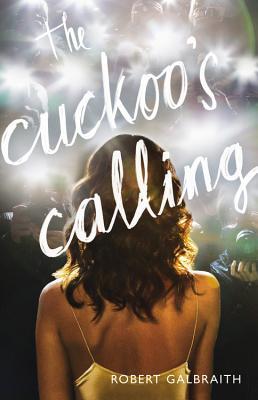
The Cuckoo's Calling - Robert Galbraith (Cormoran Strike #1)

The Cuckoo's Calling (Cormoran Strike, #1)When supermodel Lula Landray (known affectionately to some as Cuckoo) falls to her death from the balcony of her London flat, most of the world is convinced it was a suicide.  But three months later, Lula's adoptive brother turns up at the office of Cormoran Strike, private detective, and asks him to investigate whether the apparent suicide was really a murder.  Strike is skeptical, but accepts because Lula's brother offers to pay a truly exorbitant fee that will help him clear up some debts and stay in business.  His business is his home, due to a recent break-up with his fiancee, so he's really keen on keeping it.  Add into this mix Robin, a temporary secretary who decides to stay on a bit longer than planned, and about a dozen other colorful supporting characters, and you've got this book.

Now, as most of the world knows, Robert Galbraith is actually J. K. Rowling of Harry Potter fame.  This was her attempt at writing crime fiction, an attempt that I personally think had rather mixed results.  The book shot to the tops of bestseller lists, but only after it was revealed that Rowling was behind the Galbraith name.  As such, it fits my "A New York Times beststeller" category for the Popsugar Reading Challenge, but indicates that the book might not be as extraordinary as some would suggest.  I think that's accurate.

Here's the thing.  There's an intricate plot, with a lot of twisted little bits all twisted up that you can untangle in retrospect, but I don't think you really can in the moment.  That's good.  Rowling also has an amazing grasp of making distinguishable, believable, awesome characters; there was not a single character in this book that I felt was superfluous or underdeveloped.  I could totally see them all going on and living their own lives outside the scope of the main story.  This is definitely one of Rowling's talents; she showed it in the Harry Potter series, and she brought it back out to trot here.  But what she didn't do was make this a page-turner.  Every chapter serves its purpose, sure, but they didn't have me staying up later, needing to know what was next.  Most mystery/thrillers have me tearing through pages to finish as quickly as possible.  I read this one over the course of a week, which is an incredibly long time for a mystery.  It was just slow.  Strike was building things up in his mind the entire them, but we couldn't really see them, and so it seemed like not much was going on at all.  That meant that this was really, really slow.  It was good, but I don't think it's a thriller, just a normal mystery, and one that can really be picked at rather than devoured without losing too much along the way.  It's not a compulsive read, and being that I knew it was coming from Rowling's pen, I was a bit disappointed that this wasn't all-consuming.

Still, I think this was a solid book, and I'm going to continue reading them.  I really like Robin, though I'm one of those ridiculous people who hopes that she will dump her fiance and she and Strike will get together.  I know the odds of this are slim to none, but I want it to happen anyway; Robin was way too awesome of a character not to get a more prominent storyline, and this is totally how I want it to go.

3.5 stars out of 5.

Tuesday, October 6, 2015

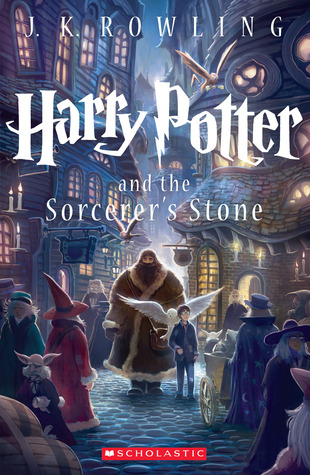
Harry Potter and the Sorcerer's Stone - J. K. Rowling (Harry Potter #1)

Harry Potter and the Sorcerer's Stone (Harry Potter, #1)Does this book even need to be introduced?  I think not.  But let me give you a little insight as to why it's appearing here, so many years after its initial publication when one more review cannot possibly do anything to influence anyone in regards to it...

So, when I was little, my mother bought me the first two books in the Harry Potter series as a reward for helping out with a family garage sale.  The third book was coming out the next day (as I remember it) so she thought it would be a good way to feed my voracious appetite for books.  These were, of course, the original US-edition hardcover editions, very different from the cover art I've posted here.  I read the first two, we picked up the third, and then settled in for the wait for the fourth.  We went to the midnight release for the fourth, and the fifth.  (Am I remembering this right?  Maybe the fourth was coming out and I had the first three...hm...)  We pre-ordered the sixth, but I ended up with two copies because I was on vacation with my dad when it came out and couldn't possibly wait a whole ten days to get the pre-ordered copy when I returned home.  And then the seventh came out, and I...never got it.  I don't know why.  I knew it was out.  It just kind of fell off my radar, and I didn't actually end up reading it until shortly before the seventh movie came out--and even then I only got the copy from the library.  Meanwhile, through forced sharing with my demonic little brother, my beautiful books had been utterly destroyed, which means they never got re-read.

Enter the Popsugar Reading Challenge and its category, "A book from your childhood."  Also enter the beautiful, paperback box-set of the Harry Potter books in which, when you line them all up in their box, the spines form a breathtaking picture of Hogwarts.  I saw that set, and I immediately knew it was a great replacement for the books that were destroyed--so I asked my boyfriend for it for my birthday, and he promptly obliged.  And, reading this for the second time ever, I'm reminded of why so many people find these books to be, quite frankly, magical.

Rowling has this very British way of writing very outrageous things very matter-of-factly, which somehow makes them seem perfectly plausible.  Neil Gaiman does this, too, and I think it's a trait that makes them so successful as fantasy authors, because this matter-of-factness just makes everything seem real.  Of course there's a school for witchcraft and wizardry lurking in the British countryside; how could I have ever thought differently?  And Rowling is, of course, an astounding world-builder.  Many have droned on and on about her worldbuilding, about all the morals these stories have to offer kids, teens, and even adults, and I won't bore you by repeating what's been said many times before.  All those people were right.  Does the Harry Potter series have plot holes?  Yes.  Yes it does.  But I don't think that those plot holes at all detract from the story.  There's just such a breathtaking world people with such extraordinary people and things that you get swept up in it all, and I don't think the holes that exist detract from that feeling one bit.  The boyfriend has never read Harry Potter (he has seen some of the movies) and I recommended to him that he give it a shot--as everyone should.  This really is an example of fantasy at its finest, with all of the beautiful worldbuilding of some of the more massive books (Game of Thrones, Lord of the Rings) but with a much higher "readability" than those doorstopper books.

4.5 stars out of 5.