Pages

Showing posts with label mystery. Show all posts

Wednesday, February 7, 2018

Do You Want to Start a Scandal - Tessa Dare (Spindle Cove #5, Castles Ever After #4)

Do You Want to Start a Scandal (Spindle Cove, #5, Castles Ever After, #4)
Our tune is that great Disney anthem, "Do You Want to Build a Snowman?"  So sing it with me now: "Do you want to start a scandal?"  The answer is, of course, yes.  Yes I do, though the characters here would probably respond with a resounding "NO!"

When I read Say Yes to the Marquess back in 2016, one of my main comments was that I didn't particularly like the main couple, and wished instead that the book had been about the hero's brother, Piers, and his quest for love after losing his fiance to his younger brother (the hero of SYTTM).  Well, it looks like I got my wish, because that is exactly what this book is.  Tying together Dare's Spindle Cover series (which I haven't read) and her Castles Ever After series (which I have), this incorporates characters from both, though I think it's probably more heavily Spindle Cove than Castles Ever After, particularly as the heroine, Charlotte, is not in possession of a castle, which was a main marker of Castles Ever After.

One night at a house party, Charlotte sneaks off in pursuit of Piers to let him know that she does not plan on marrying him, despite whatever her mother might do to throw them together over the course of the party.  Unfortunately for her, she's soon stuck with Piers behind some draperies as another, unknown couple proceeds to have sex on the desk in the library just feet away.  When Charlotte and Piers finally find a chance to make their escape, they're caught--by the son of the house, an eleven-year-old who insists Piers was trying to murder Charlotte but who gives a pretty good impression of sex sounds to an audience, including Charlotte's mother.  So Piers says he'll marry her.  But Charlotte really doesn't want to marry him, because she wants to marry for love, and becomes determined to clear her good name by finding the mystery couple before their engagement can be announced.  And the game is afoot.

The one word that I find myself using again and again in speaking of Dare's books is "charming," and this book is exactly that.  It is charming.  I love stories that take place at house parties, and this was a good example of that, though even for a house party involving a lot of guests and at least two weeks of free time, the main characters seemed to find a remarkable amount of time to have sex in obvious places--like, you know, the heroine's room that half the house has access too.  But they are never caught, of course.  But the reality of their supervised status (or lack thereof) is not the point here.  The point is that the banter is lovely and Piers is a true honorable gentleman, even when he insists that he is not.  Charlotte is clever and good at figuring things out, though Dare didn't always do the best job of showing us her train of thought and so she seems to make leaps quite a bit, though they end up being accurate.  And while Piers wants to protect Charlotte, he also ultimately acknowledges her talents, which is high praise considering that Piers is (not a spoiler) a spy.

My biggest disappointment here was that the mystery didn't end up being one.  It came down to, "Oh, it was just a misunderstanding!" when it seemed like there was going to be something truly dramatic going on in the background.  While this makes it a cozy mystery, and cozy mysteries aren't bad, it just seemed to veer dramatically from the setup that was pursued for most of the book.  A little genuine intrigue could have gone a long way to spice things up, without veering too far into outright ridiculousness, such as that one historical romance that ends with an attempted assassination by terrorists--and whose title I have evidently blacked out of my mind.  Also, I was really hoping that Frances, the bitchy sister of Charlotte's best friend, would end up getting her comeuppance, which never happened.  Maybe Delia will get her own book and it will happen there?  I would love to read a book about Delia, she seems to be imminently deserving of her own love story.

So, I enjoyed this quite a bit, a good deal more than Say Yes to the Marquess.  Was it flawless?  No.  I'm definitely not raving about it.  But it was quite good, a fun read that only took up a couple of hours, and I would recommend it for people who like light romance and cozy mysteries.

3.5 stars out of 5.

Monday, February 5, 2018

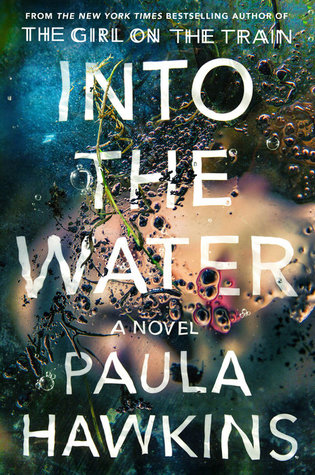
Into the Water - Paula Hawkins

Into the WaterOne of my reading challenge categories this year is a Goodreads Choice Awards Winner, and Into the Water won the category of "Mystery & Thriller" for 2017.  I also already had it as a Book of the Month extra, since I had enjoyed The Girl on the Train

The story here centers around a pair of drownings in a small English town.  Told from the perspectives of a multitude of characters, the plot tries to unravel what really happened with these drownings, who is responsible, etc.

This was not as good a book as The Girl on the Train.  While the central premise--the Drowning Pool, a place both for suicides and to get rid of difficult women--is hypnotic, there are too many point-of-view characters running around to easily keep straight.  Additionally, despite this being a mystery, there's not really a mystery here.  Why?  Because we're pretty much told who is responsible for the events here early on in the book, practically bludgeoned over the head with it for the duration of the story, and GASP!  It's supposed to be a big reveal!  Of course, there is a little twist at the end, but it was nothing earth-shaking or life-shattering.

One thing that Hawkins does get right here is atmosphere.  The small town, the rain, the river, the pool, the way that Jules speaks to her dead sister, the creepy and decrepit mill house--all of it combines for a very spooky feeling.  This would be a good rainy day read.  Or maybe one for when it's storming and the power goes out and you're reading by candlelight.  None of the characters are very likable, either, which also adds to this.  Now, I don't think that characters necessarily need to be likable for a book to be good, but if you feel differently, you might not like this very much.  The pace is slow, which I think suits the story, though the frenzy of characters sometimes makes it feel faster than it really is.

But ultimately, if this book is supposed to be a suspense or mystery novel, it fails.  As I mentioned before, the end is put out there very early on, and the little "twist" can easily be inferred from what we're outright told.  With that in mind, the book is too long by far, because we spend all of it watching the characters bumble around going "Whaaaat?" and wanting to smack them upside the head for their blindness.  By the time someone finally put it together, I was ready to drown the lot of them in the same river that was causing all of the problems.

Overall, not as good, shocking, or suspenseful as I had hoped.  The atmosphere was strong, but not strong enough to sustain the book as a whole.

2 stars out of 5.

Friday, January 26, 2018

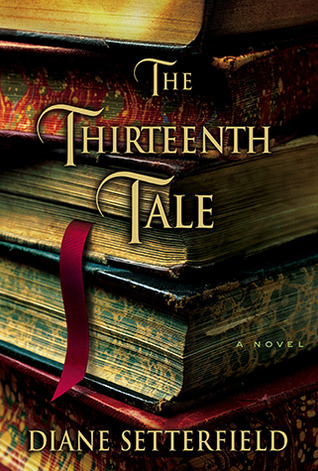
The Thirteenth Tale - Diane Setterfield

The Thirteenth TaleOne of my resolutions for the new year is actually to read less books than I did last year.  What?  I mean, in books, it's always a constant climb to the top, right?  Well, not exactly.  I read 232 books last year.  That's a lot of books.  Reading that many books takes a lot of time.  This year, while I'm still going to read a lot, I also want to spend more time focusing on my health and not making reading into a chore.  I still want to enjoy it!  That said, I still have a few reading challenges going on, and even if I cut thirty-two books out of my reading, I'd still hit two hundred, which is a pretty respectable year.  I'm trying to get more challenge books out of the way earlier this year since I have a pretty solid plan for many of categories, and The Thirteenth Tale is a book for one of those categories, namely a book with characters who are twins.

The story here is fairly simple.  Margaret Lea, our narrator and heroine, works in a small bookshop that her father owns and occasionally writes biographical snippets.  When she's contacted by the revered author Vida Winters (revered by apparently everyone but Margaret, who only reads works by authors who already dead) to write Winters' biography, she's initially reluctant, but eventually agrees on the condition that Winters, who has a long history of making up stories about herself, tell the truth.  What slowly unfolds is the story of a deeply dysfunctional family.  A pair of twins who were probably born of incest and are left to grow up mostly feral and the attempts to put them aright, leading up to the time that a fire destroyed Winters' life--as she says, she has only been biding her time ever since it.  There's a mystery lurking here, and I think it's one that the discerning reader can probably figure out.  I nailed all of it down by the end, and was pretty proud of myself for it, too.

This was an interesting book.  While the writing isn't fast-paced, there is plenty going on.  Much of it is happening in the wings, behind the scenes, and have to be teased out.  Margaret does much of this for us, over time, but it can be done before she comes to her realizations, which is a good intellectual exercise.  Her view about books is kind of stuck up--she says that she just prefers old books, but it's definitely implied throughout her attitudes and actions throughout the book that she feels like people who read modern or popular fiction somehow aren't "real readers" as much as she is.  But the book has much of the slow and almost Gothic feel that the books Margaret reveres have.  Her favorite is Jane Eyre, something she appears to share with Winters, and Setterfield herself much like it quite a lot because its influences on this book are obvious; Margaret herself points them out at several times.

I was somewhat perplexed by the subplot of Margaret feeling so lost and adrift in her own life.  I'm not a twin, so maybe it's not something that I can understand, but she feels like she's going to die because her twin died when they were both infants.  It's pretty clear what happened from the beginning, though Margaret dances around spelling it out for much of the book--and her connection to Winters ultimately felt off because, as things are not what they appear, but how they really are means that what seemed like connection isn't.  It's hard to say it better than that without revealing the twists, which I don't want to do, but that was how it came across to me.

Overall, I liked this.  It's very atmospheric and finding a truly modern Gothic seems like a rare experience, and of course I love books about books.  But some of its notes rang a little false and it also falls victim to the Gothic trope of wallowing in melodrama--but being a more recent work, it doesn't carry it off as well as its century-and-a-half-old counterparts.

3.5 stars out of 5.

Friday, January 5, 2018

Ordinary Grace - William Kent Krueger

Ordinary GraceThis was the November book for the Deliberate Reader online book club, but despite putting a hold on it well in advance (in September!) I didn't get it until mid-December, so I kind of missed out on the discussion.  Still, I wanted to read it so I was read up for the year.

This is a sort of mystery, but it's not a pavement-pounding one or one where people are getting shot or anything like that.  Instead, the main character is a twelve-year-old boy whose town is plagued by a series of deaths, some of which may or may not be murder, over the course of one summer.  Starting with the suspicious but possibly accidental death of a boy who was hit by a train, the deaths affect main character Frank and his town in different ways.  Because his father is a local minister and his father's friend works to dig graves in the town, Frank has a front-row seat to the various deaths and becomes ever-more entwined in them, particularly when one hits close to home.

This is a pretty simple mystery, and despite a few red herrings the author placed I had it figured out pretty early on.  There were a few aspects that I hadn't guessed, but none of them actually affected the outcome at all.  However, this only pertains to one death--despite Frank building up the summer of five deaths, only one of them is really relevant to the story, and another is connected but not part of the mystery.  The others were very tangential, one of them being mentioned in about one sentence at the end of the book, as if the author had forgotten he needed to include another death to get his five until that point, and then threw it in just to be done with it.

I did quite like the writing here, however; the atmosphere of a small town in the sixties is really nailed down, and all of the characters felt fleshed-out, developed, and relevant to the plot in their own ways.  Not all of them were likable, but all of them felt as if they belonged and were serving their own purposes, and had lives beyond just serving the plot, which is definitely not always the case in mysteries.  However, because this book was also a "portrait of a town" book in addition to a mystery, having all of the characters fit so well was very important to the book working as a whole.  The one thing I didn't always like was the pacing; while at some times I was intrigued and pulled along by the pace of events, at other times the flow seemed to slow to a crawl, making chunks of the book seem like they were never going to end.  Still, I liked it overall, and as it picked up speed towards the end it made quite a good airplane read.  It finishes up with a sort of "where are they now" epilogue, though, which I really hate as a literary device; the epilogue could have been structured differently or, honestly, left off entirely, and the ending probably would have been more solid.

3.5 stars out of 5.

Friday, December 29, 2017

Cocoa Beach - Beatriz Williams

Cocoa BeachDon't be fooled by the pretty colors and frothy cover--Cocoa Beach is not a book about a vacation on a tropical beach.  Rather, it's a historical novel set during World War I and during the interwar years, with a quiet menace lurking in the background and a whole posse of unreliable characters.  This book could have easily been titled Liars and the Lies They Tell but it probably wouldn't have given off the same vibe.

The book is entirely from the perspective of Virginia Fortescue, a young mother whose family has a dark secret that's just come to light and who spent World War I driving ambulances in Europe, where she met her husband, British doctor Simon.  The time period alternates between Virginia's time meeting and falling in love with Simon during the war and several years later, when they've been separated, Simon is dead, and Virginia has gone to Florida with their daughter to handle the estate of the man she hasn't seen in three years.  But Virginia doesn't quite believe that Simon is actually dead, and a whole heap of things suggest she might be right--and even if she's not, there was definitely more going on with his death than just an accidental house fire.

I really enjoyed this book.  Trying to figure out which characters were telling the truth and which ones were lying was an interesting endeavor.  I guessed some of the plot points here ahead of time, but not all of them, and there was one doozy near the end that really came out of nowhere to smack me upside the head--but still made sense in the context of the book.  The writing was very good--not excellent, but very good.  The atmosphere that Williams creates in war-torn France, in dreary Cornwall, and of course in Cocoa Beach is wonderful.  There are even some Gothic tones, particularly in the long segment at Maitland, the citrus plantation that features.  She also does a good job of making you doubt pretty much everyone; in the afterword, she mentioned that for much of the book she herself hadn't been sure of whether Simon was a good guy or a bad guy, and I could really feel that come through in Virginia's search for what happened.  That said, there were a few issues.  The "dark family secret" turns out to be nothing such; that should have been left alone, there was no need for it to be undone like that.  And then there are some weird turns of phrase here and there--the phrase "omnivorous eyes" comes instantly to mind.

Still, I really liked this.  It's a good historical mystery, but one that's not about a detective or officer, just a normal woman trying to find out what has happened to her life.  The settings and atmosphere suited it perfectly, and the juxtaposition between Virginia's near-bliss in war-torn Europe and her misery in the paradise of Cocoa Beach was very well done.  I would definitely recommend it and would even consider reading it again!

4 stars out of 5.

Friday, December 22, 2017

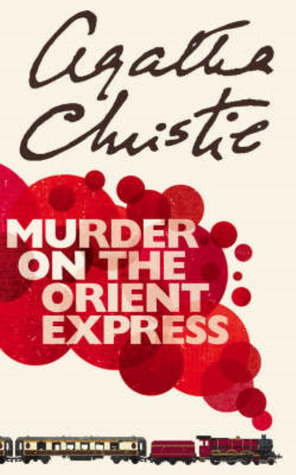
Murder on the Orient Express - Agatha Christie (Hercule Poirot #10)

Murder on the Orient Express (Hercule Poirot, #10)One of the categories that I agonized over in my 2017 reading challenge was the one for a book becoming a movie this year--mainly because there weren't really any books becoming movies that a) I hadn't already read and b) I wanted to read.  I finally settled on the classic mystery Murder on the Orient Express by Agatha Christie.  This is the tenth Hercule Poirot mystery, but you definitely don't have to have read the other ones in order to read it--I hadn't.  Hercule Poirot is basically an "any detective" of the Sherlock Holmes persuasion, solving crimes mostly by thinking about them and observing things rather than pounding the pavement, examining forensic evidence, etc.

Somehow, despite knowing what happens in all the Star Wars movies that have come out recently without having seen them, or knowing what happens in Game of Thrones without having read the books or seen the show, I've never known who the murderer is on the Orient Express, which now strikes me as somewhat strange.  But I knew it was a closed-circle mystery, which is a mystery in which the setting means that the detectives, suspects, witnesses, etc. are a limited pool that no one can join or leave because they are isolated by something--in this case, they are stuck on a train that is stranded in the mountains of Yugoslavia because it ran into a snow drift.  When a murder is discovered to have been committed, it's up to Hercule Poirot, who hopped the train to answer a summons in London, to find who the guilty party is.

This is a pretty quick read and the chapters are short, making it easy to pick up and put down.  I also think it's a good mystery because, while there is a twist, Christie puts in enough clues that you can figure it out, if you're paying attention and can maybe stretch your imagination a little.  In fact, this is one of the first mysteries where I started to think, "Wait a minute..." and while I didn't get everything exactly right, I was pretty darn close!  Considering how terrible I am at figuring out most mysteries, that made me pretty proud of myself, and I think it's also a testament to how good Christie was--after all, she wasn't the "Queen of Mystery" for no reason.  No matter how far-fetched the scenario got (and it gets very, very far-fetched) she seemed to make it work in a way that less-far-fetched plot twists in contemporary mysteries and thrillers don't seem to, purely because these more recent ones always have me going, "How did they figure that out?" whereas this made perfect sense.

Overall, very fun.  I can see why people enjoy Agatha Christie so much.  However, I'm not sure how this can be made into an interesting movie, being as it's mostly people sitting around and talking.  Maybe something a la 12 Angry Men?

4 stars out of 5.

Wednesday, December 20, 2017

Final Girls - Riley Sager

Final GirlsI wanted to read a Stephen King novel for my Popsugar Reading Challenge.  I really did.  I was aiming for the "horror" genre for the category of "A bestseller from a genre you don't usually read," and Stephen King was the clear fit.  But there was a problem, and the problem was It.  Because of the new screen adaptation of It that came out recently, every single Stephen King novel at the library had a substantial waitlist that I knew I would never make it to the top of by the end of the year.  And so I started looking for alternatives.  And then came Final Girls, which is up for a Goodreads Choice award in the horror category and which Amazon is touting as an international bestseller, and which I already had in my apartment courtesy of Book of the Month.  And so off I went.

When she was nineteen, Quincy Carpenter survived a massacre that left five of her friends dead, and has suffered from amnesia regarding the events of that night ever since.  She switched schools, graduated, and moved to New York, where she runs a successful baking blog.  She eschews her status as a "Final Girl," aka the last girl standing at the end of a horror movie, and avoids contact with her two compatriots from other massacres, Lisa and Sam--and Sam has been off the grid for the past few years, anyway.  But that changes when Cooper, the cop who found Sam and killed the guy responsible for the deaths of her friends, contacts her to let her know that Lisa killed herself, and Sam shows up on her doorstep.  And when questions about Lisa's death start to come up, and Sam continues to press Quincy for details and pushes her towards the end, nothing is certain.

I did quite like this.  Quincy is just unstable enough to make you wonder if she really did kill everyone in the cabin, though there are several possible suspects floating around besides the one who actually did the killing.  I didn't catch on to any of the twists, and while I am naturally suspicious of every single person in a horror or thriller novel (the two genres seem to have converged somewhat in recent years) I didn't peg down what was happening here.  I even nursed a suspicion that Quincy's boyfriend was the person who had killed everyone and that he'd then sought her out for a relationship because he hadn't succeeded in killing her, mainly because this was the plot of an episode of Criminal Minds that I thought could fit the circumstances here.

Quincy is an interesting main character.  She is not a good person, and whether or not that is because of the trauma of Pine Cottage is up for debate.  She seems to have had issues, potentially dangerous ones, even before that, and they come raging to the surface once Sam enters her life.  I honestly found myself upset that Quincy didn't get her comeuppance at the end; though I liked her in the beginning of the book, she did some truly awful things in the middle that I felt her trauma could not excuse, and there was a disturbing lack of consequences in regards to them.

There was a disproportionate amount of baking here for a horror novel and I felt that the actual "horror" scenes were pretty far between--the entire cabin sequence, past and present, is of course the main source of horror here, in the traditional fashion and kind of Cabin in the Woods-esque but without the larger overarching meta-story--and the pacing sometimes felt slow and more like a traditional mystery.  I frequently found myself paging ahead to the next "Pine Cottage" chapter to see how long I would have to wait to get back to what was the real exciting sequence.

Overall, this was a good book, but the pacing was somewhat uneven and I'm not really sure if it was a true "horror" novel or more of a thriller; there seemed to be some crossover at parts, though, and Goodreads says it's horror, so I'm going to count it for the challenge.  Maybe I've been thinking horror is something other than what it actually is for a while now.

3 stars out of 5.

Friday, October 6, 2017

Everything I Never Told You - Celeste Ng

Everything I Never Told YouLydia is dead.  But they don't know this yet.

What a beginning.  It sets the tone for this story perfectly: one of a family slowly unraveling in the wake of the favorite daughter's disappearance and, as we readers know is coming, death.  Lydia is the center of the Lee family, a Chinese-American teenager whose life appears to be perfect until, after her death, the cracks begin to appear.  And with those cracks spread the cracks in the other family members' lives.

The bulk of this book is actually set before Lydia's disappearance and death, showing how the Lee family got to where they are.  And in the present of the book--actually set in the 1970s--the family is slowly crumbling in the wake of their unforeseen disaster.  The alternation isn't exactly a new technique, but it really works in this case.

The story itself is really heartbreaking, and struck me for one big reason.  My edition has a cover quote saying, "If we know this story, we haven't seen it yet in American fiction, not until now..."  But we do know this story, don't we?  The story of people wanting to stand out, and to fit in, and of parents putting pressure on their children to live the lives the parents themselves wanted to live, instead of letting the children follow their own dreams.  And of families falling apart under the pressure.  Ng sets this story in the 70s, with a mother who dreamed of being a doctor but gave up on her dream when she began a family and a father whose parents immigrated from China, who has always stood out because of his ethnicity, and wants more than anything to be popular and fit in.  When both parents are unable to achieve their dreams, they focus on their daughter, Lydia, trying to make her into what they'd always dreamed of.  Lydia goes along with it, what she sees as the price for her mother remaining with her.  Meanwhile, her older brother Nath is pushed aside, despite his dreams more closely aligning with his mother's, and Lydia's younger sister Hannah is just forgotten.

I don't think there's anything particularly riveting or revolutionary about the story, the writing, or the structure of the book, but it all comes together to make a lovely whole.  There's enough uncertainty surrounding Lydia's death and Lydia herself to keep us guessing at what, exactly, happened to lead to her death.  And while readers eventually find out the answer to that mystery, there's still a deep sadness surrounding the Lee family, because we know that they will never have the same sense of closure that we do.  I think that's what really makes this book striking--it's just a combo that works, and the ending makes that "working" resonate even more.  The characters are diverse enough that I think there's someone that everyone can empathize with, in one way or another, which also helps to lend this book a sense of deep emotion that books sometimes lack.

4 stars out of 5.

Saturday, July 29, 2017

A June of Ordinary Murders - Conor Brady (Joe Swallow #1)

A June of Ordinary Murders (Joe Swallow, #1)A June of Ordinary Murders was a Book of the Month pick a while ago, and while I missed out on getting it through BOTM, I added it to an Amazon order so I could get free same-day shipping at one point.  I like mysteries with a historical setting much more than I like contemporary ones; investigation just seems so much more interesting in the days before the advanced forensics we have available now.  I mean, those forensics are great for actually solving crimes, but they typically don't make the process as fun to read about!  (Or do they?  I'm watching FX's People V. OJ Simpson right now on Netflix and maaaaan.)  This book, with its setting in Victorian-era Ireland, specifically Dublin, and the potential of a serial killer seemed to be something that would be very interesting.  (Have I mentioned I also love Criminal Minds?)

The story here follows Joe Swallow, a detective with the G-unit in Dublin.  Swallow had some success earlier in his career, but recently an unsolved crime has been hanging over him.  With the discovery of two mutilated bodies in a park and no leads to be found, and with a volatile political climate simmering all around, he feels a lot of pressure to solve the crime, and fast--but doesn't really know how.

Unfortunately, the book wasn't all I'd hoped it would be.  The setting is excellent, yes, and I rather liked the actual mystery and how it unfolded, as well.  But Brady apparently has a love for info-dumping.  While a few nuggets of information are necessary in order to get a grip on the setting and the characters--such as an "ordinary" crime just being one that doesn't have a political element--I felt he went into way too much depth sometimes.  Pages upon pages of background on characters and situations who ultimately weren't that important took up space.  For example, was the entire saga of the barge trip and how barges and locks work really necessary?  It didn't feel like it.  It just felt like the 15 minutes of stuff that would occur before the start of a Law & Order episode, and could have easily been worked into the main narrative rather than just dropped all in one place.  Episodes like this made my eyes glaze over and sometimes made it hard to continue reading the book.

Additionally, while I felt like the main crime as well-integrated into the larger story, the second crime was not.  It initially seemed like it had promise, but at the end of the book I was left going, "Really?  That's it?"  That's not a great feeling to be left with at the end of the mystery; everything with the main crime felt so neatly tied together, but for the second crime, it ultimately just felt tacked-on and unnecessary, added in for extra page space more than anything else.  Thinking back on it, I actually can't think of any way in which any of the information tied to the second crime was really integral to the main one.  It was meant to serve as a distraction, I suppose, but honestly I was just bored by it rather than distracted, as well.

Overall, this was an okay book, but I found myself bored at multiple points while reading it.  I appreciated the historical setting, but it's just a "meh" book overall.

2 stars out of 5.

Friday, March 10, 2017

Mr. Penumbra's 24-Hour Bookstore - Robin Sloan

Mr. Penumbra's 24-Hour Bookstore (Mr. Penumbra's 24-Hour Bookstore, #1)There was something charming about this title that made buy it.  It also might have had something to do with the fact that there's this tumblr post that makes the rounds of the Nano Participants (formerly known as NaNoWriMo) group on Facebook that complains that such a thing as a 24-hour bookstore doesn't exist.  (To which my response is, it does.  It's called the Kindle store/iBooks/etc.)  But it sat on my shelf for a while, quietly glowing (yes, glowing; those books on the cover glow in the dark) until I found myself in need a book to fit my reading challenge category of "A book with an eccentric character."  It worked out perfectly, because pretty much all of the characters in this book are eccentric!

The main character is Clay, who ends up working at the eponymous bookstore after stumbling across it during a walk.  Clay doesn't actually aspire to work at a bookstore, but he's been unemployed for a while after the bagel shop for which he was a graphic designer/web designer/social media marketer/etc. shut down.  In the bookstore, he finds himself selling a few books every now and then to random incomers, but more often loaning out books to strange repeat customers who have membership cards, and the books that go out on loan seem to be full of gibberish or code.  With a few strange friends, like Neel the guy who sells software to animate boobs better, or Matt the prop designer who's building a city in their living room, or Kat the Google employee who dreams of finding a way to live forever, Clay sets out to figure out what's going on, leading to a bigger mystery than he intended to find.

This book is a love letter to both books and technology.  This was so refreshing.  Another meme that goes around the Facebook group periodically is how people who read on Kindles or other e-readers aren't "real" readers.  (Also popular is one about how people who dogear book pages to mark their place are monsters.  I dogear each page with relish now.)  But the characters in this book don't see it that way.  They have a bookstore, but they have e-readers.  They have books of code and are reverent toward "old knowledge" but savor the computing possibilities of Google, Hadoop, and so on.  I loved this.  Believe it or not, books and technology can live in harmony!  Gasp!  They're not actually hunting each other to extinction!  Amazing!  Even the book-worshipping members of the Unbroken Spine realize this with relatively little influencing.

The mystery is also a great sort of mystery.  The hunt proclaims to be around the search for the secret to immortality, but there's little belief on Clay's behalf that immortality is something that can be attained in the literal sense.  I liked this, because it means that the story didn't go off the rails.  There was a mystery, but the sleuthing involved a middle-grade trilogy about singing dragons and an examination of technologies that most of us wouldn't have dreamed of, and a mysterious internet pirate who inserted himself into pirated copies of the Harry Potter books.  It's all very charming and, yes, very eccentric, but it works.  There are discussions of museum archives and of typefaces and it's so much quirkiness that it all just works together.  I think if Sloan had gone just a little bit farther in any direction, it would have been too much, but he held back to just the right degree to make this an enjoyable read.

Is it a bit farfetched at times?  Yes.  It is.  And I found myself a little bit unsure of how seriously to take some of it.  Does Google actually run this way?  I don't know, it just seems so weird, and yet, it is Google... But I still enjoyed it, and I think Sloan held the back from going too far in the immortality direction, instead choosing to make things figurative.  A very enjoyable read, and I'm glad I finally got to it.

4 stars out of 5.

Friday, January 20, 2017

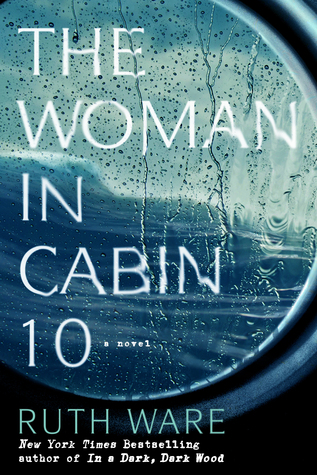
The Woman in Cabin 10 - Ruth Ware

The Woman in Cabin 10Guys, I have a confession to make.  I lied to you.  Idol wasn't the first book I finished in 2017.  The Woman in Cabin 10 was.  I just forgot about it because I'm terrible at writing reviews in a timely manner.

Anyway, I got this through Book of the Month and decided to read it as the FIRST BOOK of my 2017 Reading Challenge, as "A book recommended by a librarian."  It was recommended on the Library Reads website.  It's one of those psychological thriller books, and takes place almost entirely on a boat.

Main character Lo wakes up one night after some heavy drinking to discover that she's being burgled.  The burglar locks her in her room and it takes her a few hours to get out, and though overall unhurt (she does get a cut on her cheek from a slamming door, but it was unintentional) she's pretty understandably shaken up.  It gives her a serious case of ongoing insomnia, in which she can't sleep because she's afraid the burglar is going to come back.  Eventually she seeks refuge at her boyfriend's flat, as he's out of town, only to wake up thinking she's being attacked--and smashing the hell out of his face with a lamp.  He actually takes it pretty well, but it becomes clear through other things that their relationship is in a bit of an iffy spot.  And in the midst of it all, Lo takes off for a week-long cruise on the luxury yacht Aurora Borealis, which she's covering for the travel magazine she works for while her boss is on maternity leave.  But the Aurora is small, lending to Lo's claustrophobia, and her insomnia continues, so she self-medicates with lots and lots of alcohol on top of the anti-anxiety medication she already takes.

And then she hears a murder.

The only problem with this is, the girl who was murdered--the one who was next door to her, in Cabin 10, who Lo asked to borrow mascara earlier in the night--never existed.  There was no one booked in Cabin 10.  No one of the girl's description is on the boat.  And Lo can't get anyone to believe her that it happened, except her ex-boyfriend who is also on the cruise, but he's looking mighty suspicious himself.  And someone is certainly trying their hardest to get Lo to "STOP DIGGING."  Interspersed with all of this are emails and other sorts of documents, letting us know that Lo hasn't been heard from by her friends and family back in the UK for days, and that a body was found...

This was a good book.  It's a quick read and pretty light despite the dark subject matter.  I had fun trying to figure out who the murderer was, and got that bit right though the details of the plot I got wrong--the plot itself is a bit twisty, though the killer isn't.  What annoyed me here was that Ware was kind of trying to make Lo out as an unreliable narrator, and she's not.  But how does Ware go about doing this?  By making Lo into a drinker.  This seems like such an out.  Want an unreliable narrator?  Add alcohol!  They'll always be drunk and never really know what was real and what they imagined!  Ha ha!  It seems like a cheap trick.  I enjoyed how it was done in Girl on the Train, because there was outright manipulation there along with the alcohol, but this was a bit cut-and-dry for my tastes.  And the ending...did it seem a little too happy to anyone else?  I would have been happy without the last few pages, leaving a little mystery as to what exactly happened on the Aurora.  It was also a bit rushed in general, in comparison to the rest of the book.  So many other events took so much time, when they weren't even as major, and yet Lo's flight only takes up a handful of pages, at most.

The documents were definitely a nice touch.  It let us see into the future a bit, and work up a true dread of what might be coming.  We know Lo is fine at the time we're reading...but by the time those documents are taking place, something else has clearly happened, and I was left peering between the lines, looking for any hint of what might be coming.  And while I found Lo's drinking to be a bit tiresome, I found the reasons behind it realistic.  I can only imagine how terrifying it would be to find an intruder in your house, in your private space, even if you do get away unscathed.  Yes, it could have been so much worse--but honestly, should we denigrate Lo for being upset even though it wasn't worse?  No.  I don't think we should.  It's certainly something that would keep me up at night, tuned in for any little noise that might make itself heard.

Overall, I really liked this one.  The alcohol part of Lo's characterization was a bit tired, with nothing new or twisty added to it, and I saw who the murderer was pretty easily, but the details of that were the fascinating part.  The ending could have done with some work, though.  This is one where I wouldn't have minded being left wondering.

3.5 stars out of 5.

Monday, December 12, 2016

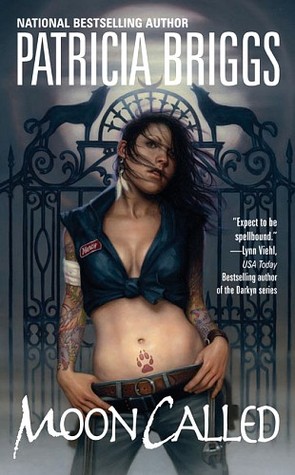
Moon Called - Patricia Briggs (Mercy Thompson #1)

Moon Called (Mercy Thompson, #1)On my search for a good paranormal romance, Patricia Brigg's Moon Called showed up at the top of many lists.  So, of course, I got it from the library.  Well, Mercy is an interesting character (who does not dress anything like the woman on the front on the book, btw, being more sensible than that) whom every male she encounters wants to have sex with, and yet this still avoids being a paranormal romance.  Presumably this is at the top of so many lists because it sets up for romance later in the series, but I still feel terribly misled by those list-creators.

Putting that aside, let me talk about the book itself.  Mercy Thompson lives in Washington state where she owns an auto shop and tries to avoid too being found out as a skinwalker.  In Mercy's world, "lesser" fae have been forced into the public eye by their leaders/overlords the Gray Lords, but other supernaturals such as vampires, werewolves, and Mercy herself have managed to remain out of sight and out of mind--at least for now.  But when a young werewolf shows up at Mercy's shop looking for a job, it sets off a chain of events that might hint at the end of this secrecy, or something even more sinister.

Mercy has an interesting past.  Despite being a skinwalker, she was raised by werewolves, and not just any werewolves but the pack of the leader of all the werewolves in North America.  She left them when she was a teenager and hasn't been back since, but that's another area she gets pulled back to when the leader of the local pack, who is also Mercy's neighbor, is almost killed and his daughter kidnapped.  So Mercy heads to Montana, and then back to Washington in the company of not only Alpha Adam, but her old flame and the son of the werewolf leader, Samuel.  Both of whom, of course, want to get in her pants.  Sigh.

I liked Mercy and I liked Samuel and Adam, despite their constant posturing over her attentions (which she doesn't really deign to give).  I found the lack of other compelling female characters strange; all of the females in the pack she grew up with hate her because apparently she can have children and they can't, which is female bitchiness at its best.  Jesse, Adam's daughter, is great but gets very little page time being as she's, you know, kidnapped for most of the book.  And while I liked the beginning of the plot, by the end I found it had wrapped itself up into a convoluted mess.  "Convoluted" is actually a word Briggs herself uses to describe the plot in another book, which is maybe an indication that it should have been set out a little differently.  Everyone seems to flip-flop on what's happening so many times that even when they laid it out in the end, I wasn't entirely convinced as to what was actually going on.  And ultimately, I don't think this book was memorable.  It's kind of another generic paranormal mystery and didn't really leave me dying to know what comes next for Mercy or her harem of would-be-lovers.

3 stars out of 5, and I don't think I'll be picking up the next one any time soon.  This just isn't what I'm looking for in a paranormal series. 

Monday, December 5, 2016

The Killing Floor - Lee Child (Jack Reacher #1)

Killing Floor (Jack Reacher, #1)The Killing Floor is the fist book in the Jack Reacher series, and it was a book my mother had mentioned she was interested in reading, so I picked it for a reading challenge category.  I'm coming to it nearly twenty years after it was first published, but I have to say that I wasn't terribly impressed with it as a whole.  There were aspects of the mystery that I didn't have quite pinned down, but I had an idea of them, and other parts of it were glaringly clear.

But here's the thing: it's not a bad book.  But it's very generic and the writing isn't particularly riveting.  It was Child's first book, so I can completely understand that.  Reading my favorite author's first books at this point in life makes me wince, though I can definitely trace her growth as a writer over time.  But for this particular one...  The writing is very stilted, the sentences choppy--though complete, which is more than I can say for some books I've read this year--and Reacher as a character just grated on my nerves.  He has a massive superiority complex to everyone around him, who are all cardboard cutouts of characters.  He also seems to have a detrimental effect on everyone around him.  When he stumbles into a problem occurring in a small town, he manages to convince the few honest people he encounters--who are cops, nonetheless--to be okay with at least a dozen murders, several arsons, and a dozen other crimes to boot, and then to just let him walk away.  That's something that most thriller/mystery books never seem to get right: the legal aftermath.  But this book seems to get it even wrong-er than most, if for on other reason than the sheer scale of what the aftermath would have realistically been.

It's another recurring pet peeve of mine that in mysterious no one ever seems to call in backup.  Case in point here: despite the main plot revolving around a massive counterfeiting scheme, Reacher and his cronies spend their time doing everything except the one thing that actually makes sense: calling the Secret Service.  Instead they apparently think that Treasury bureaucrats and university professors will do a better job of solving their problems.  And Child can't really play it off as if the thought that the Secret Service was corrupt; it's pretty clear from early on that the counterfeiting is a small, local operation.  It's one of those things that just grated on my nerves for the duration of the book, and I couldn't get over it.  Someone like Reacher, who apparently spent decades working in military police, should have known better.  But apparently, because he's no longer in the military and doesn't have a permanent home, he's free to do whatever he wants, and damn the consequences.  Honestly, what he and his buddies did her merits a coverup at least as big as that of the counterfeiting scheme--they did destroy several million dollars, on top of everything else--but no one seems to care, at all.  What?

First books can be rough.  I get it.  But something that I do expect in a first book, even though the writing might not be as polished as that of an established author (and, let's be honest here, there are plenty of authors that debut with beautifully written books, so we can still only push that one so far) is that they be thoughtful, and this was not that.  This is clearly a massively popular series (I believe a movie adaptation of one of the later ones came out recently) but it's obviously not something that's up my alley, and I think I'll be skipping most of these.

1.5 stars out of 5.

Wednesday, November 30, 2016

The Trespasser - Tana French (Dublin Murder Squad #6)

The Trespasser (Dublin Murder Squad, #6)The Trespasser was my Book of the Month choice for November.  Book of the Month tends to stay away from series selections in general, but there have been a few that appeared in the time I've been subscribed; The Trespasser is one of them.  It's the sixth book in French's Dublin Murder Squad series, though it can definitely be read as a stand-alone book, which I suppose justifies its inclusion.

The plot revolves around the main character Antoinette Conway, who finds herself and her partner (Stephen Moran) investigating the murder of a young woman named Aislinn Murray. At first, Antoinette assumes the case is just a domestic, as that's all she and Steve ever get handed.  But they desperately want the case to be something more, something exciting, and the more they dig the more they're shifted between nothing exciting and something that they are not ready to dig into.

In all, this is not a particularly twisty mystery.  I'm not normally good at solving mysteries, but I got a sense of where this one was going pretty early on.  French included enough waffling that I had doubts at a few points, but I never bought into the big red herring, which I normally fall for hook, line, and sinker.  There was also no "big reveal" that left me shocked and awed.  The solution, when it becomes evident, is pieced together bit by bit rather than just slamming into the reader like in some mysteries.  I also expected Antoinette's father to play a bigger role than he ultimately did.  Given that the book starts off with her history of stories about him, it would have seemed like more would be going on there than there actually was.  I didn't necessarily want a tearful, heartwarming reunion, because that would not have been in Antoinette's character, but having it tied in a bit more completely would have been nice.  I was also hoping that something more exciting would happen with Steve, and that he wouldn't be all he appeared--though I think if I'd read the book before this, maybe my perceptions of this one would have been different on this front.

Here are what I think the high points of the book were.  I did like the use of the slang and language here.  Normally I'm not big on phonetic accents, but I think French did well in using just enough slang and phonetically-spelled words to give the story the flavor of setting, but without making the bok a mental exercise to read or creating difficulty in deciphering what the characters were saying.  And while I ultimately didn't like Antoinette as a character (I felt she really did have a victim complex that primarily served as something for everyone, including her, to whine about) I did like the concept of her.  She's the only woman on the Murder Squad and she's a minority to boot.  And ultimately, though she and Steve pursue some crazy theories, she is ultimately the skeptic on the team.  This is refreshing, as female partners on male-female teams in fiction are typically the ones with the crazy ideas.  Antoinette in this respect was very much like Scully from the X-Files; she wanted to believe that there was something crazy going on with the case, but she was ultimately the grounded one on the team.

Overall, I think this was an enjoyable book, but nothing to rave over.  I'm actually very surprised it made the cut for Goodreads Choice nominations for 2016, because there was nothing in that really wowed me.  Still, I found the noms for those awards very lackluster in general, so I guess it fits in.

3 stars out of 5.

Monday, October 31, 2016

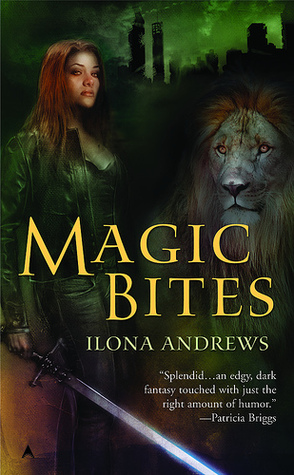
Magic Bites - Ilona Andrews (Kate Daniels #1)

Magic Bites (Kate Daniels, #1)Magic Bites was a book that repeatedly came up on lists of paranormal romances that I was perusing, along with a ton of Patricia Briggs books.  It's also apparently won some sort of online tournament for best romance book.  This confuses me, because while this is a fun paranormal mystery, it's not really a romance.  The main character goes on a few dates, but they're half-hearted at best and don't really involve any actual romance.  Because I was specifically looking for paranormal romance, this disappointed me, but I enjoyed the book as a whole all the same.

Kate Daniels is a semi-broke young woman working for the Guild, a sort of mercenary society, and living outside of Atlanta, Georgia in a time when technology is quickly losing ground to magic, which does things like make tech unusable and devours skyscrapers in addition to making things, well, magical.  Vampires and shapeshifters are real--and actually some of the strong parts of the book.  Vampires here were interesting in that they're completely mindless, possessing only a blind bloodlust, unless they're piloted by a Master of the Dead, who is a human with necromantic magic that trends toward the control of vampires.  And shapeshifters come in many, many varieties, not just wolves.  There are also other magical creatures out and about that I haven't encountered in fantasy before, which was interesting and I think a nice touch to make this book stand out--it reminded me of Liz Copen's Guilty by Association and its sequel more than anything else, which was good because I really liked the Judah Black books (and am looking forward to more).  When Kate's long-time guardian is murdered, she takes on the investigation on a pro-bono basis for the Order, a group of magical knights, in an effort to find out what actually happened.  Along the way she finds herself dating a plastic surgeon who does reconstruction on cadavers, and tangled up with the Beast Lord, Curran, who is a lion shapeshifter (hello, cover!) and rules over the rest of Atlanta's shifters, known collectively as the Pack.

Atlanta is a setting I haven't seen used a lot in paranormal fantasy, so that was interesting, and so was the use of a world in which technology is on a slow slide into obscurity while magic reigns supreme.  Andrews puts out some interesting explanations for why magic affects certain things as it does, which shows me that she put some thought into her world building.  And Kate is a cool heroine, armed with a magical sword called Slayer and trying to take on the world on her own, though she's smart enough to not turn down help when it's offered.  One thing that I did find a little eye-roll worthy here is that, ultimately, the plot does revolve around Kate being The Best (because no heroine can only be average, right?) and someone wanting to impregnate her for that reason, which seems like a bit of a tired trope to integrate into what was otherwise a very interesting plot and world.  Curran was very cool and I was disappointed that this didn't turn into the romance that I'd thought it would; I guess Andrews draws it out over the course of the series?  This partly makes sense (you want to keep up the romantic tensions) but is also frustrating because I've seen how well a romance can be played out over the course of a lengthy series even though the characters get together in the first book and stay together throughout (Rachel Caine's Weather Warden series comes immediately to mind in this regard).

Still, I think this was a good book; it kept me reading a little later than I would have normally stayed up, and I think it sets up the rest of the series well.  The unusual elements combined with a solid main character are a good premise, and I'm looking forward to reading at least the next book, Magic Burns, though I can see myself losing patience with this "oh it's a romance but there are NO ROMANTIC ELEMENTS" mentality eventually if it continues.

3.5 stars out of 5.

Monday, August 15, 2016

The Night Sister - Jennifer McMahon

The Night SisterWhen I was little, my dad bought this movie called The Mothman Prophecies.  He did it because one of the offices he oversaw was in the movie, doubling as a dress shop on the main street of the town it was filmed in, and he wanted to see it.  The movie itself is about the people in Point Pleasant, West Virginia, and a newcomer to the town, all of who keep seeing a creature referred to as the Mothman leading up to the collapse of the Silver Bridge just before Christmas.  We, as movie viewers, never actually see the Mothman, just glimpses and hints.  Really, that's what makes it scary: we don't know what's really going on, what's lurking in the shadows.  It's the same way Jaws is much scarier before we actually see the shark.  The difference is, in Jaws we do end up seeing the shark.  In Mothman, we never see the monster at hand, which I think makes it all the more creepy.

The Night Sister is Jaws.

The story here is about sisters Margot and Piper and their friend Amy. The book begins with the death of Amy and her family, with the heavy insinuation that something not human was behind it, though the police are initially eager to frame it as Amy losing it and killing herself, her son, and her husband.  The only survivor is Amy's daughter, who is found outside on the roof, and the only clue is a picture Amy has with her, on which is written "29 rooms," a strange message considering her home, the Tower Motel, only has 28 rooms.  Margot hears of the whole incident, calls Piper (who lives across the country) and Piper hops on the first plane back to Vermont to comfort her pregnant sister--who happens to be married to a cop.  The book flips back and forth in time, going from the modern day to when the girls were young, to even further back in time, when Amy's aunt vanished during another spate of mysterious happenings.  Monsters and sex and murder are all discussed here, and as the story goes on, it's clear that something not right is happening at the Tower Motel, and has been happening for quite a while.

I really liked this book right up until the "monster" is revealed.  We know for quite a while what the monster must be, but as soon as people start putting forth more detailed explanations and confessions, I think the story lost a lot of its creepy mystique, it become a much less intriguing tale.  As soon as all this came out, I found myself rolling my eyes and just wishing that the book would be over.  I think there's a great atmosphere going on up until that point, but once we hit that critical piece of information, the intrigue just dissolves and the climax is rather lackluster.  It was so disappointing, because there had been sch a good build, and then it just lost it all, knocking what could have easily been a 5-star book down a bit.

Overall, I really wish this had been Mothman instead of Jaws.

3 stars out of 5.

Friday, May 13, 2016

Grave Beginnings - R. R. Virdi (Grave Report #1)

Grave Beginnings (The Grave Report, #1)Grave Beginnings is an interesting book for several reasons, the primary one of which is that it's kind of tearing up the indie world and receiving rave reviews.  It's a paranormal mystery starring Vincent Graves, a soul who can't remember who he really is because he's inhabited so many different bodies in attempting to figure out what supernatural force killed the person, and how to kill it in return.  I've seen people liken it to the Dresden Files, of which I have only read the first one and didn't really care for it, but apparently if you like those, you'll like this.  On Grave Beginnings, I am divided.

I did not like the first half of this book.  Graves grated on my every nerve with his pop-culture references and snark.  I don't have anything against snarky characters in general, but Graves just seemed so insufferably smug about his smart-alec ways that I kept putting the book down and walking away just to master my patience with him.  Considering I had a self-imposed deadline on reading this book, that wasn't exactly good.  But the concept of Graves is pretty cool; I mean, he picks up skills and memories from all of the bodies he's inhabited, and they've obscured his own identity to the point that he can't remember anything about himself, not even his real name--Vincent Graves is a psuedonym he's adopted to suit his position.  But his "boss," a mysterious supernatural guy who goes by Church (or maybe is just called Church by Graves?) encourages him to try to reclaim his "life," as it is, by starting a journal.  Presumably the book is what Graves eventually records in that journal.  This whole setup appealed to me even when Graves himself didn't, so I kept reading.

And then I hit 50% in the book, and something strange happened.  While Graves retrained his snark and some of his smugness, much of that aforementioned smugness diminished, and the pop-culture references that had so annoyed me pretty much disappeared; there were only one or two in the entire second half of the book, whereas in the first half they were everywhere.  This greatly improved my reading experience.  What also probably helped was that, in the second half of the book, he starts working with another character who I think helped to rein him in to tolerable levels.  Once Graves became tolerable, the whole book became a heck of a lot better, and I read the second half in one sitting.

Other highlights of this book: Virdi can write a darn good action scene.  Whether it's burning down a building or fighting a supernatural being, I think the fight scenes were one of the best parts here.  Graves doesn't exactly specialize in combat but he's adept at using the environment to his favor, and his "partner" Ortiz ends up being pretty handy on her own.  She befuddled me somewhat as a character--she's a federal agent but jumps straight into solving supernatural mysteries without really questioning it.  Sure, she wants information, and I can understand some of her logic, but I would think there would be a bit more denial involved.  Then again, a lack of denial seems to be a staple of paranormal mystery books, so maybe that's only to be expected.

One more thing--this book needs another round of edits with an eye to homophones, comma splices, and grammatical structure, particularly regarding dialogue.  Comma splices abound here, and there are a bunch of instances of homophones being used incorrectly including its/it's, their/there, and beared/bared, though in fact the proper word in the "bared" case would have been "bore."  In regards to dialogue, there are a lot of instances of doing the whole "Blah blah blah." He said. thing.  There's also an abundance of ellipses; those could be labeled stylistic, far more than other issues, but reducing them and replacing some with simple periods instead could have made the impact of a lot of those sentences greater.  Overall, another round of edits could have lent this a bit of polish that I found lacking.

In the end?  I think it's a mixed bag.  There are some really cool elements here that I think Virdi does a good job of playing up, but Graves on his own annoyed me and there was a certain degree of polish missing from the book.  I know the second book is out now, so it'll be interesting to see how this proceeds--whether Graves resumes being a smug jerk who I can't stand or if he remains tolerable, and if the editorial issues are resolved.

3 stars out of 5.

Wednesday, April 27, 2016

Career of Evil - Robert Galbraith (Cormoran Strike #3)

Career of Evil (Cormoran Strike, #3)I am so bad at figuring out mysteries.  I swear, I'm the absolute worst.  I had a theory all throughout this one, but it is a good thing I am not a detective, because it was dead wrong.  As always, I fell for the red herring.  To be fair, though, Galbraith/Rowling can do a really subtle red herring; at points I felt like some bits were heavy-handed, but I'm starting to think that this is just a technique used in the mystery genre to keep you looking away from the real decoy, so that the truth jumps out at you from around the corner when it comes.

Let me back up.

So, Career of Evil is the third book in "Robert Galbraith," aka J. K. Rowling's, Cormoran Strike mystery series, about an ex-military private detective who has solved a few noteworthy cases in the relatively recent past, but is still struggling to keep his business above water.  Joining him is Robin, his assistant who really wants to be more of a partner due to a long-buried love of mystery solving.  The first two Strike novels involved murders, as does this one, but this one goes in two directions that the previous ones didn't: the pasts of the two main characters, and serial killers.  In this book, Robin herself becomes a target, stalked by a serial killer who we get perspective chapters from now and then.  Additionally, Galbraith starts to really lay out the pasts of the characters that brought them to where they are, in what I think is more detail than in the previous two novels.  The Cuckoo's Calling and The Silkworm both had some of Strike's background in them, but very little of Robin's; that comes out more here, along with increased detail about Strike, amidst a slew of relationship problems for Robin and an increasing tension between her and Strike on several different levels.

Honestly, the characters are what fascinate me about these books more than the plots.  The murder mysteries are fun to try to solve, even if I never get them right, and are always just chilling enough without straying into territory that could be considered cheesy and overblown.  But Rowling has always had a knack for developing really believable characters, and she's carried that skill over into her Galbraith persona, making Strike and Robin three-dimensional characters who are more than just the sum of their parts.  Even the secondary and tertiary characters that appear here are nuanced to a degree that I think is rarely seen in fiction, which is nice.  It makes the story as a whole very complex and helps to create a full-bodied world that supports the story rather than just acting as backdrop.

But I still hate Matthew.  I know that is the point, but I hate him and I hated the chapters where I had to read about him for more than a minute or two because he was so terrible.  Also, this book relied very heavily on Blue Oyster lyrics, and it kind of made it feel like a fanfic.  Not that fanfics are bad (I've read some really excellent ones) but it seemed off from the tone of the first two books.

Overall, this series has maintained solid 4-star ratings from me, and that's true for this one as well.

4 stars out of 5.

Friday, April 15, 2016

The Silkworm - Robert Galbraith (Cormoran Strike #2)

The Silkworm (Cormoran Strike, #2)Robert Galbraith, aka J. K. Rowling, followed up her first murder-mystery starring Cormoran Strike with another.  In the wake of solving the murder of Lula Landry, Strike has found himself doing much better, business-wise, even if his newfound semi-fame has its drawbacks, like reporters wanting to talk to him and people knowing who he is automatically, and making assumptions based on the Landry case.  But, a few months later, things have settled down some.  Strike is buried in piles of people who want to hire him to prove their partners' infidelities, which he's starting to find rather tedious even if it does pay the bills.  So when Leonora Quine shows up, asking Strike to find her missing husband, he's intrigued.  Owen Quine is a writer who had one good book and then a couple of rather bad ones, and now he's disappeared with the manuscript for his latest work after having a rather public fight with his agent about the book being unpublishable.  Leonora thinks she knows where Quine is, she just wants Strike to confirm it and make him come back.  But Quine isn't at a writer's retreat, like Leonora thought, and as Strike discovers rather quickly, Quine is actually dead, killed in the same manner as the protagonist of his manuscript--which has also been spread all over town and slanders rather a lot of people to boot.

As Strike works toward solving the mystery and protecting Leonora, who becomes the number one suspect in pretty straight order because of the rocky relationship between herself and her deceased husband, other things start to go wrong, of course.  The biggest of them is Robin, his assistant who was so integral to helping with the Lula Landry case and who stayed on with Strike despite numerous, more lucrative job offers elsewhere.  Robin's relationship with her fiance, Matthew, is on the rocks, and largely due to Strike himself.  Strike hasn't actually really done anything to make it this way; Matthew just seems like a jealous, suspicious person, and I did not like him one bit.  Not even when he has to deal with a death in the family.  I still couldn't bring myself to pity him just because of how awful he'd been to Robin the whole time, and Robin is my favorite character, so there wasn't much redeeming him there.  He eventually does start to come around, after he and Robin have a long talk about why she's working for Strike, and tries to be more supportive of her, which was good--but I can't help but feel that's all going to fall apart relatively soon, and he'll be back to being just awful to her all the time.  Meanwhile, Robin finds herself increasingly frustrated with Strike because she wants to be more involved in investigating cases, rather than just being an office administrator, and Strike seems to have dropped this idea despite seeming enthusiastic for it in the first place.

This plot was less convoluted than The Cuckoo's Calling, which I liked.  I didn't feel like there were quite so many angles, and I thought the smaller cast of involved characters really made for a better story.  I didn't figure out the mystery, though I did fall for the rather obvious decoy Galbraith/Rowling put in; I always do.  I would not make a very good investigative officer.  One thing that does bother me about this, though, is how Galbraith/Rowling just neglects to mention things that the point of view characters know in order to keep us in the dark.  Strike, for example, asks a friend to do something, which is basically worded as "He explained what he wanted and the friend agreed" without us knowing what the thing he wanted was in the first place.  I dislike this, because it's very obviously keeping things from the readers that we should know.  Strike knows it; why shouldn't we?  Probably because he's being built up to be a grand mastermind of mysteries, but I found it annoying when so many other things are teased out right in front of us to keep these things in the dark.  The other characters should be keeping the secrets, not the protagonist whose head we're supposed to be in.  Is this just a mystery genre thing?  I don't know, but if it is, I don't like it; I think the mystery and suspense could be perpetuated in other ways without deliberately keeping us in the dark about things that have already been discovered.

Still, this was a very good book, and I'm looking forward to reading the third.  Galbraith/Rowling just has such a way of creating situations and characters, of painting pictures with words, that I think the small sins here are forgivable.

4 stars out of 5.

Friday, February 26, 2016

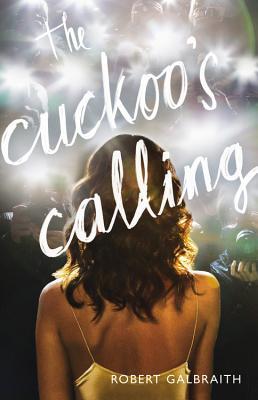
The Cuckoo's Calling - Robert Galbraith (Cormoran Strike #1)

The Cuckoo's Calling (Cormoran Strike, #1)When supermodel Lula Landray (known affectionately to some as Cuckoo) falls to her death from the balcony of her London flat, most of the world is convinced it was a suicide.  But three months later, Lula's adoptive brother turns up at the office of Cormoran Strike, private detective, and asks him to investigate whether the apparent suicide was really a murder.  Strike is skeptical, but accepts because Lula's brother offers to pay a truly exorbitant fee that will help him clear up some debts and stay in business.  His business is his home, due to a recent break-up with his fiancee, so he's really keen on keeping it.  Add into this mix Robin, a temporary secretary who decides to stay on a bit longer than planned, and about a dozen other colorful supporting characters, and you've got this book.

Now, as most of the world knows, Robert Galbraith is actually J. K. Rowling of Harry Potter fame.  This was her attempt at writing crime fiction, an attempt that I personally think had rather mixed results.  The book shot to the tops of bestseller lists, but only after it was revealed that Rowling was behind the Galbraith name.  As such, it fits my "A New York Times beststeller" category for the Popsugar Reading Challenge, but indicates that the book might not be as extraordinary as some would suggest.  I think that's accurate.

Here's the thing.  There's an intricate plot, with a lot of twisted little bits all twisted up that you can untangle in retrospect, but I don't think you really can in the moment.  That's good.  Rowling also has an amazing grasp of making distinguishable, believable, awesome characters; there was not a single character in this book that I felt was superfluous or underdeveloped.  I could totally see them all going on and living their own lives outside the scope of the main story.  This is definitely one of Rowling's talents; she showed it in the Harry Potter series, and she brought it back out to trot here.  But what she didn't do was make this a page-turner.  Every chapter serves its purpose, sure, but they didn't have me staying up later, needing to know what was next.  Most mystery/thrillers have me tearing through pages to finish as quickly as possible.  I read this one over the course of a week, which is an incredibly long time for a mystery.  It was just slow.  Strike was building things up in his mind the entire them, but we couldn't really see them, and so it seemed like not much was going on at all.  That meant that this was really, really slow.  It was good, but I don't think it's a thriller, just a normal mystery, and one that can really be picked at rather than devoured without losing too much along the way.  It's not a compulsive read, and being that I knew it was coming from Rowling's pen, I was a bit disappointed that this wasn't all-consuming.

Still, I think this was a solid book, and I'm going to continue reading them.  I really like Robin, though I'm one of those ridiculous people who hopes that she will dump her fiance and she and Strike will get together.  I know the odds of this are slim to none, but I want it to happen anyway; Robin was way too awesome of a character not to get a more prominent storyline, and this is totally how I want it to go.

3.5 stars out of 5.