Pages

Showing posts with label biography. Show all posts

Monday, January 8, 2018

The Wilderness of Ruin - Roseanne Montillo

The Wilderness of Ruin: A Tale of Madness, Fire, and the Hunt for America's Youngest Serial KillerI adore true crime books.  I adore things about serial killers, who are obviously terrible but are also fascinating.  I've watched Criminal Minds through like six times.  So when The Wilderness of Ruin popped up in the libraray's true crime category, I was intrigued.  Why?  Because, according to the cover, this book is supposed to be "A tale of madness, Boston's greatest fire, and the hunt for America's youngest serial killer."  In reality, it is none of those things.  In fact, it is three separate things: an account of the evolution and of the so-called "youngest serial killer," Jesse Pomeroy (who wasn't really a serial killer, though he undoubtedly would have become one--he killed two people, and technically you need to kill three people over a span of more than a month to be considered a serial killer), a short telling of a huge fire that swept through Boston, and a mini-biography of Herman Melville. 

This book was pretty awful.  Why?  There is absolutely nothing in these three narratives to tie them together.  Montillo tries for a "well, the fire happened while Jesse lived in Boston, and Melville probably read articles about Jesse and was interested in mental illness!" as an explanation for why these three things comprise the book, but it's a very weak explanation and doesn't work at all in context.  The fire takes about two chapters and is never mentioned again.  There is no "hunt" for Jesse Pomeroy; because he'd assaulted younger children before, the police knew exactly where to look when they found a body that matched his MO and had him arrested in pretty short order.  I kept expecting a jail break or something that would lead to an actual hunt, but that never happened.  And the Herman Melville thing was just...weird.  I have no idea why a biography of Herman Melville occupied approximately a third of this book.  In addition to these three main threads, other random topics are delved into with an amount of detail that wasn't appropriate for what was going on in the larger narrative, such as the production of dime novels or penny dreadfuls.  Montillo seems to want to tackle the ethics of Jesse's sentencing--both the death sentence and his commuted life in solitary confinement sentence--but doesn't really do so well; perhaps she was afraid of getting too political?

The writing itself wasn't bad, but the content was scattered and the structure did not hold together.  This seemed like it was going to be fascinating, but really was just disappointing.  Talk about a premise that did not deliver.

1.5 stars out of 5.

Friday, August 25, 2017

Unbroken - Laura Hillenbrand

Unbroken: A World War II Story of Survival, Resilience, and RedemptionUnbroken was my latest audiobook, following Missoula as a selection to listen to while walking to and from work some days and while running.  It had been on my to-read list for a while, but wasn't high-priority, so it seemed like a good audiobook choice.  It's the story of Louis Zamperini, an American bombardier in World War II who competed in the 1936 Olympics as a runner, was expected to be the first person to break the four-minute mile, and who ultimately survived the crash of his plane, an extended time in a life raft, sharks, and a series of prison camps in Japan and its territories, including under the reign of a nightmare of a man known to the prisoners as The Bird.  There's also a little nod to Hillenbrand's other book, Seabiscuit--namely that, upon seeing Louis run, someone said that Seabiscuit was the only one that could beat him.

It's an incredible story; Louis had a bit of a misspent youth, and his brother (who was sometimes his co-conspirator, though Louis seemed to be the only one to ever get caught) helped straighten him out by turning him into a runner.  Louis ended up competing in the 5,000 meter event in the 1936 Olympics in Berlin, running in an event that he'd only practiced a few times before his arrival in Germany.  Though he didn't medal, he seemed to be set for the next Olympics as a competitor for the mile--until the US was pulled into World War II and Louis was drafter into the Army Air Force, where he'd briefly enlisted before.  When his plane crashed during a search and rescue mission, Louis and two crewmates survived and found themselves stranded in a life raft that was abysmally poorly provisioned; the three men only had two bars of chocolate and a few cans of fresh water.  Eventually, two of them survived to be picked up...by a Japanese ship, and they promptly became prisoners of war, except without any of the rights accorded to prisoners of war by the Geneva Convention.  Spending time in three different prison camps and never registered with the Red Cross, Louis was lost; his family thought he was dead, and at times, he probably wished he was.

This is a truly amazing story, but I'm ultimately not sure that "Unbroken" is a good title for it.  Louis survived his imprisonment, yes, but he was very, very broken after it.  With a nasty case of PTSD that led him into alcoholism, an obsession with finding and killing The Bird, and nightmares that once had him waking up strangling his wife, Louis certainly didn't walk away from his imprisonment in Japan "unbroken."  Additionally, while it's certainly a story of survival and resilience, I'm not entirely sure where "redemption" plays into it, unless you're counting it as in "The Redeemed Captive" sense, where it means being brought back.  Louis didn't really have anything to be redeemed from; is Hillenbrand trying to get at his religious conversion and eventual comeback from his PTSD, at least to some extent?  Because that's not something that he really needed to be "redeemed" from.  So, yes, probably not the best titling there.

It's an intriguing book and story of survival, but it does drag on a bit.  Every single detail that Hillenbrand seems to have been able to unearth is listed here; every beating, every beating that other prisoners suffered, multiple accounts of how Louis' family was pining away in America for him, though nothing ever changed between these sidebars until it was discovered Louis was, in fact, alive.  Additionally, the final part of the book that detailed Louis' life after the war seemed to drag on.  It really hammers home that PTSD is not a "new" thing, as some people make it out to be, but it also goes into sometimes agonizing detail about what The Bird was up to and how he didn't feel responsible for his actions or that said actions were really bad to begin with.  I understand wanting to have the story be "complete," but it seemed so much slower and dragged on so much more than the earlier parts of the book.  This clearly isn't the "main" story and I feel like it could have been wrapped up in a much shorter section than it was truly given.  It was probably meant to hammer on the "redemption" theme that Hillenbrand was apparently going for, but I really wasn't feeling it.

Overall, this was a good book, but it's nothing I'd be reaching for again.  The pacing was strange and it sometimes seemed over-sensationalized; it was an amazing story on its own, so it didn't really need all of the "look at how amazing this is!" hammering that Hillenbrand laid on it.  It's also not a story of someone remaining unbroken; everyone has a breaking point, everyone, and Louis definitely hit his during his captivity.  His survival was remarkable, but I think Hillenbrand actually blew it up and made it too "larger than life" for it to come off as sincere here.

3 stars out of 5.

Friday, July 21, 2017

Princesses Behaving Badly - Linda Rodriguez McRobbie

Princesses Behaving Badly: Real Stories from History—without the Fairy-Tale EndingsI am twenty-five years old and I still adore princesses.  Most particularly, I adore the spunky, kick-butt princesses who Go Out and Do Things.  Who do I like?  I like Addie of Bamarre and Cinder/Selene, Celaena Sardothien and Queen Bitterblue, Elisa with her Godstone and Raisa with her Grey Wolf Throne, Moana sailing into the unknown and Rapunzel shaking off her lifelong abuser.  I can't get enough of them.  But these are fictional women, and there have been plenty of bad-ass women in history who haven't gotten a lot of attention, so I was super excited to read Princesses Behaving Badly and get an insight into some of them.

The book is divided into seven sections and each focuses on a different "type" of princess: Warriors, Usurpers, Schemers, Survivors, Partiers, Floozies, and Madwomen.  Obviously there is some crossover between these categories, and several of them are pretty derogatory terms, which made me raise an eyebrow when I encountered them.  Yes, the women in this book were flaunting convention for their places and times--otherwise they wouldn't have been behaving badly.  But to term them "floozies" and "madwomen" seemed a bit harsh.  Each part of the book then features several mini-biographies of princesses who the author has deemed to fit that category, each of which took about five to ten minutes to read, and also a few shorter sections that could skim over a topic, like so-called American "dollar princesses" who married European nobility on the basis of their money, with a paragraph or so devoted to each woman in that short section.  Real, born princesses are covered but also women who pretended to be princesses, possessed positions similar to that of princesses in societies that didn't have princess roles, and women who married up to become princesses.

What struck me most about this book, however, were two things.  First, it's so surface level.  I think I would have preferred fewer but more in-depth sections about a selection of the women here; I didn't expect the book to be comprehensive, there's just too much to cover, but it seems like even so it really did a disservice to some of these women by skimming over their lives at such a high level, doing very little to cover their motivations, circumstances, desires, etc.  And second, the book kind of had a derogatory tone in general to it.  While I've already pointed out some of the questionable words selected, many of the stories about women who didn't really do anything wrong had this overarching tone of, "Well, she got what was coming to her."  Which...what?  Yes, maybe Elizabeth of Bathory deserved to be bricked up in a tower--she might have killed up to 650 people, after all--but Lakshmibai, covered in the "Warriors" chapter?  She got forced into a terrible situation, dealt with it the best she could, and then got killed in battle.  And yet there's no sympathy at all in this tale, just a, "Well, that's what happens when you do that stuff" sort of feeling.  Yes, this was a book that explicitly said "without the happy endings" in the subtitle, but the tone in which these were covered rubbed me the wrong way.

Overall, a very surface-level book that I think serves mainly to direct one to the Wikipedia articles about some of these women; Wiki probably covers many of them in much more depth than the book does.  Wiki probably has better sources cited than this one, too.  It brings to light some remarkable women throughout history but is baffling irreverent towards their struggles and accomplishments instead opting for snark and disparaging terms and a tone of "well she must have deserved it" for the not-so-happy endings.

3 stars out of 5, and mainly just for bringing some light to these princesses.

Monday, May 15, 2017

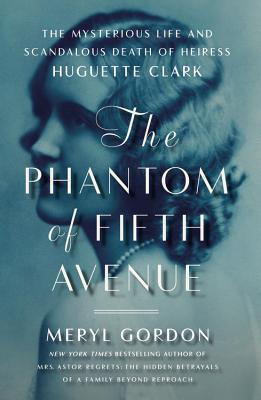
The Phantom of Fifth Avenue - Meryl Gordon

The Phantom of Fifth Avenue: The Mysterious Life and Scandalous Death of Heiress Huguette ClarkThere's something about high-society scandal that's just so intriguing.  It's why I like the Luxe series even though it's actually pretty much terrible.  It's why shows like Gossip Girl have so many fans, why the Kardashians are so popular.  And The Phantom of Fifth Avenue promised to be that, but true: the biography of an heiress who vanished from the public eye and then died in the midst of a scandal.  Well, it was really only one of those things, and scandal wasn't really involved.

The heiress in question was Huguette Clark, the daughter of a copper baron and his second, much-younger wife.  William Andrews Clark might have been the subject of some scandal in his attempts to earn money and social climb--there were certainly fishy happenings involved in his race for the Senate at one point--but the most scandal Huguette was involved in was probably being born to Anna Clark, who was a much-younger "ward" of sorts of Williams Andrew Clark years after the death of his first wife.  Huguette really lived a quiet life, traveling with her mother and sister, practicing violin, painting, and collecting dolls.  She got married and divorced once; I guess that could be a scandal, in those times, but it's nothing to write home about for a modern audience.  But what did happen with her is that, decades after she disappeared from the public eye and her relatives last heard from her--her relatives being the children and sometimes grandchildren of her half-siblings from her father's first marriage, the half-siblings who always looked down on Huguette and her mother and who, consequently, Huguette didn't want much to do with--those same relatives decided that Huguette was clearly being manipulated and abused, despite not having heard from her, and decided to see what happened to her.  That she was over a hundred years old and worth $300 million dollars with a questionably legal will of course had nothing to do with the matter.

Gordon definitely did research for this, quoting newspapers, letters, and even conducting interviews with those involved in the story who had known Huguette, or known the people who knew her.  She even got to tell one of the people that they had inherited a decent sum of money from Huguette's estate, having clearly been following the story even more closely than some of those directly involved.  But ultimately, Gordon does the same thing that many of the papers did and tries to make a mountain out of a molehill.  Most of the book is basically Huguette's biography, which is mildly interesting at best, though slightly envy-inspiring.  Seeing her evolving psychology from socialite to recluse was interesting, and I think Gordon did a good job in her analysis on that aspect, but as for the rest... Meh.  Huguette didn't die under mysterious circumstances and the only "scandalous" aspect of her death was that she left a significant portion of her $300 million estate to her longtime nurse.  A lot of people had a problem with this and threw a fit and the whole thing got dragged into court, as is wont to happen when large amounts of money are up for grabs.  Did Huguette's family really want the money for themselves?  Maybe  they were already individually wealthy, but that's not to say they didn't want more.  There certainly seems to be less at the end of the book to indicate that Huguette was being manipulated or abused than Gordon made there out to be at the beginning.

The writing here was fine, but not particularly engaging.  After a while of reading, I began to wonder what the point of my reading really was since most of the book was very repetitive.  Huguette travels.  She paints.  She flirts a bit.  As she gets older she gives away money in increasingly-large denominations.  But honestly I didn't find any of this particularly suspicious or even unbelievable.  It doesn't seem worth a 300+ page book, certainly.  Overall, this was a book that promised more than it delivered, and wasn't what it promised at all.

2 stars out of 5.

Wednesday, March 29, 2017

Alexander Hamilton - Ron Chernow

Alexander HamiltonHamilton fever has swept the nation, and I am not exempt.  I put off listening to the musical soundtrack for a long time mainly because I am not a rap/hip-hop type person, and that is, of course, what Hamilton's soundtrack is primarily comprised of.  But then PBS had an awesome documentary about the musical and the history behind it, and so I downloaded the soundtrack from Amazon and we listened to it on our way to New Jersey for Thanksgiving.  And on the way back.  And about 20 other times.  And when a friend on Facebook started singing the praises of the biography that inspired Lin-Manuel Miranda to write such a musical and said friend said he was looking for someone to discuss it with, I put in a request to the library.  Perks of working at a university: using the university inter-library system to request books so you don't have to wait for 30 people ahead of you to read the 700-page biography first.  Score!

Let me tell you this: Chernow's biography of Alexander Hamilton is heavy.  Definitely too heavy to carry around in my purse, which meant I had to pick away at it in smaller chunks than I would like.  And for those curious about how the real history differs from the musical, the answer is...a lot.  Mainly, Miranda played with the time line in huge ways, but he also drastically dramatized the relationship between Hamilton and Angelica Schuyler, and made Burr into a much more prominent and sympathetic character in Hamilton's story than he really was.

Now, for the book itself.  It spans Hamilton's entire life, but portions of it are necessarily clearer than others.  Hamilton was born in the Caribbean, making him one of the most prominent foreigners to feature in American history.  While the facts of Hamilton's childhood, such as the death of a succession of relatives that left him essentially, though not technically, orphaned is known, there are necessarily fewer documents that support Hamilton's own thoughts and development during this time.  Consequently, Chernow falls into a common pitfall of biographers of historical figures, who write hundreds of years after the fact.  Namely, he projects.  He goes into a lot of "It must have meant," and "Hamilton must have felt," and so on, a pattern that continues throughout the book in regards to how events of Hamilton's early life "must have" influenced his later life, though Chernow himself admits that Hamilton essentially severed himself from his childhood after his arrival in the United States, and particularly following the American Revolution.  Some of this projection also seems to apply to Aaron Burr and his background, though I can't say that I delved too deeply into Chernow's sited sources to see what he was drawing on for Burr's feelings on matters that weren't directly drawn from his own words.

My only other complaint about this book is in two parts.  First, Chernow sometimes has a tendency to go out of chronological order.  When he sees a connection between the events currently at hand and something that comes up later, he sometimes jumps to the later event to make sure that the connection is clear--and then ends up re-hashing the event, its precedents, and the connection.  This happens particularly in regards to elections.  As Chernow covers a variety of election levels at any one time, sometimes their orders and the impacts they have on each other get a bit jumbled together in the telling, and then when they come back later, it creates a sensation of, "Oh, wait, I thought we already covered this...?"

Other than that, I enjoyed this quite a bit.  I'm not typically very interested in American history, preferring European and Asian history, but Chernow does a great job of bringing Hamilton and his contemporaries to life.  Hamilton is definitely an under-studied figure in American history, overlooked in favor of the the other Founding Father such as Washington and Jefferson.  And while Chernow doesn't hesitate to point out how devious figures such as Madison and Jefferson could be, he also didn't shy away from pointing out Hamilton's own hypocrisy on various fronts and how he didn't always support the democratic republic form of government, instead favoring something akin to a monarchy (though not on the exact same lines as the British one).  He also doesn't go easy on Hamilton when getting into the Reynolds affair, pointing out how callous Hamilton was in arranging rendezvous with Maria Reynolds while trying to keep Eliza in Albany...though he does seem remarkably forgiving of the affair afterwards. 

Overall, I think this a great addition to the other volumes of biographies tied to figures of this period.  Hamilton has been very overlooked, and some of the other Founders much aggrandized in ways that, after reading this, don't seem entirely deserved.  Of course, reading biographies of those other figures might provide a different perspective; biographers do tend to be remarkably sympathetic toward their subjects, though understandably so given the amount of time they have to spend studying them.  Definitely worth a read, if you're interested in American history and have the time to devote.

4 stars out of 5.

Monday, March 6, 2017

Notorious RBG - Irin Carmon & Shana Knizhnik

Notorious RBG: The Life and Times of Ruth Bader GinsburgOne of the categories for my 2017 Popsugar Reading Challenge is "A book about an interesting woman."  The clear choice for this, for me, was RBG--Ruth Bader Ginsberg, one of the Supreme Court Justices and the most senior of the liberal side of the court.  I took a few law classes in school and we read many of her opinions--both majority and dissents--during those classes.  Her opinions sizzle.  One of them absolutely slams Congress, essentially saying that the Court shouldn't really be ruling on the issue at hand, but something has to be done about it, and Congress is refusing to do their jobs, so the Court is going to do it.  Wow.  Love it.  But there was a lot about RBG herself that I really didn't know, so this was a great opportunity to fit the book into my reading queue.

This a good overview, I think.  There aren't a ton of books about RBG, which I totally understand because, well, she's still alive.  It's hard to write a comprehensive biography of someone who isn't done with her life and venerable career.  But it gives some background and some insight as to where RBG comes from in the development of her ideals and what she'll do for them.  And it's not just her judicial background and time as a lawyer before that, but her life, too, and there were so many little anecdotes that you would never guess from just seeing RBG or reading her work.  Like her long, loving relationship with her husband, Marty, who cooked all the meals and who RBG once chased around her office with scissors, and who baked cakes for the clerks' birthdays at the Court.

I was surprised to learn a lot of the stuff behind RBG's professional life.  She's actually considered to be a very moderate justice, though she has a firm stance on equality, and is known to be one of the most thoughtful justices.  And then there's how she actually isn't a huge fan of Roe v. Wade; while she supports a woman's right to have an abortion, she felt that Roe didn't come in a great way, that it focuses on privacy rather than equality, and that sweeping decisions like Roe can ultimately be more easily disregarded later on--something that I think we've definitely seen in the recent spate of abortion regulations popping up across the countries which seemingly have nothing to do with actual health regulations.

However, I did have a few issues with this book.  First, it's very short, and consequently very surface-level.  While there are excerpts of some of her opinions that the authors dig into a bit, but I would have liked to see more analysis in general.  It also jumps around in time.  Just when I thought we were firmly into her life as a justice, there'd be a jump that would go back to when she was a lawyer and professor, and it was a bit confusing.  Those transitions also weren't very smooth.  And this is not a book meant to be read on Kindle--the formatting for it is absolutely terrible.

I really did enjoy this book, but I wish it had been a bit less superficial and that it just been organized a bit better.  Still, this offered a lot of snaps of RBG that I don't think most people know about, and they definitely made her more human rather than just the imposing (though tiny) justice who rules from the bench.

4 stars out of 5.