Pages

Showing posts with label nonfiction. Show all posts

Monday, June 18, 2018

In the Garden of Beasts - Erik Larson

In the Garden of Beasts: Love, Terror, and an American Family in Hitler's BerlinErik Larson is an awesome history author.  I've read both Dead Wake (about the sinking of the Lusitania) and Devil In the White City (about a serial killer and the Chicago World's Fair) by him, and found both of them to be excellent in quality.  When I was looking for a book linked to my family history for my reading challenge, I decided to just pick something set in Germany, because I didn't know what else to focus on.  (Despite this book focusing on the family of an ambassador in WWII Germany, I am neither related to the Dodds, nor am I aware that any of my direct family were Nazis, though I suppose anything is possible; wouldn't that be a nasty surprise?)

In this book, Larson focuses on Ambassador William Dodd, the first US ambassador to Hitler's Germany, and Dodd's daughter Margaret.  His wife and son were also present in Germany, but are not looked as much in the course of the book.  And what the book is, is a startling examination of the old adage "Hindsight is 20/20."  Now, we have such clear hindsight, being able to see that Hitler was bad news, and that something should have been done sooner--but through the Dodds, we can see how that wasn't the case at the time.  They initially were kind of friendly toward Nazism in general, being somewhat anti-Semitic themselves, though Hitler himself was seen as kind of a kooky guy who Hindenburg had well in hand and who probably wouldn't remain in power very long.  But the Dodds slowly become more and more aware of what a terrible situation is brewing in Germany--and are stonewalled by everyone else, who either outright don't believe them or don't want to believe them, or do believe them but don't want to get involved with European affairs and instead only want to focus on Germany paying its reparations from World War I.  It's an incredibly frustrating story to read, because you can see the trouble building in the background, and the Dodds growing increasingly concerned and Ambassador Dodd's attempts in particular to do something without causing an international incident--and without getting himself fired in the process, as he isn't well-liked in the State Department to begin with--and knowing that it's all futile.

Larson builds the tension here wonderfully.  This is a true work of nonfiction, as well--everything he implements is taken from letters, cables, diaries, etc.  He does step back to speculate once or twice, but always notes that he's doing so, saying something such as, "Perhaps, but they didn't write about it they did, so we can't really know."  The Dodds aren't really the most interesting people on their own; the details of their day-to-day lives can be boring, mostly consisting of Dodd's colleagues at the State Department planning to oust him and working to undermine him at pretty much every turn and Margaret having a bunch of affairs, but I think that provided exactly what it was supposed to: an idea of how life went on for most people in Germany, and it was not a sudden event that Hitler rose to power, made being Jewish illegal, and started killing people and planning to take over Europe.  Rather, it was a slippery slope that rose against a background of existing tensions, and no one action took place until the preceding ones seemed normal.  Hm...does that sound familiar to anyone alive today...?

This is not a "fast" read, nor is it a thrilling one.  But it is one that is chilling in the way that it, in many ways, mirrors the world we live in now.  They say that those who don't study history are doomed to repeat it--so study up, folks.

4 stars out of 5.

Monday, May 21, 2018

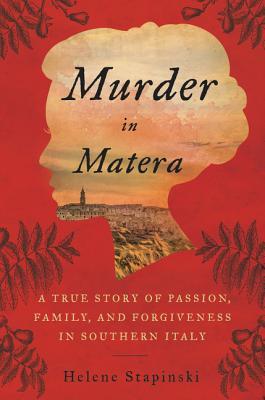
Murder in Matera - Helene Sapinski

Murder in Matera: A True Story of Passion, Family, and Forgiveness in Southern ItalyTrue crime stories are awesome--terrible, but awesome.  I just started listening to this amazing podcast, My Favorite Murder, which is both terrifying and fascinating at the same time.  I can't stop listening, or looking over my shoulder as I do so to make sure no one is lurking there with a large knife.  And so what could be better than a book combining true crime, history, and Italian food?

Murder in Matera is the story of Helene Stapinski's search for her family's fabled murder.  She grew up with her mother telling her stories of how her great-great-great (I think) grandmother, Vita, murdered someone in Matera, Italy, and fled to the United States with her children in tow, but lost one of them along the way.  Stapinski's family is apparently riddled with criminals, the most notable being her grandfather, Beansie, and she's haunted by a concern that criminality is a genetic trait and that she has passed it down to her children, and so she wants to "solve" the murder in order to figure out what happened...because apparently that will fix it?

There are some awesome things in this book and some things that bothered me.  First off, anything involving tracking down a murder--particularly one that took place over a century ago--is interesting.  Stapinski had to dig down into the archives of various towns in the region in order to find out what happened--with her great-great-great grandmother, grandfather, the padrone of the region, the children, etc.  She speaks some Italian but also hires a few locals to help her as researchers, and struggles with navigating the small-town atmospheres of the places she goes.  The scenery is clearly gorgeous and Stapinski captures it well, as she does with the food.  This is a book that will make you want to eat Italian food--all the Italian food, from fresh fruit to pasta puttanesca to pizza to--well, absolutely everything.  Even foods you don't like will sound good here.

But what I didn't like was when she takes broad liberties with Vita's story.  The actual details of the murder are eventually discovered, because they're contained in a court document.  But for Vita herself, Stapinski blatantly makes up her thoughts, feelings,a and actions, saying in the afterword that the relied on her "Gallitelli blood and bones" to know what her ancestor would have thought...which is ridiculous.  You can't just make up history.  The problem is that she wants Vita to be a saint, and so she decides that's how things must have been, without having any evidence of really knowing it.  Ascribing emotions and actions to people from the past without having any idea of what they actually did is a classic pitfall in talking about history, and Stapinski blunders into it full-throttle here.  These portions do not belong in a work of nonfiction.  Additionally, her obsessing about her children's genes got old quickly.  Apparently there is one study from Iceland about prisoners (or was it Finland?) that said many who committed violent crimes had a gene tied to aggression, but guess what?  You are not your genes!  Just because you have a gene tied to aggression doesn't mean you have to kill people!  In this way, Stapinski seems to throw her hands up in looking at the past, putting it all down to fate and not looking at responsibility for one's own actions, which really bothered me.

Overall, an okay book that could have been a good book, but strayed past its boundaries and into fiction instead of history too much.  The nonfiction portions are excellent, but the "creating stories out of whole cloth" portion left a bad taste in my mouth.

2 stars out of 5.

Friday, April 20, 2018

Ghostland - Colin Dickey

Ghostland: An American History in Haunted PlacesThis is not a book of ghost stories.  Let's get that out there right now.  There are some ghost stories in it, yes, of various turns and origins.  However, ghost stories are not the focus of this book.  Instead, what Dickey turns his attention to is the historical and cultural atmospheres that contributed to these stories, as most of them--as Dickey demonstrates--have absolutely zero basis in fact.

The United States has a tumultuous history, and it shows in the ghost stories that populate it.  Dickey digs into a lot of different areas, both geographically and topically, examining such things as: Why aren't there more stories of Native American ghosts, given the violence rained upon them by whites?  Why aren't there more black ghosts in areas that are fraught with dismay and death for Africans or those of African descent, such as former slave markets and places where slaves were tortured?  Why do the details of ghost stories change, sometimes dramatically, over time--things like race, age, and origin all altering on the same ghost?  He answers all of these in turn, and some others to boot.  Though the details vary somewhat, what it all boils down to is that ghost stories reflect cultural hopes and fears at the time they are told, and so the areas that are important at the time of telling are sometimes altered for emphasized in order to emphasize these tensions, whether the alteration is deliberate or not.  For example, a ghost can be a slave in a time when tensions about race and brutality by masters was of cultural importance, but the same ghost can be a white lower-class woman in a time when matters of economic tension are more predominant in the psyche.

Dickey's book works its way from the small to the large, from haunted houses to civic buildings to entire towns and cities and to an idea that our entire country is haunted.  While he touches on some of the places that are particularly renowned for hauntings, such as Eastern State Penitentiary in Pennsylvania, he mostly focuses on places that aren't quite as well known.  He doesn't really explain why he does this, but it seems likely that it's because the less-known places are actually easier to track, as stories might go through fewer permutations if there are fewer people telling the tales.  He also touches on some other areas of ghost stories that might not occur to everyone every day.  For example, by case law in New York State, if a building is said to be haunted it is, by law, haunted--because whether hauntings are a matter of fact or fiction, the belief that a building is haunted affects its value. 

This book had a lot of interesting aspects.  However, because Dickey has a lot of points he wants to make--and many of those points have overlapping and repetitive aspects--none of them are really delved into too deeply, and each point has one or possibly two examples at the most.  I think it would have been interesting to see how some of his theories played out in the context of places said to be more haunted--like the Eastern State Penitentiary, or the White House.  Seeing some of the stories completely debunked was interesting, but then there was no real context for how some of the stories came to be in the first place.  For the Winchester House, there were some rumors started by a paper, but even that can't really indicate the absolute plethora of stories that surround it, and the details are, as Dickey pointed out earlier in the book, what is so very important.  But none of those are touched on.

Overall, a fascinating book, but one that probably could have been a bit stronger in constructing its central argument.  Great for fans of history or fans of ghosts, or skeptics of ghosts!  Or someone who is all of the above.

4 stars out of 5.

Wednesday, March 28, 2018

Bleaker House - Nell Stevens

Bleaker House: Chasing My Novel to the End of the WorldThe happy, pale turquoise and penguin clutching a page  on the cover caught my eye while perusing books at a well-known local bookstore a few weeks ago.  Unfortunately, I'd already bought a few other books at said store (at full cover price--ouch) and didn't have it in the budget for this one.  Luckily, the library came through for me, because I'd skimmed the first few pages and was intrigued by the premise of this memoir: young woman finishes MFA and, with the opportunity of going anywhere in the world for up to three months, chooses Bleaker Island, a tiny hunk of land in the Falklands (just north of Antarctica) in the middle of the southern hemisphere's winter, in the hopes that a sense of extreme isolation will give her the discipline and concentration she needs to write a novel.  Does it work?  Well...

I found this a charming book set in a depressing AF setting.  Stevens wants to be a writer, desperately.  She picks Bleaker Island as her spot to write out of a sense of wanting to be different; and don't all writers?  But upon her arrival, she finds herself thinking, "If the island is Bleaker, it's bleaker than what?"  The answer: everything.  It is a desolate place, as the Falklands in general seem to be, at least in the winter.  It is devoid of fresh produce, and regular contact with the outside world, with a language that has evolved out of several kinds of language into its own weird sort of dialect.  Nell finds herself scrutinized by citizens who are wary of outsiders in general and writers in particular, and then eventually completely and literally isolated: the only human on Bleaker Island for six weeks.  There, she struggles to apply everything she learned in school to the creation of a novel set in the Falklands, and on Bleaker in particular.  Ultimately, the novel doesn't work, and what she produced--in her diary from her stay, in her attempts at the novel, in short stories from school, in snippets of her life leading up to the trip to the Falklands--became this book instead.

I did like Stevens' writing.  She has a dry and self-deprecating sense of humor, and while her time in the Falklands might not have turned her into a novelist (at least not a published one), it certainly seemed to let herself know herself more, though this seems to have come in an epiphany moment near the end of her stay rather than in a slow but steady stream of self-realization.  In this, she was successful, and I think the book showed that.  She realizes that not everything she has to write is amazing.  She realizes that being alone and being lonely are very different things.  And she realizes that even if she's not going to write a novel based on her time in the Falklands, she can still certainly write a book.

This was a trip taken on a whim; while Stevens has some justification for her choice, she seems aware that it's flimsy and that she's going primarily because no one else was, and that even her written proposal sounded pretty silly once it was read back.  But she definitely got something out of it, I think we can safely say.  The structure of the book feeds into this idea; while it starts with Nell's arrival on Bleaker, it jumps back with the first chapter to do a mostly-chronological account of her time in the Falklands, interspersed with snippets of her life beforehand and other writing projects she worked on, mostly a few short stories in their full form.  Because she includes pieces of her life, you can see her penchant for including life in her writing, just as she was hoping to do with basing a book on Bleaker.  It's an insight into her creative process, and the evolution of it over time.  I personally thought it was interesting--most aspiring writers probably will, if only to see someone else sharing in their struggles.  But other people might not.

Overall, this was a book I really liked.  It's light, but not fluffy, and while there's nothing world- or even life-shattering about it, I found it was a book I could empathize with...though the Falklands are probably off my list of places to visit, honestly.

4 stars out of 5.

Friday, March 23, 2018

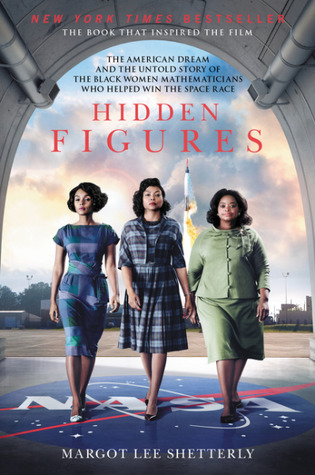
Hidden Figures - Margot Lee Shetterly

Hidden Figures: The American Dream and the Untold Story of the Black Women Mathematicians Who Helped Win the Space RaceLast September, I was at the National Book Festival hoping to get a signed copy of Outlander for my boyfriend's mother (because Diana Gabaldon is her favorite and I'm thoughtful like that).  A few queues over from the Gabaldon line was one for Margot Lee Shetterly.  There was practically no one in it.  How odd, I thought.  Hidden Figures was a pretty big movie, after all, getting a lot of press, acclaim, the whole shebang.  I found it very odd that there wouldn't be more people in that line.  Well, now I know why the line was so short: this book is boring.

And let me say this.  A book about a story that is this fascinating should not be this boring.  And yet boring it is.

This is, undeniably, an important story.  In a time when segregation was still the norm, female working women were still referred to as "girls," and women were pretty much banned from STEM fields, women were essentially storming NASA's predecessor, NACA, working as human computers and clawing their way upwards to the ranks of mathematicians and engineers, marking various "Firsts" and shattering glass ceilings as they went.  While white women were involved, Shetterly focuses on a much-ignored group, the West Computers and the women who came out of that pool to work in other areas, who were black.  While she talks about a few people here, only two names ultimately stuck in my head: Dorothy Vaughn and Katherine Gobels/Katherine Johnson.  Vaughn eventually ran the West Computers, and Johnson ran the calculations for the first American orbital flight and the reunion of the Apollo 11 moon landing crew and flight crew after departing from the moon.  There was a third main person, but Shetterly does such a poor job of actually distinguishing between these women that I honestly couldn't tell you anything about her.  And actually, there was a fourth woman, too--but she was in college for the events of the book, and I'm not entirely sure why she was included at all.

But my biggest dig against this book is that it's not predominantly about these women.  They are simply a lens through which Shetterly examines the Civil Rights movement, the press for desegregation, and all kinds of other social movements that surrounded these issues in the forties, fifties, and sixties.  While all of this is vitally important, it's not what I picked up the book to read about.  Additionally, the writing is extremely purple at times, not at all suitable for a nonfiction book.  It's entirely possible to do a book of literary nonfiction and do it well, but Shetterly does not.  It's always dangerous to project details of emotions, actions, etc. onto conversations and situations at which you were not present, and are collecting details from second- and sometimes third-hand, and yet that is exactly what Shetterly does.  Between wariness at this practice and sometimes eye-drooping boredom when Shetterly spent ages away from the main narrative to instead talk about the March on Washington, or something else entirely, I found that I didn't enjoy this book much at all.

Overall?  Important, fascinating story, but obscured by poor telling.  The movie might be better on this one.

2 stars out of 5.

Wednesday, March 14, 2018

When Breath Becomes Air - Paul Kalanithi

When Breath Becomes AirThis is a book that I had seen many, many times in various contexts, but avoided like the plague.  Why?  Because it sounded depressing, that's why.  The author, Paul Kalanithi, was finishing up his time as a chief resident in neurosurgery when he was diagnosed with extensive lung cancer, and then eventually brain cancer.  Having struggled with life and medicine and the meaning of it all throughout his life and career, Kalanithi set out to make sense of his own life--and death--and purpose before the end came.  You know all of this from the flap of the book, or the foreword at the very least.  It sounded like a serious downer and possibly preachy as well, which was not a conversation I wanted to delve into.  However, when I needed a book on death or grief for my reading challenge, it seemed like an obvious choice.

I was very much surprised by this book.  It's not religious at all, which I appreciated--a lot of people who aren't even really religious turn to it in the end--though it is deeply introspective.  In his career as a neurosurgeon, Kalanithi worked with the brain which, he points out, ultimately contains the self.  Part of this book looks at what makes life living--is it worth living if you have an injury or disease that takes away your language and ability to communicate?  If it leaves you in a coma or a vegetative state?  And in the process of coming to terms with his own death, he sees the people around him go through their own stages of grief--not only for him, but for things that they thought might be, especially when hope briefly seemed to be so close.

One thing that's worthy of noting is that the writing here is absolutely beautiful.  Kalanithi certainly had a way with words, and his aspirations to spend the second half of his career--the half he never got to experience--as an author were certainly well-merited.  He faces down some of the things that were piling up, such as a dissolving marriage that even most of his family wasn't aware of, the deep pain he was in all the time, and the terror he faced at leaving his life not fully lived, and turns it all into poetry.  When I read the foreword and saw how Verghese lauded Kalanithi's writing, I had to roll my eyes.  Surely the book couldn't actually be that good.  And honestly, depressing as it sounds, it really sounded kind of gimmicky as well.  But no, Verghese was right--the writing really is that good.

This is one of those books that it feels weird to say you enjoyed, because hey, does the average person really enjoy reading about a real person dying tragically?  No, not really.  But it was a wonderful book.  Was it ground breaking in anything it revealed?  No, not really.  But just as Tuesdays with Morrie or The Last Lecture were sad books but lovely at the same time, so was this.  It's not a book that's going to reveal the secrets of the universe.  But it's a personal, insightful journey, and hey, you can learn some about neurosurgery to boot.

4 stars out of 5.

Wednesday, February 14, 2018

Lost Girls - Robert Kolker

Lost Girls: An Unsolved American MysteryI watch a lot of Criminal Minds.  While I know it's all highly dramatized, moves much faster than any real investigation ever would, etc., it utterly fascinates me.  And so, when I needed a true crime book for my reading challenge, Lost Girls, about an unsolved serial killer case, was an obvious choice.

That said, while this is a true crime book, the crime is--again--unsolved.  That means that the perpetrator isn't know, so there's no way to really dive into the killer, his psychology, etc.  With that in mind, Kolker's focus is very much on the victims and their families and not the investigation itself.  While some information about the investigation is given, it seems like much is still kept under wraps, making reporting on it difficult and necessitating a "bulking out" of the book by talking to the families, relating Facebook drama of the victims' relatives, etc.  So, if you're looking for a true crime book heavy on the police procedural part, this probably is not the book for you.  But if the personal aspect of the victims draws you in, as well as the nasty little secrets and webs of small communities, you'll probably like this one.

So here's the focus: on Long Island, from 1996 to the time the book was written, five young women who worked as escorts and prostitutes vanished.  Following the very loud disappearance of the last one, an investigation was finally launched, and four bodies were discovered--but not the one of the girl whose screaming woke up a community and caused several 911 calls.  With the stage set, Kolker steps backwards, lining up the lives of the victims--Maureen, Melissa, Megan, Amber, and Shannan--including their often-troubled backgrounds, how they ended up as sex workers in New York, and in some cases how they ended up at Oak Beach, the small and insular community that may just be hiding a serial killer.  The cases are also potentially intertwined with a string of other unsolved cases attributed to a serial killer in Manorville, but there's no concrete proof of that and opinion on the matter seems to waffle.  So these five are the core.  Based on interviews with the people who knew these women before their disappearances and dealt with the questions and grief after, Kolker's work has a stronger tilt toward escorts on Craigslist than it does towards bodies in the sand, but until the case is solved, I'm not sure how it could be skewed in the other direction without delving into some very unresponsible reporting and conjecture.

As a study in psychology and spirals, I found this book fascinating.  I really enjoyed Kolker's writing and really felt for these women and their families.  I can't say this was an enjoyable read, because how can a read like this, without a solid resolution, ever really be enjoyable?  But it was riveting.  It's thrown out there that by some studies, the number one cause of death for prostitutes is murder.  Seriously.  Murder.  Not accidents.  Not suicide.  Not any form of disease.  If you're a sex worker, you're more likely to be killed, probably by a client, than you are to be hit by a car.  That is absolutely insane.  And as Kolker points out, a missing girl is only missing to the people who notice, and while these four women had people to notice, those people had a hard time getting authorities to believe them.  People don't care about missing and murdered prostitutes, something Kolker addresses along with the healthy dose of victim-blaming that was handed down by the police once they became involved.

This is not a fun story, and it is one that lacks a satisfying ending--but it is an important one, about how easy it is for people to be lost in the gaps of society, to be pushed aside and forgotten and blamed for their own murders.  Hopefully one day the truth will come out and the guilty party will be held responsible here--but that hope is, of necessity, a slim one, because as Kolker illustrates again and again, the women found at Gilgo Beach aren't exactly high-priority.

4 stars out of 5.

Monday, January 8, 2018

The Wilderness of Ruin - Roseanne Montillo

The Wilderness of Ruin: A Tale of Madness, Fire, and the Hunt for America's Youngest Serial KillerI adore true crime books.  I adore things about serial killers, who are obviously terrible but are also fascinating.  I've watched Criminal Minds through like six times.  So when The Wilderness of Ruin popped up in the libraray's true crime category, I was intrigued.  Why?  Because, according to the cover, this book is supposed to be "A tale of madness, Boston's greatest fire, and the hunt for America's youngest serial killer."  In reality, it is none of those things.  In fact, it is three separate things: an account of the evolution and of the so-called "youngest serial killer," Jesse Pomeroy (who wasn't really a serial killer, though he undoubtedly would have become one--he killed two people, and technically you need to kill three people over a span of more than a month to be considered a serial killer), a short telling of a huge fire that swept through Boston, and a mini-biography of Herman Melville. 

This book was pretty awful.  Why?  There is absolutely nothing in these three narratives to tie them together.  Montillo tries for a "well, the fire happened while Jesse lived in Boston, and Melville probably read articles about Jesse and was interested in mental illness!" as an explanation for why these three things comprise the book, but it's a very weak explanation and doesn't work at all in context.  The fire takes about two chapters and is never mentioned again.  There is no "hunt" for Jesse Pomeroy; because he'd assaulted younger children before, the police knew exactly where to look when they found a body that matched his MO and had him arrested in pretty short order.  I kept expecting a jail break or something that would lead to an actual hunt, but that never happened.  And the Herman Melville thing was just...weird.  I have no idea why a biography of Herman Melville occupied approximately a third of this book.  In addition to these three main threads, other random topics are delved into with an amount of detail that wasn't appropriate for what was going on in the larger narrative, such as the production of dime novels or penny dreadfuls.  Montillo seems to want to tackle the ethics of Jesse's sentencing--both the death sentence and his commuted life in solitary confinement sentence--but doesn't really do so well; perhaps she was afraid of getting too political?

The writing itself wasn't bad, but the content was scattered and the structure did not hold together.  This seemed like it was going to be fascinating, but really was just disappointing.  Talk about a premise that did not deliver.

1.5 stars out of 5.

Wednesday, January 3, 2018

Too Fat, Too Slutty, Too Loud - Anne Helen Petersen

Too Fat, Too Slutty, Too Loud: The Rise and Reign of the Unruly WomanToo Fat, Too Slutty, Too Loud is either a book that you will find extremely vapid--it focuses on celebrities, because they are easy examples that Petersen can draw upon to illustrate her points--or that will enrage you because parts of it are just too true.  It's divided into ten chapters, each one focusing on something that women are declared "too" by modern society.  Most of these are listed right on the cover: too gross, too shrill, too fat, too slutty, too loud, too pregnant, too old, too strong, too queer, too old, too naked.  Is the word "too" starting to look weird to anyone else?  Each chapter exams one (or, in one case, two) women in the public eye who embodies the theme of that chapter, though Petersen notes in her introduction that every woman in the book really falls into more than one category, some of which aren't examined in depth; for example, Serena Williams is too strong, but she's also too loud and too black.

I'm not deeply familiar with a lot of the women that Petersen talks about here.  I'm not really dialed into pop culture very much, so while I know who Niki Minaj, Madonna, and Lena Dunham are, I don't know a lot about them, and there were others that I'd never even heard of.  But I do think Petersen did a good job of giving some background information on each and building out her case, including what seems like a lot of research for each chapter.  I was actually pretty impressed by that aspect; I listened to this as an audiobook, and I found myself thinking pretty frequently as she quoted old articles, pieces of interviews she conducted, and different bits of research, "Wow, a lot more work went into this than I thought."  Because Petersen writes for Buzzfeed, I guess I was expecting something a little more Buzzfeed-like--you know, very shallow and surface-level.  I was pleasantly surprised at how deep this actually went.  Petersen lays out all kinds of stuff that woman are penalized for by society for no good reason.  Like aging.  You know, that thing that all people do.  But while older men are allowed to be "Sexiest Man Alive," an older woman would never be given an equivalent title.  Women are only allowed to be pregnant in public if they revel in their pregnancy and play out their roles without mentioning any of the absolutely awful stuff that comes with pregnancy.  If they assert themselves about how they are treated or their opinions, they are too loud or too shrill, things that are used to tear women down when there's no logical argument against them.  The double standards that women face in society are numerous and immense, and it is infuriating.

Petersen makes good points here, but ultimately it was nothing that was new to me.  There were a few nod-worthy moments of, "Oh, I hadn't thought of it exactly in that light," but I think Petersen is preaching to the choir here.  The people who are going to read this book are the people who don't need to be told these things; we already know about them, acknowledge them as the problem they are, address them with others, and try to correct them.  Society at large is not going to read this book.  Society at large does not care.  That is how we got to where we are today, and why it is such a long, slow slog to make any progress at all in fixing things.  Additionally, because these women typically fit into more than one category that Petersen has to touch on, almost every chapter felt like it was rehashing another one to some degree.  I would have also liked to see a few more women who weren't pop culture icons--two members of the Kardashian family (Kim and Caitlyn Jenner), stars of women-oriented shows, etc.  I understand Petersen's point that celebrities are easy to distill down into the categories she wanted to use, but would have liked to see some sort of point of how these things affect all women, not just ones whose very existence revolves around their presence in the public eye.


Overall, a good one, and an important one, but one that feels somewhat like it was shouting into the void and missing a large point of the population both in focus and audience.

3 stars out of 5.

Wednesday, December 27, 2017

Deep Down Dark - Hector Tobar

Deep Down Dark: The Untold Stories of 33 Men Buried in a Chilean Mine, and the Miracle That Set Them FreeA recommendation from the DC library, I picked up the audiobook of Deep Down Dark to listen to while processing spreadsheets at work.  This is the book about the Chilean mine disaster that trapped thirty-three miners underground in 2010; during their ordeal, the miners made a bargain to sell their story collectively, something they mostly held to, and Hector Tobar ended up being the one to write it.  As the only person who had the full, authorized version, much of the book comes from exclusive interviews conducted with the men involved.

The book starts the morning of the disaster with the men going to work, and goes all the way up until Tobar is actually writing the book.  While thirty-three men were trapped, Tobar focuses on a few "main characters" in order to tell the story, the ones who were the most prominent in one way or another.  Additionally, he pulls in people from the surface who weren't as focused on, such as the sister of one of the miners who was known as the "mayor" of the camp town that sprang up outside the mine during the men's imprisonment and rescue efforts.  He goes over the different plans to reach and rescue the men, which involved personnel and equipment from an unbelievable number of countries.  This was kind of like a real-life The Martian but set underground instead of on Mars--and with more people.  But the basics are the same; there's a disaster, someone (or many someones) are trapped seemingly beyond reach and hope, and the world comes together to get them back.  Tobar also goes into the politics of the rescue and its aftermath; how different parties used it as leverage in campaigns, the backlash against the men when they didn't react like the media wanted them to, etc.  They've never been compensated by the company or the government for their ordeal, which is truly criminal; Oakley sunglasses and trips to countries provided by those countries don't exactly make up for the trauma of being trapped in a mine for months.

That said, sometimes the narrative seemed to stall, and not because forward movement in the search and rescue had stalled.  More, it would be because Tobar started repeating things or repeating the same thing but in the words of different people.  While I can see the value of multiple perspectives, at some point it really seemed to not be necessary and to just be taking up space.  Additionally, though Tobar focuses on a smaller cast of characters than was actually involved, the cast is still large enough that it's hard to keep track of who is who at times--particularly for someone unfamiliar with Latin American names like myself; had I seen them on a page I think I would have pinned them by sight, but listening they sometimes blended together especially as they were frequently known by nickname and relationships in addition to given names.  He does reveal a lot of the bickering and conflict that took place surrounding the rescue, which I liked--because not everyone gets to be a sparkling white hero.  In fact, no one does; everyone has flaws, and he shows them, which I think was necessary in order for this book to be sincere.

Overall, a very good listen.  It's long, but worth it if you have the time and the interest.

4 stars out of 5.

Monday, December 25, 2017

The Death and Life of the Great Lakes - Dan Egan

The Death and Life of the Great LakesRecently my boyfriend decided that we should read more books together so that we can discuss them, and since more books is always okay with me, off we went.  He picked the first book, The Death and Life of the Great Lakes, which was also hugely interesting to me because I grew up on the Great Lakes, specifically Lake Erie but with visits to Lake Michigan and also the Niagara River in the Niagara Falls area.  I'm familiar with zebra mussels and sea weed and algae slicks and dead fish on the beach.  I knew that the Cuyahoga River used to catch fire with some regularity, and that Erie, PA was the largest freshwater fishing port in the world, and that the lake just didn't freeze over like it used to, and that Lake Erie was, quite frankly, pretty polluted and gross.  But I didn't know how bad things actually were.

Egan divides his book into three parts: the front door, the back door, and the future.  The "front door" to the Great Lakes is the Saint Lawrence Seaway, over which foreign ships bring cargo and also ballast water laden with invasive species, which they then proceed to dump in the Great Lakes.  Enter the zebra mussel and the quagga mussel, plagues upon fresh water systems everywhere.  This part also deals with the sea lamprey (mostly dealt with now due to a massive ongoing poisoning campaign--pleasant, right?), the alewife, and the chinook and coho salmon, planted in the lakes by a misguided campaign by one person to make the lakes into some sort of sport fishing paradise.  All of this, of course, ravaged the lakes' natural ecosystem, to the point that they will never truly recover.  The "back door" is the Chicago Sanitary and Ship Canal, which connects the Great Lakes to the Mississippi River Basin.  Not only has it provided a route for the quagga and zebra mussels to spread to much of the country beyond the lakes, but it's providing a route for extremely invasive species of Asian Carp to get into the lakes, which would make all the devastation the mussels have wreaked look like nothing.  This part also talks about runoff that has led to toxic algae blooms on Lake Erie that threaten clean water supplies.  And finally, the third part talks about threats to the lakes from climate change, cities wanting to funnel away the water for various reasons, and finally a drop of hope in the bucket of despair in regards to how the lakes are, in some small way, adapting and people are working to "fix" them.

This is a bleak book.  Despite Egan's attempts to show that, if we really try, we can stop the damage and start to repair it, it's pretty clear that the lakes will never be what they once were again.  The invasive species can't be gotten rid of.  There's some hope with genetic manipulation of them, but that can be a Pandora's box all on its own.  And then there's an absolute reluctance for people to actually do anything to begin with.  Farmers don't want to change their fertilizing practices, saying that the agricultural runoff isn't really due to them, even though there's overwhelming evidence to show that it is.  Agreements to funnel water away from the lakes keep going through.  There's no real teeth in an order that ships coming from overseas implement better methods of cleansing their ballast tanks of invasive species before dumping in the lakes.  And everyone fights tooth and nail against suggestions to cut the Chicago canal off from the lakes to stop the march of Asian carp.  All of this despite the fact that all of this going on is costing money and stopping it would not really affect trade or the economy at all.  It's infuriating.  Rage-inducing.  And pretty darn hopeless.

This is an excellent read, though.  Egan's writing is engaging and informative at the same time, and he writes in a narrative style while still conveying so much about the state and future of the lakes.  Sprinkled with interviews and anecdotes, I could definitely see the years of reporting that went into what ultimately became this book.  It's also an important read, and I think that it should be pushed on pretty much everyone possible.  The Great Lakes aren't just the problem of the people who live on them; they are twenty percent of the world's available surface freshwater.  That said, there is something that I think was missing here, and that is that the book is written almost entirely from an American perspective.  Egan's an American who did this research for American papers, so that's understandable.  However, Canada also touches the Great Lakes and has a ton of influence on what happens to them!  I would have loved to see something from the other side of the border--a part, a chapter, something other than a few lines about Canadian initiatives that match American ones.

Overall, an excellent read albeit a depressing one.  Read it anyway.  Educate yourself.  Water is everyone's problem.

4 stars out of 5.

Monday, December 11, 2017

Hunger - Roxane Gay

Hunger: A Memoir of (My) BodyHunger is up for a Goodreads award, I had it from Book of the Month, and a coworker had read it it and recommended it, and so this confluence of events led me to read it.  Gay's memoir is, essentially, about being fat.  At her heaviest, she weighed close to six hundred pounds, and while she's significantly below that now, she's still considered super morbidly obese.  Her weight problem stems from childhood trauma--after being gang raped at the age of twelve, she began eating in an attempt to make herself overweight and repulsive to men because she didn't want to be hurt again.  Now and adult, she doesn't want to be overweight, but essentially a lifetime of bad habits have made it hard to lose the extra pounds--and then, when she does start to lose weight, the old fears rear their ugly heads again and send her back into bad habits.

Gay's memoir is painful to read because of how real it is.  I am not overweight.  I am one of those skinny girls who sees a little padding on her hips (because you suddenly develop hips in your midtwenties--who knew?) and starts to agonize over it.  I chew my nails over inconsistent sizing at Old Navy because I wear different sizes in different styles of pants, and even though I intellectually know that sizing is bullshit, I still don't want to wear a 6 in one size when I wear a 4 or even a 2 in another.  And why is that?  Because I know the thing that Gay hammers home so hard--that our society treats fat people like shit, and I don't want to come even close to falling into that category.  In that way, Gay's memoir is easy to empathize with even for someone who isn't overweight, because many of us can tap into the fears of being so--we want to be young and pretty and skinny and fit, but life doesn't always work out that way.  I mean, I might want to weigh ten pounds less, even though my weight is perfectly healthy, but I'd also much rather spend my time reading books than going to the gym.

The other way that Gay's memoir connected with me was giving me a terrible feeling of guilt because, like a lot of society, I have a knee-jerk reaction when I see someone who is very overweight.  I do make snap judgments about their character.  I've become much better at recognizing these reactions, walking them back, and using logic to guide my thoughts and actions instead, but it's hard to buck what is essentially a lifetime of conditioning that fat equals bad.  At the same time, though, I can't bring myself to wholeheartedly jump onto the body positivity train, because at some point being overweight does lead to health problems, and I don't think "healthy at any size" is really a thing when someone can't walk a mile with their friends without having to worry about breathing problems or a heart attack.  Yes, this is judgey of me, and I am coming out and admitting it, because Gay admits so much in her memoir that I feel like the least I can do in a review is come out with the same honesty.

But Gay's story isn't just about a physical hunger for food; it's about hungering for so many more things, like company and love and security.  These are all other aspects on which I think anyone can empathize, because it's a rare person who is completely fulfilled and can't connect with some aspect of hungering for something they don't have.  This also isn't a book of wallowing, despite how intense and painful it can be.  Instead, it is an explanation and an attempt to make readers see how peoples' actions affect each other on many levels throughout life, and to make them re-evaluate how they see different people and situations.  In this, I think she is extremely successful.

This is a powerful story that I think can resonate with many audiences.  I only had two real issues with it, neither of which was content-related and instead were writing-related.  First, and this is the more minor issue, I don't get what's up with the constant parentheses around (my) body in the early part of the book, especially when they vanish later on.  Can someone explain this?  Second, the writing here isn't a solid narrative and is very scattered.  It jumps to and fro in time in a series of chapters which rarely surpass five pages and often don't go past two or three.  This jumping means that she often re-hashes things that have been covered before, sometimes two or three times, and it can sometimes be hard to follow the thread of thought.  At times, I thought that the chapters were being grouped by theme, particularly when there were a few close together which talked about Gay's relationship with food through cooking...but then that fell apart and went back to roaming to and fro, and I was left a bit perplexed again.

Overall, I think this is a book that serves its purpose very well, and can resonate with readers across a wide spectrum of ages, body types, ethnicities, etc.  But it probably could have done its job a bit better if it had been a bit more structured.

4 stars out of 5.

Monday, November 27, 2017

Under the Banner of Heaven - Jon Krakauer

Under the Banner of Heaven: A Story of Violent FaithOkay, so, I'm gonna confess that I thought this book was about climbing a mountain, primarily because the edition I read had a mountain, or very large mountain-like rock, on the cover, and I interpreted the "heaven" in the title as "the sky."  You know, like the heavens?  No, I was not confusing it with Krakauer's Into Thin Air, which actually is about climbing a mountain, namely Mount Everest.  I've read Into Thin Air, and my enjoyment of it (as well as of Missoula) was why I picked this up in the audiobook format.  Imagine my surprise when it started out by talking about a murder!  Well, that was okay, too, because I love true crime; it's awful, but fascinating at the same time.

Krakauer starts the book by discussing a gristly double murder committed by two brothers, Ron and Dan Lafferty, with the victims being their sister-in-law Brenda and her daughter Erica.  Though Ron committed suicide in prison after being convicted, Dan maintained that, while he committed the murders, he shouldn't be considered "guilty" of them because he killed his sister-in-law and her daughter under orders from God.  Hm...  Then Krakauer goes into the body of the book, which alternates chunks about the events leading up to the murder, the murder, and what followed it, with historical pieces about the founding of the Church of Jesus Christ of Latter-day Saints, aka the Mormon church.  Why is the Mormon piece so important?  Because the Lafferty brothers belonged to a fundamentalist splinter group of it which subscribed to tenants that the main Mormon church has pushed to the wayside, such as plural marriage, and one of the reasons they wanted to kill Brenda was because they thought she convinced Ron's wife to leave him after he wanted to take a second wife.  Ah, yes, polygamy--this book has it.

Krakauer blantantly says towards the beginning of the book that the main, modern Mormon church is not a problem, but that the problems he examines stem from fundamentalist groups that stem from it--just as all religions have problematic fundamentalists.  (Yes, all.)  The only times he talks about the main church is in a historical context, when he goes into its foundation, which seems pretty kooky but problems seems so because, as Krakauer points out, it was just founded much more recently than most religions.  And then he goes into the integration of polygamy into the church's practices, which really seems like it happened because the founder, Joseph Smith, wanted to bang a lot of women who weren't his wife and wanted his wife to just shut up and accept it, and a bunch of other guys high up in the church decided they wanted to do that, too.  This was a problem.  Is polyamory a problem?  No, as long as all members are consenting.  But Krakauer digs into how a solid policy of it led to rampant sexual abuse, rape, and incest, which women literally couldn't say no to because the men in charge told them all it was God's will, and they could be excommunicated, losing their families and entire lives, if they refused to go along.  It's this policy and these awful practices which still abound in the splinter fundamentalist groups that Krakauer discusses in the contemporary part of the book.

This is a riveting story on all fronts, and Krakauer is an excellent nonfiction writer to record it.  There is a bit of a structure issue with it, however, because he goes and tells a lot about the murders of Brenda and Erica right in the prologue, which means that for much of the contemporary chunks of the book, I was just waiting for something to happen that I already knew was going to happen.  I think this might have been a bit better if Krakauer had let us know that something had happened, but left the "reveal" for where it fit in the body of the main book, rather than in the prologue.  That would have let us know that it was building up for a purpose, not just rambling, but still had something to "surprise" us with.  He also tries to go into all sorts of terrorism comparisons in the end, which seemed like reaching far.  Does it tie into the topic?  Yes.  However, I don't think it was the right place in this particular story, especially because there's no good answer for the question that Krakauer wants to examine by bringing a terrorism component into play--namely, if someone has religious convictions, can we count them as delusional, and in any case, if they commit a crime based on those convictions, can we hold them guilty?

Still, the body of the book, before it dives into trial transcripts and metaphysical ponderings at the end, was excellent.  I really like Krakauer and hope to read his other books as well.

4 stars out of 5.

Sunday, October 1, 2017

Funny in Farsi - Firoozeh Dumas

Funny in Farsi: A Memoir of Growing Up Iranian in AmericaA lighthearted memoir, Funny in Farsi was the Deliberate Reader Book Club title for October's month-long discussion.  The author, Firoozeh Dumas (her father specifically told her not to mention her maiden name in the book, and then wondered why she hadn't used it once it was published) first came to the United States when she was seven, when her father had a two-year work assignment for the Iranian oil industry in California.  After returning to Iran, her family later came back to the United States to liver permanently.

Despite the cover claim that this is "A memoir of growing up Iranian in America," I felt like much of the book wasn't really about Dumas so much as it was about her larger family, with her serving kind of as an observer in the background.  Each "chapter" is really more like a little vignette focusing on a different incident, and there's also a pretty big jump from when Dumas was a child to when she was adult, with only one real chapter on her adolescence--one minute she's trying to get her mother to bake American snacks for her elementary school, and the next she's getting married.  Many of the stories focus explicitly on Dumas' father, something that she admits in the afterword of the book.  Her parents are definitely the center of this narrative; despite having brothers and an extended family, most of the stories involve her parents in the central role, whether it's her mother's accent and learning of English consisting mainly of watching The Price is Right or her father wanting to compete on a bowling game show, "fixing" up the house on his own, or trying on her engagement ring when her boyfriend asked her father's permission to marry her.

Obviously, the humor here is in the clash of cultures that comprises Dumas' life.  While her family is eager to embrace much of American culture, they're still baffled by other parts of it--such as why Americans like turkey.  And then, once Dumas marries a Frenchman, yet another aspect of culture clash enters her life.  To some degree, Dumas presents herself as better than the others around her--better at adjusting, better at understanding, just better, which is a little self-centered, even more so than writing a memoir about your experiences.  (And she is correct that you don't need to have done something amazing to write a memoir about your life.)  Maybe it's that she's more pragmatic than other people in her life, maybe it's a skewed viewpoint; it's hard to say.  However, it's still an amusing read, though one that, like many memoirs, you probably need to take with a grain of salt.

Overall, this was an enjoyable read, but it's one that lacks a lot of depth.  Rather than really digging into any issue, light or heavy, Dumas instead skims over pretty much everything, keeping the focus away from herself.  I would have liked to see a little more depth here in some respect; depth doesn't mean that something has to be depressing, but it would have made the book seem a little more whole-hearted; as it was, it just felt a bit shallow.

3 stars out of 5.

Friday, September 22, 2017

The Wave - Susan Casey

9674788There is something utterly fascinating about the ocean and how little we know about it.  Fascinating, and completely terrifying, because have you ever witnessed an 1,800 foot high wave?  No?  Neither have I, and after this, I plan on avoiding the ocean for like, ever, because I don't want to! 

In this, Casey splits her attention in a few different directions to examine big waves in various contexts.  First, in a narrative she goes back to again and again, she follows surfers, particularly Laird Hamilton, as they attempt to surf bigger and bigger waves across the globe, with a lot of focus on Hawaii's "Jaws" surf spot.  Interwoven with the surfing, which is probably the easiest for the layperson to understand, she talks to scientists who study waves, salvagers who recover ships wrecked by huge waves, historians who look at
the big waves of the past--like the 1958 mega-tsunami in Alaska that I referenced in the first paragraph of this review--and other assorted "wave" personalities. 

What all of this underscores is that the ocean is really freaking scary, and it's likely to get even more so.  We actually know very, very little about how waves, particularly big waves, work--one of Casey's interview subjects points out that, after a certain size, waves kind of stop acting like water waves and start acting kind of like waves of light, which is totally weird.  We can't study them in their natural environment to any great degree because, as another interviewee pointed out, if you encounter a hundred-foot wave, you're probably trying to survive it, not measure it.  But we know that they occur much more often than we used to think they did, and that they're doing a lot of damage--like apparently sinking two shipping ships or tankers per week, and why is no one pointing that out???  I think Casey did a good job of pulling in all kinds of information that people don't really encounter about waves and the ocean, and by using the surfing as the core of the narrative, she focused a lot of the science into through a lens that a lot of us laypeople can understand.

I listened to this an audiobook, and the narrator, Kirsten Potter, was excellent.  She has a very conversational way of reading the book and, while some of her "surfer guy" impressions came off as very stereotypical and maybe even mildly offensive, she really made the book engaging.  I think this is one that would have been good in actual book form as well, but it was a good choice for audiobook!

Overall, I really enjoyed this.  It's a great science book about a topic that I don't think is really frequently covered in the "popular science" category.  Apparently Casey has written some other books that have serious ethical questions involved regarding her behavior in researching and writing them, but I really liked this one, didn't see any issues like that, and would recommend it to others.

4 stars out of 5.
Monday, September 11, 2017

Voracious - Cara Nicoletti

Voracious: A Hungry Reader Cooks Her Way through Great BooksWhen I first saw Voracious' description, I thought it would be love at first read.  "A Hungry Reader Cooks Her Way Through Great Books."  What more could a hungry reader who reads her way through great books want?  Well, the answer is apparently something other than Voracious, because while this book had nice parts, it wasn't really what I wanted.

Cara Nicoletti is a woman with a career in the food industry and a love of books.  Our love of books doesn't always overlap--I've only read a few of the books she covers in Voracious--but that didn't really matter to me.  What mattered to me was that she is also the author of the blog Yummy Books (last updated in 2015) and a blog is exactly what this book reads like.  This was my issue with What If? as well; it didn't read like new material, but like material that was just recycled into book form from the blog.  And here's the other thing: I like blogs, I like food, but I generally don't like food blogs.

Yes.  I said it.  Here's the thing.  For some reason, food blogs seem to have this thing about them that no other type of blog I've encountered has, and that's that food bloggers seem to feel the need to put deep and personal stories in front of all of their posts, when what I really want is just the recipe.  My favorite food blog, Budget Bytes, falls into this pitfall as well, though maybe not to the same degree as other ones.  As you've probably gathered from the preceding sentence, I don't particularly care about these personal stories.  And that was exactly the case here.  I really liked the parts of this book where Nicoletti dug into the books she talked about, showed how food played into them and how the characters in the books used food in their lives, or abhorred it.  But I didn't particularly like the stories about Nicoletti's life.  While her life in the food industry and in New York in general was no doubt interesting in its own way, it was the very last thing I was looking for in a book about food and other books, and consequently it did not hit the right note here.  I think this book might actually be aimed at people who already read and liked Nicoletti's blog, and were just looking for some new material in the book, other than an entirely new audience.

Overall, I'm just not convinced that blogs made into books are a good market.  They just seem to lack something that books actually conceived as books seem to have, and I haven't yet found one that's really worked.  So, while I liked the actually bookish parts of this and some of the recipes definitely seemed intriguing, the book as a whole didn't really agree with me.

2 stars out of 5.

Friday, September 8, 2017

Rabid - Bill Wasik and Monica Murphy

Rabid: A Cultural History of the World's Most Diabolical VirusRabies is a terrifying but absolutely fascinating disease.  Pretty much the only disease guaranteed to kill you--more people have survived Ebola than rabies--it's been around for as long as civilization has and has also lurked close to humanity because one of one of its main carries, dogs.  In Rabid, Bill Wasik and Monica Murphy go not into the science of rabies, though they touch on it, but into the cultural history of rabies, including how it's inspired works of fiction in genres of literature and horror.

The book starts with a quick overview of rabies as it exists in our culture today--a looming threat of twenty shots in the stomach that's not true of all--touches on Louis Pasteur and his team's work to create a vaccine, and then dives into the first chapter, taking us all the way back to ancient times and touching on lyssa, a sort of rabid rage that pops up in The Iliad.  Wasik and Murphy aren't arguing that Paris, who lyssa refers to in the original Greek, is actually rabid, but more that the sort of rage that consumed him was the type that was seen in rabid animals, drawing evidence that rabies existed even back then.  A Sumerian joke adds to the argument.  From there, they work their way forward in time, through dog cullings, the evolution of vampire and werewolf myths and werewolf trials, how it's affected zombies (fast zombies, distinct from slow zombies that are more true to their origins in voodoo), and so on.  While parts of this were fascinating, I found myself wondering if it was quite so necessary to spend so long on the pop culture when there's really a lot more to "culture" in general than werewolfs, vampires, and zombies.  The final chapter, about a recent rabies epidemic in dogs in Bali, was more intriguing to me, because it dug into not only how rabies spread, but how it was maintained in Bali because of the relationship people had with their animals.  In the conclusion, they go into the potential that rabies has to be a tool of use instead of evil.  They also touch on the treatments for rabies, which, if you miss the vaccine, is pretty much only one and has only been "successful" six times, if you count "successful" as "didn't die from rabies, but died of other complications, remained in a vegetative state, or had serious other impairments," with only two people actually recovering.

I listened to this as an audiobook, and the narration was good, but having it in audio form really hammered home how much time the authors spend recounting various vampire and werewolf encounters, relating the plots of zombie movies, and things like that.  It seemed like, for much of history, they didn't really have a lot of "cultural history" of rabies to pull on, so they used up pages by relating every detail they could dig up for the instances they did have.  Consequently, if you're not interested in vampires, werewolves, or "fast" zombies, it can be a bit of a drag.  Rabies influenced these genres?  Interesting.  An hour of records of every supposed vampire or werewolf encounter?  Not as interesting.  I guess I was looking for something that did have a little more science behind it; we still don't know a ton about rabies, but that's been the case for much of history with supposed "cures" ranging from the ridiculous to the downright dangerous, and I think I was looking for some idea of how culture had lent itself to these, more than just myths and legends.  The actual science parts of this book were so much more interesting than the recitations of myths and extended quotes of records and the science didn't feel like filler, unlike the numerous examples for the "cultural" bits.  I think the culture was interesting, but there was a bit of "beating the dead horse" here, and that was frustrating.

Overall, a decent book, and I liked it, but I was hoping it would have a bit more substance than it actually did.

3 stars out of 5.

Saturday, September 2, 2017

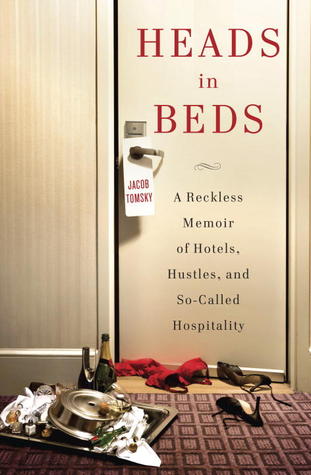
Heads in Beds - Jacob Tomsky

Heads in Beds: A Reckless Memoir of Hotels, Hustles, and So-Called HospitalityHeads in Beds was my latest foray into the audiobook world, because it seemed to fit what I needed perfectly--something not too heavy, easy to tune in and out of without losing a major thread, and with a good narrator, who in this case was the author himself.  Tomsky has worked in hotels for years and, as he states in the beginning of the book, has disassembled them all and re-assembled them into two hotels for the purpose of the narrative.  One hotel is in New Orleans, and the other in New York City.  He's also changed names, including his own, and conglomerated some people, made up a few scenarios in order to demonstrate general rules of working in hotels that he might not have remembered a distinct incident to illustrate the point for.

Overall, this is pretty amusing.  Tomsky has worked in a few different areas of hotels, and in this book he talks about his time as valet, front desk worker, and a lower-level manager in housekeeping.  He suffers burn out, just like we all do, and it becomes clear in the end of the book that he pretty much wrote the book on a three-week bender in a fury after being fired from one position.  However, that doesn't eliminate the appeal of the rest of the book, which for the most part is written in a lighthearted manner...as long as you can be pretty sure that you're not one of the people he's talking about in the book, in specifics or in stereotype.  Having never actually checked myself into a hotel--geeze, I can't remember the last time I stayed in a hotel--I was pretty safe on that front, though now I have a handy arsenal of tricks filed away in my head for the next time I do have to stay in a place that's not mine or my family's or an Airbnb.  Hint: it involves carrying plenty of cash and being willing to give it out freely.  Allotting an extra $100 probably wouldn't go astray, in various denominations for doormen, bellhops, front desk attendants, etc.

Of course, many of the things that people suspect go on in hotels are confirmed--employees slurping from the minibars, discriminating against you because you booked via Expedia instead of direct, etc.  But he firmly maintains that some of the things that people claim happen really don't, such as housekeepers stealing from guests, and honestly, why would they?  His pictures of entitled guests and stuck-up management are spot-on, as someone who has worked in an extremely unpopular arm of service, aka the front desk person in a parking enforcement office. (Ask me about the time we honestly thought a guy was going to leave and come back to shoot up the place.  Go on.)  So no, you definitely don't have to have worked in hotels to empathize with this memoir; you really just have to have worked in any job where a portion of the population you work with feels entitled to treat you like garbage, which is pretty much every job.

Overall, an enjoyable listen.  Sometimes Tomsky does come across as an asshole, and I strongly suspect that he's casting aspersions on people who really didn't mean anything bad some of the time.  After all, not everyone is aware of "the rules" of staying in hotels, especially because those rules don't seem to have changed even while many of our other social contracts have.  I would not doubt at all that millennials are particularly egregious at this hotel stuff, because that's just not how we work.  But there are some good stories, some good lessons, and some good wince-worthy moments (yes, that's a thing) that shine, and this was definitely worth the time.

4 stars out of 5.

Monday, August 28, 2017

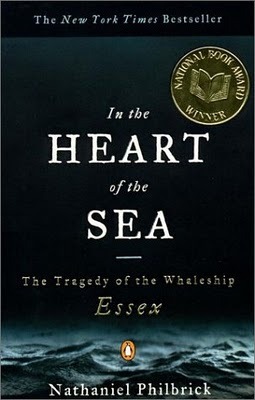
In the Heart of the Sea - Nathaniel Philbrick

In the Heart of the Sea: The Tragedy of the Whaleship EssexThe story that inspired Moby Dick (which no, I have not read), the sinking of the Essex, a whaleship out of Nantucket, seems like something that could only have been made up.  A whale sinks a ship designed to hunt it and the crew are left as castaways in a trio of boats for three months, sailing around the Pacific with dwindling rations and deteriorating vessels, succumbing to despair, dehydration, starvation, and eventually resorting to cannibalism so that some of the crew may survive.

Nathaniel Philbrick uses two main narratives written by survivors, first mate Owen Chase and cabin bow Thomas Nickerson, to construct the main story here, though he also relies on other resources, such accounts of the story told by Captain George Pollard, letters that were written, and other documents from the time.  He provides context of what life was like in Nantucket at the time, some history of the Essex--which was known as an unusually lucky ship, prior to its ill-fated prior journey which seemed plagued by bad luck from the start--as well as information on what happened after the survivors of the wreck were rescued.  At first, I thought that the narrative was ending remarkably early, but all of that information on what came after was so important to showing the slide of affairs in the whaling industry and to, ultimately, make the tale more believable.  For example, no ship had ever been sunk by a sperm whale prior to the Essex, at least not that anyone knew of--but Philbrick includes information on how, in the decades after the Essex sank, whalers reported that whales were becoming scarier, and several other ships were sunk or heavily damaged by whales.

Apparently I'm super into survival stories recently, since this is the second one in a row I've tackled, after Unbroken (yes, the reviews sometimes show up out of order based on how I schedule them!) and I have Robinson Crusoe lined up for the near future, as well--though that one is fiction.  But it's interesting to see the differences between them; for example, while both this and Unbroken are stories of survival and both feature exiles at sea, In the Heart of the Sea seems to come across as more realistic than Unbroken, even though the circumstances are so much more extraordinary.  It definitely has something to do with the writing; Philbrick's seems so much more matter-of-fact than Hillenbrand's, which felt more sensational.  I do think this one was actually referenced in Unbroken, which might have been what put it in my head to begin with.  Additionally, I did this one as an audiobook; the narrator was excellent for this and I think really contributed to the overall feel of the story.  And it was a piece of history that I hadn't been familiar with, though I had heard of it before, so learning about it was great!  The denouement was a bit long-winded, even including all of the excellent extra information, but I think that was probably the book's only big detractor.

Overall, I really liked this one; I would definitely recommend it to anyone interested in history, nonfiction, survival stories, any of that!

4 stars out of 5.

Sunday, August 20, 2017

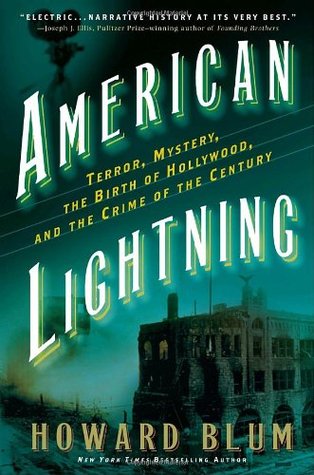
American Lightning - Howard Blum

American Lightning: Terror, Mystery, the Birth of Hollywood & the Crime of the CenturyOkay, I'm going to come out and say it: this book was kind of a drag.  Especially for a book that promises to be about "Terror, Mystery, the Birth of Hollywood, and the Crime of the Century."  Ostensibly, it's about the bombing of the Los Angeles Times building, the bombings that came before and after it, the hunt for the criminals, the trial...and a guy who makes movies?  What?  Where the connection?  Well, here's the answer: there isn't one.

Now, that's not 100% true.  The private detective who worked on the bombings knew the guy who made the movies.  But still.  The movies weren't actually about the bombings, they were just about social events that occurred around the same time, and in a very vague sort of way--putting the two directly together is a very tenuous connection at best, and trying to tie it together with "But they saw each other in a hotel at the end of it!!!" doesn't really lend the connection any credence.  And with the book relying on such a tenuous connection, it was on shaky ground to start with.

Blum focuses on three main figures in this book: Billy Burns, a private inspector; Clarence Darrow, a lawyer; and D. W. Griffith, the filmmaker.  But for most of the book, only Burns is actually relevant, as he and other inspectors from his company attempt to find out who are behind the bombings that are sweeping the nation.  A startling string of domestic terrorist attacks, the bombings sprung from the ongoing battle of union workers vs. businesses, but initially no one was sure which side was actually doing the bombing.  Was it the unions, trying to get back at businesses who were against unions?  Or was it the businesses themselves, trying to frame the unions?  Meanwhile, Blum intersperses chapters about Darrow and Griffith just...being themselves.  Lawyering.  Having affairs.  Making movies.  It's incredibly boring and served no purpose.  Griffith's line isn't necessary at all and certainly doesn't play into "the birth of Hollywood" as his movies were made in New York and he wasn't even the first person to film a big movie.  Darrow becomes necessary to the story, but not until the very end, and even then it seems like Blum greatly inflated his role in the story, especially given the way the investigation and trial ended.

The writing is bland and it's hard to determine what's actually pulled from research and what's conjecture, especially in the realm of conversations that occurred.  There always seemed like suddenly there was going to be a turning point, a new sight of depths...but then that point never actually developed.  There were some interesting parts, mainly when Blum actually focused on the investigations, but for the most part this was a very "meh" book.  For a good read about an investigation surrounding a crime closely linked to social issues, I would recommend American Fire or Killers of the Flower Moon--the first is set in the 2010s, the second in the 1920s.  They are both excellent and far outshone this one.

2 stars out of 5.