Pages

Showing posts with label read this then that. Show all posts

Thursday, July 27, 2017

Read This, Then That Vol. 3

It's been a long time since I've done a "Read This, Then That" post, but I've just had the most lovely pairing of books that I wanted to share it with you.  Taking a turn to light sci-fi and post-apocalyptic fiction, but with beautiful prose and human elements, let's first take a look at a book from a few years ago.  To start:

Read This...
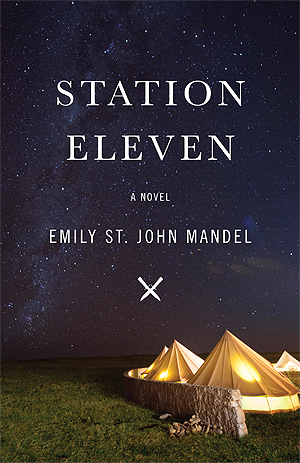
Station ElevenThe world ends with the flu.  Scattered survivors who evaded infection roam the desolated land; they live in airports full of planes that no longer fly and vending machines that have long been depleted.  A travelling theater company provides entertainment for a world that is suddenly and tragically without much to laugh at.  And a custom comic book is at the center of it all.  A startling and yet beautiful look at the sudden disintegration of life and society as we know it, and what what might be left behind once many of us are gone, Station Eleven made waves a few years ago for its stunning prose, wonderful characters, and refreshing take on a post-apocalyptic story.  With no zombies or nukes in sight, Station Eleven is about people far more than it is about plot, though there is a plot there.  The parallels between the different parts of the story are breathtaking, building on each other to a whole that is so much more than the sum of its parts.  There are Star Trek references: "Because survival is insufficient." And honestly, that's what this book is about--not just surviving, but living, even when everything that you've known has come to an end, and how people can come together, remember what was lost, but still move on into the future.  And when you've seen what's happened at the end of civilization in parts of the world we're more familiar with...


...Then That
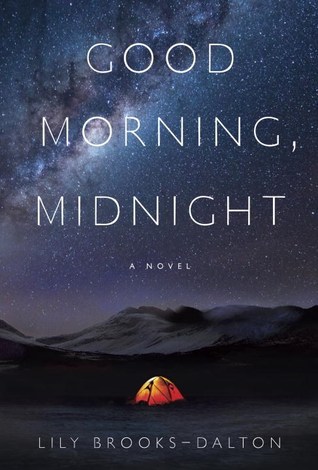
Good Morning, Midnight...move on to the ones that, to many of us, are Great Unknowns.  Instead of travelling players and ad-hoc museum curators, Good Morning, Midnight focuses on an isolated astronomer left behind in the Arctic Circle when he refused to evacuate the observatory and the crew of the spaceship Aether, on the way back from Jupiter to a world that has suddenly and strikingly gone silent.  This is also a story of parallels, of people desperately trying to reach out and connect--over the radio, physically, emotionally.  And though the circumstances are bleak--the handful of characters on our pages might very well be the last humans alive, and most of them aren't even on Earth--the story manages to be wonderfully hopeful and uplifting.  There is a story of redemption and new beginnings, of overcoming seemingly unyielding odds, and of coming back to a world that it seems like everyone else has, in one way or another, left behind.  It has the same feel as Station Eleven does and it's easy to imagine them taking place in the same world, though of course miles and miles apart and with Good Morning, Midnight having a distinctly sci-fi slant that Station Eleven lacked.  But ultimately, both books come down to this: The world is a strange place.  The universe is an even stranger one.  And people are looking for where they belong in both.

Sunday, September 11, 2016

Read This, Then That Vol. 2

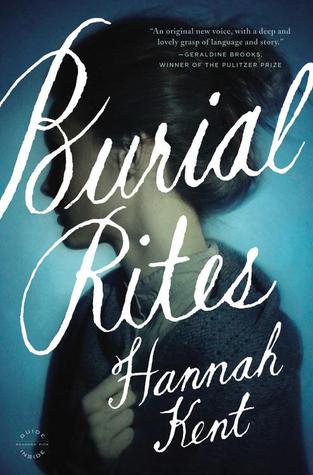
Burial RitesRead This...
Start with Hannah Kent's Burial Rites, which is the fictionalized story of the last woman to be publicly executed in Iceland.  We know from the beginning that Agnes is sentenced to death, the penalty for murder.  She's being kept on a small farm, and a young priest comes to listen to her story and essentially take her last confession.  As Agnes' execution looms ever closer, her story comes out, and it's implied that not everything might be as it seems.  This uses non-linear storytelling, jumping from the "waiting for execution" stage back to the times Agnes speaks of, when she worked as a servant on a really strange homestead and became engaged in a series of events that eventually led to a double-murder.  Agnes has apparently been painted as a ruthless killer historically, and Kent strives to humanize her and bring some semblance of doubt into whether she actually committed the murder or not.  Kent doesn't make Agnes a sympathetic character, necessarily, but does make it easier to see things through her eyes even when at times when it's hard to actually feel bad for her.  Ultimately, however, Agnes is a young woman in circumstances that, while they initially seem ideal, eventually spiral beyond her control to devastating consequences.  If you liked Burial Rites, continue on...

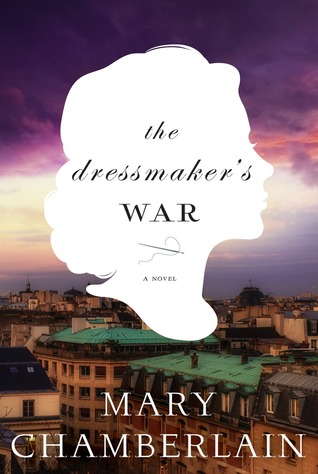
The Dressmaker's War...Then That
If you liked Burial Rites, you'll like The Dressmaker's War.  Set more than a century after Burial Rites and taking place in WWII Britain and mainland Europe (mainly Germany) rather than rural Iceland, The Dressmaker's War nonetheless has many of the same "feel" qualities.  It has that same sense of a young woman hoping to find love and advance herself who gets swept up in something that was not what she thought and paying the price for it.  In this book, we also know (or can pretty easily infer) that Ada, the heroine, is about to be executed, but it's unclear exactly for what.  That comes out over the course of the book.  Unlike Burial Rites, The Dressmaker's War uses sequential storytelling, with the exception of the prologue; the rest of the book is kind of set up as the story of what happened to Ada that she wrote down prior to her execution.  There's no sympathetic ear for Ada, unlike there was for Agnes--the reader has to serve that purpose.  But the feel is much the same, and if you liked one, you'll like the other.  I think reading Burial Rites is good because then you get them chronologically--the earlier story first, then the later, and it gives a sort of sense of continuity, of how over more than a century, in some areas, things had not changed that much.

Thursday, August 11, 2016

Read This, Then That Vol. 1

The Great GatsbyFirst, let me introduce what this is: Read This, Then That is a new series I'll be doing from time to time with book pairings that complement each other.  They might be two fiction books, or a fiction and a nonfiction; two different portrayals of the same event, or the background information on the fiction, or just books that are thematically similar.  What gave me this idea was how similar Mary Chamberlain's The Dressmaker's War felt to Hannah Kent's Burial Rites, and how reading them together could be a very good pairing.  But for this first edition, I'm going to focus my attentions on a book that's famous to the world: F. Scott Fitzgerald's The Great Gatsby.

Read This...
Most people know about Gatsby.  He's obsessed with the green light across the way, the light that signifies, to him, his true love Daisy.  A story of a man who's not all he seems to be, seen through the eyes of an interloper on the scene, The Great Gatsby is known for its fantastical parties, starcrossed lovers, and ultimately how futile and hollow the lives these people have been living seem.  It's easily Fitzgerald's most famous book, and has become a sort of icon for fiction set in the 1920s, when "paper millionaires" abounded and life, for many, was very, very good.  This is definitely a book you've at least heard of.  There's a good chance you've already read it.  If not, give it a read, take it in...

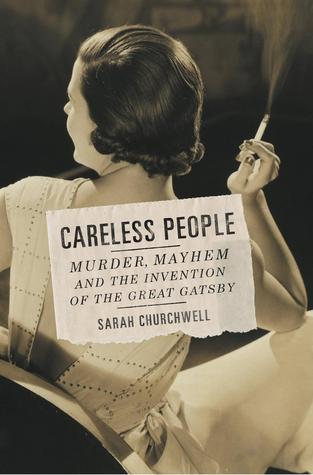
Careless People: Murder, Mayhem, and the Invention of The Great Gatsby...Then That
And then read about some of the things occurring in the world that Fitzgerald encountered while writing Gatsby. Sarah Churchwell's Careless People is both the story of the Fitzgeralds, both F. Scott and Zelda, during the time in which F. Scott was writing Gatsby, and of a double homicide that occurred and which very well might have inspired large chunks of the story.  It's nonfiction, but a riveting one, and seeks to not only portray the frantic partying of the Fitzgeralds but also plays with solving the double murder.  I really pondered the order in which to put these two books: which one to read first?  Ultimately, however, I decided that Gatsby should come first.  It lets you take in the story as a whole, without fishing around in for the details that come out in Careless People.  Reading Careless People second gives you the chance to follow along for the points of the "plot" that were paralleled in Gatsby, as well as fill in the background of the time period in which Gatsby was written and view the literary work with new eyes.  Careless People is definitely a longer book than Gatsby, but I think the writing is very engaging and that it's a worthy use of your time if you're at all interested in Fitzgerald, Gatsby, historical crimes, or the Roaring Twenties as a whole.