Pages

Showing posts with label contemporary fantasy. Show all posts

Wednesday, May 9, 2018

The Magicians - Lev Grossman (The Magicians #1)

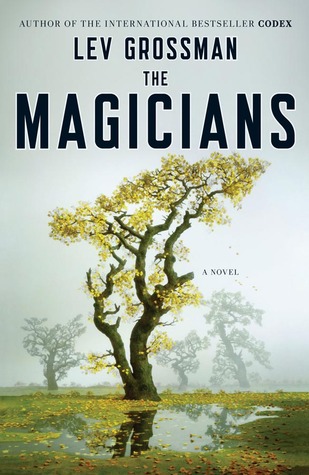
The Magicians (The Magicians #1)What an awful book.  I hope the TV series is better, because this was a work of pretension and drabble that I haven't encountered since I read The Name of the Wind.  (Yes, I went there.)

The Magicians is basically Fifty Shades of Gray for the Chronicles of Narnia, but with less BDSM and better writing.  What does this mean?  It's fanfiction, people.  Come on.  It's Grossman reading the Narnia books--particularly The Magician's Nephew in this case--and going, "Hey, I can write that better.  With alcohol and drugs and threesomes!"

This is a book that thrives off the nostalgia it invokes for its vastly superior source material.  Here, the plot follows the whiny main character Quentin, who is determined to be unhappy and destroy any bit of happiness he may possess, and even admits this at various times, even when he has pretty much everything.  Quentin is obsessed with a series of books about Fillory (Narnia) that is found by going through the back of a clock (wardrdobe) by the Chatwins (Pevensies).  The books came to a rather unsatisfactory end, but when Quentin is recruited to a school for magic instead of college, he thinks he's found something even better.  What follows could have been an excellent magical school story...except then Grossman ruined it by tacking on a Fillory/Narnia adventure in the second half of the book that had none of the charm or appeal of the first half, and way more ridiculous drama and stupid decision making.  Other parallels between Fillory and Narnia are the magic buttons/rings, the Neitherlands/Wood Between the Worlds, four thrones that can only be occupied by humans from Earth rather than by anyone from their own land...you know, that sort of stuff.

That said, there were some cool parts of this book.  The incident with The Beast at Brakebills was suitably chilling.  Brakebills South was awesome.  The Neitherlands, despite being an obvious riff on the Wood Between the Worlds, were very, very cool, and I wish we had actually seen more of them.  Brakebills itself offered a heck of a lot of charm, and was in fact the strongest part of the book--stronger than any individual character, setting, or plot line was.  But the insufferable characters, who upon departing Brakebills immediately became a full bunch of assholes rather than just entitled schoolkids, were a huge drag.  They showed no signs of character growth or attempts at redemption.  They held all the power in the world, and instead of choosing to do something with it, they got drunk, did drugs, hurt each other, and scammed non-magical people.  Even Alice, who I initially had hopes for, I ended up hating.  I have no sympathy for anything that happened to any of these people.

After reading this book, I immediately went back and read The Magician's Nephew and got a start on The Lion, the Witch, and the Wardrobe, too.  The Magicians' power lies almost entirely in what Grossman draws from Narnia...so why not just read the books that did it right the first time?

2 stars out of 5.

Tuesday, October 31, 2017

Beasts of Extraordinary Circumstance - Ruth Emmie Lang

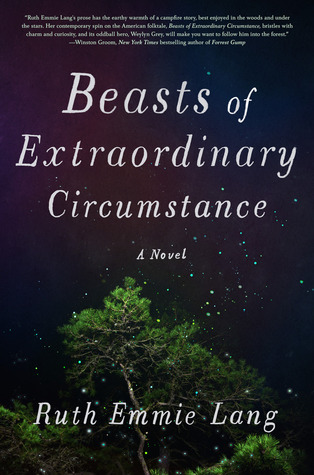
Beasts of Extraordinary CircumstanceWhen I saw the Book of the Month selections for October, I'm going to admit, I wasn't entirely thrilled.  There was nothing that really spoke to me, but I needed to get a book from this month so I could get my extras from previous months, so I finally picked Beasts of Extraordinary Circumstance because it seemed to have a magical realism element to it that might be interesting.

I loved it.

This is the story of Weylyn Grey, but Weylyn himself isn't a perspective character until the second-to-last chapter.  Instead, his story is told through the perspectives of other people.  First is Mary Penlore, the girl who first encounters him living in the woods with a wolf pack and buying out every butcher in the area for enough meat for them to survive.  Mary is a recurring character throughout the book, drawn to Weylyn after their first encounters even across years.  Also included are Weylyn's foster sister and her son, his teacher and eventual foster mother, the mayor of a small Mississippi town, one of his coworkers, and a young boy who encounters Weylyn living in the woods years later.  This wide range of perspectives gives insight into Weylyn even though we don't ever hear from him in a first-person perspective--even his dedicated chapter is written in third person, rather than first-person like all of the other chapters.

Mary and Weylyn's relationship, fraught by Weylyn's strange abilities to control (or not control) the weather, is what's really at the heart of this book.  At some points, it seemed like a sweet relationship, like when Weylyn decides to do something for Mary's birthday.  However, I'm ultimately not convinced that it's a healthy one.  Weylyn is fascinated by Mary because she is normal, and he is not.  Mary is fascinated by Weylyn because he is not normal, and she is.  Ultimately, there's not much more to their relationship than that, which is kind of sad, because I wanted them to connect in spite of their differences, rather than because of them.  It just doesn't seem like enough to build a lasting relationship on, or else it would have happened sooner than it did.

There is some beautiful imagery in here; the magical realism certainly helps with that.  Taking fantastical elements in such a normal way means that things like fireflies that make honey that becomes light that becomes an energy source can be mentioned, and incorporated with breathtaking detail.  The wolves are wonderful, Weylyn's house is creepy, and Merlin the pig is adorable.  All of this seems to come to the page effortlessly, making it seem both real and strange at the same time.  Ultimately, this was a wonderful story for the magical realism, for the story, for the characters--but I wish there had been a bit more to the relationship at the heart of it.

4 stars out of 5.

Sunday, December 4, 2016

Marked - Elisabeth Naughton (Eternal Guardians #1)

Marked (Eternal Guardians, #1)Marked was the Unapologetic Romance Readers book for November.  No, we are not good at reading things in a timely manner.  Thank you for noticing.  It's a paranormal romance with a focus on Greek-based mythology, but set in a modern world.  The main characters are Theron, head of the Argonauts from the mystical realm of Argolea, who work to protect humanity (Or Argolea.  Or something.  There seems to be some disagreement over what they actually do.) and Casey (short for Acacia, of course) a young woman who works the used bookstore her grandmother formerly owned and waitresses at a strip club to help ends meet.  The book starts with Theron barging into the club, sweeping another woman out of it, and then promptly being almost killed by demons, who scatter when Casey shows up despite her being someone they are supposed to kill. (?)  Casey rescues Theron, helps nurse him back to health (which happens very quickly because he is not human) and they almost have steamy sex before he notices a mark on her and jets off to figure out what's going on.

This book didn't have many highlights for me.  What I did like about it were the almost-sex scenes, which were very, very steamy.  The actual sex scenes suddenly went from steamy to "I'm going to die in three days so we must gently make love now!" very quickly and sort of made me want to gag.  But what really drove me up the wall here was the lack of internal logic in this book.  "But it's a paranormal book!" you might say.  And to that I still say, as I always do, "Yes, but it must play by its own rules."  I don't think Naughton did a very good job of that here.  At the climax of the book, she ultimately seems to go, "Screw the rules, I'm the author!" and the very thing that was supposed to have massive consequences for the entire length of the book didn't have any.  Also on this point, she uses the style of speech for all the characters, who all sound like foul-mouthed teenagers (I have nothing against foul language but really, I found myself rolling my eyes at it here), even the princess who has supposedly been sequestered away from the rest of society, which makes the whole "Oh, the Argoleans learned it from humans!!!" argument a bit weak.  The big romantic conflict is also ultimately resolved with no effort at all other than one character being stubborn, and really wasn't a conflict to begin with since none of the characters actually intended to go through with any of the things that would have made it a conflict to begin with.  Sigh.

She also cherry-picked mythological elements, which drove me crazy, because if you're going to do mythology, at least try to make it all work together or put some story behind it rather than just taking what you like and throwing out the rest with no explanation.  And what exactly was the point of this prophecy/separation of powers deal, anyway?  It didn't actually seem to serve a purpose?

Overall, I was not a big fan of this.  Naughton has a way of writing some steamy scenes but I don't think they could carry the book through all of its other weak moments.  I liked some of the other Argonauts and wouldn't mind seeing more about them...but I'm not quite sure I'm ready to go through another book of this to do so.

2 stars out of 5.

Friday, October 14, 2016

Elixir - Hilary Duff (Elixir #1)

Elixir (Elixir, #1)Oh, Elixir.  What a twisted path we've taken to each ohter.  See, the thing is, I noticed Elixir when it first came out because it was seemingly everywhere in the bookstores I was going to.  But I didn't read it.  (Why?  Two reasons: it was written by Hilary Duff, and while The Lizzie McGuire movie is the pinnacle of all things amazing, I am skeptical of celebrities' writing abilities, and because the font was too big.  Yes, I did in fact judge books by how large they were printed, in some though that the larger the font, the poorer the quality.  I still think there is something to this idea.)  But it came to mind when I needed a book to fulfill the "written by a celebrity" category of my reading challenge, so off to the library I went.

It was better than I thought, but not great.

Here's the thing.  I think this is a premise that would make an awesome late teen/young adult TV show.  It has all the markings of a great one for these times: a pretty girl with a penchant for photography, a love triangle with two attractive guys, a hint of the supernatural, and various times and places that would make sets and costuming a clear standout.  And for a book in the same vein, it wasn't horrible.  In fact, I liked it quite a bit until about 2/3 of the way through.  The plot follows Clea, who, after looking at pictures taken on vacation with her best friend, finds that the same guy is lurking in the background in all of them, including in places there's no way he actually could have been--like hundreds of feet up in midair.  And then she starts having dreams about him, in four distinctly separate times and places, with her taking on the persona of four different young women.  And then, when she tells her friend Ben about them, he reveals to her that she's not the first person to see this guy in photos.  Clea's father saw him in photos of and by her, too, all through her life up until he vanished a year before while on a trip to Brazil.  Wanting answers about both the guy in the pictures and her father's disappearance, Clea accepts a photojournalism assignment to cover the Samba Parade at Carnival and plans to stop by the last place her father was seen on the way.  And then, while she's there, she and Ben run into the guy from the photos, and everything gets weird very fast.

Here's the thing... Once Clea and Ben run into Sage, all logic goes out the door and the pace of the story dissolves into complete goop.  I think it was actually pretty well-structured leading up to this point, and even for a bit afterwards I thought it was going to go well.  But then Clea decides to dive head-first into a relationship with a guy that she thinks might have killed her in past lives and might be planning to do so again because her other best friend, Rayna, tells her to listen to her heart.  Oh, suddenly instead of just looking for answers, Clea & Co. are being chased by a bunch of baddies who have no problems shooting up malls in Tokyo to get at them.  (This is another scene that was tailor-made for TV but did not work so great on paper.)  Very little is found out about Clea's dad, except that he might actually still be alive, but that didn't really bother me, because that's something that's clearly going to come out more in the other books in the series.  But the end of the book... Ugh.  Clea is all blame-y on Ben for something that was really her fault, and that was so against the logical person she'd been for most of the book that it annoyed me even more than it would have if she'd been a normal brainless YA heroine.  That and a few more minor things (Clea's dad was declared dead after four months?  What?  It's typically seven years for someone to be declared dead without a body, people...) really grated one me, even though I could see how awesome this really could have been.

Overall, I think this is a book that was written with the screen, rather the page, in mind--not surprising, considering Duff's background.  And I think it would have done well on the small screen.  But as a book, the pacing just doesn't feel right, and the way that Clea as a character kind of falls apart at the end, putting a guy she's just met before everyone else, including friends and family she's had for, uhm, ever, really knocked it down for me.

2 stars out of 5.

Friday, June 10, 2016

Twenty-Six Roses - Tamara Vann (Keeper's Daughter #1)

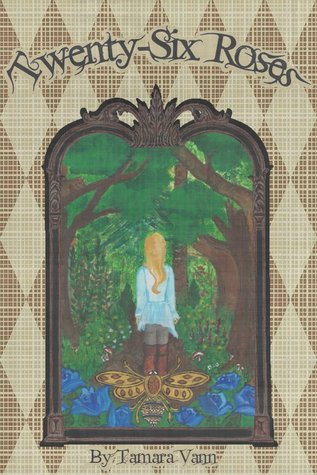
Twenty-Six RosesThings this book does not have to do with:
-Twenty-six roses
-A person who is a "Keeper's Daughter"

The roses are very, very briefly referred to at the end of the book.  But unless the main character, Kara, is not actually the main character, I can see no reason that this series is called "Keeper's Daughter."  Shes' 15, so she clearly doesn't have a daughter, and she's apparently also not the daughter of the person who formerly held the title of Keeper in the world that this book involves.  So yeah, I'm not sure where that comes from.

Now that those things are out of the way...

Twenty-Six Roses is about Kara, whose father dies and whose mother moves herself, Kara, and Kara's little sister Meghan from Colorado to Texas in order to get away from the tragedy.  On one of the first days in their new house, Kara and Meghan find a weird mirror behind a barricaded door in the attic.  Meghan half-falls through the mirror and is injured by something there, and quickly sickens.  When Earth doctors don't seem to be able to help her, Kara goes back to the mirror and enters the world beyond it to find a cure for her sister.  In the mirror, she finds a world where "people" are really human-sized animals, with the exception o of the Marked (like guide and love interest Vargas) who appear to be humans with a few animal-like features such as eyes and teeth.  The world has fairies and menacing creatures called shadow howlers, and it's hinted that there might be more magic but it's not really dealt with.

Actually, while there are some very nice concepts here--fairies who will take over your body and hurt you while having fun, or tempt you off your given path, pendants like the sun and rain that hold some of the properties of their likenesses, and quests to find cures for mysterious illnesses, it left hanging a bunch of things that I, well, find kind of strange, such as...

-A strange woman of a different species entirely shows up in your kingdom and declares herself ruler.  You apparently have no problem with this; there doesn't appear to be any prophecy of any sort to support this or anything like that.  And then that woman goes away, and another shows up a huge amount of time later... And you welcome her, too, even though she pretty much blatantly says that she's not the person you're looking for.  You accept her as your new ruler anyway.  Why?

-Animals are people.  Except they're not?  Sparrows and mice and dogs are people, but rabbits and horses and ponies and phoenixes are not.  Some animals are people, and others are eaten.  Why?  What's the distinguishing factor?

I'm going to set aside the issue of how quickly Kara attaches herself to the new world and Vargas and accepts it all in such a short time, even when her sister is dying back in her own world.  I have some problems with it, but it's a pretty typical trope for this type of book so I'm going to let it go.  What I'm not going to let go is that there's no real conflict in this book.  Everyone Kara meets pretty much bends over backwards in order to help her.  Even though she's lying about who she is, even though they have no real reason to.  Vargas himself just immediately decides he's going to work with her and do everything in his power to help her, even though he knows she's not this new ruler person.  I just can't wrap my head around the logistics of this, or the lack thereof.  It's not addressed at all.  Kara just breezes through the mirror, finds out she's the new ruler of this place, and is just kind of like, "Oh, cool, so help me help my sister, good, kthxbai."  It's just weird.  The background for this setup isn't laid out and isn't a problem at all, and how there's absolutely nothing to oppose Kara once she gets on her way.  There are a few trip-ups, but it's nothing that's actually aimed at preventing Kara from reaching her goal.  Instead, they are things that could have happened to anyone.

Overall, this was a cute, short story, but I think it would have done well with some fleshing out.  The background for the world and Kara's new position in it just isn't there to support the narrative, and while there are some nice concepts, a lack of a strong central conflict (Meghan's illness hardly qualifies as a conflict) means there's also a lack of compelling oomph.

3 stars out of 5.