Pages

Showing posts with label france. Show all posts

Sunday, July 23, 2017

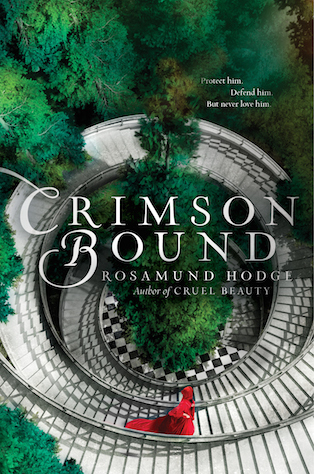
Crimson Bound - Rosamund Hodge

Crimson BoundRed like roses fills my dreams and brings me to the place you rest...

If there's one thing that sums up the tone of this book, it's the original "Red" trailer for Rooster Teeth's webseries RWBY.  There is, in fact, very little in common between the plot of RWBY and that of Crimson Bound; the similarities can basically be boiled down to "young woman in red coat kills monsters," though Ruby uses a scythe/shotgun and Rachelle uses a sword.  But there's such atmosphere in that trailer, and it is that which is evoked in the pages of Crimson Bound.

 I read Rosamund Hodge's other fairy tale book, Cruel Beauty, earlier this year and while it felt magical, I didn't really like the ending, feeling it was messy.  Crimson Bound does not have that issue, and was beautiful all throughout.  The story is a retelling of Little Red Riding Hood, a rarely-used retelling unless someone's going with the "Red and the werewolf fall in love" angle, which has its perks, but this didn't go that way and it was refreshing.  The main character in this France-inspired fantasy realm is Rachelle, who was supposed to serve as a woodwife following in her aunt's footsteps, guarding her village against misfortune and the evils of the Great Forest, a mystical wood on a separate plane that overlies Rachelle's world and encroaches upon it.  However, Rachelle is claimed by a forestborn, marked with a black star that means she must kill within three days or die herself.  She kills her aunt and flees her village, ending up as a bloodbound in the service the king, hunting down the creatures that appear from the Great Forest to hunt humans.  All the while, she dreads the return of the Devourer, a being that kept the world in darkness until a human woman stole the sun and moon from his belly and bound him with a mysterious sword that has since been lost.  Wanting to save the world as a sort of redemption, Rachelle dreams of finding one of the two swords that could defeat the Devourer again.

I think fans of Uprooted or Hunted would really like this; they all have a similar feel to them, especially with the whole "magical and menacing forest" dynamic.  The love interest here was unusual, and not who I thought it would end up being; I originally thought Hodge would try to pair Rachelle off with Erec, the captain of the king's bloodbound who Rachelle calls her best friend.  Ultimately, this did not happen, and that's a good thing.  Rachelle is a fascinating character.  She has both an urge to die and a will to live; she plans on going to Hell even as she dreams of saving the world; she wants to be beautiful and in love despite being afraid of what lurks inside her and the monster she might become.  There's a definite religious aspect here, but it wasn't preachy; it was more in the search of redemption and balance, though there was definitely an aspect of denial of reality here as well.  It played wonderfully with the rest of the book.  The supporting characters were wonderful, the playing out of the plot in parallel with the Red Riding Hood story and the myth of the Devourer was spot-on, and the slow building of dark menace overlaying the decadent setting of a Versailles-inspired court was beautiful.

Ultimately, the climax was here was wonderful, with all of the right elements being pulled together and unspooling in just the right way.  Rachelle chooses the path of needles, not the path of pins, and it shows--she struggles, and she fails, and she backslides, and she does petty things, but she perseveres and ultimately comes out better for it in the end, as does the world.  It's a striking story, in characters, world, and plot, and I am so glad to have read it.

5 stars out of 5.

Wednesday, April 26, 2017

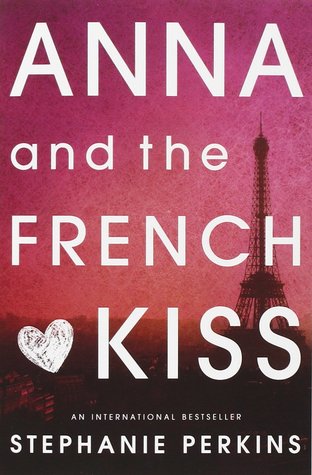
Anna and the French Kiss - Stephanie Perkins (Anna and the French Kiss #1)

Anna and the French Kiss (Anna and the French Kiss, #1)
So, one of the categories for the Popsugar Reading Challenge for 2017 is to listen to an audiobook.  Originally I'd slated The Nightingale for this, since it's supposed to be a great audiobook.  But then I figured that, given my attention span with listening to things, I'd better pick out something I'd actually read, so that when I inevitably tuned out, I could catch up without constantly having to rewind.  So, because of that and library availability, I got Anna and the French Kiss on audiobook.

I liked Anna a lot less on audio than I did when I read it.  Part of this is the narrator.  I don't think it's really the narrator's fault, but she reads in this high, breathy voice that kind of made me want to punch Anna (not the narrator herself, let's be clear) in the face because she came off so much more brainless and immature and downright bitchy than she did in the actual book.  I didn't agree with the inflections she used and felt that it gave a completely different feel to the entire story; if I'd listened to this originally, never in a million years would I have picked up the two companion books, Lola and the Boy Next Door and Isla and the Happily Ever After.

But hearing the book did bring to light a few things that I think I glossed over the times that I read it.  Like how there's a surprising amount of slut-shaming and homophobia in this book, and not all of it is from the antagonists; there's actually a good deal from Anna herself, which makes me flinch away from the book as a whole.  There's an incident in which the stereotypical "bitchy" girl calls one of Anna's friends a dyke, and Anna gets into a fight with her.  Anna is so offended that this term was used, not because it's a derogatory term, but because the friend isn't a lesbian, so how dare someone imply that she is?  Later she backtracks some and tries to say that the insult doesn't make any sense, but her knee-jerk reaction is that, somehow, being a lesbian was the insult here, not the way in which it was referred to.  She doesn't show this attitude toward a man who's implied to be gay at another point in the book; rather, this seems to be confined to lesbianism, which makes the whole thing so icky.

And then there's the slut-shaming.  This is rampant from all directions.  Someone spreads a rumor that Anna slept with the guy she was dating, which of course automatically makes her a slut.  Anna views girls who date boys she likes as sluts, even if she never uses the term in relation to them--the implication is definitely there.  Anna's friends say they don't believe that she slept with the guy, but it's also implied that if she had, they wouldn't be friends anymore.  Because sleeping with your boyfriend obviously means you're a total slut.  Yes, this is a book about high school students, but one would expect better behavior from our protagonists--both Anna and her friends.

There's also an uncomfortable amount of "friendzone" mentality in this, in which Anna thinks that, because she's close friends with St. Claire when he's having a hard time, he should totally break up with his girlfriend and be with her, even though she actually has no idea what his relationship with his girlfriend is right.  Ultimately, of course, St. Claire is attracted to Anna in return, but that isn't my point.  My point this that, just as girls are not machines you put friendship coins into until sex comes out, neither are boys, and this mentality isn't any healthier on a female main character than it would have been on a male one, though I think this book would be getting a lot more flack if it was St. Claire who had displayed this attitude and not Anna.

Anna was my second-favorite book in this trilogy, and despite the new flaws that I've seen it I think it retains that spot.  It has inherent flaws, yes.  But I am willing to give it some slack, because the story is so charming and the slow-building romance is so delicious, and it's a first book.  Lola is my least favorite and Isla takes the top spot, though now I might have to re-read and re-evaluate those with a more studied eye, as well.

Originally I had rated this 5 stars; at this point, I'm knocking it down to somewhere between 3.5 and 4 stars, marking at 4 for Goodreads purposes.

Wednesday, November 2, 2016

The Black Count - Tom Reiss

The Black Count: Glory, Revolution, Betrayal, and the Real Count of Monte CristoThe Black Count was another book I was reading as catch-up for the online book club over at The Deliberate Reader, but I was also planning on doing a "Read This, Then That" with it and The Count of Monte Cristo (also read for book club catch-up) because, uhm, the subtitle of The Black Count is "Glory, Revolution, Betrayal, and the Real Count of Monte Cristo."  Unfortunately, that didn't work out so hot, for a couple of reasons.

The Black Count is supposed to be a biography of Alex Dumas, father of the novelist Alexandre Dumas, who served in the army during the French Revolutionary era.  Reiss tries to make the argument that it was Alex Dumas' experiences that inspired The Count of Monte Cristo, but honestly, after read the whole book, I can only see a few tenuous connections; the strongest points of influence don't even have to do with a Dumas/Edmond Dantes connection, but rather in general constructions and side characters.  The only connection between the two directly is that Alex Dumas was imprisoned for two years.  Edmond Dantes was imprisoned for fourteen.  But whereas Dantes was thrown into prison because he'd been framed, Dumas was imprisoned because he was an actual prisoner of war and had made the mistake of winding up in a territory that was at war with the revolutionary French Republic that he served.  So honestly, I don't think that "Alex Dumas inspired Edmond Dantes!" is an argument that holds water; Reiss even quotes Alexandre Dumas in the prologue of the book, from when the novelist said that he was inspired by a news article about a serial killer and added a revenge plot to bulk it up when he wrote the book.  But that doesn't mean that this book was bad...

...it just wasn't, predominantly, about Alex Dumas.  The first several chapters build up the Dumas family history, it's true, but after that the focus of the book turns largely to the French Revolution as a whole, and with a particular focus on the time when Napoleon was rising to power.  Reiss' main goal actually seems to be to illustrate what a jerk Napoleon was, and he uses Dumas to illustrate that point rather than to actually tell Dumas' story in and of itself.  I think it was an interesting book--I wrote my senior thesis for university on the French Revolution, and particularly on the noyades de Nantes, the mass mass drownings that Reiss mentions briefly here, but I actually hadn't known about a lot of the Napoleonic parts that Reiss goes into.  This is probably because no one really knows whether to properly include Napoleon in the main Revolution or not, and so it gets a bit jumbled up when it's taught.  I learned a lot on those aspects, and about things that happened outside of Paris, which, again, classes don't typically go into.  But once the revolution actually gets underway, Dumas himself really falls into the background as Reiss lets us know about everything else going on, so I think putting this forth as a book that's really about Dumas is a bit of a stretch.

So, overall, an interesting history book...but a biography, or something about the "real" Count of Monte Cristo?  I think not.

3.5 stars out of 5.

Monday, August 22, 2016

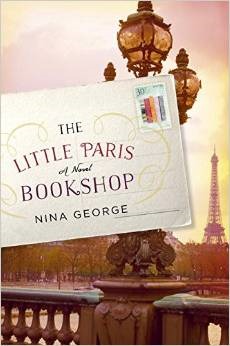
The Little Paris Bookshop - Nina George

The Little Paris BookshopGuess what?  This book was translated into English!  What a pleasant surprise that was, because it means that I can count it for one of my reading challenge categories.  My reaction upon realizing this (though I'd been planning on reading the book anyway) can be summed up thusly: "O frabjous day!  Callooh!  Callay!" I chortled in my joy.

The Little Paris Bookshop is the story of Jean Perdu.  He owns a floating bookshop upon a barge moored in the Seine in Paris, which he calls The Literary Apothecary.  He prescribes books for all of life's woes and aspires to write a sort of encyclopedia of feelings that haven't really been pinned down in most works yet.  He has a routine and sticks to it like clockwork, something he has done ever since the woman he loved left him two decades ago.  When a new neighbor moves into the flat across from him, he gives her a table--a table he has to haul out from a room that's been walled up ever since said lover left.  And in the table, the new neighbor finds a letter that's never been read.  The neighbor and the letter are a pair of catalysts that have Jean casting off from his mooring and starting off on a journey to the south of France aboard his floating bookshop, along with a famous author facing a serious case of second-book writer's block and, eventually, an Italian chef looking for a woman he loved and lost.  Along the way they explore the canals of France, go to a secret tango society, rescue a woman from drowning, and look for the pseudonym-ed author of Jean's favorite book.

Even in translation, there was some beautiful writing in this book.  The descriptions of the settings in particular were wonderfully vivid and I could just see the canals, the locks, the flowers in my mind.  I think the supporting characters added just the right amount of flavor to the story, though their losses and longings are really side notes to the main story.  There are also a few chapters which are excerpts from Jean's former lover's travel diary, which help to explain what was going on with her, and why she did what she did, long before Jean gets the full story.  I found those a bit long and sappy for my taste, but I can see why they were included.  Maybe Manon herself just didn't agree with me; her actions in how she conducted her relationships aren't really something that I'm on the same page with, which made her hard for me to empathize with in that regard, though other parts of her story were routine enough.

Honestly, Manon's reason for leaving Jean was the part of the story I liked the least, just because it seems so...done.  I didn't find anything particularly interesting about it, and honestly felt like she'd played the whole thing up more than she had to.  This spills over into the rest of the story, because Jean has been tied up in all of this drama for twenty years, which honestly...I mean... Ugh.

So, I think the writing and descriptions here are the real strength, and the central story was not.  George has a way of making her locations just come to life in a way that I don't think many authors can, and I really enjoyed that.  The central plot didn't do much for me, though.  The side plot--about finding the author of Jean's favorite book--was much more intriguing.  The problem for me is, the central story is one that's about grieving and moving on, and I'm not really at a point in my life where I can empathize with that.  Sympathize, yes.  But empathize?  Not really.  Jean Perdu believes that each person needs different books at different times throughout life, and maybe this just wasn't the right time for me to read this one, though I definitely do appreciate the skill that George put into it.

3 stars out of 5.

Friday, December 11, 2015

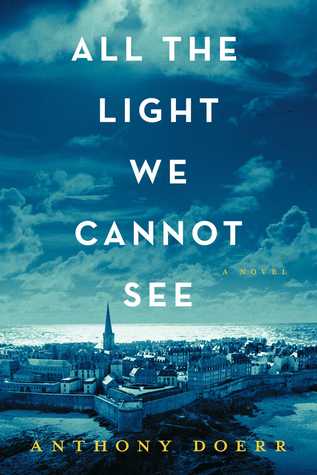
All the Light We Cannot See - Anthony Doerr

All the Light We Cannot SeeOne of the categories for Popsugar's Reading Challenge for 2015 was "A Pulitzer Prize-winning book," which of course led me to All the LIght We Cannot See.  I did scroll through the list of Prize winners for other options, but out of all of them, this one seemed the most interesting to me, and it got great reviews from regular readers in addition to the Prize-givers, so it seemed like a solid option.

And it was beautiful.  The book takes place during World War II, with short periods and a slightly longer denouement taking place before and after the war, respectively.  There are two main characters.  Werner is a German boy/teenager who gets into a prestigious school for his engineering abilities.  He can fix pretty much any radio, and is soon designing his own, which the Germans use to hunt down resistance fighters in eastern Europe and in France.  The other main character is Marie-Laure, a French girl/teenager who lost her eyesight at a young age and whose father is trusted with taking a copy (or potentially the original) of an infamous diamond with him when he and Marie-Laure flee Paris.  Marie-Laure's father is eventually arrested as a spy, and Marie-Laure unwittingly becomes the guardian of the diamond in his absence.

The diamond itself is the axis on which the story spins.  It lends a fantasy, or maybe a magical-realism, element to the story--is the diamond magic, or not?  Is it a curse, or luck?  Doerr never comes out on one side or the other, making it a real either-or that tantalizes at various parts of the story, sometimes seeming one way, sometimes seeming the other, and we're ultimately left having to make our own decisions on the matter.  The war-time setting lends atmosphere more than anything else, and is cause for some poignant moments that would not have otherwise happened, but most of the plot could easily take place in another point in time, when a group of people is hiding a diamond from someone else who wants it.  That, to me, was good, because it made the story easier to slip into, and while there are some heavy events in this book, Doerr doesn't focus on the aspects of the war that many do: concentration camps, shootings, fighting a resistance.  His focus on a teenager who is in the German army, but tries to distance himself from its doings, and on a French civilian--who ends up helping the resistance, but only in the barest of possible ways--makes the story seem more every-day, makes the characters more real.  Most of us probably can't imagine what it would be like to find a downed pilot, rescue him from a tree, nurse him back to health, and then smuggle him across the border to safety.  However, most of us probably can imagine asking for a loaf of bread and passing off a piece of paper.  Small, simple things, but they make such a difference in this story.

The writing here is absolutely beautiful.  Doerr's descriptions of Marie-Laure's world are wonderful, and Saint-Malo was clear to me even though Marie-Laure couldn't see it to actually describe it.  Werner's parts were lovely, too, though in a more painful way.  His attempts to distance himself from his own actions, a blatant dissociation in order to preserve his sense of righteousness as much as possible when he knows that what he is doing hurts people, was painful at times, especially in regards to his friend Frederick and in his estrangement from his sister Jutta.  At the same time, though, it's easy to see how boys like Werner would have ended up rabid Nazis.  Werner was picked up from an orphanage in a nothing town, saved from a life of mining coal and probably dying young, and instead put into a school where he was treated like he was special, like his knowledge and skills were valued.  That's quite a lure, and it's easy to see how he wanted to vanish into that world--though the niggling conscience instilled by his own morals and his sister never quite left him.

 The only real complaint I have about this book is that the denouement was too long.  This is one of the instances in which I felt there was too much resolution; I would have liked a little more to be left up to our imaginations, instead of multiple time-jumps taking us decades into the future to see where various characters ended up.  A little more mystique in regards to the characters would have matched the mystery tied to the diamond, and tied in a little more meaningfully to me.  Still, though, a beautiful book, and one I would heartily recommend to pretty much anyone.

4 stars out of 5.

Monday, December 7, 2015

Lovers at the Chameleon Club, Paris 1932 - Francine Prose

Lovers at the Chameleon Club, Paris 1932This book has been on my to-read list for quite a while, but the university library system in DC didn't have it.  However, when I was scanning the popular reads section a few weeks ago, it was there!  So of course I picked it up.

The book is historical fiction written in the style of a collection of memoirs, letters, biographies, and even some chapters that are written in a typical third-person narrative style.  Each character has his or her own style that's maintained throughout the book; Lionel writes books that aren't specifically memoirs, but are definitely first-person, while Lily and Suzanne write memoirs, Gabor writes letters to his parents, and Lou's story is told through a biography written in 2010.  The mix of styles means that each character has a distinctive voice, and their overlapping opinions and version of events give a nuanced feeling to the story.  What's most interesting about this book, though, is that it's a fictionalized version of historical events--obviously, because it's historical fiction, but even more closely than most historical fiction is.  All of the characters are re-named real people, so that Prose could draw heavily on their real lives and doings but still have some creative license.  The title is taken from the title of Gabor's book-within-a-book, which is in turn named for a photo he took.  While the photo described in the book is its own, it's easy to see that it's drawn heavily from this photo:

"Lesbian Couple at Le Monocle, 1932" by Brassai, Cleveland Museum of Art 

This makes Gabor, Brassai, a real-life Hungarian photographer, and Lou Villars is really Violette Morris, a female athlete turned Nazi sympathizer.  The book is clearly built off Prose's fascination with Morris/Villars, and how such a young woman could slide into what could, arguably, be called evil amongt the larger narrative of Europe's slide into World War II.  The other characters' stories all really revolve around Lou's, even though they have their own events happening beyond her scope.  Possibly this was meant to be a real biography that Prose reworked into a fictionalized version, possibly not; but it was a delightful read nonetheless.  I didn't know anything about Morris, Brassai, or the other real-life people who inspired the characters before I read this, but the book made me want to read and learn more about them, and that's a good book indeed.  It does have the result, however, of having to keep in mind that the book is fiction, and carefully balancing out the real-life aspects with the fictionalized aspects in one's head.

Out of all the sections, Gabor's were my least favorite.  I dislike narratives written in letter form, and I was glad that Gabor's letters shortened and became more scarce as the book went on, to be replaced by chapters of the memoirs and the pseduo-biography instead.  And then, from nowhere--gasp!--we get an unreliable narrator!  Ugh, that bothers me so much, but at the same time it gives a ton more dimension to what could have been a good, but somewhat flat, book, because it raises the question...who is telling the truth?  And for the unreliable narrator, what was that person's motive in telling the story as he or she did?  These are questions that are never actually resolved in the book, though another character speculates on them in the end, and it left me with some food for thought, something to chew over while starting on my next book.  I started reading All the Light We Cannot See while I was reading Lovers, which is another World War II historical-fiction book, and the two paired together have made an excellent read so far.

Overall, I really liked this is a historical fiction, but some of the characters--like Lionel, and Arlette--annoyed me enough that I'm not quite willing to give it a full 4 stars.  There's no preface or prologue explaining the pseudo-historical aspects of it, either, which I don't like; when something treads this close to the truth/fiction boundary, I feel like the author should at least have the decency to own up to it and put the facts straight in an afterword.  I'm not sure if I'd read this again, but I liked it this time around.

3.5 stars.

Wednesday, September 30, 2015

Picnic in Provence - Elizabeth Bard (Lunch in Paris #1)

Picnic in Provence: A Memoir with RecipesThe Popular Reading section strikes again!  I haven't actually read Bard's Lunch in Paris, though I certainly intend to now, which should tell you something about my attitude toward this one.  And I'll be honest--it was the combination of "Provence" and that little sub-title, "A memoir with recipes" that got my attention, because I fricking love food and there's no secret about it.

In this book, Bard talks about her experiences moving to the small town of Cereste in Provence, France, with her husband and small child.  Consequently, the book follows several themes: living in a new place, food, and the struggles of motherhood.  Two of these appealed to me.  One of them did not.  Can you guess which two I liked?

You got it, new places (I long to travel freely; someday I might actually make enough money to do it) and food.  Motherhood strikes no chord for me because I am not, and never intend to be, a mother.  Children are not my cup of tea, to put things politely.  That said, the sections about Bard's struggles with her son, Alexandre, didn't alienate me.  Bard has a warm way of writing and while I certainly don't envy her status as a mom, let alone a mom in a foreign land, I never felt like I needed to skip portions or roll my eyes in exasperation.  She also had a good way of interspersing the different themes so that they balanced each other out, not leaving one portion of the book more "top heavy" than the others.  Toward the middle/end, Bard and her husband decide to open an ice cream shop, which largely devours their lives and hence the narrative, but I suppose that's to be expected for a memoir.

The recipes sounded scrumptious, and there are even a few I think I might make.  Ice cream recipes do me no good, because I do not own an ice cream machine and have little inclination toward buying one, but there seemed to be a few good, hearty recipes in here that anyone could use, ice cream machine owners or no.  White beans with tomatoes and herbs sounded scrumptious, and while I'm pretty sure that the folks at Safeway would look at me like I was crazy if I asked for a butchered rabbit, zucchini soup, zucchini gratin, and many other recipes might need to make an appearance in my kitchen.  I'll have to hold on to the book a day or two longer to glean out the ones I want before returning to the library.  Bard has a way of describing food that just makes it sound delicious, and while I'm pretty sure I'll never roast a whole lamb, no part of me would object to eating such a thing if it's as good as she says it is.  She even made me want to give blood sausage a try, and let me tell you, that's an accomplishment.

There were a few things that did bother me, though.  First, Bard switches between present and past-tense a lot, which drives me absolutely crazy.  I am a very firm believer in writing entirely in past tense, especially for things like memoirs.  Very rarely is present tense necessary, even when what you're discussing might technically still be true--yes, Bard loves her husband and child, but the tense switching wasn't necessary.  She could have left it in past tense and I wouldn't have found her feelings suspect.  And there's this string of logic through it that I just can't quite seem to get my head around.  Bard talks about taking her son to day care, about working full-time and not being around him, and yet, for the life of me, I can't figure out what she actually does.  She talks about writing, but it's in a way that makes it seem like she puts off writing (as all writers do!) and that getting a few hours to write is a blessing, so I have no idea what all of this "full time work" she talked about actually was.  Her cover bio says she's a journalist, but given that she can't drive, I don't exactly see her roaming all over the countryside looking for stories, and I'm not sure how much Cereste has to offer--it's beautiful and charming, I'm sure, but even that can be exhausted at a point.

Still, I definitely want to pick up Lunch in Paris, Bard's first book.  It's another memoir with recipes, but it seems like it will focus more on her early relationship and experiences in France, before her wedding and subsequent move.  Given where I am in my life, that seems like it'll be more up my alley.

3.5 stars out of 5.