Pages

Showing posts with label wwii. Show all posts

Monday, June 18, 2018

In the Garden of Beasts - Erik Larson

In the Garden of Beasts: Love, Terror, and an American Family in Hitler's BerlinErik Larson is an awesome history author.  I've read both Dead Wake (about the sinking of the Lusitania) and Devil In the White City (about a serial killer and the Chicago World's Fair) by him, and found both of them to be excellent in quality.  When I was looking for a book linked to my family history for my reading challenge, I decided to just pick something set in Germany, because I didn't know what else to focus on.  (Despite this book focusing on the family of an ambassador in WWII Germany, I am neither related to the Dodds, nor am I aware that any of my direct family were Nazis, though I suppose anything is possible; wouldn't that be a nasty surprise?)

In this book, Larson focuses on Ambassador William Dodd, the first US ambassador to Hitler's Germany, and Dodd's daughter Margaret.  His wife and son were also present in Germany, but are not looked as much in the course of the book.  And what the book is, is a startling examination of the old adage "Hindsight is 20/20."  Now, we have such clear hindsight, being able to see that Hitler was bad news, and that something should have been done sooner--but through the Dodds, we can see how that wasn't the case at the time.  They initially were kind of friendly toward Nazism in general, being somewhat anti-Semitic themselves, though Hitler himself was seen as kind of a kooky guy who Hindenburg had well in hand and who probably wouldn't remain in power very long.  But the Dodds slowly become more and more aware of what a terrible situation is brewing in Germany--and are stonewalled by everyone else, who either outright don't believe them or don't want to believe them, or do believe them but don't want to get involved with European affairs and instead only want to focus on Germany paying its reparations from World War I.  It's an incredibly frustrating story to read, because you can see the trouble building in the background, and the Dodds growing increasingly concerned and Ambassador Dodd's attempts in particular to do something without causing an international incident--and without getting himself fired in the process, as he isn't well-liked in the State Department to begin with--and knowing that it's all futile.

Larson builds the tension here wonderfully.  This is a true work of nonfiction, as well--everything he implements is taken from letters, cables, diaries, etc.  He does step back to speculate once or twice, but always notes that he's doing so, saying something such as, "Perhaps, but they didn't write about it they did, so we can't really know."  The Dodds aren't really the most interesting people on their own; the details of their day-to-day lives can be boring, mostly consisting of Dodd's colleagues at the State Department planning to oust him and working to undermine him at pretty much every turn and Margaret having a bunch of affairs, but I think that provided exactly what it was supposed to: an idea of how life went on for most people in Germany, and it was not a sudden event that Hitler rose to power, made being Jewish illegal, and started killing people and planning to take over Europe.  Rather, it was a slippery slope that rose against a background of existing tensions, and no one action took place until the preceding ones seemed normal.  Hm...does that sound familiar to anyone alive today...?

This is not a "fast" read, nor is it a thrilling one.  But it is one that is chilling in the way that it, in many ways, mirrors the world we live in now.  They say that those who don't study history are doomed to repeat it--so study up, folks.

4 stars out of 5.

Monday, December 4, 2017

Tatiana and Alexander - Paullina Simons (The Bronze Horseman #2)

Tatiana and Alexander (The Bronze Horseman, #2)Guys, we have a problem.  My library had The Bronze Horseman, the first book in this trilogy, and it had this one, the second.  You know what it doesn't have in any format?  The third book.  What am I supposed to do?  Honestly, I could probably stop reading here since this book has a pretty firm ending, but it would feel weird to just leave out the third book, you know what I mean?  But though I'm eager to read the third book, that doesn't meant that this book isn't without its flaws.

The book doesn't pick up where the first one left off so much as jump backwards--the parts with both Tatiana and Alexander overlap with the happenings at the very end of the first book, with Tatiana fleeing to America and Alexander being arrested by the NKVD.  The chapters early in the book are also interspersed with short bits about Alexander in his life prior to his first appearance in The Bronze Horseman.  For much of the book, Tatiana and Alexander are separated, neither truly knowing whether or not the other is alive.  Because two characters who don't even know the "living or dead" status of their significant others don't really bode well for romance, the first half to two-thirds of the book heavily involves a lot of re-treading of the ground covered in the first book, particularly the time that the two spent in Lazarevo--which was, unfortunately, the weakest part of the first book.  And while the "present" parts of the book--aka, the parts that are actually happening on this book's timeline, after Tatiana and Alexander's separation, rather than during the "past" part before it--have some interesting happenings, they're pretty much all on Alexander's part.  See, Alexander is busy being arrested and interrogated by the NKVD and then going through other sorts of hell in Russia afterwards, while Tatiana spends her time bopping around New York with their child Anthony.  While she's not disrespectful toward Alexander or anything, and in fact does what she came to find him from thousands of hours away, her parts just aren't as interesting.

Where this book regained its strength was in the final part, when Tatiana returns to Europe in search of Alexander, once again in her disguise as a Red Cross nurse, though I guess it's not exactly a ruse anymore.  This returns her to action, and shows the strength and goodness of her character that just wasn't present while she was drifting around New York and protesting that she could never love again.  Tatiana does have a good character, but Simons didn't display it to its fullest here, though Alexander was done wonderfully.  In fact, he was probably better in this book than in the first one, precisely because he and Tatiana were separated for most of the book.  Once they're reunited, Alexander actually gets worse again.  Why?  Because their separation allowed his controlling tendencies to fade to the wayside, and when they're reunited, all of those terrible character traits come surging to the surface again.

Overall, I don't think this was as strong of a book as the first one.  The setting of wartime Leningrad really carried the first book, and without that here, the characters separately weren't enough to make up for it.  Alexander's parts were good until Tatiana showed up, whereas Tatiana was better once she returned to Europe, which basically sums up the unevenness of the book.  I'm still interested in seeing the end of these characters' story as the timeline moves away from World War II and into the Cold War, but I'm a little leery of how Simons will pull it off after this offering.

3 stars out of 5, and most of that is from the end of the book which at least had good pacing even if Alexander became a bastard again.

Friday, November 24, 2017

The Japanese Lover - Isabelle Allende

The Japanese Lover
The Japanese Lover has been on my radar for some time because it was a past Book of the Month option, but it was sold out by the time I joined BotM, so I didn't get a chance to read it.  When it was added to my library's digital book collection, I added myself to the waitlist--only to have about a billion holds all come through at the same time and lead to me scrambling to finish them all!

The story here is on two timelines.  We're first introduced to a contemporary timeline, though it still takes place over the span of a few years.  The main character in this timeline is Irina, a young woman originally from Moldova who begins working at Lark House, an elder care facility in San Francisco.  Through her work, she also ends up being the assistant to Alma Belasco, a still-independent woman who lives at the facility much to the bafflement of her family.  Alma's grandson, Seth, also becomes involved as he falls in love with Irina.  The second timeline involves Alma's past, from her immigration to the United States from Poland in the days leading up to World War II through her later life, and heavily involves both her cousin/eventual husband Nathaniel and Ichimei, the son of the Belasco family gardener to whom Alma becomes close...and who is, it doesn't take a genius to guess, the eponymous "Japanese lover."

Looking at this book now, I realize that it's been translated, and I bet that explains the problems I had with the book.  They are basically the same complaints that I have about every book in translation, which is what leads me to think it's actually the nature of translation rather than some problem intrinsic with the book itself.  The problems are twofold: the prose is very tell-y without a lot of emotional depth, and the conversation is very stilted.  Honestly, considering that I have these issues so often with translated books, I'm not going to dig into them too much and just kind of accept that it's the way they are.  However, I do think that there are a couple of things that are unique to this book that I can go into in a bit more depth. 

The two timelines is an interesting and important component of this book, but they're definitely not equal in quality.  The contemporary timeline is much stronger than the historical one.  Why?  Because it covers less time.  The book is pretty evenly divided between the two timelines, but with the contemporary one covering fewer years, it means that Allende can examine the characters and events with more depth.  In the historical timeline, she tends to glaze over lot of the characters' deeper emotions and motivations, and the writing doesn't end up being as engaging.  Additionally, Irina is given a Tragic Past.  It is tragic indeed, but it is hard to see what purpose it actually gave to the plot other than making her shy away from Seth (who, by the way, will not take "no" for an answer, very creepy and pushy) and honestly, a girl doesn't need a Tragic Past in order to not want to be with a guy, or to be with anyone.  It seemed like Allende was just trying to justify the delay in their relationship, but honestly, you don't need to justify not wanting to be in a relationship with someone.  That grated on my nerves a bit; even if Allende wanted the two of them to end up together, there was no reason that Irina couldn't just decide that her life was in a better place for a relationship later in the book than it was earlier.

Overall, I enjoyed this, but the translation meant that it had rough spots, and some of it wasn't engaging.  This definitely isn't a "rave" review, but I wouldn't discourage you from reading this, either, if the story seems like it would pique your interest.

3 stars out of 5.

Monday, November 13, 2017

The Guernsey Literary and Potato Peel Pie Society - Mary Ann Shaffer and Annie Barrows

The Guernsey Literary and Potato Peel Pie SocietyThis was a charming book.  I read it for the Popsugar 2017 Reading Challenge, for the category of "A book of letters."  I originally meant to read The Color Purple for this category, but couldn't quite figure out if it was mostly letters or included other items in an epistolary style, such as news articles, and I wanted something that really stuck to the category.  I do still plan to read TCP, just not for this!

Taking place just after World War II, the story that of Juliet, an author who wrote comedic articles during the war that have just been released as a book.  While she's on a book tour, she receives a letter from Dawsey, a man who lives on Guernsey in the Channel Isles, asking about a used book of hers which has come into his possession.  The article sparks a stream of correspondence between Juliet, Dawsey, and many of the other inhabitants of Guernsey, as well as Juliet's friend/editor and the friend/editor's sister, also her friend, and her touring agent.

While Juliet is charming in her own writing, the strength here is really in the setting of Guernsey.  I'd never even heard of the Channel Islands before reading this--I have an American education to thank for that--or known that this British territory had been occupied by Germany during World War II.  As Juliet decides to make Guernsey and the titular Literary and Potato Peel Pie Society the focus of her next book, more and more information about the Isles during that time comes to light, as do stories about the characters directly involved in the story.  It's a war story, but one that has plenty of levity along with sobriety, and a little bit of a romance running along underneath the surface--though definitely not a significant part of the main plot.

Now, some of the letters aren't exactly the most sensible, relating information that the recipient should already know as if it is brand-new.  I actually didn't even realize this until another reviewer pointed it out--the information was new to me, after all, and its importance to the reader is clearly why it's included, but it is a bit of a hole in the actual construction of the novel.  Also, Juliet, while charming, can sometimes be so to the point that I found myself grinding my teeth at her, because even when she's angry or frustrated or not at her best, she still manages to be irritatingly perfect, if that makes sense.  Everyone loves her on sight, or on receipt of a letter, or on reading her works, and that was just...ugh.  No one is that likable! 

Still, this was a fun, short book.  For some reason I thought there were two timelines here, a post-WWII one and a modern one, but that's not the case--it's all post-WWII, which is a time that I think is somewhat underutilized, so I was glad to see it, even if it dips back into the war itself in the characters' recollections.  It's somewhat lacking in depth, but the fun characters and charming setting helped to make up for that, and I enjoyed reading it.

3.5 stars out of 5.

Wednesday, April 12, 2017

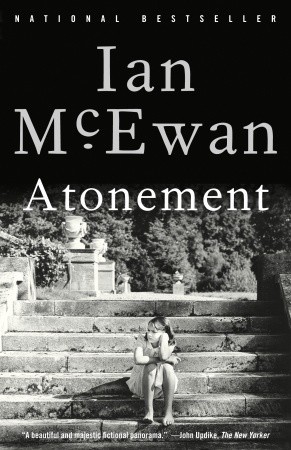
Atonement - Ian McEwan

AtonementAtonement has been on my to-read list for a while, but I finally got around to it because I fit it into both my normal reading challenge and my romance reading challenge for 2016.  For my regular reading challenge, it fit the category of "A book set during wartime."  For the romance challenge, I slotted it in for "A literary romance."

Atonement is a weird sort of book.  It has a meta storyline, fitting the events of the book into their own book story.  The plot follows two sisters of the wealthy Tallis family, Cecilia and Briony, and the son of the family's charwoman, Robbie.  One day in 1935, there's a house party at the Tallis home for Cecilia and Briony's visiting brother and his friend.  Briony, an aspiring author and possibly playwright, sees a confrontation between Cecilia and Robbie, who both attended the same school and have spent the past few years in a sort of dance around each other, drawn to each other but unable to put a pin in their feelings.  Briony, ten years younger than Cecilia and Robbie and not within hearing distance, thinks Robbie is coercing Cecilia into some perverse act that involves taking her clothes off and getting into a fountain.  Later, when Robbie puts his feelings to paper in an apology to Cecilia, he gives Briony the note to deliver and she reads it--but Robbie has actually given her a draft that includes some passionate but rather vulgar phrasing, and it helps to cement in Briony's mind that Robbie is a dangerous deviant.  All of this sets off a chain of events that ends with Robbie being falsely accused of rape and imprisoned, and then joining the infantry just before the start of World War II to lessen his prison sentence.  All the while, he and Cecilia maintain a relationship via letters, and Cecilia severs her relationship with her family due to how easily they turned on Robbie.

The romance in here is definitely a secondary story, with the main story revolving around the devastation the rape allegations wreak on Robbie's life and, to a lesser degree, Cecilia's, and how Briony comes to the realization that she was wrong as she grows older and tries to atone for her actions, even though there's no way she can completely right the wrong she committed.  This is an interesting concept, and once the book moved into the second and third parts, it moved quickly and was pretty enjoyable.  However, the first part, which takes up the first half of the book, is very slow, and it almost had me quitting reading a couple of times.  The problem is that, despite the part taking place over only a day, it just drags.  Pretty much every scene has to be rehashed from at least two different viewpoints, and while I understand that the perspectives were necessary to introduce both the truth of the events and how Briony interprets them, but I can't help but wonder if there would have been a more streamlined way to do this that wouldn't have resulted in the beginning of the book being so incredibly slow and clunky.

Later in the book, Briony receives a rejection letter from a literary magazine to who she'd submitted a piece of writing based on the pivotal events of the book.  The letter contains a bunch of advice for Briony about the weak points of her work--and I couldn't help but feel like those weak points were still evident in the book itself, which is ultimately supposed to be Briony's final draft of the events, one that she's worked over again and again for decades.  But I found the same weaknesses and tedium in it that were pointed out in this fictional rejection letter, and it just highlighted to me that the beginning of the book was...not that good.

Overall, I can see why people like this--it's very meta, and the later parts of the book are enjoyable.  But the slow beginning and rehashing of any and every event in the first half of the book really impacted my enjoyment of it.

3 stars out of 5.

Wednesday, December 28, 2016

Sarah's Key - Tatiana De Rosnay

Sarah's KeySarah's Key was a book lent to me by a coworker who thought I would like it.  Well, I'm not sure that I liked it overall--but when we discussed, we liked the same parts of it, and it's those parts that really resonate, so I think that was more the point overall.  The story is in two timelines.  One takes place in France in 1942, when the French police round up thousands of men, women, and children and lock them in the Velodrome d'Hiver before sending them on to camps near Paris, and then on to Auschwitz to be gassed.  The orders for this were issued by the Nazi German occupiers, but the operation itself was entirely carried out by the French.  The main character on this timeline is Sarah (who is referred to, for the longest time, as "the girl," which is annoying, because we know her name is ultimately Sarah, it's right in the title) who is caught in the round-ups with her family.  Before they're dragged from their home, Sarah locks her little brother in a hidden cupboard in an attempt to keep him safe, thinking that she'll be coming back within a few hours.  This goes about as well as you can expect.

The second timeline takes place in 2002.  Julia Jarmond is an American living in Paris, with a French husband, who works for an American magazine aimed at expats in Paris.  She's assigned  a story about the Vel d'Hive round-ups as part of the memorial taking place for the 60th anniversary.  While investigating the story, she finds out that the apartment that her husband's family owns, and which they are currently renovating, belonged to a family caught in the round-up in the 40's.  The husband's family moved into it in a hurry soon after it was vacated.  Julia becomes absolutely obsessed with finding out about the family who lived in the apartment, tracking them down, and letting them know that they haven't been forgotten.

Sarah's part of the story, no matter which timeline it's being told in, is ultimately the more powerful.  I had no idea that the Vel d'Hive round-ups happened.  It seems most people don't.  While I knew that the Vichy government in France was complicit with the Nazis, I was clueless that they had collaborated to such a high degree.  This is the important part of the book.  Knowing that these things happened and not forgetting them, even though many seem eager to do so, or at least to gloss over French participation in these terrible events.  In this respect, I can totally sympathize with Julia's actions, because not forgetting is paramount.

...but at the same time, Julia was an incredibly selfish character, and I didn't much like her.  (I don't actually really care about her pregnancy.  This seems to have been handled relatively well, in my opinion, having her go through her options without being preachy.  She didn't make the decision that best benefited her husband, but that relationship was on the rocks, anyway, so I think it was probably best for everyone involved that it went the way it did.)  She allows her obsession with Sarah to take over her life and proceeds to drop a bomb on someone else regarding it, someone who didn't ask for it, and then she continues to basically cyber-stalk the guy when he asks her to stay away.  And naming the baby Sarah?  I think that's incredibly creepy and very poor taste.  Ultimately, Julia does well to remember, but she goes beyond remembering and into appropriating Sarah's story as her own, which is not appropriate, at all.  And when William expresses a feeling that Julia failed him, she is upset, which struck me as highly hypocritical.  She made it out like she was doing him a favor, but ultimately all of her actions were for her own peace of mind, not for anyone else, and consequently I don't think she really had the right to get to offended when William opened up to her--which was what she wanted all along.

The writing here is a bit lopsided, too.  The chapters in the first half are very short, and alternate between Julia and Sarah, which meant that as soon as I got into one part of the story, I was jerked back out of it in favor of the other part.  I would have liked if the chapters had been just a bit longer to help smooth that jerky feeling.  And the writing itself is a bit uneven; there are some wonderful, evoking images, but there also short, choppy patches, and the two don't always seem to fit together.

Overall, I think Sarah's story was the powerful, important part of the book here, and Julia was a terrible character.  Skimming some other reviews, I don't seem to be alone in these sentiments.  Sarah's narrative chapters vanish halfway through the book, but her story doesn't, which is good because that's the compelling part.  Remembering the history is vital...but Julia went about it in a terrible way, and I absolutely could not like her for it.

3 stars out of 5.

Friday, September 16, 2016

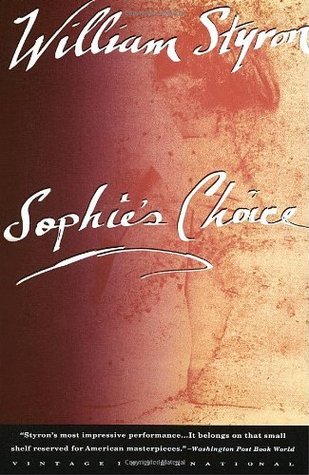
Sophie's Choice - William Styron

Sophie's ChoiceUgh, what a tedious book.  I read this because a) it's supposedly a classic and b) it's on the ALA's banned books list, which means it qualifies for one of my reading challenge categories.  Again, I can see why it was banned: because it involves tons of talk of sex, and the people who like to ban books are terrified of sex.  Also it was apparently banned in Poland because it highlights how anti-Semitic that country was?

Anyway.  The main story here is about struggling writer Stingo, who ends up living in a boarding house where the titular Sophie and her lover, Nathan, also live.  While Stingo tries to write a great Southern novel, he gets tangled up in Sophie and Nathan's disastrous love affair and learns about Sophie's past in Poland during World War II, including her time in Auschwitz.

Stingo is pretty clearly Styron; not a literal version of Styron, but he wants to write about all the same things Styron writes about and Styron uses him to shove his own philosophy about slavery and concentration camps and whatever down our throats.  This is especially easy for him because Stingo is the narrator.  I basically hated Stingo.  He was so boring and pretentious and all he ever thought about was getting laid.  I didn't care about him at all and the best parts of the book were when he was "narrating" Sophie's story, because those parts actually read as normal third-person narration for the most part rather than Stingo's pretentious rambling.

Sophie is someone that everyone falls in love with right away because she's hawt.  No other reason.  This is sad, because I think there were other reasons to love Sophie--but none of the characters actually like her because of them.  Her personal story is deep and moving, and is the story of a non-Jewish inmate of Auschwitz.  She apparently knows how to love unconditionally, given her feelings for Nathan despite his abysmal treatment of her, though some of this is probably her clinging to something that seems stable (even if it's not) after the previous turmoil of her life.  The thing I didn't like about Sophie is that she is an unreliable narrator.  She's told everyone different versions of her story with different details revealed.  Stingo purports to have the true version, but how can we really know?  All of these lies and contradictory revelations that Sophie puts out kind of made me doubt her larger story as a whole, which really isn't something that I think was supposed to happen.

Other problematic things about this include how Nathan's mental illness is portrayed.  He's very clearly unstable from the beginning of the book, but I don't know...something about how Styron tied his (unknown to everyone else until late in the book) diagnosis into his behaviors and used it to just excuse away his behavior seems...not good.  I mean, people with mental illnesses are not dangerous as a rule, and Nathan very clearly was from the very start.

Overall, though, the book just dragged.  I like the parts with Sophie's story, but I knew the ending of that before I started, and so it didn't come as a big, heart-wrenching, shocking moment for me.  Stingo I absolutely hated.  (Did I mention he sexually assaults someone?  They're making out and once he realizes she doesn't want to have sex, he decides to just whip it out and try to get a handjob out of her, even though it's been made pretty clear from her reactions that she's not into it.)  The non-Sophie parts dragged, and I didn't want to read about Styron's philosophy at all.  This was tedious all over, and I'm glad to have it over with.

2 stars out of 5.

Friday, September 2, 2016

The Chosen - Chaim Potok

The ChosenThe Chosen is another book I'm reading as catch-up for the Deliberate Reader book club.  This was the selection for March.  It's an older book, originally published in 1967, though it's gone through several rounds of re-issues; the cover pictured here is from an edition from the 1990s.  The story takes place in the later part of World War II and in the years immediately after it, and follows two Jewish boys living in New York City.  Reuven is our narrator; the son of a professor who writes lots of articles on Judaism and who becomes a prominent Zionist, he wants to become a rabbi when he grows up, despite his father's wishes for him to become a mathematics professor.  The other main character is Danny, who Reuven first encounters during an ill-fated baseball game.  Danny is the son of a Hasidic rabbi and is supposed to become a rabbi himself when he grows up, following in his father's footsteps, though what he really wants to do is study and practice psychology.  Despite the rocky start at the baseball game, Danny and Reuven become friends, and the story follows them through the trials of their friendship as they try to balance the expectations placed upon them with their own hopes and dreams.

This was a really interesting book to me not because of the story itself, but because of what it fundamentally is.  Ultimately, this is a book with Jewish characters set during WWII which doesn't deal with the Holocaust.  The Holocaust is mentioned in passing, once troops reach the camps overseas and news comes back, and some of the older characters are absolutely destroyed by it, but ultimately it plays a very minor part in the story.  I might just be narrowly-read in this area, but in my experience it's fairly rare to find books with Jewish main characters set in this time period that doesn't deal with the Holocaust in a very intimate way.  I actually liked this; while the Holocaust was a horrible, horrible event, it's also very widely-written, and I liked that this book offered a view onto Jewish life as it continued on in the US, despite the ongoing war.  It was just something that I don't see very often, and was therefore a very refreshing read.

The relationship between Danny and Reuven is really the center of this book; the relationships with the fathers are, in my opinion, secondary.  It's Danny and Reuven who shape each other more than their fathers ultimately do, as they encourage each other in different ways, support each other, and help cement what are essentially the opposite fates of what their fathers had intended for them.  In some ways, Danny would have been better suited with Reuven's father, and Reuven better suited with Danny's--though Danny's father raised him in this weird sort of silence, the reasons for which were ultimately explained but didn't really hold water for me, and Reuven blatantly said that would have been terrible for him.  So maybe that pairing wouldn't have worked out after all.  But watching the deviation from their intended paths to their desired ones, even when they were separated, was an interesting process.  It's a character-driven novel, definitely, which means that if you're going to look for a strong plot, there isn't one.  It's very much about Danny and Reuven's development as people rather than being about them actually setting out to achieve a specific goal.  But I think that's the type of narrative that was best suited here, and I ended up really enjoying this one.  It put out a lot of information about Judaism in general and Hasidism more specifically that I wasn't aware of, and so it also functioned as a sort of educational experience.  As I mentioned before, the whole "raised in silence" thing, while it seems like it might be real (I can't weigh in on that) didn't hold up for me, but that's really my only big complaint about this book.

4 stars out of 5.

Friday, August 26, 2016

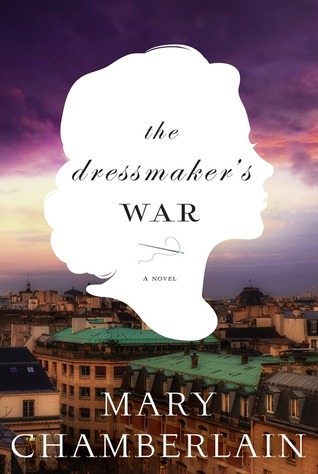
The Dressmaker's War - Mary Chamberlain

The Dressmaker's War
On the eve of World War II, Ada Vaughn is a mannequin for a dressmaker in London.  She has a fair bit of dressmaking skill herself, and hopes to one day open her own fashion house: House of Vaughn, something that she holds in her mind as parallel to Chanel.  She dreams of living a higher-style of life in general, to the point of taking elocution lessons in an attempt to "better" herself from her common origins, living in a small flat with her parents and many siblings.  And when a young man approaches her on the street one day, claiming to be an Austrian count, Ada is completely swept away.  It's a whirlwind romance, but it ends badly, with Ada stranded in Europe after the war begins, with no money and no way to get home.  The series of events that follows leads us in a full circle, back to the prologue and Ada's preparation for her own execution, and serves to read "between the lines" of a story of a young woman swept up in the tide of war.

If I could compare this book to only one other, I would compare it to Hannah Kent's Burial Rites.  The time, location, and characters have absolutely no crossover; they take place more than a century apart, in different countries and to very different people.  But from the very beginning we know--or can at least infer with very little difficulty--that both the main characters, Kent's Agnes and Chamberlain's Ada, are sentenced to die.

We don't know why Ada is sentenced to death.  We have to actually read the story for that.  But the feels of the two books, of the story going back in time to trace the path to the heroine's death sentence, is very similar.  The structures aren't; other than the prologue, Chamberlain's story is told in a very straightforward manner whereas Kent has a few more narrative devices employed.  But there's just this feel to The Dressmaker's War, one that really matched Burial Rites even when there was very little in content to connect the two of them.

Stories of women in WWII are, I think, very few and far between.  There aren't a lot of prominent female historical figures, so finding a good character to write in a historical fiction context can be difficult.  Chamberlain completely invented Ada, but uses her as a lens to view a few other historically-based people that come and go, and to show the overall plight of a woman, and a civilian, stuck in the war.  AS a female civilian, Ada isn't a prisoner of war.  She's just a prisoner.  There's no sort of prisoner exchange for her.  No one knows where she is or if she's even alive.  She's gone through a lot of trauma, and even when she returns home, no one wants to help or support her.  Everyone wants to leave the war completely behind them, even though its consequences haunt every moment of Ada's life.  It's a tragic story, really, and as Chamberlain says in the afterword, Ada didn't stand a chance.  It's the story of untold stories here that's really intriguing, and how those stories were untold not only because people didn't want to talk about them, but because even the people who did want to talk were cognizant of the fact that no one wanted to listen.

That said...I didn't really like Ada as a person or a character.  The only portion of the book I really liked her for was the Dachau portion.  I felt like, under the strain of her situation, she became a much more real and likable person.  For the rest of the book, I found her stuck-up, bratty, and pretty stupid at the same time.  She made all sorts of crazy decisions that, even in a narrative context, just had me rolling my eyes and wanting to shake her, and she made those decisions for reasons that came off as flimsy more than anything.  I though the Dachau portion would really be a turning point for Ada, and that she'd be more sympathetic from then on--but as soon as she left and returned to London, I found that all of her brattiness and poor decision making came roaring back.

Chamberlain does a great job of capturing atmosphere here, and it's interesting to see how clueless Ada was due to her isolation in Germany, but because I didn't really like Ada as a character, this book didn't have the emotional impact it should have.  I liked many of the supporting characters much more than Ada herself, and at the end, quite frankly I wasn't very sad to see her go.

3 stars out of 5.

Wednesday, August 24, 2016

Eve of a Hundred Midnights - Bill Lascher

Eve of a Hundred Midnights: The Star-Crossed Love Story of Two WWII Correspondents and their Epic Escape Across the PacificI recently realized I haven't read a lot of nonfiction this year.  This is actually kind of strange for me because I really like nonfiction, and Eve of a Hundred Midnights is a great example of why.

This is the true story of two news correspondents during WWII.  The first, and main one, is Mel Jacoby, who was a relative of the author's.  Mel worked for his college newspaper and went to China on a study abroad during his junior year, at which point he absolutely fell in love with the country.  After his graduation, he found his way back, working as a reporter for a propaganda station in China's wartime capital.  He continued to move around in various reporting capacities, coming and going from different points in Asia for several years.  Eventually, he convinced a girl, Annalee, who had also worked at the college newspaper, and who he had connected with during a stop back in the United States, to also move to China in a news capacity.  But as the war intensified, Mel ended up stationed in the Philippines, and Annalee ended up joining him there and the two got married.  And then the United States suddenly joined the war, and the two found themselves stuck in the islands, with the Japanese army--who were likely to kill Mel if they caught him--growing ever closer.

This book has a lengthy subtitle, "The Star-Crossed Love Story of Two WWII Correspondents and Their Epic Escape Across the Pacific."  Well, that's part of the story.  It's not all of it, and it's really not even most of it.  The actual escape across the Pacific takes up a relatively small part of the book, and it's probably actually one of the most uneventful portions.  It must have been nerve-wracking at the time, I'm sure, but in retrospect, with more than a half a century between us and the story, it wasn't nearly as exciting as reading about dodging falling bombs in China.  The book also isn't really the story of two star-crossed lovers.  First off, star-crossed implies there was something keeping them from each other, and there wasn't.  Second, Annalee is NOT very prominent in this book.  The focus is definitely on Mel, which is understandable, given the author's relation to him, but it's a bit misleading to make it out like Annalee was more of a player than she was.

Most of the book is really about Mel and how he ended up in Manila prior to the US retreat and Japanese army's arrival.  It's a very interesting story, about living in a war capital, navigating the different censors and political bodies, and seeing war grow ever closer, all the while trying to report the news in a way that no one back home was actually doing.  I really enjoyed this, because it was a perspective that we don't usually get.  Lascher includes a hefty reference section in the back, and it's a pretty good bet that Mel and Annalee actually did think and feel as he portrays them, because he quotes their letters and cables extensively.  Lascher is a very engaging writer, and makes Mel and Annalee's story into just that: a story.  I think he does wax poetic a couple of times; the epilogue is a great example of this.  It's very purple and completely unnecessary to the content of the book.  Overall, though, this was a really great book that offered a fairly unique perspective into a part of the war, and the lead-up to it, that we don't typically get to see.  Very interesting.  I just found myself wishing that the part of the story that was actually advertised had been a little more prominent and gripping!

4 stars out of 5.

Saturday, August 13, 2016

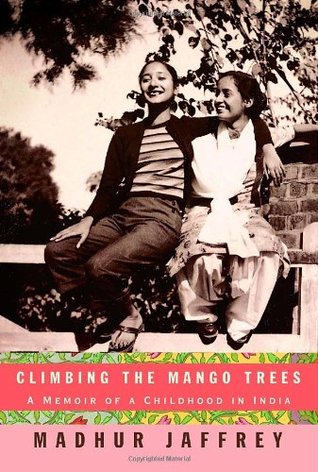
Climbing the Mango Trees - Mathur Jaffrey

Climbing the Mango Trees: A Memoir of a Childhood in IndiaThis title came to me via the virtual book club over at The Deliberate Reader.  I've been following along via the club (which discusses via Facebook) but haven't actually read most of the selections because, well, I've been doing other things.  But July's book was The Cuckoo's Calling, which I read earlier this year.  I joined in the discussion and had such a good time that I decided to bump the other books up on my priorities list!  I won't be reading September's book, which is Hannah Kent's Burial Rites, because I read it a while ago and don't care enough for it to re-read, but I'll spend the rest of this month and next catching up on the other titles for the year that I haven't read, and join back in for October.

Madhur Jaffrey is apparently a chef and an actress, but I had honestly never heard of her until I picked up this book.  She grew up in India in the years of WWII and India's independence.  Her family lived in a multi-family setup in the area of Delhi.  Jaffrey was a fairly privileged child, as far as I can tell.  Her father managed various factories, but they could afford private schools and private drivers and could go on vacations in the hill resorts that involved servants packing picnics and renting out multiple houses for the family to stay in.  Because of this, I don't think this is a really good example of what "life in India" was like.  Granted, it's a memoir, and therefore limited to Jaffrey's view--but I'm also reading another memoir currently, that of Malala Yousafzai, and I think that one does a good job of including not only Malala's experiences but a broader view of how life in her area was in general.  I don't think Jaffrey quite managed to do that.

The memoir is very food-focused but not in the way that many food books are.  Jaffrey admits to not being interested in cooking until later in life, past the point in time at which this memoir occurs.  Why would she have been?  Her family had servants to cook for them, and while it seems like the family as a whole was more involved with food for special occasions, Jaffrey focuses more on other aspects of those--for example, the throwing of paint pigments and such during Holi--than on the food.  Consequently, there's talk of food but not a real understanding of it.  I know that Jaffrey possesses that understanding as an adult, but she keeps it entirely removed from the years of her childhood that are depicted in this book.  The last forty pages or so are recipes for some of the things that she discusses in the book, and I guess it's there that the real appreciation and understanding is meant to be conveyed; but as much as I love food and cooking, I'm not going to sit down and read forty pages of recipes, so that was kind of lost on me.

Something else that I found rather lacking in this was a larger sense of what was going on.  Jaffrey was in India for the time of both the second World War and India's independence, and yet, except for a few small excerpts such as going to watch Ghandi speak once, a sense of any of this going on is completely absent.  This memoir could have place at almost any point in history, because there's nothing there to ground it.  Even if Jaffrey didn't pay much attention to those things at the time, I feel like she could have put in a little bit of "looking back" perspective that would have helped to anchor this memoir in that specific era.

Overall, I didn't really enjoy this book.  I think that Jaffrey (or her ghostwriter; I'm always so skeptical of memoirs like this) didn't actually have a lot to say because she doesn't really have any compelling experiences behind her, at least not in this particular point of her life.  While that makes for a happy childhood, it doesn't really make for an interesting one.  It's the old "every happy family is happy in the same way, but every unhappy family is unique" thing, or however the quote goes.  The points that stood out at this were the unhappy ones, such as when her parents were so devastated that they had to re-join the bigger family because of her father's job changing, and knowing that it would put an end to the happy independence they'd had for several years.  But as for the rest...it's a steady stream of frolicking that I don't think really had much of a larger message or purpose lingering behind it, which made for boring reading.  The writing itself isn't bad, but there's not really any compelling content to propel it along.

2 stars out of 5.

Wednesday, July 13, 2016

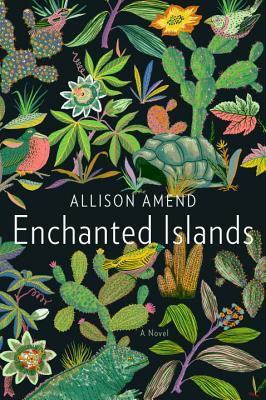
Enchanted Islands - Allison Amend

Enchanted IslandsEnchanted Islands was my selection for June from Book of the Month, but it took me a while to actually start reading it.  The story follows Frances Frank(owski) from her childhood through her old age, in the form of her writing down a memoir of sorts in order to record the rather extraordinary events of her life.  The book starts with Frances in an old folk' home with her long-time friend Rosalie.  Rosalie is receiving an award from a Jewish society for the work she did during the war, which mostly consisted of fund-raising.  Frances is a bit jealous, because she was doing other work during the war that she can't talk about--which launches her into her recollections.  Frances is from Duluth, Minnesota, and has a plethora of siblings and parents who haven't adjusted well to life as immigrants from Poland.  While at the library one day, she meets Rosalie, and the two become fast friends.  Following the revelation of some rather horrid things that happened to Rosalie, the two run away to Chicago, and after some time there and Rosalie being a really crappy friend, Frances runs away again, and eventually ends up in California.  The real part of the story that Frances wants to talk about doesn't start until she's in her fifties, when she's working as a secretary for the intelligence portion of the navy and agrees to marry a man, Ainslie, who is eleven years her junior, so that they can go be spies in the Galapagos Islands.

Frances and Ainslie's relationship is off from the very beginning, and while I think most readers can easily determine why, it takes Frances quite a while to pin it down--understandably, given her background and knowledge.  But it's sad to watch Frances pine for Ainslie's love when it's apparent that it's not really ever going to go anywhere, at least not in the way that she wants.  The Galapagos Islands themselves are a beautiful backdrop to this drama as it plays out, though this isn't really a "spy story," as I thought it would be, except for one or two chapters.  Beyond that, Frances is just a cover, and doesn't have much to do with the work that Ainslie is presumably off doing.  Becuase this is a first-person story, it means it's mostly about her just living in the islands.  But she loves them, loves how living there means that everything is focused on survival and has a visible impact, and also finds comfort in knowing that nothing they do will ultimately affect the state of the universe--though it might, just might, impact the world.

One thing I didn't like was Rosalie, and how Frances kept going back to her.  I really hated Rosalie.  I didn't mind her at the beginning--and she had some really terrible things happen to her when she was young.  You could make the argument, and it would be a good one, that these events are what shaped Rosalie and her actions for the rest of her life.  I even believe that.  But Rosalie was still a really shitty friend at multiple points, and was an extremely selfish person, and I hated how Frances just let Rosalie walk all over her and forgave her for everything she did.  You can have terrible things happen to you and not be a selfish, terrible person; Rosalie chose to take that path anyway, and then she had the audacity to try to tear down Frances at multiple points.  I couldn't bring myself to like her, not even a little bit, and I think that tainted the book as a whole for me because I knew Rosalie was there and never really got what I consider her "just deserts."  Sure, that doesn't always happen in real life, but I still wanted it to.

Overall, the part of this book that actually took place on the islands was the best.  There were some beautiful descriptions and I think Frances really came into her own there--something she herself acknowledged at multiple points.  But this is only a portion of the book, and the rest of it didn't have a ton of appeal to me.  I wish there were more books with settings like this; it did make me want to read some things like Swiss Family Robinson, which I've never read before.  But I don't think this is something I'll return to again and again.

3 stars out of 5.

Wednesday, March 30, 2016

The Orpheus Clock - Simon Goodman

The Orpheus Clock: The Search for My Family’s Art Treasures Stolen by the NazisSo, I have a thing about history and stolen art, mainly because during this class in college I read a book called The Rape of Europa which was about the rampant art pillaging that went on during World War II.  Then I read The Monuments Men, about the group of Allied soldiers who were supposed to find and protect things during WWII, including but not limited to art.  And then I read another book about going undercover to recover art stolen from museums.  Basically, art is valuable, relatively easy to move, and relatively hard to track, which means it ends up getting used as currency in all kinds of transactions and then surfacing at some point with its provenance not really being on the firmest ground.  This is basically what The Orpheus Clock is about.

After Simon Goodman's father died, Simon and his brother Nick got all of these boxes containing documents about what their father had covertly been doing for the past half century: running around trying to recover the art and belonging that had been stolen from his family by the Nazis during WWII.  After realizing exactly what the scale of it was, Simon (and to some extent Nick, though he features much less prominently in this book) took up his father's search.  The Goodman family, then spelled "Gutmann," were Jewish in heritage though not really practice and were living in the Netherlands when the war started.  Generations of being banking magnates meant the family, in all its branches, was pretty wealthy, and Simon's grandfather was keeper of the family trust, which was massive.  There was a big house and lots of silver and fancy paintings.  And then, of course, because the Gutmanns were Jewish, the Nazis took it all and sent Simon's grandparents to a concentration camp, from which they didn't return alive.  Simon's father and aunt survived because they were living in England and Italy, respectively.

Now, reparations from the Holocaust are a really tricky subject because there's not a firm good way to handle them.  Here's the thing.  A lot of these belongings have popped up over the years with seemingly good providence, and so someone buys one of the things thinking it's okay.  And then, BANG!  It turns out it's not okay, that it's actually loot.  But the person who has it now still likes the thing, for the thing itself and not the history attached to it, and paid a lot of money for the thing, so obviously they're not so keen to give it up.  But the family that originally owned the thing wants it back because it shouldn't have been taken away from them in the first place.  Is there a good way to deal with this?  No, not really.  It's much easier when it's the government that still has the thing, because then at least it's not private individuals tangled up in it.

What this book does well is lays out the complexities of how hard it actually is to get back items that were taken during the Holocaust, because many of them have been scattered to the winds and then surfaced all over the place with seemingly clean backgrounds.  Did people look too hard at these backgrounds?  No, not really.  But then, if you look at the backgrounds of a lot of art, they're not really as clean as we'd like, which makes art trading in its entirety a very dirty and complicated business.  But I couldn't help but wonder why Goodman was doing this the whole time, and yes, I confess, he came off as a bit greedy, because his family didn't even want most of the stuff and ended up selling it immediately after they got it.  I know, I know; it's more complicated than that, because the money is rightfully theirs anyway, and so on and so forth.  That's fine; they're entitled to it.  But I feel like there could have been a better way to convey that than how Goodman did it.  It was the language he used about it, being so smug about items selling for much more than their appraisal values and such, and how he seemingly wasn't willing to work with people who thought they were buying (or receiving, in the cases of donated pieces) "clean" art.  It was...I dunno.  It just had a dirty feel about the whole process, when really it shouldn't have.  Them getting the stuff back from the Dutch government was much "cleaner" feeling to me, because it was really freakin' wrong of the government to keep all that stuff for all that time when they had a pretty good idea of who it had belonged to.  It's when people who didn't know and didn't have reason to got involved that it all had a sort of icky feel to it.

Also, more than half of this book isn't about getting art treasures back at all.  It's a multi-generational history of Goodman's family which wasn't entirely necessary for the book.  I think all of that could have been condensed to a chapter or two, at most, and then the rest of the book focused on the retrieval process, because that's what the book purports to be about.  I get that Goodman has discovered this incredibly lush and complex family history and wants to include it, but if that's the case the publisher should have looked into titling the book more accurately, because it was pretty misleading reading about bankers for 180+ pages (out of a 320-page book) when I thought I was going to be reading about art recovery.

3 stars out of 5.

Friday, December 11, 2015

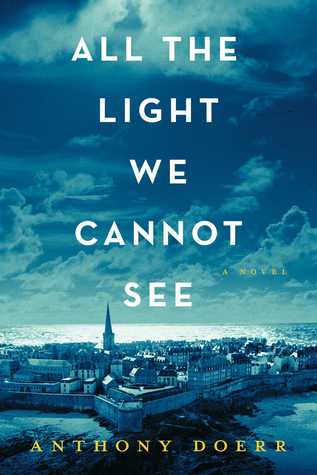
All the Light We Cannot See - Anthony Doerr

All the Light We Cannot SeeOne of the categories for Popsugar's Reading Challenge for 2015 was "A Pulitzer Prize-winning book," which of course led me to All the LIght We Cannot See.  I did scroll through the list of Prize winners for other options, but out of all of them, this one seemed the most interesting to me, and it got great reviews from regular readers in addition to the Prize-givers, so it seemed like a solid option.

And it was beautiful.  The book takes place during World War II, with short periods and a slightly longer denouement taking place before and after the war, respectively.  There are two main characters.  Werner is a German boy/teenager who gets into a prestigious school for his engineering abilities.  He can fix pretty much any radio, and is soon designing his own, which the Germans use to hunt down resistance fighters in eastern Europe and in France.  The other main character is Marie-Laure, a French girl/teenager who lost her eyesight at a young age and whose father is trusted with taking a copy (or potentially the original) of an infamous diamond with him when he and Marie-Laure flee Paris.  Marie-Laure's father is eventually arrested as a spy, and Marie-Laure unwittingly becomes the guardian of the diamond in his absence.

The diamond itself is the axis on which the story spins.  It lends a fantasy, or maybe a magical-realism, element to the story--is the diamond magic, or not?  Is it a curse, or luck?  Doerr never comes out on one side or the other, making it a real either-or that tantalizes at various parts of the story, sometimes seeming one way, sometimes seeming the other, and we're ultimately left having to make our own decisions on the matter.  The war-time setting lends atmosphere more than anything else, and is cause for some poignant moments that would not have otherwise happened, but most of the plot could easily take place in another point in time, when a group of people is hiding a diamond from someone else who wants it.  That, to me, was good, because it made the story easier to slip into, and while there are some heavy events in this book, Doerr doesn't focus on the aspects of the war that many do: concentration camps, shootings, fighting a resistance.  His focus on a teenager who is in the German army, but tries to distance himself from its doings, and on a French civilian--who ends up helping the resistance, but only in the barest of possible ways--makes the story seem more every-day, makes the characters more real.  Most of us probably can't imagine what it would be like to find a downed pilot, rescue him from a tree, nurse him back to health, and then smuggle him across the border to safety.  However, most of us probably can imagine asking for a loaf of bread and passing off a piece of paper.  Small, simple things, but they make such a difference in this story.

The writing here is absolutely beautiful.  Doerr's descriptions of Marie-Laure's world are wonderful, and Saint-Malo was clear to me even though Marie-Laure couldn't see it to actually describe it.  Werner's parts were lovely, too, though in a more painful way.  His attempts to distance himself from his own actions, a blatant dissociation in order to preserve his sense of righteousness as much as possible when he knows that what he is doing hurts people, was painful at times, especially in regards to his friend Frederick and in his estrangement from his sister Jutta.  At the same time, though, it's easy to see how boys like Werner would have ended up rabid Nazis.  Werner was picked up from an orphanage in a nothing town, saved from a life of mining coal and probably dying young, and instead put into a school where he was treated like he was special, like his knowledge and skills were valued.  That's quite a lure, and it's easy to see how he wanted to vanish into that world--though the niggling conscience instilled by his own morals and his sister never quite left him.

 The only real complaint I have about this book is that the denouement was too long.  This is one of the instances in which I felt there was too much resolution; I would have liked a little more to be left up to our imaginations, instead of multiple time-jumps taking us decades into the future to see where various characters ended up.  A little more mystique in regards to the characters would have matched the mystery tied to the diamond, and tied in a little more meaningfully to me.  Still, though, a beautiful book, and one I would heartily recommend to pretty much anyone.

4 stars out of 5.
Monday, December 7, 2015

Lovers at the Chameleon Club, Paris 1932 - Francine Prose

Lovers at the Chameleon Club, Paris 1932This book has been on my to-read list for quite a while, but the university library system in DC didn't have it.  However, when I was scanning the popular reads section a few weeks ago, it was there!  So of course I picked it up.

The book is historical fiction written in the style of a collection of memoirs, letters, biographies, and even some chapters that are written in a typical third-person narrative style.  Each character has his or her own style that's maintained throughout the book; Lionel writes books that aren't specifically memoirs, but are definitely first-person, while Lily and Suzanne write memoirs, Gabor writes letters to his parents, and Lou's story is told through a biography written in 2010.  The mix of styles means that each character has a distinctive voice, and their overlapping opinions and version of events give a nuanced feeling to the story.  What's most interesting about this book, though, is that it's a fictionalized version of historical events--obviously, because it's historical fiction, but even more closely than most historical fiction is.  All of the characters are re-named real people, so that Prose could draw heavily on their real lives and doings but still have some creative license.  The title is taken from the title of Gabor's book-within-a-book, which is in turn named for a photo he took.  While the photo described in the book is its own, it's easy to see that it's drawn heavily from this photo:

"Lesbian Couple at Le Monocle, 1932" by Brassai, Cleveland Museum of Art 

This makes Gabor, Brassai, a real-life Hungarian photographer, and Lou Villars is really Violette Morris, a female athlete turned Nazi sympathizer.  The book is clearly built off Prose's fascination with Morris/Villars, and how such a young woman could slide into what could, arguably, be called evil amongt the larger narrative of Europe's slide into World War II.  The other characters' stories all really revolve around Lou's, even though they have their own events happening beyond her scope.  Possibly this was meant to be a real biography that Prose reworked into a fictionalized version, possibly not; but it was a delightful read nonetheless.  I didn't know anything about Morris, Brassai, or the other real-life people who inspired the characters before I read this, but the book made me want to read and learn more about them, and that's a good book indeed.  It does have the result, however, of having to keep in mind that the book is fiction, and carefully balancing out the real-life aspects with the fictionalized aspects in one's head.

Out of all the sections, Gabor's were my least favorite.  I dislike narratives written in letter form, and I was glad that Gabor's letters shortened and became more scarce as the book went on, to be replaced by chapters of the memoirs and the pseduo-biography instead.  And then, from nowhere--gasp!--we get an unreliable narrator!  Ugh, that bothers me so much, but at the same time it gives a ton more dimension to what could have been a good, but somewhat flat, book, because it raises the question...who is telling the truth?  And for the unreliable narrator, what was that person's motive in telling the story as he or she did?  These are questions that are never actually resolved in the book, though another character speculates on them in the end, and it left me with some food for thought, something to chew over while starting on my next book.  I started reading All the Light We Cannot See while I was reading Lovers, which is another World War II historical-fiction book, and the two paired together have made an excellent read so far.

Overall, I really liked this is a historical fiction, but some of the characters--like Lionel, and Arlette--annoyed me enough that I'm not quite willing to give it a full 4 stars.  There's no preface or prologue explaining the pseudo-historical aspects of it, either, which I don't like; when something treads this close to the truth/fiction boundary, I feel like the author should at least have the decency to own up to it and put the facts straight in an afterword.  I'm not sure if I'd read this again, but I liked it this time around.

3.5 stars.

Sunday, October 4, 2015

The Monuments Men - Robert M. Edsel

The Monuments Men: Allied Heroes, Nazi Thieves, and the Greatest Treasure Hunt in HistoryThe Monuments Men came to my attention during one of the most awesome courses I took in college, "Indiana Jones in History," which wasn't about Indiana Jones so much as it was about historiography--that is, who gets to tell history and how they form those narratives.  As part of the course, we read The Rape of Europa, which is about the looting of art, sculptures, etc. from locations all across Europe during World War II, as well as the efforts to protect and preserve those same cultural items and to retrieve the ones that were stolen.  It was interesting, and the Monuments Men factored into it, and I consequently didn't really have any interest in reading The Monuments Men because I figured The Rape of Europa had already covered it all.  And then, of course, The Monuments Men became a movie.  I still didn't really have any interest in reading it...until the Popsugar Reading Challenge threw out "A book that was made into a movie."  While I had other books that had become movies, I'd also picked up The Monuments Men when it was on sale on Kindle, so I figured this was as good a time as ever to read it.  And?  Well, it was much, much better than The Rape of Europa.

Don't get me wrong.  Europa was good.  But it was a very academic work, one that was written for more of an art history audience.  It seemed to rely heavily on the reader knowing the names of tons of artists and tons of pieces of art, and its scope meant that it went from place to place very quickly.  The Monuments Men also jumped from place to place, but Edsel did this very purposefully to build tension and cover a select handful of people rather than to just cover as much territory as humanly possible.  Edsel also focuses exclusively on the work of the Monuments Men in the areas of France, Germany, and Austria, mostly from D-Day onward, and the recovery efforts of the few who made it into the Monuments Men's ranks.  By restraining his scope, Edsel manages to make this a narrative history that, while it's well-noted and researched, still manages to be engaging and readable to someone who isn't totally versed in either WWII history or art.  Instead of producing laundry lists of art and artists, Edsel uses a few well-known artists (Vermeer, Michelangelo) and a few iconic pieces of art (The Astronomer) to illustrate his points and keep a continuous narrative.  Consequently, the book is informative while also reading like a gripping war story.

I had two main complaints about this book.  The first was the chapter length.  Edsel's chapters vary wildly in length; some are only a handful of pages long, taking less than five minutes to read.  Others are more than four times that long.  While none of the chapters were bad, the differences in length could be frustrating.  There were many times that I wouldn't start a new chapter because I just didn't have time for it--though if it had been the length of the other chapters, I could have read two or three more.  The other complaint was that, at the end, Edsel suddenly seems to switch from telling a story to solving a mystery.  I didn't necessarily mind the mystery-solving aspect, because most history books do revolve around an argument that tries to "solve" some aspect of history.  However, in most cases, the entire book revolves around building and supporting an argument; any narratives are secondary to the argument.  In this case, it was the other way around.  Most of the book was a narrative, and the argument came out of nowhere at the end, which just seemed...odd.

Okay, there was a third thing, and that was that Edsel suddenly took a moralistic approach at the end.  World War II was horrible on so many fronts.  We know that.  (Well, most of us do.  There are certainly Holocaust deniers out there, but I doubt they'd be reading this to begin with.)  Edsel's random preachy moment at the end, about one of the Monuments Men recovering a painting that he, as a German Jew, had never been allowed to see when it was on display, came across as rather abrupt, and it would have been best if it had been either left out or worked in a bit more subtly...which would have been hard, because the Monuments Man in question really wasn't even involved for most of the story, and instead seemed to have been incorporated only for this purpose.  It was weird.

Despite the rather jarring bits at the end which didn't seem to properly incorporated, I did enjoy this.  The narrative style worked well, and the book as a whole was engaging.  I definitely read on later than I should have on several occasions, because it was just so good.  I might even read this one again.  Maybe.  We'll see.

4 stars out of 5.

Sunday, August 23, 2015

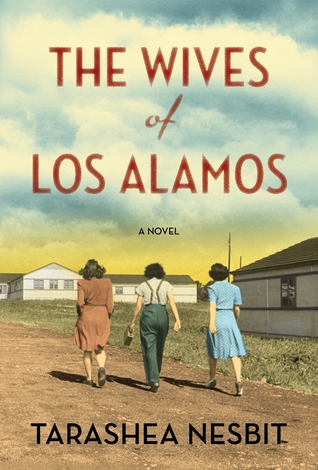
The Wives of Los Alamos - Tarashea Nesbit

The Wives of Los AlamosThis seems to be a contentious book for one reason and one reason only: it's written in first-person plural.  Pretty much every review about it begins that way, and if I had read them before I requested the book from the library, I probably wouldn't have picked it up.  It doesn't have a solid core narrative.  It doesn't have real, distinct characters; different women are mentioned by name at several points, but no one is ever really given the chance to develop because of the amorphous "we" talking about "our" sometimes contradictory experiences.  I understand why this device was used; it's supposed to give you a feel for the lives of the women of Los Alamos as a whole, instead of just picking or making up one or two to flesh out more fully and stand in for the rest.  It's meant to capture a wider range of experiences.  Is it successful?  I didn't really think so.  Some of the women are so obviously outsiders that they're clearly not contained within the "we," and that means that their experiences are completely left out of the book. 

Each chapter has a theme, such as "Children" or "Foreigners," and the snippets that compose each chapter--because each chapter is composed of a series of one-paragraph snippets, instead of a more traditional narrative--adhere to that theme.  It's a sort of experimental style, and while some people loved it, I didn't.  I didn't hate it.  I did hate it to begin with, but as with most writing, I got used to it after a while, and it didn't grate on my nerves so much.  But I never really liked it, and was left feeling like Nesbit could have offered a much richer picture of Los Alamos if she had just been fuller in her telling.  I guess that's just my preference; I like books with real characters and central narratives, even if those narratives don't move quickly and are more character-driven than anything else.  An amorphous, ever-changing central figure who isn't even one figure but a conglomerate of many left me feeling like I was reading about a hive mind, which is kind of demeaning to a group of women who no doubt went through a lot of hardships to support their husbands.

By choosing the narrative style she did, Nesbit avoided a great deal of detail.  This probably saves her from being savaged by people who are sticklers for historical accuracy, but I felt it distanced me more than intrigued me, and I felt left out more than anything else.  A novel needs to draw readers in and connect them with the characters, and I felt that wasn't accomplished here; looking at other reviews, some people clearly disagree, but hey, that's the nature of personal preferences, and I guess we'll have to agree to disagree on this one.  To me, this was an okay book, with a really good premise--I feel like these women haven't had a lot of historical fiction written about them, and they are truly fascinating subjects--but it just fell flat because of its strange delivery.  Experimental styles, I feel, are sometimes better left to subjects that have already been widely explored in more traditional mediums, as then the new style brings a new light to the subject.  I'm not sure this particular subject, these women and this place and time, were quite ready for being experimented with before we were better acquainted.

2 stars out of 5.

Monday, July 13, 2015

Gretel and the Dark - Eliza Granville

Gretel and the DarkThis book had a lot of things that I absolutely love: fairy tales, historical fiction, a psychological element.  At times, it was absolutely enchanting.  But despite the book's very good reviews, I didn't really like it overall.  There were a few reasons for this.  First, until the very end of the book, you're left wondering what the heck is going on.  The two alternating storylines are obviously connected, but I was left wondering if one of the stories was a dream, a delusion, or if Granville was actually going with the idea of someone time-traveling in order to try to kill Hitler.  Second, I'm not sure how, but Granville actually managed to make a main character who is a Holocaust survivor utterly unlikeable.

Okay, that was kind of a lie.  I know exactly how Granville managed to make her Holocaust-survivor main character unlikeable.  Mainly, she made Krysta a complete brat, so much that I wanted to slap her and lock her in a cupboard just as much as most of the characters that surrounded her did.  We weren't supposed to like Johanna, but man, I sympathized with Johanna and her desire to put Krysta in her place way more than I sympathized with Krysta herself.  Her constant streams of "Won't," "Want," "Don't want to," and so on were absolutely unbearable at more than one point.  Granville tried to turn her obstinacy into a positive trait later in the narrative, successfully, but even that wasn't enough to wash away the dislike of Krysta that had built up over the first three-quarters of the book.

The other characters I liked.  Lilie's character was weird but cool, Josef's character was creepy but realistic and added an interesting psychological element to the story, Benjamin was easily the most empathy-worthy character of the lot, and Gudrun and Greet both had the "gruff housekeeper who means well" dynamic to them.  I found that I enjoyed the Vienna storyline much more than the Ravensbruck storyline, which is kind of problematic given the structure of the two and how they fit together.  Whenever Krysta appeared on the page, I wanted her off it as soon as possible, and considering she was our main point-of-view character...that's an issue.  I know Krysta was young--exactly how young I don't remember, if it was ever mentioned, though it is mentioned that she's older than one would think--and had somewhat-recently lost her mother, but let me tell you: in all my years of dealing with precocious children and entitled students, I have never met a child as insufferable as Krysta is.

The inclusion of all the different fairy tales and how they fit together and morphed from telling to telling was interesting, but trying to figure out how they fit into the different timelines and storylines was disorientating and didn't allow me to get a good feel for the story as a whole.  It was just a weird feeling, and in the end I wasn't sure where I was left standing with this one.  Normally I would read a fairy tale-inspired book more than once, but this one?  Not so much.

2.5 stars out of 5.

Tuesday, July 7, 2015

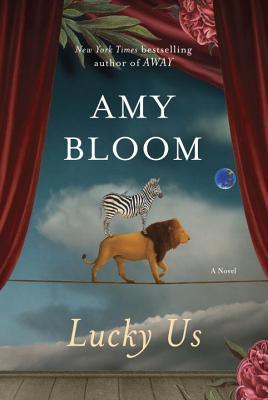
Lucky Us - Amy Bloom

18316089Whoever decided on the title for this book--whether it was Bloom, her editor, publisher, whoever--has a sick sense of humor, because the characters in Lucky Us are lucky only in the sense that they survived infancy.  Beyond that, they are perhaps the unluckiest set of people I have ever read about.  This book was almost painful to read because just when you thought it couldn't get any worse, it does.

The story follows Eva and Iris, half-sisters who share a father.  When Iris' mom dies, Eva's mother (the father's mistress) takes Eva to Edgar's (Iris and Eva's father) house and leaves her there.  Iris and Eva bond pretty quickly and eventually run away to Hollywood where Iris tries to make it as an actress and Eva plays support.  Eventually, a scandal results in Iris being blacklisted from the Hollywood scene, and Edgar tracks the girls down.  The family, plus makeup artist Francisco, heads to New York where Francisco found Edgar a job as a butler and Iris a job as a governess for a rich family.  Things continue to go wrong, however: Iris falls in love with the family's cook, who happens to already be married; the cook's husband is arrested an interned as a Nazi spy; Edgar's health starts going downhill, fast; and so on.  Also involved: a kidnapping and a fatal fire.  Throughout it all, Eva supports herself, and later her family, by reading tarot cards and telling fortunes.

I wasn't a huge fan of how the book was composed.  Most of the chapters are written in first person, from Eva's point of view.  Also interspersed are letters from the other characters to Eva and sections written in third person that focus on the other people.  While I didn't mind the inclusion of letters, many of them seemed very strangely written; they were obviously letters written that were to tell the reader backstory, and therefore didn't feel like genuine letters.  After all, Eva would have known what had happened to herself and Iris.  She wouldn't have needed Iris to write her a letter describing it all, which is exactly what happened.  That didn't quite fit to me, and the letters, especially those from Iris, didn't seem to fit with the content of the book.  Iris gets really roughed up at one point, and ends up going to England for plastic surgery, and it's apparently a smashing success because she writes about her life like she's super pretty and everything is awesome, but according to the rest of the narrative she was terribly disfigured and I'm skeptical of how well plastic surgery would have gone in the mid 1940s.  I certainly don't think it would have been enough to restore her looks to the starlet ones she had before.  I also didn't like the third person bits, because while the things that happened in them were interesting, they jarred me out of the narrative.

ALSO this book involves lesbianism!!!  Very prominently!!!!  Iris realizes her sexuality as a lesbian relatively early on (there is a lesbian orgy in this book, guys; not a very explicit one, but still) and has two major relationships with other women (none with men) throughout.  This seemed to be remarkably well accepted, considering the time period; I would have thought there would have been a lot more stigma attached to a homosexual relationship in the 1940s, though female homosexual relationships have never been frowned upon quite to the degree that male ones have been.  Anyway, it was cool to see a non-straight character in a historical fiction, and especially one where her sexuality is an element of the plot but is not the main thing driving it.  So many books that involve non-straight characters can become completely about the character's non-straight identity, and this one didn't do that.  Which was good, because there is always more to a person than their sexuality, and Iris was no exception.

One more thing: this book is full of terrible people.  Pretty much all of the main characters (with the exception of Francisco) do terrible things at one point or another, Iris most notably of all.  This made them hard to like, and almost made you feel like they deserved all of the hardships that came their way which....might have been the point?  I'm not sure.  I liked Eva, overall, but even she facilitated a kidnapping at one point, which obviously is not good.  Some of their actions were very jarring for protagonists, because protagonists are supposed to be easy to identify with, and I didn't find Eva or Iris that easy to empathize with.  I can't imagine kidnapping someone or reporting someone as a spy so that I could hook up her husband; it just doesn't work in my mind, and it alienated me from Eva and Iris quite a bit.

And can we talk, briefly, about how that cover has nothing to do with the book?  Nothing.  At all.

Overall, 3 stars out of 5.  It was short but complicated, and not necessarily in a good way...the end somewhat made up for the other bits, but not entirely.

Thursday, November 14, 2013

The Book of Lost Things - John Connolly

The Book of Lost ThingsThe Book of Lost Things is for those who like their stories with a heavy dose of fantasy influence, with a few twists but nothing that makes the underlying stories completely unrecognizable.  The story revolves around David and his experiences following the death of his mother.  With only his overworked father for company, David takes to reading.  His father meets a new woman, Rose, who becomes pregnant.  David and his father move in with her in her old family home.  David's room is filled with the books of the former occupant, and David can hear them speaking.  Not only that, but he's started to have fainting fits, and when he wakes up he had memories of a different place.  Oh, and did I mention The Crooked Man, who looks like something out of a nightmare, is stalking him?

One night, David crawls through a hole in the garden wall and finds himself in a strange land that's infested with monsters and creatures of myth and fairy tale.  His only hope of getting home, he's told, is to go see the king.  The king has a mysterious book called The Book of Lost Things, and it might hold the answer to David's safe return to his family.

The strange world in this book is heavily influenced by fairy tales, which was very cool.  Connolly subtly modified all of them to make them fresh and foreboding, but they were still recognizable enough that I could feel I was "in" on the secrets of the world without actually being there.  Also, not only well-known fairy tales are used.  Sure, there are elements of Snow White, Sleeping Beauty, and Little Red Riding Hood, but there is also The Goose Girl, The Three Army Surgeons, and a few things out of poetry and myth which haven't been as heavily represented in the current fad of retelling fairy tales.  The overall plot of the book isn't entirely ground-breaking; it's extremely reminiscent of the movie Labyrinth.  You know, the one with David Bowie as the Goblin King?


Yeah.  That one.  Anyway, The Book of Lost Things is definitely more about the journey than the destination, because honestly, I don't like the destination.  I don't like destinations like that in general, because, um...


That's why.  Awkward.  Also, some of the stuff in the book doesn't work the way it says it works, which was kind of weird.  Like the Loups.  Their presence is explained (via the Red Riding Hood story) but later on, they don't actually fit that story at all in their transformations.  It was kind of weird.  David's character seems kind of immature for his age, too; he's supposed to be around the age of twelve or thirteen, but he acts much longer.  I see this a lot in books; it's like authors have a couple of pre-conceived "child" characters and jump straight from the 8-year-old to the 17-year-old, with no shifts in behavior in between.  Still, though, a good read for the bulk of the book.  OH!  And it has this awesome section at the back where all of the "origin stories" of the fairy tales are laid out, so if you ever want to know more about one of the elements Connolly uses, he goes right on and tells you!  Very cool.  Kudos for that one.

Overall, good book.  I didn't like the ending, but I can forgive it because the body was so great.

4 out of 5 stars.