Pages

Showing posts with label non-white mcs. Show all posts

Friday, June 22, 2018

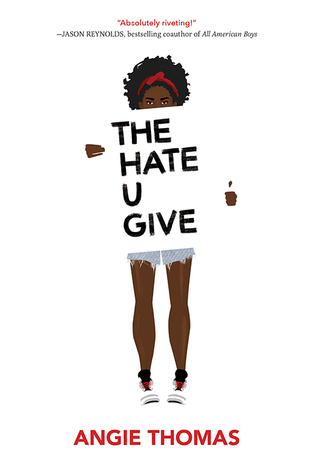
The Hate U Give - Angie Thomas

The Hate U GiveSometimes a book comes out that everyone is talking about.  Sometimes it's in a good way, sometimes it's in a bad way, sometimes it's in a mix of the two.  The Hate U Give seems to fall into the third category; from what I've seen, it's mostly good chatter, but then a handful of people who seem to feel that Thomas is just "stirring the pot."  Which...let's not get into it.  Anyway, this is a book that had people talking, and made the long list for the National Book Award.  So when Emma Watson put it up as the May/June read for her Our Shared Shelf book club, of course it was an easy one to pick up.

The story follows Starr, a high school student who sees her best friend shot by a police officer after they're pulled over for having a tail light out.  Starr is the only witness, but she doesn't want anyone to know who doesn't absolutely have to, because she knows it could tear her life apart.  But the trauma itself has a lasting impact, and the events shake her city to its core, dividing communities, families, and friends.

Is the writing in this book the most amazing ever in style?  No.  However, it's very, very good.  Thomas uses slang and dialect without making it seem obnoxious--like the dreaded phonetically-written Scottish accent I seem to encounter so much--and instead it reads as natural.  She shows the division that inherently exists in Starr's life, between her home life and her school, where she carefully monitors her clothing and behavior so she doesn't come across as "ghetto" or "an angry black woman" and can fit in better with her peers.  She has a masterfully-crafted narrative of empathy, and that is really what this book knocked out of the park.  It truly does allow the reader to step into Starr's shoes and see things from her perspective--how there are conflicting narratives and how those narratives came to be from one set of facts, and how they affect her and those around her.  Starr is not a person of conflict by nature, but finds herself surrounded by it, from protests that turn to riots in her neighborhood to a friend who doesn't outright mean harm but is unwilling to recognize or work to correct her prejudices and racist tendencies.

This book does not have a specific location, as far as I can tell.  It has generic place names and a generic place feel.  It is not a retelling or a spin of any one incident, but instead a look at a mentality and the events that lead up to it, and provides a lens for which those of us who have not and never will experience things like this because of our privilege and background and can really see where these characters are coming from.  There is some info-dumping; there is some awkward time-skipping.  There is some "It's two months later"-ing, which is never really a good narrative device.  But the emotion and purpose in this book ring true, and once I figured out the out-of-order pages at the beginning of my library copy (a printing error and not something inherent in the book, I'd guess) I was truly engrossed.

4.5 stars out of 5.

Wednesday, June 13, 2018

Salt & Storm - Kendall Kulper

Salt & Storm (Salt & Storm, #1)This is a book that I eagerly waited for before its release, then didn't purchase because it was too expensive--seriously publishers, what's up with the ridiculous prices for Kindle books?  If authors were getting more of it I'd understand more, but that doesn't appear to be the industry standard--and I was hedging on the library to purchase it, and then finally got when it was on sale...and then proceeded to not read for ages because something was always more pressing.  But I finally queued it up for my 2018 reading challenge for "a book with alliteration in the title."

Salt & Storm is the story of Avery Roe, the youngest in a line of woman who possess magical powers on the fictional Prince Island, which is based on Nantucket.  The island's industry is whaling, and the women of Avery's family have a tradition of supporting the industry through their magic, one at a time.  But Avery's mother forswore magic and her heritage and left her mother, and eventually took Avery away, as well.  But Avery wants nothing more than to claim her birthright and become the Roe witch, taking over the position from her aging and ailing grandmother.  Cursed by her mother and unable to find a way to use her own magic, she turns to a young sailor from the South Pacific, Tane, for help in exchange for reading his dreams which he hopes will help him gain revenge for the murder of his family.

This book got off to a slow start, but things started building when Tane entered the picture and he and Avery began working together.  I had high hopes for this book at that point.  Tane's magic conflicting with Avery's was an interesting aspect, and while I knew Avery's mother couldn't be quite the raging bitch she appeared, I was unsure of how she was really going to enter the narrative.  I wanted Avery to reclaim her magic and become everything she wanted--maybe even save the island from some disaster!  Cliched?  Yes.  Satisfying?  Also yes.  But when Avery came under fire for being a witch, rather than being lauded for it, I was good with that, too.  After all, it was the logical course of things based on how the story had happened up until that point.  And things were finally building, obviously coming up to some big, climactic finish...

But let's talk about Tane, shall we?  An interracial romance set in New England?  Yes.  Please.  More.  He possesses his own magic and is looking to reclaim it, and his heritage, in a similar way to Avery, making them an ideal pair.  But then there's that Roe curse in play...but it could have played out so much better.  I can think of a billion ways that this could have ended rather than the way it actually did, which is Tane fulfilling the Magical Negro trope.  Unfamiliar with this?  It's a trope in which a character of color, usually from a much less privileged background than the white protagonist, enters the story only to help the privileged white protagonist achieve her goals, rather than existing as a character with his own path and journey.  Tane seemed to have so much more going on at first, but ultimately, no, he was tossed to the side so Avery could go off and ~be free~.  Utter garbage.  I expected more of Kulper than this.

What Kulper does really well here is, ultimately, the atmosphere.  I listened to In the Heart of the Sea as an audiobook last year, and Salt & Storm really nailed the way that I expected a Nantucket-based fictional island to feel.  The way that the Roe magic had changed the island, and eventually turned on it, made perfect sense.  Despite the slow pace, all of these things really had me rooting for this book.  If only Kulper hadn't gone and fucked it all up.  And don't get me wrong--I can really go for a good bittersweet ending, one that has me thinking for days, wondering and wishing, "What if...?"  But this was not good.  Characters of color deserve to be characters in their own right, just as white characters are, rather than just tools for white characters to find fulfillment and then toss by the wayside.

2 stars out of 5.

Thursday, May 31, 2018

Small Country - Gael Faye

Small Country
Genocide is an oil slick: those who don't drown in it are polluted for life.  

Book of the Month has had a few books about the Rwandan genocide recently.  They had The Girl Who Smiled Beads a few months ago, about a woman who fled massacres and lived as a refugee in various camps for years before being granted asylum in the United States; and this month they had Small Country, a translated novel that actually takes place in Burundi, but to which the Rwandan genocide is closely tied.  The genocide is, in fact, the propelling element of the book, though the narrator and main character only briefly sets foot in Rwanda during the course of the book.

The book starts with Gabriel, the main character, living in France as an adult.  His life has obviously been very affected by fleeing from Burundi as a child, and he wonders about it even as his sister refuses to look back.  Then we skip back in time to Gabriel's childhood.  The child of a French man and a Rwandan woman, Gabriel lives a privileged life in Burundi, though his mother is in exile from Rwanda and dreams of either going back there, with the country free, or of moving to France.  He spends his days stealing mangoes and hanging out with his friends, but all around him the environment in Burundi intensifies in tandem with those in neighboring Rwanda, ultimately leading to the breakout of the Burundian Civil War.  Gabriel's mother is a Tutsi and he has family in Rwanda, and so he cannot remain aloof from the events even though he doesn't entirely understand them and his father tries to keep him isolated from politics.  Most of the book is a slow tightening, a gilded cage growing smaller and smaller as conflict grows closer and eventually explodes, driving Gabriel and his sister from their home.

Normally I have some struggles with books in translation.  Something tends to be lost when switching from the original language to the translated one.  Luckily, that was not the case in Small Country (Petit Pays in French).  Sarah Adrizzone is the translator, and she has done a wonderful job of keeping the feel and poetry of the book in translation.  The book does not read as stilted or emotionless, and while there are a few phrases that don't really translate and are kept in French, there's enough of a parenthetical explanation to make the phrase make sense without really jarring the flow of the narrative.

For the story itself, the Burundian Civil War is something I had never heard of, even though it went on for a dozen years.  I'd heard of the Rwandan genocide--and yes, in more contexts than just Hotel Rwanda--but had absolutely no idea that similar ethnic and political tensions were driving a conflict in Burundi.  Faye (and, by extension in translation, Adrizzone) does a wonderful job of showing the tensions while also showing the everyday highs and loves of Gabriel's life in Burundi.  His somewhat idyllic neighborhood, his band of friends, the conflicts with their rival, and how it all slowly descends into chaos are orchestrated masterfully.

Ultimately, however, there is some disconnect in the book.  I can do an ambiguous ending, if it suits the story.  But this was a book in which the prologue did not seem to have any connection to the actual story, and also does not fit with the epilogue--it seemed like the epilogue really should have been broken into two parts and maybe expanded a bit, to serve as prologue and epilogue.  All we really got out of the prologue as it was, was that Gabriel and his sister lived in France, Gabriel liked to sleep around in search of connection, and his sister didn't talk about the past.  While these are important pieces of information, they did not seem woven into the narrative as a whole, particularly in regards to the end of the book.

Overall, a very good read, but I would have liked a bit more connection and resolution between the beginning of the book and the very end.

4 stars out of 5.

Wednesday, May 30, 2018

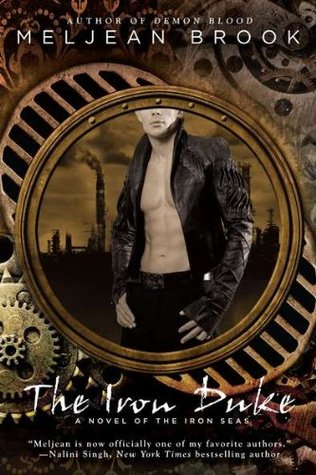
The Iron Duke - Meljean Brook (The Iron Seas #1)

The Iron Duke (Iron Seas, #1)I hadn't taken part in the Unapologetic Romance Readers' monthly reads for several months, just because there was nothing coming up that particularly interested me--or, even if they interested me, they weren't available from the library and were too expensive for me to buy.  I spent a lot of money last year buying book club books that I ended up not particularly liking, and so I've tried to dial it back some this year.  But, the monthly theme for May was "steampunk," a genre I really like, and the club choice of The Iron Duke was available from the library, and so I rejoined the fold. 

This is a book that I liked, but not because of the hero.  The world and the heroine are wonderful, and they carried the weight of the book for a hero who at first seemed like he was going to be okay, but really didn't know how to take "no" for an answer.

Our heroine here is Mina, a biracial young woman in an England that lived under the rule of the Mongol Horde for two centuries (I think).  While under Horde rule, those who lived in England were infested with nanotechnology that allowed the Horde to control them, mainly by freezing them or forcing them into breeding frenzies.  The "hero" of the book, Rhys, ended Horde rule by taking down the tower that broadcasted the signals used to control the populace.  Now, about a decade later, Rhys is known as the Iron Duke and ends up in Mina's sights when a body shows up on his doorstep and a conspiracy begins to unfold around them.  Oh, and Mina doesn't really want much to do with him, and so he is determined to own her.

This is such an interesting world.  While I'm not a huge fan of the "Asian Other" theme that's going on, the concepts in general are interesting.  It's a fusing of nanotechnology and steampunk and genetic modification.  Krakens and megalodons, genetically engineered by the Horde, threaten sea ships and airships trawl the skies.  The European continent is infested by zombies.  Mina and her fellow countrymen might be infested with nanotechnology that can let the Horde control them, but that same technology protects their lungs from the smoke and smog of London, gives them superhuman strength, and lets them heal at a supernatural rate.  And while the Horde kept a death grip on England, there are hints that this might be developed further and shown nuance in other books, though I'm not a hundred percent sure--but Mina tells about an incident when the Horde was fleeing after the downfall of their tower, and some of the Horde tried to take Mina with them, and she believes it was to protect her from a wrathful English populace who hate her because of her Mongol blood.

Mina herself is also a great heroine.  She is committed and willful, but loves her family, wants to do best by her position as an inspector, and is a true Englishwoman despite how she is looked down upon because of her racial background.  She wants to live in peace but knows it might not happen, and doesn't let it destroy her life.  She's traumatized by her own life under the Horde, which has scarred her in regards of sexual intimacy, but is not scared of connection.

But then there's Rhys.  At first, I thought it was just going to be a typical "alpha male pursues woman who rebuffs him" story, but with the awesome world thrown in.  In reality, though, Rhys is a total creep.  This became increasingly apparent as he insisted on manhandling her against her express wishes, culminating in a scene in which he sexually assaults her despite her repeatedly telling him no, and that the experience is triggering harmful memories for her--the word "trigger" isn't used at all, but that is definitely what is happening and what Mina expresses.  But Rhys ignores that and carries on anyway, leaving Mina in a position where she literally has to shoot him to eventually get him off of her.  Then, of course, the book tastes a distasteful turn to "woman falls in love with rapist."  While this is somewhat of a trope in historical period romances--not as much anymore, but you still find it--it seemed particularly egregious here because so much about this world was more progressive than the historical period is takes place in (albeit in an alternate universe) was, and this made it feel even more out of place than it normally would.

This Rhys plot really left a bad taste in my mouth.  I liked the rest of the book a lot--the consensual encounters would have been awesome, had they not been tainted by the earlier one, the world was cool, and I really liked Mina and so, so many of the side characters.  I'm one hundred percent interested in other books in this series.  But this one...I just can't get over the Rhys thing, and so despite my overall liking of the book, I'm going to have to give it...

2 stars out of 5.

Monday, May 28, 2018

Chemistry - Weike Wang

ChemistryOh, books that you just keep around and never read, despite having been interested when you bought them.  This particular one lived under my bed for almost a year, where I would glimpse it every time I went looking for misplaced bottles of lotion, nail files, hair brushes, etc.  I finally pulled it out, really for lack of anything better to read--I've been reading, but I feel like I'm in a slump--and went to it, which was easy, because it was short.

This is one of those books that wants to be artsy, because it doesn't have a named narrator or any dialogue punctuation, so it all kind of just blends together and it's sometimes hard to tell when someone is talking or just thinking.  Oi.  The story itself is a very simple one: the unnamed narrator is a young woman in chemistry PhD program in Boston, until she has a breakdown after not making any progress on her thesis, is put on a medical leave, and finds herself in tough straights with her fellow chemistry PhD student boyfriend, who wants to marry her but whom she's not sure she wants to marry.  It's a tale of self-discovery in the wake of all of this, and of coming to terms not only with her parents' expectations of her but what she really wants for herself.

There is some lovely prose in here, descriptions of Boston and of chemistry.  There's some good introspection, into aspects of this narrator's life; for example, how she's expected to go into science because of her parents and has always been the "smart Asian kid' but doesn't really want to be, and is actually more interested in teaching, or how she struggles with being a woman in science while her boyfriend sails through with no obstacles, or how she wants a relationship but she doesn't want to entirely lose herself to it, or be expected to give up a professional life to be someone's wife.  These are all important aspects of the narrator's (I hesitate to call her a heroine, it's not really that type of book, nor would I call a man in this role a hero) life and struggles, both internal and external...however, none of them are particularly interesting.  One thing I did find interesting was the role that language played in the narrator's life, as it draws so many connections and divisions between cultures very clearly and helps to illuminate the struggles of the narrator and those around her in a way that I don't think most books hit upon--or even can hit upon, because they're not from this same perspective.

This is one of those books that just drifts from place to place, from thought to thought.  It's not stream of conscience, thankfully--a style I can't stand--but there is not a lot of structure.  The narrator is just drifting through life, and the book of course reflects that.  There is not really a plot, there is not really a pace.  It just kind of is.  While the premise is strong, I felt like it just wasn't really a great read.  This book had a lot of buzz when it came out, but it just didn't capture me as much as I had hoped.  A book can have a lot of wonderful, important things in it--but still not be a good book for everyone, and I think that's the category this hit upon for me.

2 stars out of 5.

Friday, May 18, 2018

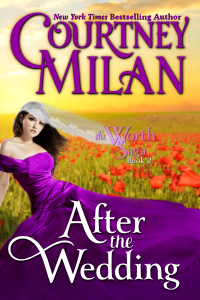
After the Wedding - Courtney Milan (Worth Saga #2)

After the Wedding (The Worth Saga #2)Sometimes a book is a long time in coming.  This book, for example.  Courtney Milan self-publishes this series, and she has admitted to having zero loyalty to deadlines.  This means that I've been stalking this book's steadily-receding release date for about two years.  It's one thing when a book doesn't have a release date; it's another when it has one, and it keeps changing, getting your hopes up and then crushing them time and time again as the months march by with no sign of an actual book appearing.  And as those months march by and hope for a release diminishes, well, hope for that book's quality has to go up in proportion.  After all, it must mean an extraordinary story is being written if it's taken so long to appear, right?  Well...

Unfortunately, this book was not everything I had hoped it would be.  The premise is amazing: Camilla Worth, the missing sister of the heroine in the first book, is forced to marry a man at gunpoint.  We last saw Camilla turning up at her sister's house asking for her help; this book takes a step back, relating the events that led up to that reunion and what came after.  Camilla has been shuttled from place to place, always hoping to find love and belonging but never actually finding it, though hope springs as eternal for her as it did for Milan fans hoping this book would ever be published.  While she didn't want to be married at gunpoint, she's hopeful as ever--maybe this will be the time it will stick, that someone will stand by her and choose her.  Her groom is Adrian Hunter, the black nephew of a bishop.  Adrian has a loving family, even if he doesn't see them terribly often and even if some of his brothers died during the American Civil War.  He wants his uncle to finally acknowledge him and the rest of his family after a lifetime of pretending that Adrian is someone else to him--a page, an amanuensis, whatever--and he's willing to do almost anything to earn that acknowledgement...even if it involves spying on his uncle's main political rival.  But Adrian also wants a romance like his parents had, and being married at gunpoint does not factor into that.

This book has so much going for it.  Beyond the strong premise, it has an interracial relationship, set in a place and time--Victorian England--where such romances are extremely rare.  It's nice to see this!  Adrian is a hero who isn't nobility, though he's still wealthy.  There are hints that Camilla is bisexual, or at least open to experimenting, and several other characters blatantly are bisexual, and Adrian's uncles--one by blood and one by relation--are gay (and also the stars of their own story in the compilation Hamilton's Battalion).  Camilla is a heroine who isn't a virgin.  There's so much going on here that could be amazing, which actually isn't surprising, because Milan has always been very vocal about a greater need for diversity in romance.

And yet the book falls flat.  Much of this is due to Camilla.  She is, quite frankly, annoying.  She manages to be Eeyore-level depressed and yet ridiculously peppy at the same time.  She believes she's cursed, in a way, not to be loved because she abandoned her family for comfort and security when she was twelve.  And yet she keeps looking for it.  This is fine!  This is a great character background.  But she harps on it, repeats it so much, that I wanted to slap her and tell her to think of something else at some point.  She has literally no other thoughts or hobbies other than sighing over wanting love and belonging while moaning that she doesn't believe it.  And then, of course, she has a moment of "Yes, I do deserve it," and no internal conflict from then on.

Adrian is also perhaps a bit too nice.  Not that heroes need to be assholes--quite the contrary.  But his niceness was syrupy to the point that he lacked backbone until, like Camilla, he suddenly didn't.  Really, what was lacking in these characters was growth.  They changed, but they did not necessarily grow, and that was disappointing, because Milan has always been so good at showing how her characters grow and evolve and improve.

This book's strongest elements, other than a diverse cast, might have actually boiled down to the set up for future books.  Theresa's character set up and the hints for Anthony, Priya, everyone else, were so great.  I have high hopes for future books in this series, but I wonder if maybe Milan got a little too tied up in this one and it just didn't work out in the long run.

3 stars out of 5.

Wednesday, April 25, 2018

The Bollywood Bride - Sonali Dev (Bollywood #2)

The Bollywood Bride (Bollywood)This is another one of those books that I've had for ages but, despite being intrigued by it, just never got it.  When you own a book, sometimes reading it doesn't seem as pressing as reading all of your library books that have due dates attached to them!  But the Popsugar Reading Challenge for 2018 has a category for "A book by an author of a different ethnicity than you," and since this was hovering so close to the top of my to-read list anyway, it was an easy one to slot in for that category.

Given the title of the book, with the emphasis on the word "Bride," I thought that this was going to be a romance.  While there is a romantic plot, perhaps one that is really the central driving force of the book, what this really felt like was a book about family, particularly family you choose over family you're born to.  Heroine Ria was mostly raised by her aunt and uncle following a terrible encounter with her mentally-ill mother, and while she and her father loved each other, their relationship was strained by that encounter and everything that followed it.  But Ria is now somewhat estranged from her aunt and uncle, who she kind of sees as her real parents, stemming from a secret relationship with her not-cousin (seriously, not her cousin, but around a lot, and the cousin of her cousin) that ended poorly on several fronts.  Ria has spent the last decade in India as a Bollywood star, and returns to Chicago and her family in order to attend the wedding of her actual, blood cousin who is more like a brother to her than anything.

Ria is perhaps not the ideal heroine.  She's kind of mean, and deliberately does things that hurt people.  Ostensibly she does these things to protect them, but it seems like what would really be better would be letting people make informed decisions for themselves.  Vikram is also kind of terrible.  He holds grudges and does spiteful things, and while he might be entitled to do so, he doesn't just hurt Ria, he hurts everyone else around him in the process.  However, they are surrounded by absolutely wonderful people who love and support each other and welcome misfits into their fold and make everyone around them feel wanted.  They keep each others' secrets, but to actually protect each other, rather than out of some misguided sense of righteousness.  Ria's aunt and uncle are both wonderful, her cousin is wonderful, his fiancee is wonderful, the aunties are wonderful, everyone is wonderful except our main characters.  Luckily this isn't a book that depended totally on romance between the heroine and hero to propel it; the supporting characters were so important in building the feeling in the story.

The writing itself is decent; Dev an write a good romantic scene, but I think her true strength was in those wonderful family scenes, and even more so in descriptions of food!  Oh geeze, I got so hungry reading this book.  I wanted to eat so much Indian food, it wasn't even funny.  Except Indian food is like a million dollars in the United States, and so I didn't.

Overall, a good book, and I might be interested in readings others by Dev--but not the sequel to this one, because it sounds depressing af.

3.5 stars out of 5.

Monday, April 9, 2018

A Hope Divided - Alyssa Cole (Loyal League #2)

A Hope Divided (The Loyal League #2)Alyssa Cole is a relatively recent discovery for me, as I've only read the first Loyal League book prior to this, but she's got some good stuff coming out.  A Hope Divided intrigued me as soon as I finished reading An Extraordinary Union, and she also recently put out a modern romance, A Princess in Theory, that looks wonderful as well.  She has heroines who are in interesting fields--spying, medicine, science--and who are women of color, which are rare in mainstream romance and rarer still in historical romance.  And while I had liked An Extraordinary Union, something about A Hope Divided just seemed like it would strike me better.

And it did.

An Extraordinary Union was definitely a historical romance.  A Hope Divided I would classify as a historical fiction with a strong romantic thread.  The relationship between Marlie and Ewan is important to the story, yes--but equally so is the emphasis that Cole places on the non-combatant participants in the Civil War, those who didn't join up with the Confederate or Union armies, but fought in their own ways.  This might have been running slaves, escaped Union prisoners, or others trying to get away through the Underground Railroad, it might have been Quakers refusing to fight, it might have been spies, it might have been farmers sending food to Union prisoners.  Marlie, our heroine, is a biracial woman.  Growing up with her mother in a rural area, she's not very aware of her background, until a white woman, Sarah Lynch, shows up offering to take Marlie and give her the life that she, as a Lynch, deserves.  Marlie's mother agrees that's best, and off Marlie goes, against her will.  Though she finds herself living a mostly-respectable life--even as a Lynch, the color of her skin and her strange heterochromatic eyes keep people aware of who she is--she also holds onto her roots, brewing medicines for those in need, though she maintains that she relies on medicine and science rather than magic, folklore, or witchcraft like people said about her mother.

Enter Ewan, the brother of An Extraordinary Union's hero.  He's a Union prisoner hiding his identity, because his specialty was torturing information out of Confederate soldiers, and one of the men roaming in the area in charge of the nefarious Home Guard is one of the last men he encountered before being taken prisoner and he...somewhat lost his composure during the "interrogation."  Ewan has anger problems, stemming from his childhood with a drunk and abusive father, but he's worked hard to suppress them.  Torturing people, however, doesn't exactly lend itself to that.  In Marlie, who he encounters when she brings food and books to the prison, he finds peace, and also attraction--not just to her body, but to her mind.  But of course they can never be together...until he's holed up in a hidden room in Marlie's suite at Lynchwood, having escaped from prison.

There are some really nefarious people here, far so more than in the first book, and it's Marlie's interactions with them as well as the people in her community and those she meets when she leaves that make this a work of historical fiction with a romance bend rather than the other way around.  In traditional historical romance novels, the setting is kind of wallpaper, just designed to make the characters look good.  In A Hope Divided, the setting thrums with life.  It lives and breathes and is a character in its own right.  This sense of place contributes so much to the story and really grounds it in a strong historical fiction background instead of only romance.

Overall, I liked this more than the first book.  It's less of a spy story or a romance, but I think the other aspects added in balance well and make it a stronger story overall.

4.5 stars out of 5.

Saturday, March 31, 2018

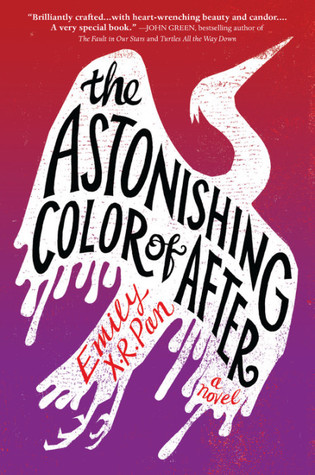
The Astonishing Color of After - Emily X. R. Pan

The Astonishing Color of AfterBook of the Month sometimes has some interesting selections.  They tend to be mostly literary fiction or suspense/thriller; I guess the judges' favored genres tend in this direction.  However, every now and then something very different slips in.  Something like Exit West or this one, The Astonishing Color of After, which has a definitive magical realism bend to it.

The story is about Leigh, whose mother commits suicide while Leigh is finally, finally kissing her best friend, Axel.  But while Leigh's mother might be dead, she is not gone, because Leigh is one thousand percent certain that instead of going away, her mother has become a red bird.  Her father thinks she's crazy, but some strange occurrences as well, and he takes Leigh to Taiwan to meet her maternal grandparents, whom Leigh has never seen due to a rift between them and her mother.  Leigh wants to find her mother, to figure out what she's supposed to know or remember, and finds herself on that quest with her grandmother and a strange young woman named Feng.

This is an interesting take on magical realism.  The things that Leigh experiences are definitely  happening.  They are not in her head.  Other people even sometimes acknowledge them.  But there's a whole aspect to it that only Leigh notices, that only she can see, or only she can remember, and I haven't encountered that in other magical realism books, which tend to have everyday magic more closely woven into the real world as a whole.  I spent a lot of the book flopping between "it's magical realism, no, it's just plain fantasy," but overall I think that magical realism is a more apt descriptor, just given how the magical plays into the story and characters.

Most of this book is set in Taiwan, but there are also flashbacks to parts of other people's lives and Leigh's own evolving relationship with Axel.  I really liked Leigh and Axel.  They're teenagers, and they do stupid things and have stupid fights, but their pull is undeniable.  They have a connection, and despite Leigh shutting down after her mother's suicide, that connection persists and grows even when they're separate and not talking...with a little magical help, of course.  But I think the aspect of this book that most intrigued me was Feng.  I had some idea of who she had to be, but I think Pan did a good job of concealing her true origins and revealing them in a way that wasn't designed to trick you but to make you put together all of the little pieces that had come before.

There were some things I didn't like, however.  First, Leigh's father is horrible.  Not in a typical "Leigh is a teenager and doesn't get along with her father" type of way, but in a "I knew my wife was depressed and so I pretty much abandoned her and my daughter rather than deal with it" type of way.  He hates that Leigh loves art.  He sends her off to a camp that she hates to the very depths of her soul and doesn't tell her anything regarding her mother's health, even though Leigh is the one who cares for her mother, because her father isn't present.  Pan tries to reconcile Leigh and her father at the end, but I am not at all convinced that he would suddenly become so supportive of her, or that he would become an involved father.

Second...can we talk about the pretentious color words?  Pan uses so many descriptive color words that I have never, ever encountered before, and I have a large vocabulary and am widely read.  Which means if I haven't encountered these words, I doubt her target young adult audience has.  I actually started highlighting them as I went through the book, there were so many!  The result is that there would be "[some crazy word] orange" and I would just disregard the descriptor, because "orange" was the part that mattered.  There are so many words for colors and hues and shades that the average reader knows, so I'm not sure why Pan veered away from those and to these spelling bee ones instead.

Overall, I did like this quite a bit.  Leigh's father was awful and the vocabulary was eye-roll worthy at times, but the story itself is solid.  The magical realism is done well, Leigh is a compelling main character, and the setting of Taiwan is a strong one.

4 stars out of 5.

Friday, March 23, 2018

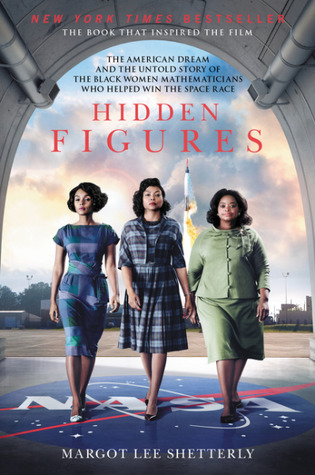
Hidden Figures - Margot Lee Shetterly

Hidden Figures: The American Dream and the Untold Story of the Black Women Mathematicians Who Helped Win the Space RaceLast September, I was at the National Book Festival hoping to get a signed copy of Outlander for my boyfriend's mother (because Diana Gabaldon is her favorite and I'm thoughtful like that).  A few queues over from the Gabaldon line was one for Margot Lee Shetterly.  There was practically no one in it.  How odd, I thought.  Hidden Figures was a pretty big movie, after all, getting a lot of press, acclaim, the whole shebang.  I found it very odd that there wouldn't be more people in that line.  Well, now I know why the line was so short: this book is boring.

And let me say this.  A book about a story that is this fascinating should not be this boring.  And yet boring it is.

This is, undeniably, an important story.  In a time when segregation was still the norm, female working women were still referred to as "girls," and women were pretty much banned from STEM fields, women were essentially storming NASA's predecessor, NACA, working as human computers and clawing their way upwards to the ranks of mathematicians and engineers, marking various "Firsts" and shattering glass ceilings as they went.  While white women were involved, Shetterly focuses on a much-ignored group, the West Computers and the women who came out of that pool to work in other areas, who were black.  While she talks about a few people here, only two names ultimately stuck in my head: Dorothy Vaughn and Katherine Gobels/Katherine Johnson.  Vaughn eventually ran the West Computers, and Johnson ran the calculations for the first American orbital flight and the reunion of the Apollo 11 moon landing crew and flight crew after departing from the moon.  There was a third main person, but Shetterly does such a poor job of actually distinguishing between these women that I honestly couldn't tell you anything about her.  And actually, there was a fourth woman, too--but she was in college for the events of the book, and I'm not entirely sure why she was included at all.

But my biggest dig against this book is that it's not predominantly about these women.  They are simply a lens through which Shetterly examines the Civil Rights movement, the press for desegregation, and all kinds of other social movements that surrounded these issues in the forties, fifties, and sixties.  While all of this is vitally important, it's not what I picked up the book to read about.  Additionally, the writing is extremely purple at times, not at all suitable for a nonfiction book.  It's entirely possible to do a book of literary nonfiction and do it well, but Shetterly does not.  It's always dangerous to project details of emotions, actions, etc. onto conversations and situations at which you were not present, and are collecting details from second- and sometimes third-hand, and yet that is exactly what Shetterly does.  Between wariness at this practice and sometimes eye-drooping boredom when Shetterly spent ages away from the main narrative to instead talk about the March on Washington, or something else entirely, I found that I didn't enjoy this book much at all.

Overall?  Important, fascinating story, but obscured by poor telling.  The movie might be better on this one.

2 stars out of 5.

Friday, January 26, 2018

Bone Crossed - Patricia Briggs (Mercy Thompson #4)

Bone Crossed (Mercy Thompson, #4)The fourth book in the Mercy Thompson series, this one picks up right where the third, Iron Kissed, left off--with Mercy going to accept her position as Adam's mate.  Adam puts a stop to any sexual advances right away, which is good, given how IK wrapped up, and says that she needs to work through some of her trauma before they can become physically involved.  Of course she does this over the course of the one week that this book takes place and they're in bed with each other soon enough (not very many steamy scenes, though, unfortunately; nothing that can compare to Kate and Curran's hookup in the Kate Daniels books, that's for sure) but at least it got off on the right foot?

Anyway, the action here focuses around the consequences of Mercy killing a couple of vampires two books back, despite the wishes of the head of the vampire seethe.  When a pair of crossed bones appears on the door of Mercy's garage, indicating that she is persona non grata with the vampires and is able to be attacked by anything that thinks it can take her, it seemed like this book was going to ramp up dramatically.  Especially when her vampire friend shows up mostly-dead (as dead as a vampire can be) in her living room, her mother appears all primed to be a target, and one of her college acquaintances shows up at her door in a strange state hoping that Mercy can help her with a ghost. 

Unfortunately, I feel the promise fell flat.  Much of the book is taken up with politicking with the vampires in the Tri-Cities and a lurking menace of another vampire up north.  Ultimately, it's that vampire who ends up being the crux of the actual action in the book, revealing some new powers for Mercy and causing some drama, but nothing that has to do with real consequences of her actions.  Instead, everything in the Tri-Cities ends up going about in a hunky-dory manner, which was kind of disappointing given how built-up the drama of the vampire killing and its pending consequences were.  It seems like Mercy got let off lightly--which seems like a strange thing to say, given what happened to her in the last book, but that was completely unrelated to what was brewing with the vampires (who were suspiciously absent in the previous book) and it having pretty much an absence of consequences in the end, other than an exchange of "I don't like you"s with Marsilia, meant that this one felt a bit flat.

Was it nice to see Mercy finally acknowledge her feelings for Adam?  Yes, of course.  And I did like how Briggs showed Mercy wanting to move forward, but in many ways being hampered by her recent trauma.  But while Mercy spent three prior books deciding how she felt about Adam and what to do about him, here she just rushes ahead, and it feels like the pace of their relationship went from one extreme to the other within the span of less than week.  Such a swing didn't seem to fit the book or the series.  Mercy obviously needed recovery time and Briggs wanted time to give it to her, but there was no reason that the follow up with the vampires couldn't have been put off for one more book when they could have been given the drama it truly deserved.  Then this one could have focused more on the Blackwood subplot and maybe been used to make Mercy's proper transition into her role as Adam's mate feel more natural.

I'm not giving up on this series--I at least have to read Silver Borne for a challenge--but this one was something of a disappointment, not living up the previous volumes or the drama that was promised for this particular plot.

2 stars out of 5.

Friday, January 19, 2018

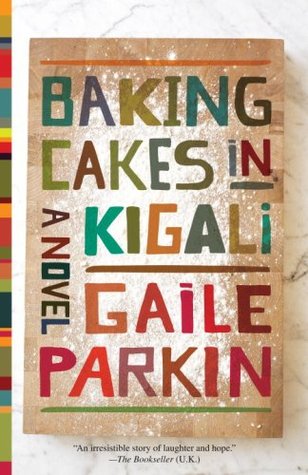
Baking Cakes in Kigali - Gaile Parkin

Baking Cakes in KigaliBaking Cakes in Kigali has been on my to-read list for a while, and as I have a friend who recently traveled to Rwanda and was in Kigali for New Years', the book popped back to the front of my mind and it seemed like a good time to read it!

Set in Kigali in 2000, the story is a slow, character-driven one about a neighborhood that centers around a single apartment complex and particularly one woman who lives there, Angel.  Angel is a native Tanzanian who lives in Kigali with her husband, who is doing consulting work for a technical institute, and their five grandchildren, who they care for in the wake of the deaths of both of their children.  Angel interacts with other people who live in the complex as well as others they are connected to, and others still who come to order cakes from her.  Her cake making business is the heart of the book, bringing her into the lives of many other people and revealing their secrets to her, as she promises confidentiality as part of being a "professional somebody."  There characters include Odile, a nurse who survived the Rwandan genocide; Jenna, the wife of a CIA agent who she doesn't know is a CIA agent, and who is also cheating on her; Sophie and Catherine, a pair of American volunteers helping with the reconstruction of Rwanda in the wake of the genocide; Vincenzo, Amina, and Safiya, a Muslim family Angel is close to; and Leocadie, a young woman who runs a small shop down the street.

This is a book that touches on a multitude of tough subjects while still remaining a wholesome story.  There are so many tough subjects--AIDS, genocide, suicide, rape, genital mutilation, kidnap and child soldiers, to name just a few--that I kept expecting disaster to pop up around every corner, but it (thankfully) never did.  Really, the story touches on those things, but it's about Angel acting as a sort of mother to the entire neighborhood, handing out wisdom over cake and milky cardamom tea.  Love, loss, and schemes are all poured out and over, and Angel, despite having had difficult times of her own, remains a calm force throughout, and even leverages her insight for others to help herself come to terms with the death of her daughter.

I liked the writing here.  At some times I did find it a bit stiff and formal--however, I had to keep in mind that, while this book was written in English, most of the dialogue is actually delivered in Swahili that Parkin represents as English on the page.  Some other reviews indicate that Angel's version of Kigali seems a bit too bright and sunny for taking place after the genocide--however, the genocide occurred in 1994, and the book takes place in 2000.  There are ongoing trials and attempts at reconciliation--two of the characters that Angel meets have come from South Africa, where they worked on the truth and reconciliation process following the breakdown of apartheid, in order to assist--but six years can change a heck of a lot.  And I think Parkin did a good job showing that, while some people seem happy and functional, they can still be deeply scarred and haunted below the surface.  And it's also important to remember that, while the genocide was clearly a huge part of recent Rwandan history, it's not all that Rwanda is--and that, I think, is what Parkin was really aiming for, and I think she accomplished it.

The structure of the book revolves a series of events, all things which people would order a cake for, which allows Angel to really become involved.  Again, this is a character driven book, which means that there's not a strong central plot and the story instead revolves slowly around the people on the page rather than a driving event or crisis.  The structure works well for this type of narrative, but it's definitely not something that everyone enjoys.  Considering this was a first novel, I think it was done extremely well; characters can be hard to balance without plot points driving them along, but Parkin did so with aplomb, and this was overall a joy to read.

4 stars out of 5.

Monday, December 11, 2017

Hunger - Roxane Gay

Hunger: A Memoir of (My) BodyHunger is up for a Goodreads award, I had it from Book of the Month, and a coworker had read it it and recommended it, and so this confluence of events led me to read it.  Gay's memoir is, essentially, about being fat.  At her heaviest, she weighed close to six hundred pounds, and while she's significantly below that now, she's still considered super morbidly obese.  Her weight problem stems from childhood trauma--after being gang raped at the age of twelve, she began eating in an attempt to make herself overweight and repulsive to men because she didn't want to be hurt again.  Now and adult, she doesn't want to be overweight, but essentially a lifetime of bad habits have made it hard to lose the extra pounds--and then, when she does start to lose weight, the old fears rear their ugly heads again and send her back into bad habits.

Gay's memoir is painful to read because of how real it is.  I am not overweight.  I am one of those skinny girls who sees a little padding on her hips (because you suddenly develop hips in your midtwenties--who knew?) and starts to agonize over it.  I chew my nails over inconsistent sizing at Old Navy because I wear different sizes in different styles of pants, and even though I intellectually know that sizing is bullshit, I still don't want to wear a 6 in one size when I wear a 4 or even a 2 in another.  And why is that?  Because I know the thing that Gay hammers home so hard--that our society treats fat people like shit, and I don't want to come even close to falling into that category.  In that way, Gay's memoir is easy to empathize with even for someone who isn't overweight, because many of us can tap into the fears of being so--we want to be young and pretty and skinny and fit, but life doesn't always work out that way.  I mean, I might want to weigh ten pounds less, even though my weight is perfectly healthy, but I'd also much rather spend my time reading books than going to the gym.

The other way that Gay's memoir connected with me was giving me a terrible feeling of guilt because, like a lot of society, I have a knee-jerk reaction when I see someone who is very overweight.  I do make snap judgments about their character.  I've become much better at recognizing these reactions, walking them back, and using logic to guide my thoughts and actions instead, but it's hard to buck what is essentially a lifetime of conditioning that fat equals bad.  At the same time, though, I can't bring myself to wholeheartedly jump onto the body positivity train, because at some point being overweight does lead to health problems, and I don't think "healthy at any size" is really a thing when someone can't walk a mile with their friends without having to worry about breathing problems or a heart attack.  Yes, this is judgey of me, and I am coming out and admitting it, because Gay admits so much in her memoir that I feel like the least I can do in a review is come out with the same honesty.

But Gay's story isn't just about a physical hunger for food; it's about hungering for so many more things, like company and love and security.  These are all other aspects on which I think anyone can empathize, because it's a rare person who is completely fulfilled and can't connect with some aspect of hungering for something they don't have.  This also isn't a book of wallowing, despite how intense and painful it can be.  Instead, it is an explanation and an attempt to make readers see how peoples' actions affect each other on many levels throughout life, and to make them re-evaluate how they see different people and situations.  In this, I think she is extremely successful.

This is a powerful story that I think can resonate with many audiences.  I only had two real issues with it, neither of which was content-related and instead were writing-related.  First, and this is the more minor issue, I don't get what's up with the constant parentheses around (my) body in the early part of the book, especially when they vanish later on.  Can someone explain this?  Second, the writing here isn't a solid narrative and is very scattered.  It jumps to and fro in time in a series of chapters which rarely surpass five pages and often don't go past two or three.  This jumping means that she often re-hashes things that have been covered before, sometimes two or three times, and it can sometimes be hard to follow the thread of thought.  At times, I thought that the chapters were being grouped by theme, particularly when there were a few close together which talked about Gay's relationship with food through cooking...but then that fell apart and went back to roaming to and fro, and I was left a bit perplexed again.

Overall, I think this is a book that serves its purpose very well, and can resonate with readers across a wide spectrum of ages, body types, ethnicities, etc.  But it probably could have done its job a bit better if it had been a bit more structured.

4 stars out of 5.

Saturday, December 9, 2017

Take the Lead - Alexis Daria (Dance Off #1)

Take the Lead (Dance Off, #1)Take the Lead was listed as one of the best romance books of 2017 by Sarah MacLean in The Washington Post, and Nenia over at Readasaurus Reviews gave it a thumbs-up, which is fairly rare for her, and it's about a dance competition, so yeah, it jumped onto my to-read list pretty quickly!  I have a weak spot for figuring skating romances and Dancing with the Stars, which I never watch on-air but binge clips of on Youtube, and this book could also fill in a category I hadn't yet gotten to for my romance reading challenge: the interracial romance.  I'd planned to read The Far Pavilions for it, but when that showed up on my Kindle with a read time of 25 hours, I backed away from that, bumped it to next year's list, and put this in instead; Alexis Daria is an #OwnVoices author, and her heroine Gina Morales is a Hispanic Puerto Rican while her hero Stone is a white guy with distant Scandinavian ancestry.

SO.  The book itself.  Gina is a professional dancer on the The Dance Off, which is basically Dancing with the Stars.  For her fourth season, she fins herself partnered with Stone, whose family is the subject of a reality TV series where they live "off the grid" in the remote expanse of Alaska.  And as soon as they meet, Gina knows what the show has in mind--a showmance between them, something she refuses to do as she tries to buck the stereotype of the promiscuous Latina and put forth a more true and positive image of herself.  Problem: she and Stone actually are attracted to each other.  And when they find out that Gina's job is on the line if she doesn't win The Dance Off this year, Stone doubles down and decides to take them all the way.  There are costumes and contrivances and glitter and of course awesome dances, though we rarely see Gina and Stone on stage; most of the action actually takes place in their rehearsals and other parts of their lives.  There's a positive female relationship between Gina and her roommate Natasha (set up to be the heroine of the second book) and just all-around awesomeness.  But that doesn't meant that Daria slacks on the drama.  Oh, no.  It's a constant stream of "We can't be together because I want to live in the city and you want to live in the wilderness!" and vice versa, and a Big Miscommunication to which, I will say, Gina totally overreacts (and everyone tells her so, thankfully).

But yeah.  This book was a riot.  It wasn't perfect, but it was very, very fun, and well-written.  Stone and Gina were both great main characters (Stone of course has a Secret that he is protecting for his family), the drama is on-point, and the "behind the scenes" dynamic of the dancing show is one I haven't seen before, showing just how much of it is contrived for the audience's amusement and consumption.  I'm definitely looking forward to reading the second book!

4 stars out of 5.

Wednesday, November 29, 2017

When Dimple Met Rishi - Sandhya Menon

When Dimple Met RishiWhen Dimple Met Rishi was one of my most-anticipated reads for Fall 2017.  It seemed like it had so many things going for it: main characters who aren't white (diversity matters), a young woman in a STEM field (Dimple has a passion for coding), and a romance plot with an arranged marriage--or rather, a hopefully arranged engagement, since Dimple isn't actually aware of the fact that her parents are trying to hook her up with an Ideal Indian Husband, though she knows her mother wants her to get married.  Unfortunately, I felt like this book ultimately fell short of my expectations.

The story follows the two title characters as they attend Insomnia Con, a six-week app-coding bootcamp, the summer before they enter their freshman years of college.  Dimple dreams of being a coder.  It is her passion, and attending Insomnia Con and winning the app-coding competition for a chance to work with her idol seems like a coup that she won from her reserved parents, especially considering the thousand-dollar fee that she knows is a stretch for her family to afford.  Rishi, on the other hand, is resigned to being an engineer like his CEO father, though his true passion is drawing comic art.  He attends Insomnia Con mainly to get to know Dimple, as his parents and Dimple's parents know each other and think the two would be an ideal match.  Unfortunately, Dimple has not been made aware of this, and their first encounter ends with her throwing an iced coffee at him and fleeing the crazy guy who apparently thinks she's going to marry him.

Unfortunately, this didn't end up being a story of "getting know you while building world-changing app."  Despite their rocky first encounter and Dimple's determination to not get attached to anyone, Dimple and Rishi fall in love with each other pretty much right away, and only the barest minimums of the actual Insomnia Con competition are mentioned.  Instead of working on their app, Dimple and Rishi appear to spend most of their time swanning about San Francisco, eating out (can't blame them on that one) and practicing for a bizarrely-inserted talent show in which they perform a Bollywood dance.  No wonder the competition comes to the end it does--though of course, we're supposed to see that clearly they are the rightful winners!  (Why?)  The two have chemistry, but it was disappointing to have the conception that Dimple basically just ditched her app programming.  I don't think we're supposed to think this, but there's about three sentences of Dimple working on it in the book, so it really doesn't feel like she's as focused as we're supposed to believe she is.  And Rishi doesn't seem to know anything about coding, so it's hard to see how he got into Insomnia Con at all!

Watching the characters struggle against the expectations and preconceptions of their families was interesting, I'm not convinced that it was enough to propel the entirety of the story because ultimately, it doesn't end up being much of a struggle.  The parents cave pretty easily into wanting their children to be happy as soon as the children actually, explicitly push back.  So not much drama there, despite the "big deal" the characters make it out to be.  It ended up being a story that overall lacked dimension, with things seeming to come to the characters very easily on all fronts with only about five minutes of suspense in wondering if things will work out happily.  I think there were a lot of good concepts and themes in here, but none of them were worked to the degree they could have been, and should have been if this was to be a truly great book.

3 stars out of 5; I enjoyed reading it, but I'm not sure I would go for it again.

Sunday, November 12, 2017

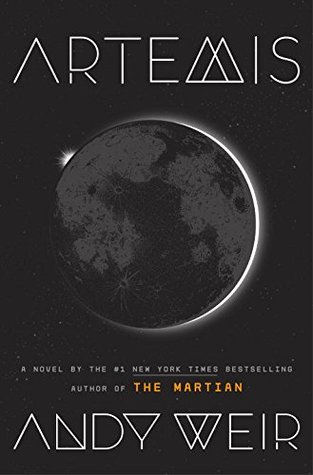
Artemis - Andy Weir

ArtemisAnother hotly-anticipated book this season, Artemis is Andy Weir's follow-up (though not a sequel, not even related) to his smash hit The Martian.  This is still a sci-fi, with the setting being the town of Artemis on the moon, made up of a series of domes and some subterranean levels.  The main character is Jazz, a woman who was born in Saudi Arabia but emigrated to Artemis with her father when she was six and so considers herself a true Artemisian, especially because people can't actually have children on Artemis and have to go to earth to do it because of how the lunar gravity can affect gestation.  Jazz works as a porter, delivering packages, and also as a smuggler--also delivering packages.  And when one of her clients offers her a million dollars (essentially; that's not the currency used, but it's the gist) to destroy some machinery used by a smelting company, Jazz sees her chance to claw her way up out of poverty and into the good life.  Unfortunately, it goes wrong, and she quickly finds herself running for her life and entangled in a plot that could lead to Artemis' downfall.

I don't think this was as strong a book as The Martian was.  First, I'm not convinced that Weir can write a female main character, at least not from a first-person perspective.  Have you ever read or watched something and had a definitive moment where you went, "This was written by a man?"  I had one of those moments here, just a few pages in, when Jazz/Weir describes Artemis as looking not like a group of domes, but a group of boobs.  This is not the type of thing that I have ever encountered in a woman's writing, though it seems to abound in men's writing for some reason.  In fact, with the fact that Jazz does not have a scientific background and Mark Watney of The Martian does, they are essentially the same person.  Their speech is the same, their humor is the same, I basically could not tell the difference between them.  Weir also seems to use Jazz's non-scientific background as an excuse to skimp on some logic in the book; there's still a demonstration of research into various things like welding, smelting, chemical reactions, etc. but he breezes right by some of the things that really would have been built into an enclosed community literally connected to a smelting facility via air tubes.  Let me put it this way: when you have a character spout off all the things that should have been included at the end of the book to foil your big plot, then you probably should have thought the plot out a bit more carefully.

Artemis was a promising setting for a story like this, and I was also psyched to meet Jazz's Kenyan pen pal, Kelvin, who is featured in letters from Jazz's childhood up through the present that appear between some chapters of the book.  But we never actually meet Kelvin, Jazz continues to be annoying, and all of the supporting characters are completely one-dimensional.  There's a romance that's absolutely forced in between Jazz and a supporting character, but while I think we're supposed to get the vibe that "OMG I've loved him all along and I've just realized it!!!" it really just feels like she decides to hook up with this guy because he has a nice bed and a shower and she wants that life.

Overall, super disappointed in this.  1.5 stars out of 5, a huge comedown from The Martian.

Monday, October 16, 2017

Trickster's Queen - Tamora Pierce (Daughter of the Lioness #2)

Trickster's Queen (Daughter of the Lioness, #2)I wasn't actually planning on reading Trickster's Queen so soon after reading Trickster's Choice, but after a few books that were just "meh," I found myself in a bit of a reading slump.  And when I'm in a reading slump, I like to go back to books that I know I enjoy to get me out of it.

What struck me immediately upon re-reading Trickster's Queen is its great disconnect from the first book.  It picks up several months and much character development after Choice, which Pierce tries to bridge with a couple pages of prologue that is essentially all info-dump about what the characters have been doing in the interim.  However, the effect of this is that it feels like this is the third book in a trilogy in which the second book is missing.  Most of the development of Aly's relationship with Nawat, which was so sweet and charming in the first book, is just skipped over; so is Aly's building of her position as spymaster for the growing rebellion.

On the whole, however, this book has less infodumping than the first one.  The prologue is the vast majority of it, and the narrative itself is less interrupted with intermittent infodumps than Choice was.  Additionally, I think this one does a better job of building the environment, culture, and overall feel of the Copper Isles.  Aly also really has room to come into her own and show off her skills in this book, rather than scampering to use them while also hiding them as she had to in the first book.  Tensions come to a head regarding Sarai, and the twist that's hinted at all along finally actually happens.  Dove continues to be an excellent character, far wiser than her years, and the integration of many of the side characters is done very well.  The other minor flaw that comes to mind is that the end does feel a bit rushed; Pierce lists off a list of casualties, one of which was a major-minor character (if that makes sense) in the first book and then was just brushed aside in the second and then written off as a sacrifice of the rebellion.  With all of the build-up to the rebellion, it just seems to be over in remarkably few pages, and then the epilogue just feels a bit off as well, though I can't quite put my finger on why.

Overall, this is a good book; I definitely enjoyed re-reading it.  However, I don't think that it's as good as the first book in the duology.  It feels disconnected from the first part of the story, and the ending also feels rushed and off-kilter with the rest of the book.  The body has a good feel and good characters and a good plot, but without a strong beginning or end, I don't think it can be stronger than the first book.

4 stars out of 5.

Friday, October 6, 2017

Everything I Never Told You - Celeste Ng

Everything I Never Told YouLydia is dead.  But they don't know this yet.

What a beginning.  It sets the tone for this story perfectly: one of a family slowly unraveling in the wake of the favorite daughter's disappearance and, as we readers know is coming, death.  Lydia is the center of the Lee family, a Chinese-American teenager whose life appears to be perfect until, after her death, the cracks begin to appear.  And with those cracks spread the cracks in the other family members' lives.

The bulk of this book is actually set before Lydia's disappearance and death, showing how the Lee family got to where they are.  And in the present of the book--actually set in the 1970s--the family is slowly crumbling in the wake of their unforeseen disaster.  The alternation isn't exactly a new technique, but it really works in this case.

The story itself is really heartbreaking, and struck me for one big reason.  My edition has a cover quote saying, "If we know this story, we haven't seen it yet in American fiction, not until now..."  But we do know this story, don't we?  The story of people wanting to stand out, and to fit in, and of parents putting pressure on their children to live the lives the parents themselves wanted to live, instead of letting the children follow their own dreams.  And of families falling apart under the pressure.  Ng sets this story in the 70s, with a mother who dreamed of being a doctor but gave up on her dream when she began a family and a father whose parents immigrated from China, who has always stood out because of his ethnicity, and wants more than anything to be popular and fit in.  When both parents are unable to achieve their dreams, they focus on their daughter, Lydia, trying to make her into what they'd always dreamed of.  Lydia goes along with it, what she sees as the price for her mother remaining with her.  Meanwhile, her older brother Nath is pushed aside, despite his dreams more closely aligning with his mother's, and Lydia's younger sister Hannah is just forgotten.

I don't think there's anything particularly riveting or revolutionary about the story, the writing, or the structure of the book, but it all comes together to make a lovely whole.  There's enough uncertainty surrounding Lydia's death and Lydia herself to keep us guessing at what, exactly, happened to lead to her death.  And while readers eventually find out the answer to that mystery, there's still a deep sadness surrounding the Lee family, because we know that they will never have the same sense of closure that we do.  I think that's what really makes this book striking--it's just a combo that works, and the ending makes that "working" resonate even more.  The characters are diverse enough that I think there's someone that everyone can empathize with, in one way or another, which also helps to lend this book a sense of deep emotion that books sometimes lack.

4 stars out of 5.

Wednesday, October 4, 2017

Women of the Silk - Gail Tsukiyama

Women of the SilkI remember my stepsister reading Women of the Silk when she was in middle school or early high school and loving it, and while I creeped on her bookshelf many times, this was never a book that I actually picked up.  Having read The Samurai's Garden within the past few years, however, this seemed like a good book to read when I came across it in a used bookstore.

The story follows Pei from her girlhood to young adulthood in rural China, where she first lives with her family on a farm for mulberry leaves and fish ponds, and then--for most of the book--inside a silk factory, where her father takes her when the family encounters financial difficulties.  As Pei grows older, she clings to relationships she's built in the factory and her dormitory-style home outside of it as surrogates for her birth family and comes to terms with an independence that most women in this time period in China were not able to gain for themselves.

The writing in this book is very simplistic, and while sometimes I felt like the style fit the narrative, at other times it felt like Tsukiyama was info-dumping, just pouring out information about side characters because she wanted them to be more important than they ultimately were to Pei's own narrative.  Pei herself was a strong-minded character but one who was still adrift, which worked well for the story.  What I was never entirely sure of was her exact relationship with Lin; sometimes it seemed completely platonic, then Tsukiyama would throw in something about desire, and then it would go back to being platonic, so it was a bit baffling in that way.

The setting was perfect for this place and time period; starting during the Great Depression and going forward into World War II, Pei is relatively sheltered from global events, but we as readers can still see the world's wider influence bearing down upon the silk factory and the girls who work there.  The slow encroachment of the Japanese, the conflicts involving communists, all of it kind of swirls around Pei without touching her, until it finally slams into the silk factory.  It was a good method of setting the story, but there was one problem with it: because none of this ever really touches Pei, I never felt like she actually matured as a character.  At the end of the book, she felt just as young as she did at the beginning of the book, almost two decades before.

Overall, though, this was a lovely book.  It appears there's a sequel, though this hasn't been formally slotted into a series, and I might check that out at some point if I can get it from the library, though it's not something I feel a need to rush out and buy.

3.5 stars out of 5.

Sunday, October 1, 2017

Funny in Farsi - Firoozeh Dumas

Funny in Farsi: A Memoir of Growing Up Iranian in AmericaA lighthearted memoir, Funny in Farsi was the Deliberate Reader Book Club title for October's month-long discussion.  The author, Firoozeh Dumas (her father specifically told her not to mention her maiden name in the book, and then wondered why she hadn't used it once it was published) first came to the United States when she was seven, when her father had a two-year work assignment for the Iranian oil industry in California.  After returning to Iran, her family later came back to the United States to liver permanently.

Despite the cover claim that this is "A memoir of growing up Iranian in America," I felt like much of the book wasn't really about Dumas so much as it was about her larger family, with her serving kind of as an observer in the background.  Each "chapter" is really more like a little vignette focusing on a different incident, and there's also a pretty big jump from when Dumas was a child to when she was adult, with only one real chapter on her adolescence--one minute she's trying to get her mother to bake American snacks for her elementary school, and the next she's getting married.  Many of the stories focus explicitly on Dumas' father, something that she admits in the afterword of the book.  Her parents are definitely the center of this narrative; despite having brothers and an extended family, most of the stories involve her parents in the central role, whether it's her mother's accent and learning of English consisting mainly of watching The Price is Right or her father wanting to compete on a bowling game show, "fixing" up the house on his own, or trying on her engagement ring when her boyfriend asked her father's permission to marry her.

Obviously, the humor here is in the clash of cultures that comprises Dumas' life.  While her family is eager to embrace much of American culture, they're still baffled by other parts of it--such as why Americans like turkey.  And then, once Dumas marries a Frenchman, yet another aspect of culture clash enters her life.  To some degree, Dumas presents herself as better than the others around her--better at adjusting, better at understanding, just better, which is a little self-centered, even more so than writing a memoir about your experiences.  (And she is correct that you don't need to have done something amazing to write a memoir about your life.)  Maybe it's that she's more pragmatic than other people in her life, maybe it's a skewed viewpoint; it's hard to say.  However, it's still an amusing read, though one that, like many memoirs, you probably need to take with a grain of salt.

Overall, this was an enjoyable read, but it's one that lacks a lot of depth.  Rather than really digging into any issue, light or heavy, Dumas instead skims over pretty much everything, keeping the focus away from herself.  I would have liked to see a little more depth here in some respect; depth doesn't mean that something has to be depressing, but it would have made the book seem a little more whole-hearted; as it was, it just felt a bit shallow.

3 stars out of 5.