Pages

Showing posts with label retelling. Show all posts

Monday, July 3, 2017

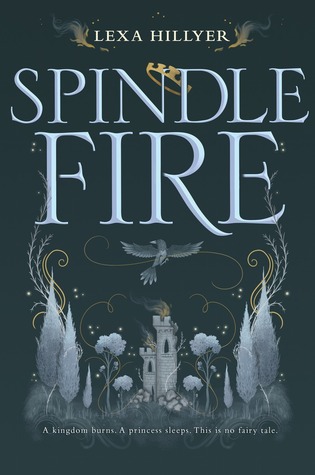
Spindle Fire - Lexa Hillyer (Spindle Fire #1)

Spindle Fire (Spindle Fire #1)Fairy tale retellings always intrigue me, and when I was looking for another book to add to an Amazon order so I could get free same-day shipping, I settled on Spindle Fire because it promised to be an intriguing retelling of the Sleeping Beauty story.  Featuring not one princess but two, and one of them a bastard trying to save her enchanted sister, with a wicked faerie lurking the background... Well, it had potential.

The story follows Isabelle, the bastard princess, and her younger, legitimate sister Aurora.  Isabelle is blind and Aurora is mute and has no sense of touch, those senses being taken from the girls by faeries when they were small.  When Aurora's fiance, the prince of the neighboring kingdom, is killed on his way to marry her, the kingdom is threatened with chaos and Isabelle is to be sent away.  So she runs away instead, and Aurora follows her, and in the process stumbles across a golden spinning wheel, where she pricks her finger and ends up in a dream world called Sommeil and apparently haunted by the long-thought-dead faerie Belcoeur.  Meanwhile, the faerie Malfleur, said to have killed her sister Belcoeur, raises troops to march against the kingdom.

The most intriguing thing here was that Isabelle is a blind heroine.  Aurora's muteness and lack of touch are interesting, but ultimately not used much because in Sommeil her tithes seem to be waived and her voice and sense of touch come back to her.  Since she spends most of the book in Sommeil, she doesn't really come across as "challenged" as she actually is in the real world.  Isabelle, on the other hand, spends the entire time in the real world, where her lack of sight is a huge disability.  She manages, but once she leaves the places that she already knows, it becomes infinitely harder.  And yet Hillyer manages to have a great sense of imagery, showing how Isabelle pictures the world through touch and smell and sound even without her sight.

Other than that, the book wasn't as intriguing as I thought it would be.  Some of the plotting and world-building definitely seems confused; like, is this supposed to be our world, or not?  There were indications in both directions.  And what's up with Malfleur and Belcoeur?  Because some people say that Mafleur is evil but she says that she saved everyone from Belcoeur who didn't really seem to be doing anything...?  There's a big info-dump chapter near the end of the book that I thought would straighten this out, but ultimately it didn't.  And as for breaking the curse...what a cop-out that actually was, and I feel like it actually removes a lot of the promise of the second book because now all that's left is dealing with Malfleur, and military conflicts are typically less interesting than twisty curses.

Overall, this was an okay book.  It's marketed as young adult but I feel like it's more middle-grade in reading level; there are a few parts that trend more YA, but as a whole it doesn't have a YA feel to it.  With that and the other confused aspects of it, I'm not really sure I'm intrigued to read the second book when it comes out.

2 stars out of 5.

Friday, February 24, 2017

Chasing Cats - Erin Bedford (The Underground #2)

Chasing Cats (The Underground, #2)Last year, I read Bedford's first book, Chasing Rabbits, as part of an indie-author feature I ran for a short time.  I ultimately ended the feature without really saying anything about it because I was just being disappointed too much.  There is some amazing indie work out there--one of my favorite authors, Intisar Khanani, is indie--but so many times something that's highly rated isn't actually good because it's people supporting an author just for being indie.  Yes, there's a lot of crap in traditional publishing that's highly rated, too--I am well aware.  However, it's normally easier to spot from a distance, as opposed to indie, where my experience has been overwhelmingly to see things that have a neat concept, but aren't actually well-executed.  That said, I had picked up Chasing Cats a while ago while it was on sale (I think this might have involved pre-ordering it) and found myself in the mood for something involving sexy fae over the weekend, so I dug through my dusty Kindle archives and found it.

Let me put it out there right away: I think this was an improvement over Chasing Rabbits.  Much of this has to come from the fact that, apart from a tiny, tiny part of the book, none of it takes place in the Underground/Wonderland.  The main character, Kat, is trying to come to terms with both her newly-revealed identity as a faerie princess reincarnated as a human and with the magical powers that come with that status, as well as with the fae beings who keep popping up in her house without ever bothering to knock.  Included among them?  Dorian, her former fae fiance and the UnSeelie prince, and Chess, aka the Chesire Cat, who, let me remind you, is a fae guy with ears and a grope-prone tail and a love for tight and/or revealing clothing.  While the third book in the series is clearly headed back to Wonderland, I have higher hopes for it after this, because Bedford seems to have edged a bit away from equating every single thing in the traditional Wonderland story something fae.  It's a bit hard to say, because this is mostly set in our human world, but I have hope based on how this one went.

That said, there's second-book syndrome here.  While Kat worries about finding herself, she has a few short magic lessons until she's told to "just do it," essentially, and does (because magic works like that?) and flirts with Chess.  That's about it.  There's a bit going on in the background, the repercussions of things that Kat did in the first book, but they're all happening in the background rather than in Kat's direct line of vision and action.  Aside from her self-discovery bend, she deals with her bitchy boss and her bitchy mother(s) and her bitchy sister.  Seriously, why is every woman other than Kat a bitch here?  It makes me side-eye female authors when all of their female characters other than the heroine are one-dimensional bitches.  Additionally, she continues to use the threat of rape as a motivating trope.  Sigh.  The Big Betrayal also doesn't ring true to me from how it's written here, but maybe it follows through more in the third book?

And, again, this book needs more editing.  There are misused words--conscious instead of conscience immediately springs to memory, though there were more--and missing words and a dearth of proper comma use and just some overall very awkward sentence structure.

But I still enjoyed this more than Chasing Rabbits.  CR felt like it was trying too hard.  This one might have felt a bit like it wasn't trying hard enough, but I think it was an improvement.  Bedford can also write a pretty good makeout scene, though Kat having her tongue down the throat of every fae male she encounters at some point (and vice versa) also got a little old.  I get it.  Pheromones.  And no, there is absolutely nothing wrong with Kat as a woman enjoying getting some--her lectures to Alice on this point were humorous--but I felt there could have been a more productive use of page time here.  And apparently there's going to be a fae/human war?  Where did that come from?  There was no indication of this, it feels like an attempt to escalate the drama but there's no way that it's actually tied in.  Oi, I'm whining again, aren't I?  Sigh.

Okay, so, basically, what I'm trying to say is, this book has its issues.  Definitely.  I think it needs polishing and refining and all sorts of stuff.  But I also think that it was better than its predecessor, and I think that if Bedford actually stays away from the Wonderland tropes (hard, maybe, because of how this got started, but doable) this could be a better series than it started off as.

3 stars out of 5.

Monday, October 17, 2016

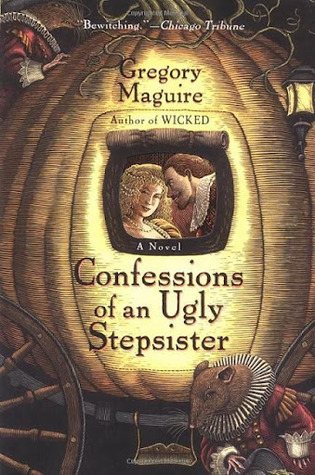
Confessions of an Ugly Stepsister - Gregory Maguire

Confessions of an Ugly StepsisterConfessions of an Ugly  Stepsister was my pick for a fairytale retelling for my 2016 reading challenge.  I read Wicked back when I was in high school, and wasn't a huge fan.  There were some interesting aspects to it but I found it overall very strange and it didn't really agree with me.  I liked Confessions much better!

The story takes place in seventeenth-century Holland, where the Fisher family has just fled after the death of the father.  Our main character is Iris, the younger of the two "ugly stepsisters" from the traditional Cinderella story.  When the family finds refuge with a painter, Iris finds a love for drawing and a growing attraction to the master painter's assistant, but is too busy helping her family to survive to act on her desires.  Eventually, the family finds themselves moved into the house of a prosperous trader dealing in tulips, and this is where the Cinderella tale really begins to take shape.  Iris is a much more sympathetic character than the stepsister in the story, but she still has her "ugly" moments on the inside--her looks are nothing to write home about, but her actions are, for the most part, well-intended.

But honestly, the most fascinating character here is Clara.  She is such a weird Cinderella-character, and seeing her essentially relegate herself to her reduced status was something very different, as was her agoraphobia and her, honestly, bitchiness.  For much of the book, Clara acts more like the stereotypical ugly stepsister than Iris and the older sister, Ruth.  Clara's firm belief that she is a changeling is strange, but evidently a mechanism for coping with something that happened to her when she was younger.  While some of the details come out eventually, not all of them do, but based on Clara's actions, I think we can probably make some educated guesses.  It's definitely a darker take on the story than one typically reads, all of the grit of harsh reality without any of the light touches of magic to lighten things up.  Some of the feel of it was, honestly, very similar to The Miniaturist, and I think readers of one would like the other.  The Cinderella story is an overall minor aspect here, and this is more of a historical fiction with a bit of a fairytale-inspired treatment than a true fairytale retelling, because the retelling doesn't truly come into play until so late in the game.

SPOILERS IN THIS PARAGRAPH: The thing I didn't like here was Ruth.  I thought the treatment of her character was an interesting one, and she has her own sort of growth throughout the story.  When the revelations came out in the end, I at first thought that it was a fascinating way to go about it--but then there was an assertion by Ruth that I really didn't agree with.  It just didn't seem to fit.  While I think some of her actions, and that everyone underestimated her, suited the story overall, the suggestion that she had basically faked her mental/developmental disorder for her entire life in order to pull one over on her mother was...mildly offensive.  I did not think that aspect worked, at all, and it really turned me off to the ending in general, which is a shame.

Overall, this was good.  I liked it, and it's made me more inclined to read more of Maguire's work than Wicked did.  I think the historical fiction-style retelling worked better than his treatment of Oz, though maybe if I went back to that book now I would feel differently.  The revelation at the end here was a bit of a turn-off, but I think the bones of this story were good and the writing was elegant, I enjoyed it as a whole.

The Kindle edition, though, does need some serious work--there are a huge number of missing quotation marks, the paragraph/page breaks are strange, and the formatting is overall not good; very disappointing for a release from a major house.

3.5 stars out of 5.

Saturday, October 15, 2016

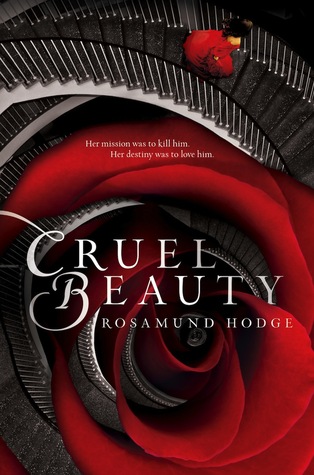
Cruel Beauty - Rosamund Hodge (Cruel Beauty #1)


Cruel Beauty (Cruel Beauty Universe #1)Cruel Beauty is a book that I think had a lot of potential and, for a while, was well-executed, but in the end fell flat.  It was the book club pick for October for the Unapologetic Romance Readers group on Goodreads, and I was pretty excited for it--I had voted for it--because it had been on my to-read list for a while.  It's a Beauty and the Beast-based story in which Nyx, the heroine, has been raised to marry a demon prince as payment for a bargain her father made prior to her birth.  The setting is somewhat strange.  It appears to be the island of Great Britain, but magically cut-off, and on a timeline in which Britain continued to be ruled a sort of Greco-Roman dynasty after the fall of the Roman Empire.  But there's also magic and what seem to be pseudo-Victorian or -Regency trappings.  It's a strange mishmash, and Hodge continues this mash into other areas of the story, which are ultimately what I think led to its downfall.

The story starts with Nyx on the day of her wedding.  She's married by proxy (a statue) to the Gentle Lord, and then promptly deposited on his doorstep with the expectation that she will never return.  But her sacrifice isn't to be for naught.  Once inside the demon's castle, she's supposed to find its four magical centers and destroy the castle, with the demon inside, and free the people of her country from his rule.  But she quickly finds that everything isn't as it seems.  The Gentle Lord, Ignifex (not his real name), lets her know that every night, she'll have the chance to guess his name.  If she gets it right, she goes free.  If she gets it wrong, she dies.  (She also has the option to just not guess.)  And she has a key that unlocks all the doors she's allowed to go through, and told that if she goes through other doors, it's likely she'll die.  Demons lurk in the shadows, ones that don't have the seemingly good intentions of Ignifex, and there seems to be little hope of Nyx ever successfully navigating the constantly-shifting castle and destroying it.  But she does have the help of Shade, Ignifex's shadow who takes on physical, human form at night, and--just maybe--of Ignifex himself, who doesn't actually seem to want to kill her.  Or ravish her.  But of course, as time goes on, feelings grow between them...

Beauty and the Beast is the main basis of the story here, but Hodge also mixes in Greek mythology, mainly the story of Pandora and a weird creation called The Kindly Ones, who seem to be based on the Furies (The Kindly Ones is another word for furies, who have pursuit of oath-breakers as part of their job, and breaking oaths is a big deal in this world) but also have some strange component of making bargains with strings attached, a la Rumplestiltskin. 

Image result for all magic comes with a price

While these strings play together in an interesting fashion throughout the story, at the end they all collide in a sort of series of climaxes, which don't really fit together and seem to go on for far too long--seriously, this book could have ended at least twice before it actually did.  And then there's a weird time paradox involved that I didn't really "buy" the workings of, either.  It's such a shame, because this was a cool world and an interesting premise, but ultimately some of the things that made it so cool made it too complicated to work in a sensible manner, and it kind of fell apart under its own weight.

Nyx was an awesome character, though.  The thing that ultimately her so strong and so different was that she wasn't a nice person, and she wasn't afraid of showing it.  She had a noble goal in mind, but her motive for attaining it had more than a little resentment and guilt attached to it, rather than being selfless.  As Ignifex says, she has "a little malice in her heart," and she never really gets rid of that.  Even at the end, she maintains it, and that's what made her so strong and so different.  Heroines in these sorts of books are always so good and pure, and seeing someone who had a splotch of black on her heart was a very different feelings.  And the same with Ignifex and Shade, both--none of the characters here, not even Nyx's oh-so-sweet twin, are actually good, but they're also not utterly despicable to the point that you don't want to root for them.  It was an interesting balance, and I think that was an aspect that Hodge handled very well.

Ultimately, this is a first book, and I think the construction of it shows in the end.  I'm still interested in reading more of Hodge's work, because I think authors certainly learn a lot from the first book they produce, and come back much stronger in future volumes.  Hodge had strong beginnings here, and with a bit of refinement, I think she could become a real powerhouse in the "fairy tale retelling" genre.

3 stars out of 5.

Saturday, August 13, 2016

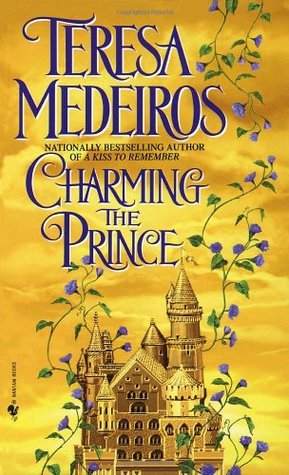
Charming the Prince - Teresa Medeiros (Fairy Tales #1)

450924Charming the Prince was the main buddy read for August in the Unapologetic Romance Readers group on Goodreads.  (We also have a bodice ripper for this month, which I'm planning on reading as well.)  It's supposed to be a historical romance Cinderella retelling, though honestly the "historical" and "Cinderella retelling" parts are painted in with only the broadest strokes.  The main plot follows Branson, the bastard-born lord of some lands in the fourteenth century and Willow, the daughter of another lord who lost all his money and married a rich widow, bringing her and her posse of children into his home.  Now, years later, Willow has basically been relegated to a servant, taking care of her step- and half-siblings, until Branson's men show up at her father's holdings looking for a wife for Branson.  He has specifically requested someone who is "maternal" and "bovine" who can act as a mother to his posse of children, numbering around a dozen, while not awakening his lusts at all, because he doesn't want more children; the ones he have terrify him enough.  Due to a bonnet and an apron full of apples, Willow is mistaken for being both maternal and bovine and has been married off before Branson's representative really realizes his mistake.  The rest of the book consists of Branson coming to terms with his children and Willow and Willow trying to get Branson to appreciate her for herself, which no one has done in a long time.

The writing here is decent, and some of the incidents involving Willow and the kids were amusing, but overall I don't think this was anything remarkable to write home about.  The whole "Branson is so fertile he can get you pregnant just by looking at you" thing was way overdone, especially considering some of the information that comes out later in the book.  There's also a subplot involving one of Willow's stepsisters, who stows away in her luggage and ends up being present throughout the book, and who wants to marry Branson herself.  That felt overly contrived and, honestly, didn't add anything to the book--nor did the whole creepy stepbrother thing.  The "historical" setting lends nothing because it's sketched in very lightly.  The main thing the setting does that I can think of is help distinguish this book from the more plentiful Regency romances we normally see, which are set several centuries later.  That did make for a nice change, but I don't think it was so terribly important to the plot or characters.  Honestly, I feel like this could have been placed in almost any historical era and would have varied very little because of it.

The romance was nice, but again, nothing stellar.  Branson and Willow were immediately attracted to each other and wanted to like each other but also didn't at the same time, which was weird.  I think the ongoing "conflict" between them, which mainly consisted of "warfare" between Willow and her forces (the kids and her stepsister and some of the servants) and Branson and his forces (his men) was honestly the most amusing part of the book.  Once it ended, the whole thing got rather bland rather quickly.  There was some nice kissing, but honestly this is something I think the setting worked against--drafty castles with straw strewn everywhere, no matter how clean, don't really strike me as romantic.

Overall, I don't think this was anything special.  It was an okay romance, but just okay; the "Cinderella" plot it purported to have was barely present, most of the characters were just meh, and despite the title, there wasn't a prince anywhere in sight.  I wouldn't be totally opposed to reading something else by this author, but she's not someone I'll be purposefully seeking out anytime soon based on this book.

2 stars out of 5.

Friday, June 24, 2016

Chasing Rabbits - Erin Bedford

Chasing RabbitsChasing Rabbits was a book that seemed to have a lot of promise in its premise: what if Wonderland was actually Faerie?  It was enough to get me to pick it up, but the more I read, the more this book and I didn't get along.

Let me start with the good: like I said, it's an interesting premise.  Wonderland is traditionally just weird enough that it can be twisted into a lot of different things, so why not Faerie?  The adaptations that some of the characters took here were neat, too: the Cheshire Cat is a sexy guy with a thing for scanty clothing, and the white rabbit that our heroine follows turns out to be more of a character, a sometimes clumsy but well-intentioned guide named Trip who comes with his friend Mop.  Mirrors play a big part in this, too, as barriers between the different realms within Faerie.  I think mirrors have been an element that have generally been a bit underplayed in Alice adaptations, with the exception being the Looking Glass Wars series, so seeing them playing a bigger role here was pretty neat.  There's also an overall story arch that I rather like, because it follows one of my favorite tropes, but I feel like I can't really say too much about that without revealing spoilers--let's just say that it deals with Kat, the heroine, and a dead Faerie princess.  So yeah, I think this has some stuff going for it.

However... I felt like it fell a little flat on the execution, particularly the melding of Wonderland and Faerie, which was, like, the whole point.  Here's my beef with it, and I completely understand if others disagree: using Alice in Wonderland means you have one set of mental markers for readers to follow and examine as you use them to create your own twists.  Using Faerie as another setting provides another.  Melding these two things is possible, but I think it's difficult, and I don't think Bedford quite pulled it off here.  Here's an example: Wonderland has two courts, the Red and the White, and Faerie has the Seelie and the Unseelie.  In Faerie, neither court is traditionally "good," while in Wonderland the White court is typically better than the Red.  In this, the White court isn't really as good as you would think, putting it more into the lines of Faerie...but this doesn't actually come off as a twist or a surprise at all, because we already know it's Faerie, so clearly no one and nothing is actually "good."  Eliminating the Faerie part of this equation would have meant that, when the White court is revealed to be a little twisted, it would have come as much more of a "punch" because we wouldn't expect it from the traditional White court like we would from a Faerie court of either persuasion.

There are a couple of other things here that bothered me, too.  First off, there's a near-rape that kind of came out of nowhere and I don't think really served any purpose.  The dream sequence it involves could have easily fit in a couple of other places, and while I think Bedford did a relatively good job of making the horror of the situation stay with Kat throughout the rest of the story, I really don't see what the point of it was.  It doesn't equate to any point of the Wonderland story, so it didn't serve as a mental cue or check-in there.  It doesn't tie in to any dramatic rescue; Kat rescues herself, and kudos to her for that.  Maybe Bedford was trying to use it to show Kat's tough streak coming out?  Again, that was accomplished in other places, and having a near-rape for the pure shock value of having it is just...meh.  As was giving Kat a job in the library.  Here's why: it's a trick.  Kat isn't actually a very likeable person, in my opinion.  Bedford tried to counter this by employing this One Easy Trick.  How do you make a character appeal to readers?  Make her love books!  And guess what?  It worked.  It wasn't until I began thinking about this more in depth that I realized how unlikable Kat really is...which brings me my next point.

Kat is a total bitch.  This really came out to me through how she views other women.  Kat is a woman who hates other women, but who does it under the pretext of other women hating her.  In her view, all other women are sluts and airheads.  She glares down judgingly from her high throne at other women who are pretty and are comfortable with their sexuality, while she goes around making out with or at least considering making out with every guy she runs into.  "Oh, this is because Faerie men give off pheromones!" Bedford says. "Kat is a one-guy sort of girl, this isn't like her at all!"  Except there is nothing in the book to actually show us she isn't.  I don't care if she feels like flirting and kissing and even more--good for her!  But her acting like she's so above such behavior, and that other women are less for engaging in it, while she proves herself a complete hypocrite by acting exactly the same... That bothered me.  Even women who can't be viewed as sexual competition for Kat, such as her mother and aunt, are hated because they judge Kat and try to change her--until she thinks about going back home, and suddenly she's all for them.  And despite knowing the Wonderland story, she also doesn't actually connect with even the most obvious parallels to her own situations.

So, that's about the sum of it.  I think this had some good ideas and some good potential, but I didn't like or connect with the main character and the execution didn't deliver on the strong premise.  The side characters here were the main strength, I think, but they tended to come and go, as side characters do.  I think a lot of the parts of this story on their own could have made a very strong tale, but combined they tried to do too much and didn't really accomplish it.  It looks like this one is going to be continued, so maybe the sequel will be a little more streamlined; I guess we'll have to wait and see.

2 stars out of 5.

Wednesday, March 16, 2016

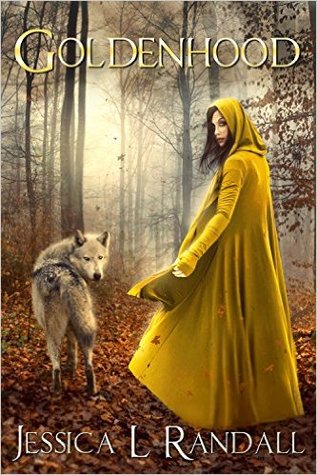
Goldenhood - Jessica L. Randall

GoldenhoodWhen I saw that Jessica L. Randall had a fairytale adaptation to her name, I was super excited.  I liked the charm of her Obituary Society book (I have the second one and just need to get around to using it) and was thrilled to see her turn her pen to a fairytale.  Granted, it was Red Riding Hood, which isn't the most exciting to me, but still.  So, how did it hold up?

It was okay.  The story is about Elise, who comes from a family where the women are said to be witches.  Her grandmother supposedly set wolves on her grandfather, killing him; her mother walked off into the woods and was never seen again; and her aunt serves as the village wisewoman, trying to put aside any witchy tendencies, but the townspeople won't really let her.  Elise herself is inexplicably drawn to the woods, and only the golden cloak she wears--a cloak that was once her mother's--keeps her tethered enough to resist the forest's call.  But as she begins having dreams that hint that something is hiding in the woods, waiting for her, farm animals begin showing up dead and a massive wolf is spotted around the town, Elise might not be able to resist the woods after all--not if she wants to survive with her family intact.

This wasn't a terribly twisty book; everything is laid out all nice and neat and there aren't any big surprises.  There were a few times when I went, "Really?  Oh, okay," but nothing that had my jaw dropping in shock or awe.  Elise is a nice girl but not, I think, a particularly intriguing one; her little sister, Rosie, might have actually been more interesting had she been a bit older.  (Rosie is Red Riding Hood, paired with Elise's Goldenhood.)  Most Riding Hood adaptations tend to have one thing in common, which is werewolves, because that's the obvious place to go with it, and this isn't really any different in that respect.  There's a light romance story line, but nothing too series; one sweet kiss is really as far as it goes.  I thought the end would tie up a bit more neatly with Elise wanting to embrace magic and the title of witch or showing the villagers how things could be, with care, but it didn't go that way; instead, everyone tells a bunch of conflicting stories that everyone believes anyway, and no one questions any of the weird stuff that happened, which was kind of strange.  Okay, really strange.  That was a bit of a plot hole, really.

This is a short book, at 129 pages, which was another reason I picked it up; it helped fill in my "A book under 150 pages" category for a reading challenge.  But I think Randall could have taken the time to add some more pages and flesh things out a little more, and the story would have benefited from it.  It also would have benefited from another round of line edits; there are multiple instances of quotation marks in random places and typos such as "ee'll" instead of "we'll".  It's nothing major, but enough to show that the book isn't really as polished as it could have been.  Overall, it's not my favorite short fairy tale adaptation.  That title still goes to Jill Myles' The Scarecrow King.  But this was good, and I'd be interested in seeing other adaptations from Randall now that she has a bit more experience under her belt to work with.

3 stars out of 5.

Wednesday, March 9, 2016

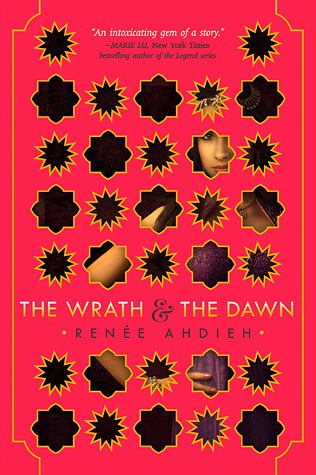
The Wrath & The Dawn - Renee Ahdieh (The Wrath & The Dawn #1)

The Wrath and the Dawn (The Wrath and the Dawn, #1)Here is the thing: I absolutely love the story of Scheherazade.  It's not a very known tale, so for those of you not following along, I'll summarize.  Once upon a time there was a caliph who found his wife had been unfaithful to him.  As punishment, he beheaded her, and every day after that he took a new bride and beheaded her the following morning.  Eventually, the daughter of one of his viziers, Scheherazade, volunteered to become his next bride.  The night before her planned death, she begged the caliph for a chance to say goodbye to her sister.  He granted her request, and as he waited in the next room, Scheherazade began telling her sister a story.  By the time the dawn came, she'd reached a cliffhanger.  The caliph, entranced by the tale, demanded that she finish the story, but she refused, saying it could only be told by night.  Begrudgingly, he allowed her to live until the next night so she could finish the story and he could know the ending.  The next night, she finished the story...and began a new one, also ending in a cliffhanger at dawn.  The cycle repeated itself for a thousand and one nights, at the end of which the caliph had fallen in love with Scheherazade and did not kill her, instead letting her live on as his queen.

I've been longing for a good Sheherazade story for a long time, but there have always seemed to be a few problems in the way.  First off, it's pretty hard to make a guy who wants to kill the heroine for something someone else did a viable love interest.  That's really, really difficult.  He has to have damn good reasons for that, and maybe not even then will that be okay.  Second, Scheherazade's whole story is stories within the story, which means the bulk of her story isn't even actually about her.  While this can give an author a lot of room to create, it also means there isn't much of a framework to use as a guide.  I think Ahdieh managed to conquer these roadblocks very well and create what is, for the most part, a very intriguing story.

Ahdieh's Shahrzad, aka Shazi, volunteers to become the next doomed bride of the caliph (constantly and annoyingly referred to as the boy-king) in order to avenge her best friend, one of Khalid's former victims.  She plans to make him put off her execution for long enough to find a way to kill him instead.  Shahrzad is, of course, good at pretty much everything.  Wall-climbing, witty banter, archery, ect...it all falls within her grasp (except swordplay, though she picks that up within the course of a few paragraphs, too).  These skills are all put to use in keeping herself alive--until she doesn't really need them to keep herself alive anymore because Khalid falls in love with her pretty early in the story and then she's not really in danger anymore.  There's still danger around, and intrigue, because she still doesn't know why he killed all those girls, but her own life isn't directly on the line which does tend to lower the tension a bit.  The story is bulked up by the introduction of Shahrzad's former love interest, Tariq, who vows to rescue her from Khalid's evil clutches, and the integration of magic into what was initially portrayed as a Ruritanian-type setting; you know, a fake kingdom, but this time in the Middle East instead of in Europe.

I think this book had a lot going for it.  There are some great kissing scenes, some scenes that blatantly allude to other stories (particularly Aladdin, which we are all, of course, more familiar with from the Disney adaptation than from the original Arabian Nights story, which is actually set in China), and the elements of Scheherazade that prove so problematic are adapted to make the whole story much more palatable, though it takes a while for them all to come out--for much of the book, I was going, "Okay, I get that part, but this whole thing is still not okay."  In the end, it's kind of a moral quandary, which I'm sure Ahdieh's going to tie up in a bow in the second book, The Rose and the Dagger (due out in May).  That said, I still had a few issues with this.

First, Shahrzad's clothes are a topic of constant discussion.  Now, I love pretty clothes as much as anyone and probably more than some, and I think discussions of pretty clothes have their place in books like this.  Clothes are used to shock and awe, and to bulk up a character's appearance to others or make a character appear like something they are not.  However, there are times in this book when Shahrzad's clothes have no bearing on what is happening and still are described at length; for example, there's a part where she's basically pacing in her room and Ahdieh spends several paragraphs describing her clothes and jewelry.  I thought, at first, that this was going to tie into the Bluebeard story integrated into the narrative, because Bluebeard's last wife (in some versions) wears a diamond necklace that falls into a pool of blood and therefore betrays her for doing something she was told not to do.  That didn't happen, and it left the whole outfit description thing pretty pointless.  I don't think these descriptions should have been cut entirely, but I think they could definitely have been narrowed down; we didn't need a day-by-day account of what she was wearing.  "She dressed and went to do blah-blah" could have easily fit in for "She dressed in this and that and the other, with a necklace made of and a belt of and bangles of..."  Do you get my point?

Second, I hated Shahrzad's handmaiden, the Greek girl who I despised so much that I have entirely blocked her name out of my mind.  (It's Despina, I think?  Maybe?)  She was supposed to be this complex side character with a personality and story of her own, which she was, but she was also this really terrible example of how stereotypes can come alive in books.  Despina is in Khalid's service as a slave, even though there's absolutely nothing slave-like about her, and she comes from Enlightened Greece which is apparently completely different from places like Khorasan where they still have things like slavery anyway!  Gasp!  And she's always saying things like "Hera help me" or whatever, which were annoying...her whole "Greek" thing was really stupid and made me really, really hate her.  I don't know why Greece even had to come into it other than as a way to introduce a "civilized" country where rulers don't chop off the heads of their wives every morning.

Third, there is a lot of waffling here.  I hate waffling unless it's done really, really well.  And there's a lot of refusing to tell people about important things for really stupid reasons, too.  "Tell her!" "I don't want to!" is about the gist of it.  Which, of course, leads to a lot of misunderstandings.  This is very much a book where communication is the key to all of the problems; the problems could have been worked out a lot sooner if the characters had just talked to each other.  Hell, the story could have been avoided entirely if Khalid had just talked to his people.  Granted, he probably would have been offed, but hey, you gotta do what you gotta do in order to preserve your kingdom, right?  And it ended with a lot of waffling in a really weird place.

There was some really lush storytelling here, in places, and some good handling of the original story's central problems for being a viable retelling/romance, but I think Ahdieh added in her own problems that kind of even the scales for it.  I'm still eager to read the second book, but I hope some of these problems are resolved in it.

3.5 stars out of 5.