Pages

Showing posts with label dystopian. Show all posts

Saturday, October 14, 2017

V for Vendetta - Alan Moore

V for VendettaI slotted in V for Vendetta as my "book set around a holiday other than Christmas" for the 2017 Popsugar Reading Challenge, with the holiday here being Guy Fawkes Day aka Bonfire Night aka the 5th of November.  Most of the book does not take place on November 5th; however, the pivotal parts of the story do, and the characters' actions draw their influence and strength from that day.

I'm not a big graphic novel person, finding that they lack some of the depth and substance of prose books; a picture is not, necessarily, worth a thousand words.  And, following in this vein, I was not a huge fan of V.  Not necessarily because it was a graphic novel, though I wasn't terribly impressed by its art or flow in that respect, but because V is a pivotal character who just doesn't make sense.

The story is about Britain, following a war, which has become a totalitarian state under the control of a far-right party whose policies have included killing homosexuals, non-whites, and other groups that don't match their perfect idea.  There's an early panel which contains the words "Make Britain Great Again."  Hm...  In this world, Evey is a teenage girl who, desperately in need of money, tries to turn to prostitution, only to find herself caught by a sting targeted at sex workers.  On the verge of being raped and killed, she's rescued by the mysterious, masked, preternaturally strong and fast caped crusader, V, who takes her back to his home in "the Shadow Gallery" and begins to tell her of his plans to free Britain, and eventually to integrate her into them.

But V as a character never made sense to me.  He is an anarchist, wanting people to be able to live in "the land of do-as-you-please," but with an order instilled by the masses.  He evidently became this person after being the subject of a medical experiment in a "resettlement," aka concentration, camp, where he received an injection that damaged his mind.  This part was one that made me go, "What?"  Because the injection apparently killed everyone else who received it in horrible ways, and yet it just makes V into an anarchist with superhuman strength and computer skills...?  What?  And apparently a criminal mastermind to boot.  I think Moore was going for some sort of superhero origin story here (and V's mysterious identity contributes to this, too, and that worked) but I'm not convinced he truly pulled it off.  He's also a brutal, unnecessarily cruel character; what he did to Evey is absolutely unforgivable, unconscionable, and it was certainly not the only way to persuade Evey to his way of thinking.  She was halfway there already.  Yes, V is supposed to be an anti-hero instead of your typical mainstream hero...but I was never convinced of his heroism in any regard.

As for the art, I found it very bland, very washed out--which I at first thought might be an artistic choice, maybe saving splashes of color for particular points that would need emphasizing, but not--and with some of the characters being very hard to distinguish from each other.  There's also a shift in it at one point, probably because the original serialization of V was paused, and then resumed for the compilation later, but it means that some of the characters look quite different in later parts of the book than they did in the earlier parts, despite only about a year passing in the course of the book.

The end of the story is striking, and I commend Moore for going the way he did with it--however, Evey is not V, and I remain skeptical that she could pull off many of the things that V wanted her to, considering she didn't have any of the "abilities" that his background apparently gave him.  The strength of this book is clearly in its nature as a cautionary tale, and that is more important now than ever; its clear demonstration of the "slippery slope" is particularly noteworthy.  But I'm not sure that its message and ending can carry a story that was, ultimately, only so-so.  Overall, an okay read, but nothing I would go back to in the future.

2 stars out of 5.

Monday, August 21, 2017

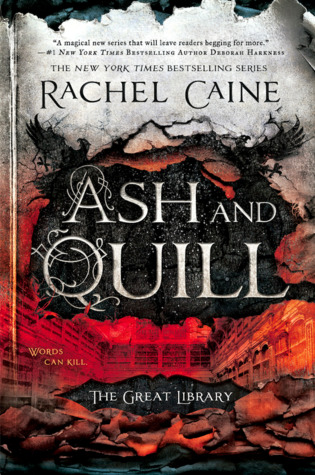
Ash and Quill - Rachel Caine (The Great Library #3)

Ash and Quill (The Great Library #3)
No one with a book is ever alone, even in the darkest moments.

Oh dear.  Oh dear oh dear oh dear.  You know that point where a series starts to go downhill?  A series that you absolutely love?  That you want to succeed more than anything in the world?  I think this might be that point in this series.  Here's the thing.  Ink and Bone was amazing.  Paper and Fire was great.  But Ash and Quill?  It was...good.  And that's all.

This picks up right where the second book left off, with Jess and his band of misfits appearing in Philadelphia, the main Burner stronghold in the American Colonies, after fleeing the Library in Europe.  This change of setting had great promise, but unfortunately the book didn't really deliver.  Jess and his friends spend probably half the book imprisoned in Philadelphia, plotting their escape, and the other half of the book fleeing Philadelphia and trapped in a second location, which they also must plot to escape.  Their plan to fight against the Great Library does not really go anywhere.  Thomas and Jess build not one, but two printing presses.  They build a weapon.  They survive Greek fire attacks on Philadelphia by the High Garda.  There's a sense of pieces moving in the larger world beyond the characters, such as the revolt of several countries, but the main characters don't actually accomplish much, and that leaves this book feeling very much like filler--a third book suffering from second book syndrome, if you will.

The sense of world here is still wonderful, but our characters, with one exception, seem to have stagnated.  Jess and most of his band have failed to evolve in the face of their new circumstances.  They are not allied with the Library or the Burners, but want a middle path, and so find themselves surrounded by enemies.  But Morgan, Jess' love interest and the one possessing magical powers in the group, is the only one who seems ready to rise and twist and change to suit the things that arise in their paths.  Additionally, while the world itself is still interesting Philadelphia is not as riveting a location as Alexandria, Rome, London, etc. have been in the series.  It's pretty much stuck in colonial times, with a few exceptions, and without many of the library technologies seen throughout the rest of the world.  It's a city under siege, but this is never really examined and the city seems to lack the depth of the other locales.  And I'm a bit concerned about the end; it seems very likely the group is going to split up and the next book will need to include multiple perspectives rather than sticking with just Jess, and that seems like it could get messy quickly.

I liked this book, but I didn't love it.  It didn't keep me turning pages or gasping for the next one at the end--a good thing, I guess, since the next one probably won't be out until around this time next year, but a bit disappointing at the same time because it just didn't have the same sparkle as the other volumes did.  The diverse cast remains a draw, but I wish they'd grow a bit more as characters instead of remaining essentially the same people we met in the first book.  Some changes came about in the second book, but in this one... None.  This one wasn't bad, but I do still hope that the next one will be better.

3 stars out of 5.

Monday, June 5, 2017

The Handmaid's Tale - Margaret Atwood

The Handmaid's TaleThis book was utterly terrifying.

The Handmaid's Tale is the story of Offred, a Handmaid in a country called Gilead that has taken over at least part of the United States and, with heavy religious overtones, regulates all relations between men and women, as well as between women and women.  They justify it as saving the human race after some nuclear-type apocalypse hinted at in a few places caused birthrates to spiral downward and birth defects to shoot up.  Really, this isn't such a wild premise for a post-apocalyptic dystopian novel...except it shows that most terrifying of all things: the slide.

This book takes place with the Gilead regime in full swing, but Offred grew up and had a life, a husband, a child before it started.  So she remembers the slide from normalcy to what is the "new" normal, where fake news is used to control the populace, women are the property of  men, abortion is illegal, and Gilead is against the rest of the world.  And to me, that is the most terrifying thing of all: seeing how all these small steps can add up to such a huge difference, how each thing can be taken in stride, until the next generation won't remember what life was like before Gilead at all.  That next generation of girls will think life has always been the way it has.

Following the main narrative here, there's a section of "historical notes" which I originally intended to skip over, but I'm glad that I didn't.  It's actually a part of the larger story, giving some context and some closure to a few of the "holes" in the main narrative.  Atwood left a few things up to the imagination, such as what ultimately happens to Offred, but also gives some insight into the larger events that that surrounded her in Gilead.  It also hammers home the terrifying aspects as well, because it shows how the rest of the world wasn't really affected by the events in Gilead, and just turned their backs on the plights of the people there.  This is pretty much the case in most dystopian novels: one region goes crazy, and the rest of the world just backs away.  But for some reason it just feels so much more real in this book than in others.

This book is, of course, airing as a television adaptation on Hulu now, but it's really more striking than that because of the political times we live in.  It's a truly horrifying read because this book makes it so easy to see how things could go so wrong.

5 stars out of 5; an important book, I think, especially now.

Monday, March 20, 2017

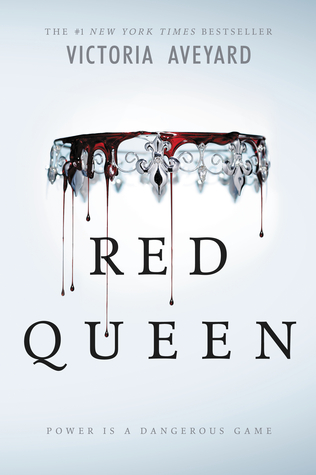
Red Queen - Victoria Aveyard (Red Queen #1)

Red Queen (Red Queen, #1)Red Queen is one of those books that I really didn't have any intention of reading, except everyone was raving about it, so I shrugged and added myself to the library wait list.  Of course the loan came through at the worst time, at the beginning of a month when I started working on various other book club reads, but alas, the timing was it was, so I dug in.

Mare Barrows is a red-blooded commoner in a world ruled by silver-blooded elites who also possess strange powers, like the ability to manipulate water, or fire, or heal people, or shut down others' powers.  Mare's country of Norta is engaged in an ongoing war against the Lakelanders, and every Red who isn't employed when they turn eighteen is conscripted into the army.  Mare's three older brothers are in the war and Mare is resigned to being conscripted, too, though her younger sister has a job as a seamstress.  But when Mare's best friend loses his job when his boss dies, she becomes determined to steal enough money for the two of them to steal away...an act that only results in her younger sister's sewing hand being irreparably broken.  Desperate to repair the damage she's done to her family, Mare tries to steal as much as she can, but inadvertently steals from Norta's crown prince, who instead of punishing her gets her a job at the castle.  But when Mare accidentally falls into the middle of the Queenstrial, when eligible girls from Silver families show off their abilities in hope of winning the hand of one of the princes, it's revealed that she's not just a Red, though she bleeds like one--she has the never-before seen ability to create and manipulate lightning.

Mare ends up posing as a Silver princess, trying to balance her sense of self-preservation with a desire to help her people.  She joins a Red resistance with a hope for changing the status quo and tries to avoid the crown prince's bride, Evangeline, while dealing with her attraction to both the crown prince, Cal, and his younger brother and her supposed fiance, Maven.

I didn't really like this book.  It gets off to a very slow start, the world building is confused, and Mare is not a great heroine.  Much of the book is just Mare going from lesson to lesson and fretting about how everyone will find out she's a lie, and trying to hide her activities by turning of the security cameras that abound in the palace, like everyone else is completely stupid and won't figure out that all the cameras just happen to turn off whenever the girl who can control electricity is up to something.  For the world, it has a mix of magic and technology that could be intriguing, but doesn't really end up working.  Mare remarks a few times that they Silvers don't actually have amazing technology, that it's all manipulated by their abilities--but they have cars, and motorcycles, and apparently nuclear technology?  That doesn't seem like stuff that can be made with magic.  And what makes Silver blood silver, if the thing that causes their abilities isn't what does it?  Because Mare clearly has abilities, too, and her blood is very red.

The "commoner masquerading as a princess" trope is one that I would normally love, but I just couldn't like Mare.  While her loyalty to her family is admirable, she's told repeatedly of exactly what to watch out for, but she refuses to listen to anyone and so is completely blindsided when things don't turn out the way she expected.  And I really didn't like Kilorn, Mare's best friend, as a character, either.  He was just kind of a jerk.  And the supposed romance wasn't really here, either.  Despite Mare repeatedly saying how attracted she is to Cal or how much she cares for Maven, there doesn't appear to actually be anything there.  Maybe there's a tiny bit of something at the end, but it's clearly bound for another love triangle in the next book, and I'm not really sure I have the patience for that.

Overall, I'm not so sure what has people raving about this book.  Some of the supporting characters are interesting--Julian, for example--but while the end fight was cool and made me want to root for Mare, I don't think she's a strong enough central character to carry the series, not with her inability to see exactly what's in front of her face, and the promising world is just a flimsy skin over a logic-less void.  I can't really see myself picking up the other books in the near future, not with another 1600 more interesting books on my to-read list.

2 stars out of 5.

Friday, February 10, 2017

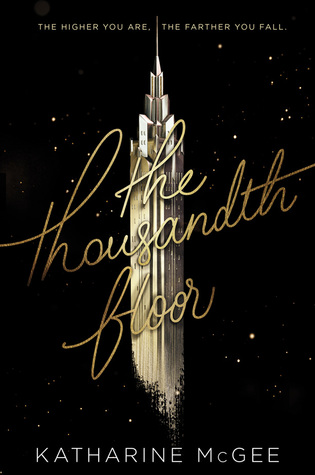
The Thousandth Floor - Katharine McGee (The Thousandth Floor #1)

The Thousandth Floor (The Thousandth Floor, #1)I read a snip of The Thousandth Floor sometime before it actually came out, so when it hit my library I put myself on the waitlist.  The snip featured the prologue of the book, in which a beautiful young woman falls from the eponymous thousandth floor of the Tower, which is I guess like the NYC of the future (and takes up most of Manhattan).  There's something tantalizing about that beginning.  Something that hints at glitter and glam but with a dark underside.  I was excited to see more.

Unfortunately, this book fell flat.  The Tower, which could have been an amazing setting, is really no different than our current New York, except with things like touchscreens and holograms everywhere.  There's a large ensemble cast of characters, all of them in their teens, who spend all of their time partying and doing drugs.  Indeed, there are two main plots here that intertwine, and they can most easily be described as "love and drugs."  Two characters like the same guy (who happens to be the adoptive brother of one of the two) and the rest of them spend their time doing and selling drugs.  Oh, and there's one character who suddenly loses all of her wealth and another who is a hacker.  While there was glitter and glam and polish, I really wish we could have seen something other than how the people on the 900-something floors lived.  Eris and Watt offered a glimpse into lower-floor life but even then they spent most of their time pretending to belong to the upper floors, so that real sense of what life was like down below didn't come through.

The writing here isn't bad; McGee can very easily convey has glamorous it is to be Avery, who lives in the thousandth floor penthouse, and she does handily weave together all of the characters' stories to lead up to the climax--the girl falling off the top.  All throughout the book there's a lingering question: Which girl will it be?  Eris?  Leda?  Avery?  That is the question.  However, I do still think there were too many characters and the same could have been accomplished with a slightly smaller cast.

And then there's this.  The end.  That the entire book leads up to the end, and then it's set up so that the real plot, dealing with the consequences of that fateful fall, will be done in two other, future books.  But I don't buy the ending.  I don't buy that all of the witnesses to the fall choose to say nothing for fear that their own petty little secrets will be revealed.  All of them could easily conceal what they've done if the person who threatens them with their secrets actually said something.  As one character says in the course of the story...who would the police believe?  Certainly not the blackmailer, in this case.  And honestly, is a murder really something you should keep secret so your own little dramas can continue to play out?  I can't believe that even a group of spoiled teenagers would have such an ambiguous moral compass that they would letter a murder go as an accident, when they liked the victim, for such small reasons.  I didn't mind the characters, though I did honestly find their lives vapid, but I just can't go along with such a ridiculous premise for another two books.

Oh, and there's also a drugging and rape (female perpetrator) that McGee just kind of brushes off as a seduction, which it most definitely was NOT.  Not good.

2 stars out of 5.

Sunday, December 18, 2016

The Machinery - Gerrard Cowan (The Machinery #1)

The MachineryThe Machinery was recommended to me by a random person in the unofficial National Novel Writing Month Facebook group to fulfill my reading challenge category of "A book recommended by someone you've just met."  I put it off and put it off because there were just more intriguing things on my list, and honestly I'm glad I did because if I hadn't read it with a looming end-of-year deadline, I don't think I would have finished it.

The main draw of this book is the world.  The story takes place on one continent of the world (though it's made apparent the world is larger than that, and there has been some contact beyond this continent) where the government is chosen by something called the Machinery, which was created by a man known as the Operator.  The Strategist is the head of the government and he's supported by a number of Tacticians.  There are a group of people called Watchers who can see into your soul using their masks, also created by the Operator.  And then there is a string of suspicious deaths, starting with the current Strategist and expanding to involve some of the Tacticians, in the year in which the Machinery was prophesied to break down and not select a new beneficial government, but rather someone who will bring ruin.  And then there's Katrina Praprissi, the last of a once-powerful family, who watched her brother be stolen away by the Operator ten years ago and has spent the time since becoming a Watcher.

This is all a very interesting setup, but here's the thing... Nothing actually happens in this book.  A few people are discovered dead.  The people wait for new ones to be selected by the Machinery.  There is a lot of going to and from different places and describing different buildings and how impressive it is that they exist.  That's it.  Even the most promising bits, typically involving Katrina and, later, one of the Tacticians, tended to drag a bit, and then peter out into nothing at the very end.  But the end wasn't enough to redeem the sheer dullness of the rest of the book here.  Honestly, a lot of this could have just been cut and the end brought up further, giving room for things to actually happen.  But as it stands, I was pretty much bored out of my mind while reading this, and as I mentioned above, I think I would have abandoned it if I hadn't been on a deadline for my reading challenge.  There's really not that much else to say about it.

2 stars out of 5, for a promising world but a story that failed to live up to its full potential.

Monday, November 7, 2016

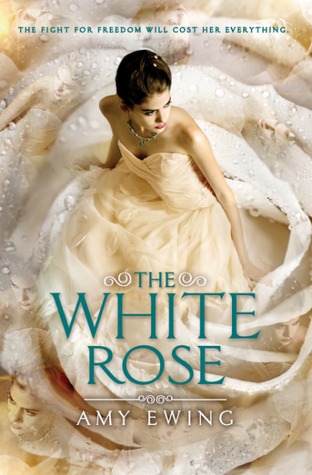
The White Rose - Amy Ewing (Lone City #2)

The White Rose (The Lone City, #2)The White Rose is the second book in Amy Ewing's Lone City trilogy, and it picks up directly where The Jewel left off: with Garnet promising to get Violet out of The Jewel.  In quick succession, a character gets killed, to show how Serious things are, and then the escape attempt is made, with a rescue and meeting or two along the way.  Over the course of the book, Violet learns why she is so important to Lucien's plot, what the Auguries really are--or are supposed to be--and about a rebellion brewing within the walls of the Lone City.

This book did not thrill me, and I don't think I'll be picking up the third one.  First, Ash continues to be a prominent character, and I was so, so hoping he was going to get killed off.  Meanwhile, the characters who seem to offer the most promise--aka Garnet and Raven--are sidelined, and are made out to be some "aw, how cute" side romance (though nothing really develops between them in this book).  I would much rather read about Garnet and Raven than Violet and Ash, who are both incredibly boring.  The magic system is ultimately nothing new, and isn't even really presented in an interesting way.  I love elemental magic, but this feels like Ewing just got sick of the Auguries (which were interesting) and decided to replace them with something else, so she just stuck in elemental magic for kicks.  Violet also reads some documents explicitly stating that the Lone City has not always been there, and that there are other lands, and yet...this doesn't seem to pique her interest at all.  This is so confusing, because certainly if things are so bad, it might just be better to leave?

There's also a "plot twist" at the end that really didn't seem very twisty at all to me.  It's become such a trope in these YA dystopian novels that the siblings become used as tools against each other, and honestly, I'm so over it that I was completely emotionally unaffected by this turn of events at the end of the book.  It just feels like a story that had a lot of promise, and then immediately ditched all of that promise to become a run-of-the-mill dystopian.  It's pretty easy to see where the third book is going to go from here, and consequently I don't really see a need to read it.

2 stars out of 5.

Friday, October 21, 2016

The Jewel - Amy Ewing (Lone City #1)

The Jewel (The Lone City, #1)This book kept popping up on my Overdrive dashboard for the library, and I'll be honest: I thought it was a sequel to The Selection.  The covers and titles are just so similar.  But apparently, it's not!  When another member of the NaNoWriMo book on Facebook was looking to read it, I decided that I would, too, so we could discuss.

It was okay.  The story is about Violet, who is slated to be a surrogate for a rich family in the Jewel, the center and wealthiest ring of the Lone City, which is apparently surrounded by ocean that will destroy them all if they're not careful.  (There is absolutely not a chance that they don't find out there's something out there beyond the city during the course of this series.)  The families in the Jewel can't bear their own children because they need the surrogates, who have special abilities called Auguries, to repair the gene damage in their families that resulted from generations of in-breeding amongst the same elite set.  At the surrogate auction, Violet is purchased by the Duchess of the Lake, the matriarch of one of the four founding families.  She's swept off to the Duchess' house, where she's known only as "the surrogate of the House of the Lake," and is rewarded if she behaves, and punished if she doesn't.  She's separated from her friends and family and really only has a looming pregnancy to look forward to.  She wants to escape...and then, of course, she meets dreamy Ash, who was hired as a companion to the Duchess' niece to get her ready for marriage.  Love at first sight ensues.

Honestly, I think the best part of this book was the potential it laid out for the next ones.  It felt very formulaic, trope-y, and patched together to me.  Basically like Ewing read a bunch of other YA books and pieced together the parts she liked, together with the whole "surrogate" thing which is apparently somewhat like The Handmaid's Tale, but I haven't read that so I can't really look into it.  The love at first sight was very eye-roll worthy, and I didn't buy the "romance" between Violet and Ash at all.  Violet really wasn't a very interesting character in general; she played the cello and wandered around looking pretty and moping about her fate instead of really trying to do anything about it, all while waiting for rescue from a guy she literally met twice before the plan was hatched, and who she doesn't really have any reason to trust.  The more interesting characters were the minor ones, so I'm hoping that they become a bit more prominent in the next book.  I also didn't buy into the world of the Lone City; there were all these things that didn't make sense to me.  The whole way the city was set up, with the rings of different industries, and jewels and riches and stuff, but no where that the resources actually came from, seems either extremely poorly thought out, or very fishy.  I haven't decided which one yet.  It's also very strange to have a plot that relies so heavily on pregnancy and its threats, problems, etc. but shies away from sex.  I understand it's a YA book, but I feel like you can't have it both ways on this issue.

I will be reading the second book in this series, The White Rose (and I believe the third just came out) because I'm hoping that the plot is about to become a bit more complex, and that the side characters who showed such promise will become more prominent.  Oh, and I hope they kill Ash.  He's lame.

2.5 stars out of 5, but with hope for the future.

Wednesday, August 10, 2016

Dust - Hugh Howey (Silo #3)

Dust (Silo, #3)Dust is the final volume in Hugh Howey's Silo trilogy, which began with Wool, jumped backward to prequel Shift, and has now returned to the "present" for the finale.  It picks back up with Jules and Silo 18, Jimmy/Solo and Silo 17, and the folks inside Silo 1.  Jules is engrossed in trying to burrow her way back to Silo 17 to rescue Jimmy and the kids, and all the while dissent is growing in her own silo because she's basically challenging the world order.  Jimmy is waiting for Jules, and then eventually unnerved by what has happened with the silos being connected.  And in Silo 1, the truth is starting to come out about who is awake, who is asleep, and who is dead...and what it might mean for all of them.

I don't think that Dust was the greatest conclusion to this series.  Wool and even Shift were so twisty and full of surprises, and Dust just...wasn't.  The story is pretty straight forward here, with everyone's intentions all out in the open after the drama after the first two books.  While the actual writing hasn't deteriorated in quality, the fact that there weren't as many "OH MY GOD" moments meant that this wasn't as riveting a book as the first two were.  I also had more problems with the logistics of this one; I let a lot go in sci-fi because I am not a scientist and am in no way qualified to nit-pick at the details, but the whole way in which the "apocalypse" had been contained, and that it was contained, just didn't make any sense to me.  I also wasn't sure if this was another thing in which the "apocalypse," such as it was, had only effected the United States, as seems to be the case in many, many books of this genre.

I think that's about all there is to say with this one; I mean, it's very...meh.  I don't think there's ever a big climax.  The most "climactic" event happens probably midway through.  Some people might have found the end, especially with Silo 1, surprising, but I've read another of Howey's books, Sand, which basically solves the same problem in the same way, so there wasn't really anything to turn my head there.  In fact, the repetition actually disappointed me a little.  I think Howey has some good ideas and some really creative settings and dilemmas, but I would have liked to see a different method of problem solving in the end here.

2.5 stars for this one; I enjoyed it, but only marginally more than it being "just okay."

Saturday, July 23, 2016

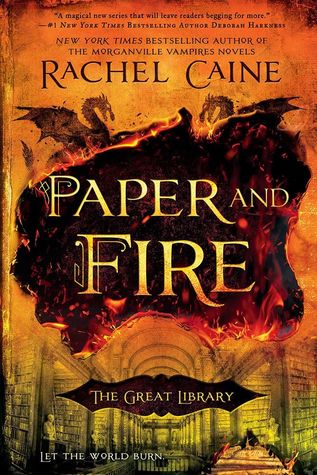
Paper and Fire - Rachel Caine (Great Library #2)

25890355I can't believe I missed the release date for this book!  I'd been hotly anticipating it since reading Ink and Bone earlier this year.  And yet I didn't realize it was released until more than a week after the fact!  Yikes.  Well, I got my little paws on a copy and read it as quickly as humanly possible, and here's the verdict:

It was great.

I don't think it was quite as great as Ink and Bone, but I also don't think it suffered "second book syndrome" which can be a problem with series.  The amazing world continues here, but I don't think it's quite as breathtaking was it was in the first book because it's already fairly well-established.  There also isn't the same sense of awe from the characters due to their new circumstances and surroundings, which means that doesn't transfer to the reader as well.  But the strange quirks of this world ruled by the Library of Alexandria--such as a Paris that is completely populated by Library personnel and French citizens who are forced to take part in historical reenactments of an uprising against the Library--are still dropped here and there, just enough to be a little disorienting and make it clear that no, this is not the world we know.

The plot of this book follows Jess and his friends, who are now employed in different positions throughout the Library in Alexandria, as they try to get information about Thomas and rescue him.  Jess and Glain are recruits in the High Garda, and Dario and Khalila both work in scholarly roles.  Morgan is trapped in the Iron Tower, slaving away as an Obscurist and struggling with the ever-present threat of forced impregnation, but she, too is determined to escape.  (The "threat of forced impregnation" bit is very trope-y, but I think Caine actually handled it well, with many of the Tower's inhabitants, male and female, being against the "program" and others being for it for both logistical reasons like more Obscurists and for more cult-like reasons.  I was so pleased when Caine (briefly) brought in the guy in this scenario, who was clearly just as agonized over it as Morgan was, rather than depicting this as some male-wet-dream-type thing.  Forced sex is not cool for either gender.)  Our group also gets on the move once again here, eventually traveling from Alexandria to Rome and beyond in their quest and its aftermath.  The settings remain breathtaking, with the Iron Tower offering a tantalizing glimpse at what the Library has been hiding for all these millennia, with Rome still showing its pagan roots and using them to hide the Library's nefarious actions, and of course with all the trappings that come with these settings, like the automata, which gain an even more prominent (and, yes, awesome) role in this book than they did in the first.

I'll be honest: a big part of this book hinges on Jess' love for Morgan and his desire to help her, which I totally didn't buy.  I mean, I bought the wanting to help her part, but their relationship honestly doesn't have any chemistry to it, and they feel more like friends, like Jess and Thomas, than potential lovers.  I found the bonds of friends and mentors here much more believable than the romantic ones, though Dario and Khalila and Wolfe and Santi did feel much more natural and complete than Jess and Morgan did.  And again, I think this was an incredibly diverse and awesome cast that were not diverse for the sake of it, but who also weren't painted in as being stereotypes or representations of whole groups.  They're all people, and I think that really works.

Caine's writing in this remained very engaging, but really, it's the world and the thoughts behind it that intrigue me here.  The ongoing discussion about censorship and the power of free thought and speech and press, and how a loss of that can change things, is absolutely fascinating, and it's thrilling to see this discussion being played out in a young-adult-genre novel.  It makes you think.  Who is our Library, what are they really doing?  (I'm not a conspiracy theory fan, I swear, but I think this book is very thought-provoking in this area.)  And, of course, I'm super psyched about where this is headed, because while we have, so far, seen cities in several countries across Europe and Egypt, we haven't yet seen America, which has historically had a basis of the freedoms I've mentioned above, or at least we think that we do, so I'm fascinated with how Caine is going to tackle a Library-influenced America in the upcoming volumes.

This was another great book.  I don't think it was quite as twisty and breathtaking as the first, because it doesn't have quite the same newness, and there were some weirdnesses in logic here (especially with Dario and the High Garda and the Iron Tower; the whole thing just didn't seem to "fit" to me) but I still devoured this and eagerly await the next volume.

4 stars out of 5.

Friday, May 20, 2016

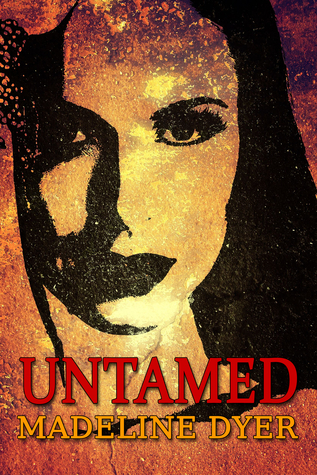
Untamed - Madeline Dyer (Untamed #1)


Untamed (Untamed, #1) 
Untamed has been on my radar for a while and, to be honest, I had been avoiding it because I didn't think it would be very good.  I'm not quite sure what instilled this thought in my mind; maybe it was because it sounded like a generic young adult dystopian and my experiences with those have been mixed at best, maybe it's because the cover rubbed me the wrong way; the visual, to me, is lovely, but the way the title and author name are formatted grate on my nerves for some reason that I can't quite put my finger on.  But Untamed is turning a year old today, so I decided to give it a read--and I'm delighted to say that I was very, very wrong about that "it won't be good" impression that had somehow instilled itself in my brain.

The story follows Seven, a teenage girl who is one of the last Untamed in a world of people who have mostly been Enhanced.  Enhanced people have mirror-like eyes while the Untamed have normal eyes (I love this; special eyes are one of my favorite tropes) and the Enhanced aren't really capable of emotions, supplementing their feelings with bottled concoctions that can replicate the feeling of emotions, but only positive ones, like calmness.  This whole thing is kind of akin to how the inhabitants of Wonderland consume emotions derived from captured Earthlings or "oysters" in Syfy's awesome miniseries Alice.


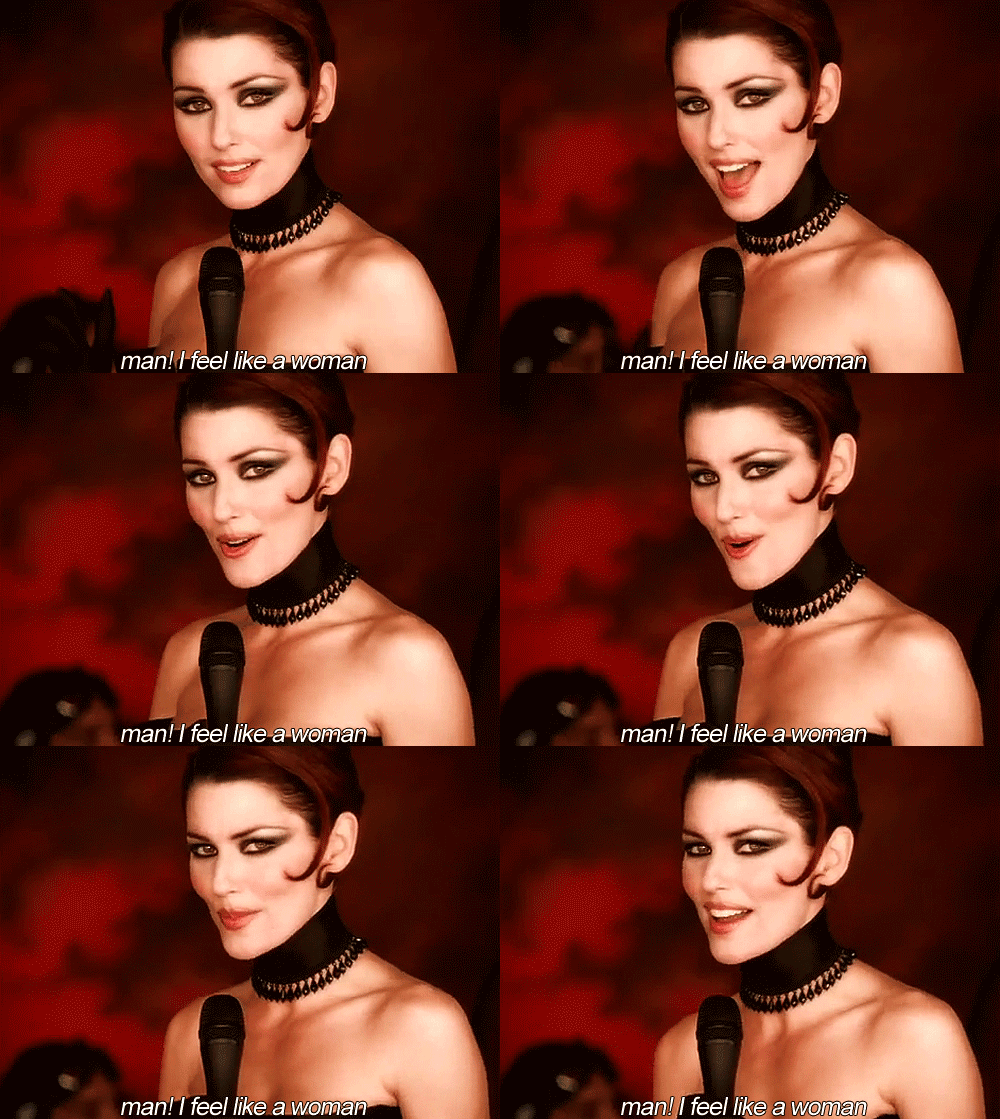
The Enhanced can also consume other substances to give them super-human abilities like super speed; the substances, both the ability-givers and the emotions, are called augmenters, and once you've been augmented, the Untamed say you can never go back.  This seems particularly true for Seven, who finds herself kidnapped by the Enhanced while out raiding with other members of her group.  She's dragged back to the Enhanced city and promptly augmented and given the new name of Shania, which I hated because all I could think of was Shania Twain.  Seriously, this was running through my head the entire time I was reading the book:

http://38.media.tumblr.com/tumblr_lzvllnoZR71qbu4f8o1_500.gif

It wasn't really appropriate mood-music.

Seven gets rescued, but her very presence puts her entire group in danger, and soon they--or what's left of them--are running from the Enhanced, who seem to think that Seven is the key to them becoming all-powerful or something.  Seven really only gets support from her group because she turns out to be a Seer, a skill that has cropped up in her family before but which she hadn't previously shown an affinity for.

Seven's Seer skill was pretty neat.  When she falls asleep, she enters the Dreamland, and has visions of things that will happen in the future, some of them more clear than others.  Though, in retrospect, the usefulness of this skill is somewhat questionable because at least one of the visions doesn't actually come close to coming true in the book.  It might be reserved for a future book, but the content of the vision combined with the note the book ended on doesn't make it seem likely, and Seven actually never really did anything to avert that one, so maybe her visions aren't all they're cracked up to be after all?  Intentional or plot hole?  The world may never know.  Anyway, she has to always wear a pendant passed down from her mother, another Seer, that protects her, or else she might get stuck in the Dreamland and never return.  And there's something about a symbolic bison who shows up there, which was neat but which I'm not really sure I understood the full symbolic significance of.

This book also deals with an interesting topic that I don't think a lot of young adult books do, and that's addiction.  It manifests itself a little differently in this, and it's kind of implied that it might be because Seven is Special, but she's definitely addicted to augmenters once she receives them, and she spends much of the book battling that addiction in secret, because bringing it out into the open could show her group how much she really is like the Enhanced, and then they might ditch her.  I've never had an addition (except maybe buying nail polish) but I thought Seven's came across as realistic.  She spends so much of her time fighting against the urge to give in, while simultaneously fighting to not let anyone else know in case they hate her for it.  To tell you the truth, I kind of sneered at her for this, groaning about why didn't she just get rid of the augmenter, while at the same time knowing that it wasn't that simple for her.  It made her a not-entirely-savory character, which is unfortunate but also true to life.

Though the writing, editing, and general characters were excellent, there were two things that I didn't particularly like about this book.  First, the main plot is a bunch of people running from another bunch of people, and not a heck of a lot actually happening other than this.  I'm going to make a comparison here that many will find flattering but isn't meant to be: it's like in Mad Max: Fury Road, where the bulk of the movie is literally some people driving to a place, and then turning around and coming back.  Sure, there's some fighting that happens along the way, but in the end it's kind of a fruitless road trip.  There wasn't a lot of substantive plot underlying this.  But that does bring me to the second thing I didn't like: the "romance," if you can even call it that.  It didn't feel like a romance at all, not even one of the more subtle young adult variety.  It was more like "I am aware of your presence and oh suddenly I am in love with you," and while I liked both characters involved, I didn't like how this "relationship" suddenly appeared without having too much development behind it.  It was just "meh" at best.

I think this story holds a lot of promise.  Seeing Seven's abilities develop will be interesting, and I'm also curious as to if she and her companions will try to penetrate the Enhanced civilization and bring it down, or work from the outside; if Seven will end up taken by the Enhanced again and have to fight to regain herself and her freedom, a la the Uglies series; and if her relationship will develop into something a little more substantial (I hope it does).  The writing here is excellent, far above the quality of most indies, and I could definitely tell how much work Dyer put into making sure it was publish-ready.  I really appreciate that.  I do wish that a bit more had actually happened in the book, but I think it's well set up for the sequel (I don't know when that's scheduled to come out) and I'll definitely pick up the next book when it arrives.  This was a solid young adult dystopian novel, and while it wasn't my absolute favorite, I think it's definitely worth a read.

3.5 to 4 stars out of 5.

Saturday, February 27, 2016

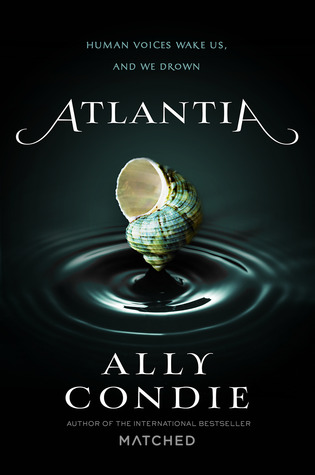
Atlantia - Ally Condie

AtlantiaAll her life, Rio has lived in Atlantia, the city Below, with her twin sister Bay.  She has always dreamed of going Above, a chance that comes once in a lifetime--but in the wake of their mother's death, Rio promises Bay she'll turn down the opportunity to go above so that they can stay together, and is shattered when Bay betrays her and chooses to go Above herself, leaving Rio alone in Atlantia.  Immediately, Rio becomes consumed with finding a way to escape Atlantia, because she can't take back her choice to stay, and also has to manoeuvre around her aunt Maire, a siren of immense power who might have had something to do with Rio's mother's death.

Stories about Atlantis always seem so cool when you read about them.  Sometimes they're super cool in execution, too; I haven't read 20,000 Leagues Under the Sea yet (which I think has a part about Atlantis in it?) but one of my favorite animated movies is Atlantis: The Lost Empire, which is supposed to be based roughly on Leagues.  So I was hoping for something really awesome in Atlantia.  I didn't find it.  The world is based on an extremely weak concept, which makes everything else hang off of it and also be weak.  Basically, the idea is that the air on the planet became so bad that people decided it was easier to build a city underwater for some people to live in; everyone who had to stay on the surface had someone who went to safety Below, to ensure their good behavior.  Why building a city underwater instead of just building a bubbled-in city on land with filtered air makes sense, I don't know.  How the people of Atlantia got their air, because there are no plants or anything that actually produces oxygen Below, I don't know.  Why the people of Above decided that they were going to spend all of their lives enslaved to providing all of Atlantia's resources, because it cannot provide anything for itself, I don't know; sure, at first it might have been the "we have your children" thing, but this set-up lasted generations, and at some point you don't have anyone you know on the other side, so what's the point?  It involves all of the people having really stupid names, like Oceana and Rio and Bay (which I kept reading as Bae; hey, bae) and oh my god, True.  Because living underwater means that all typical naming conventions go out the window and everyone suddenly has to have super weird names.  It involves Rio (who is a siren, by the way; I might have forgotten to mention that) successfully hiding a pretty much impossible to hide gift her entire life, and then using it in a few basic commands to different people and things, and then her aunt saying that she can save them all because she has a pure, unused voice, except she doesn't because she has used, even if it was in small ways.  It involves Bay actually not telling her sister why she went Above and left Rio below, except in a note that wasn't supposed to be delivered until after Rio tried to go Above, an attempt which, by the way, should have killed her, so what's with the note, anyway?  And sirens can't live Above?  Why?  I thought they were human; Rio blatantly says so at the beginning.  This book made no sense.

Oh, and Rio is so stupid.  She does not see a single thing coming her way.  At all.  Not even when it's super obvious.  She goes off alone, multiple times, with people she suspects might have had a hand in murdering her mother.  She decides she's going to swim to the surface even though she knows she's deep enough that her lungs will burst from the pressure if she attempts it.  And she actually believes that people cannot have meaningful relationships outside of their families, because only blood matters--you know, like the blood that ties her to her aunt who she thinks murdered her mother.  Because that is such a good relationship (it is ultimately more complex than that, of course, but why even go down that road if that's what you think? why?) to pursue, but you can't bother making a single friend who isn't your sister because there's no blood tie there.  Stupid.  Stupid stupid stupid.

This was an extremely weak book.  I think it had a cool concept that could have gone awesome places, but Condie just turned it into another walk in the park dystopian story, with no real unique dimensions or strong, interesting characters to distinguish it.  She could have done so much with this setting, but she didn't.  Super disappointing.

1.5 stars out of 5.

Monday, February 1, 2016

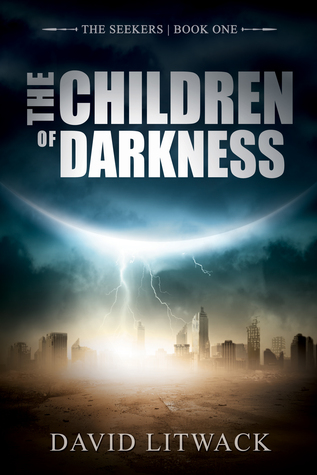
The Children of Darkness - David Litwack (Seekers #1)

The Children of Darkness (Seekers #1)I admit it: I liked this book more than I thought I would for a good while.  It's a dystopian book, but that takes a while to come out, and it begins like a humdrum fantasy, which put me off a bit at the beginning.  The story starts with a festival in the town of Little Pond, and one of a handful of annual visits by a vicar from Temple City to bestow a blessing of light, deal out medicines, and--unfortunately--take away one of the main characters, Thomas, for a "teaching."  Thomas leaves behind his friends Orah, who has prophetic dreams, and Nathaniel, who believes he is destined for greatness.  In Temple City, Thomas receives his teaching, showing the horrors of the past age called "the darkness," a time when people used weapons like suns they dropped from the sky against each other.  He comes back changed, and shortly after Orah is taken for a teaching of her own--but Nathaniel, determined not to let another of his friends suffer, goes after her, and he, Orah, and Thomas end up on a quest to discover the truth about the darkness and whether the vicars of Temple City have been lying to them their entire lives.

Not-so-spoiler: they have.  This is pretty much a given in a dystopian book.  What makes this interesting in comparison to most modern dystopians, I feel, is that the government in control of the land is a theocracy.  In most dystopians published these days, religion has been eliminated or at least pushed to the fringes.  In The Children of Darkness, religion--granted, a conglomeration religion and not one of the ones that's currently practiced on Earth--is front and center.  I liked this, because it shows how government and religion can be so strongly linked that they can become the same thing, even in places where one isn't actually portrayed as the other.  It also makes it harder for the heroes to invoke change, because they're fighting against a doubly-strong force; trying to turn people away from a political structure of life and a religious one is, in theory, twice as hard as trying to turn people from just one of them.

That said, this book can be a bit slow.  The quest of looking for the truth about the darkness doesn't progress very quickly; there's not a lot of action.  You're not going to find any girls on fire in this book, no teenagers quite literally fighting the power.  There's a lot of walking from place to place, admiring of the scenery and creations left over from the previous age, and then a lot of sitting around and learning.  This was necessary for the characters, because the main thing they're trying to do is find out the truth; they're not dead-set on overthrowing the system, they just want to know what's really going on.  When they do decide to act, they do it with words rather than weapons.  I'm skeptical of how successful this would have realistically been, since they never actually emerge into the light and kind of end up with a leaderless movement, but eh.  Whatever.  However, this non-action might mean that this isn't the book for people looking for something a little more like The Hunger Games.  It's a slower, lower dystopian, and it also kind of ends up feeling more like backstory for whatever comes next.

There are supposedly two more books in this trilogy, one of which is currently out.  I think I'll read the next one, at least--it involves crossing the ocean, which is a much more intriguing proposition to me than finding the keep was--but I'm also interested in reading another Litwack book I already happen to have, Daughter of the Sea and Sky.  I think his writing and world-building skills are strong enough to give another look, even if this one wasn't quite as fast and action-y as I would have thought, and might have liked.

3.5 stars out of 5.

I received this book free from Awesome Indies Books in return for an honest review.

Monday, January 4, 2016

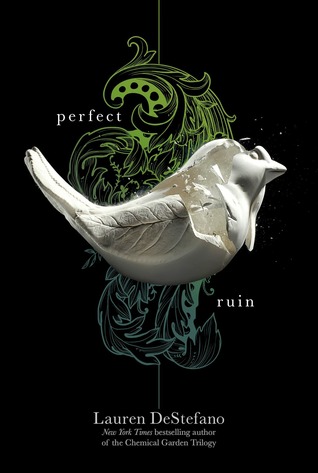
Perfect Ruin - Lauren DeStefano (Internment Chronicles #1)

Perfect Ruin (Internment Chronicles, #1)This isn't so much a review to start the new year as it is to end the old, even though it comes in the new one.  I squeaked this title in just before the end of 2015, and it was my last-read book for the year.  It was one of the free reads on PulseIt, Simon & Schuster's social media/book promotion website where they post free books to read once or twice a week.  The books are up for two weeks; I noticed this one when there were two days left to read it, so I had to make progress fast!  Luckily, I did so, and managed to finish it before it went away.  Not that it was a difficult read, because young adult books never are, but because there was a lot else going on for vacation.  I know the PulseIt site is going down this year (I believe sometime in January) to make way for a new site, though their multiple emails on the subject have assured users that their policy of posting free reads will remain the same.  Though they don't post books I'm interested in often, I do think it's a great service for discovering young adult books, so I encourage you to check it out if that's a genre you're interested in, and I'll be sure to highlight the new service once more is known about it.  Anyway, here's the review!

Lauren DeStefano is perhaps better known for her first young adult dystopian series, The Chemical Garden, than she is for these Internment Chronicles books.  I read Wither, the first of the Chemical Garden books, in 2013 and found myself rather unimpressed by it.  The romance wasn't what I wanted, the plot wasn't what I wanted, and despite an interesting premise, the book and I just didn't click.  I didn't move on to the other books in the series, though I heard dissatisfied mutters from others--and so I was a bit apprehensive about reading Perfect Ruin.  But the description, about a city in the sky where the only rule is not to approach the edge, just seemed too delicious to ignore.

Well, it turns out that DeStefano's worldbuilding is a bit inconsistent there, because despite the fact that the "only rule" thing is stated multiple times, in the description and in the book itself, it's really clear that not approaching the edge is not the only rule.  And despite the narrator saying that everyone's life is theirs to do with what they choose, to use or to squander, that's also patently not true.  In fact, Morgan (our heroine) and her fellow Internment-ites are in a highly regimented society, and it's hard to believe that Morgan really doesn't see all of these other rules floating about her just as Internment floats about the sky.  Take the pills the government sends you.  Go to school, go to work, go to support groups, and so on and so forth.  Don't talk about this, or that, or the other...  It drives me crazy when authors are so inconsistent about their worlds, and how the characters view them, so this flip-flopping on how Internment's society functioned was extremely frustrating.  I was expecting a world more like Scott Westerfeld's Pretties, where people really are free to do whatever the hell they want, and do so--crazy parties, drinks and games and fun, not a worry to be had by most.  Interment wasn't like that, not at all, despite how it was originally made out to be.

The rules in Internment become even more prevalent following the murder of Daphne Leander, a girl in Morgan's grade who wrote a downright heretical essay about her doubts regarding the god of the sky.  Following her death, copies of the essay begin to appear all over the city, and a hunt begins for her killer--a hunt which eventually sweeps up Morgan, her friends, her betrothed, and her family.  Which was another frustrating thing for me: Morgan has very little agency.  For the most part, she's dragged along for the ride.  She does make a few choices, and they become a little more pronounced as the book goes on, but still, she's not a very active heroine.  She is a follower, not a leader; she doesn't charge into action, but merely lets herself get swept along by it.  Don't get me wrong: not every heroine has to kick butt in a very literal way.  But quiet, calm Morgan sees so many things going on around her, but hardly ever acts on them.  She seems completely content to live within Interment's confines, even though she professes to dream of the ground constantly.

Honestly, the things that redeemed this book for me are the mythology and the relationships.  Morgan's relationships with other characters feel very real, from her tenuous yet strong (contradictory, but true) bond with her brother, to her strained relations with her parents, her love for her betrothed, Basil (please don't turn this into a love triangle, it comes across as so pure and true and I'd hate to see it ruined by a love triangle trope) and her almost psychic friendship with Pen.  How Morgan deals with people and the troubled web surrounding them was so genuine that I couldn't help but like her, despite the qualms I discussed above.  And then there's they mythology, about the god of the sky and the god of the earth, and how Internment came to be and the people who believed and questioned, all of it surrounding Morgan's crisis of faith.  Because ultimately, that's what this book is about: a young woman's struggle to maintain her faith or find enough proof to cast it to the winds.  Daphne Leander's essay, portions of which headline each chapter, contributes greatly to this and makes it more prominent than it would seem from the main text alone.  But Morgan is indeed questioning, unsure of exactly where she stands, and I think that questioning is also a very real experience for people her age--sixteen--in one way or another, and it makes her easy to empathize with.

This book had its frustrating aspects, but ultimately I found the writing engrossing, the mythology and relationships beautiful, and I hope to read the other two books in this series soon.

3.5 stars out of 5.

Friday, June 14, 2013

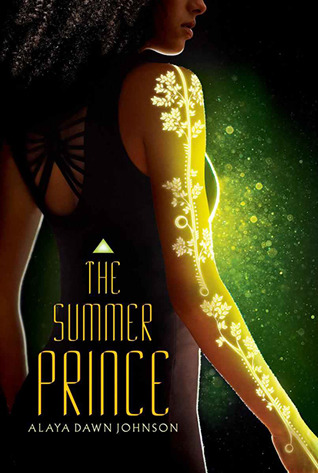
The Summer Prince - Alaya Dawn Johnson

The Summer PrinceI started this book thinking I would love it.  Then partway through I thought that I would like it, because it's very different, but I would be left confused.  And then it broke my heart.

The Summer Prince is the story of Enki and June, Enki and Gil, Enki and the City, and Enki and death.  Enki is the sun in this story, even though he's supposed to be a moon prince; everything revolves around him, completely and irrevocably.  For a long time, I didn't think that there was going to be any romance between Enki and June, that she was going to be sidelined by Enki and Gil, and I would have been okay with that, because it was different, and they were cute, and June was "aware this attachment I feel is the product of emotional investment in the largely stage-managed and manufactured spectacle of the royal election."  I admired her for that, for recognizing that in herself.  But that love transforms over the course of the story, and while, to some degree, I never really believed June and Enki would have a romance, it was so beautiful that I couldn't NOT want it.

I wouldn't say this book is about a revolution.  I would say that it's about art, and love, and inevitability, and the mistakes of history.  It was beautiful in all those ways.

Of course, it DID have flaws.  There are two instances of suicide in this book, and while one is barely mentioned, the other is glorified to what seems like an unhealthy degree.  There is also some lack of description that I find unsettling; I can't really get a clear picture of Palmares Tres in my head because there isn't really any solid description of it.  The whole sacrificial ritual also left me with some confusion; I feel like I absorbed a lot of knowledge about it that wasn't explicitly stated, but I'm still not sure if it's an annual thing or something that only happens every few years, and exactly how it evolved into what it is during the time of the book.  Still, the absolutely heartbreaking beauty of this more than outweighs it, and even parts I thought would be completely unnecessary, such as most of the last part of the book, turned out to fit into it so perfectly that I wouldn't wish them away for ANYTHING.

And the conclusion!  Wow...just...wow.  I sobbed like a baby in the middle of my workplace, but it was worth it.  Completely worth it.

5 stars out of 5.