Pages

Showing posts with label science fiction. Show all posts

Sunday, November 12, 2017

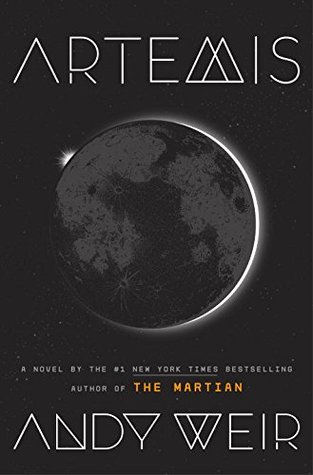
Artemis - Andy Weir

ArtemisAnother hotly-anticipated book this season, Artemis is Andy Weir's follow-up (though not a sequel, not even related) to his smash hit The Martian.  This is still a sci-fi, with the setting being the town of Artemis on the moon, made up of a series of domes and some subterranean levels.  The main character is Jazz, a woman who was born in Saudi Arabia but emigrated to Artemis with her father when she was six and so considers herself a true Artemisian, especially because people can't actually have children on Artemis and have to go to earth to do it because of how the lunar gravity can affect gestation.  Jazz works as a porter, delivering packages, and also as a smuggler--also delivering packages.  And when one of her clients offers her a million dollars (essentially; that's not the currency used, but it's the gist) to destroy some machinery used by a smelting company, Jazz sees her chance to claw her way up out of poverty and into the good life.  Unfortunately, it goes wrong, and she quickly finds herself running for her life and entangled in a plot that could lead to Artemis' downfall.

I don't think this was as strong a book as The Martian was.  First, I'm not convinced that Weir can write a female main character, at least not from a first-person perspective.  Have you ever read or watched something and had a definitive moment where you went, "This was written by a man?"  I had one of those moments here, just a few pages in, when Jazz/Weir describes Artemis as looking not like a group of domes, but a group of boobs.  This is not the type of thing that I have ever encountered in a woman's writing, though it seems to abound in men's writing for some reason.  In fact, with the fact that Jazz does not have a scientific background and Mark Watney of The Martian does, they are essentially the same person.  Their speech is the same, their humor is the same, I basically could not tell the difference between them.  Weir also seems to use Jazz's non-scientific background as an excuse to skimp on some logic in the book; there's still a demonstration of research into various things like welding, smelting, chemical reactions, etc. but he breezes right by some of the things that really would have been built into an enclosed community literally connected to a smelting facility via air tubes.  Let me put it this way: when you have a character spout off all the things that should have been included at the end of the book to foil your big plot, then you probably should have thought the plot out a bit more carefully.

Artemis was a promising setting for a story like this, and I was also psyched to meet Jazz's Kenyan pen pal, Kelvin, who is featured in letters from Jazz's childhood up through the present that appear between some chapters of the book.  But we never actually meet Kelvin, Jazz continues to be annoying, and all of the supporting characters are completely one-dimensional.  There's a romance that's absolutely forced in between Jazz and a supporting character, but while I think we're supposed to get the vibe that "OMG I've loved him all along and I've just realized it!!!" it really just feels like she decides to hook up with this guy because he has a nice bed and a shower and she wants that life.

Overall, super disappointed in this.  1.5 stars out of 5, a huge comedown from The Martian.

Sunday, September 17, 2017

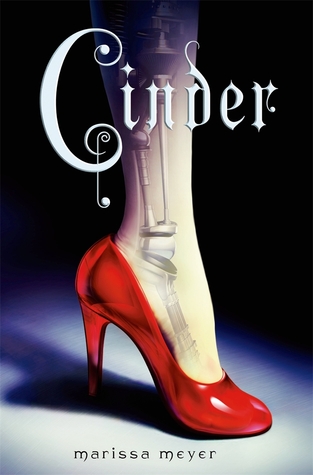
Cinder - Marissa Meyer (Lunar Chronicles #1)

11235712It feels a bit weird reviewing this book so long after I put out my first review on this series, for Cress.  I had read Cinder before, but I wasn't writing reviews at the time, and so this comes to anyone following along a bit out of order.  Cinder was the Unapologetic Romance Readers' theme read of "A sci-fi romance" for September 2017, and I was delighted to have an excuse to re-read it, especially as I'd been in a bit of a reading slump and going back to books I've previously enjoyed always helps with that.

Cinder is, as you can guess from the title and cover, a Cinderella story.  Except this Cinderella is a cyborg.  Injured in an accident she can't remember, Cinder has been left with a mechanical arm and lower leg/foot, with wires in her brain and nervous system and an interface that flashes information over her eyes.  She's also one of the best mechanics in New Beijing, and her business is her step-family's main (only?) source of income.  Oh, and New Beijing, and the rest of the world, are currently being ravaged by a plague with an unknown cause and no cure.  But one day, when Prince Kai stops by Cinder's stall to get an android repaired, Cinder is pulled into a web that she never imagined and that will destroy--or rebuild--her entire life.

I love this story so much.  It follows a very traditional Cinderella structure, but with little flourishes and garnishes that make it seem new.  The pumpkin coach is a decrepit car, the glass slipper is a cyborg foot.  The characters are also wonderful; while Meyer makes Cinder's stepmother absolutely loathsome, the daughters aren't entirely without redemption, particularly Peony, who Cinder actually likes.  And then, of course, there's Iko, Cinder's android sidekick who has a quirky, perky personality all her own.  Adding the plague and the brewing conflict between Earth and Luna adds dramatic tension to a story that traditionally lacks it, and having Prince Kai and Cinder meet and grow closer multiple times before the ball is absolutely necessary--the "love on first site" aspect of Cinderella has never sat well with me, so I appreciate this added relationship building.

That said, this isn't a perfect story.  It has a bit of a cliffhanger ending, which I didn't remember.  Given the narrative arc of the series as a whole, I can see why Meyer had to break it where she did, but it definitely doesn't lead to a satisfying conclusion for this volume.  And while the Cinderella element helps to tie together a story and genre that could otherwise alienate some readers--I probably wouldn't have normally picked up a story about a cyborg--it also means that, despite the flourishes, the plot itself can be quite predictable.  Of course, the story as a whole goes past the Cinderella story, but that doesn't mean that parts of it can't be called from a mile away.

Still, I really enjoyed rereading this.  It's not my favorite book in the series--that goes to Scarlet--nor does it feature my favorite main characters--that would be Cress--but I still think it was a solid intro volume, and would definitely recommend it to others.

4 stars out of 5.

Wednesday, August 16, 2017

Empress of a Thousand Skies - Rhoda Belleza (Empress of a Thousand Skies #1)

Empress of a Thousand Skies (Empress of a Thousand Skies, #1)Empress of a Thousand Skies belongs to that genre which is recently coming to popularity in the young adult fiction world: the space opera.  Other examples: These Broken Stars and Starflight.  All of these tend to be lifestyles of the rich and famous meets the poor and suppressed and the world is changed--in space!  In this case, the two main characters are Rhiannon, the heir apparent to a galactic empire who is due to be crowned any day, and Alyosha, a young man in the military and the star of a reality TV show along with his co-pilot.  Rhee lost her entire family when their ship exploded when she was younger; she survived because she'd sneaked off to get a lucky token.  Aly lost his family and home in the war that destroyed his home planet.  After Rhee escapes an assassination attempt, she finds herself on the run--and Aly finds himself framed for the attempt on her life, putting him on the run, as well.

I kept expecting the stories of these two characters to merge into one, but they never did.  Each of them is keenly aware of the other's predicament--Rhee knows that Aly isn't the one who tried to kill her, and Aly knows that Rhee is actually alive--but even when they cross paths, they never actually meet and become a pair, taking separate routes on their respective exiles.  I thought the plot itself, including both the big "twists," was pretty transparent, but the characters and their paths through the universe were interesting.  Belleza includes a variety of species and I don't think any of the main characters are actually what we would consider "white," which was cool.  Aly definitely isn't, and Rhee, though human, might possibly be of Native American descent, given that her dynasty is called the Ta'an, but I'm not 100% sure on that one.  Rhee herself has a strong sense of duty, but it's overlaid by a deep desire for revenge against the man who assassinated her family.  Consequently, she doesn't always make the most logical decisions, and this is compounded by the fact that she's only fifteen for much of the book--not exactly a prime decision-making age, even if you've been raised to be empress.  This isn't always the most flattering characterization, but it seemed likely to me.

Aly, on the other hand, just wants to be liked.  His race is blamed for the war that tore apart much of the galaxy, and he sees his role on the Revolutionary Boys show as a way to be a sort of ambassador to the other races of the galaxy, even though he actually hates being on the show itself.  What he wants more than anything is to clear his name and show people that the Wraetans aren't all bad.  His life is understandably thrown into chaos when Rhee's supposed assassination is blamed on him, and he's desperate to prove himself innocent--but he's not willing to do so at any cost.  He also has a keen sense of what's going on in the universe around him, as terrible as it might be, even when he doesn't want to believe it, and tries to navigate his new circumstances accordingly.

Lurking behind all this is a narrative about the potential horrors of everyone being connected all the time, about the grips of reality TV on our lives (Hunger Games, anyone?), and about finding your place in the universe.  The plot itself isn't revolutionary, it's true, but I think the characters, the galaxy, and the themes are strong enough to support the weaker plot here.  Am I chomping at the bit to read the next one?  No, which is good, because it's not out until 2018.  But I am looking forward to it when it eventually becomes available.

3.5 stars out of 5.

Saturday, August 5, 2017

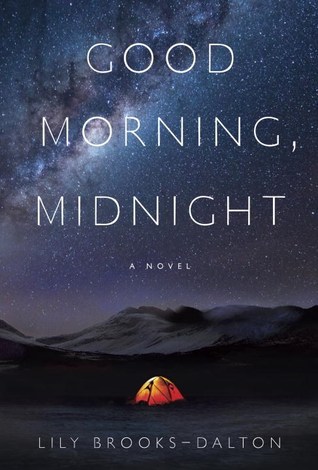
Good Morning, Midnight - Lily Brooks-Dalton

Good Morning, MidnightWow, what a lovely book!  With both a cover and a plot evocative of the equally-lovely Station Eleven from a few years ago, Good Morning, Midnight looks at a few individuals left alive, for various reasons, after the mysterious end of human civilization in the rest of the world.  In fact, the writing styles and feel are so similar that it's easy to imagine that this book takes place in the same world as Station Eleven, just in different physical locations on it.

There are two halves to this book that are told in alternating chapters.  First, astronomer Augie has been left alone--or almost alone--at an observatory in the Arctic Circle after he refused to evacuate with the rest of the staff.  He planned to live out his last days in solitude, until he discovers a young girl, maybe nine or ten years old, named Iris and who appears to have been forgotten during the evacuation.  Augie and Iris try to make a life in the observatory in the silence that the rest of the world has left behind.  Meanwhile, Sully is a communications specialist aboard the Aether, a ship completing the first manned mission to Jupiter and its moons and which is now on its way back to Earth--but they know something is wrong, because Earth has gone silent.  Told over the course of a year, the book is very much a tale of people searching for purpose when the lives that they have known are suddenly, completely, and irrevocably changed.

There are no zombies to fight here, no nuclear hazard zones, no diseases to outrun.  The apocalypse, whatever it was, happened and then was done.  We don't know what caused it.  We just know that something happened, and now the world is silent.  Augie appears to be the last man on Earth, though it's hard to imagine he actually is; certainly other isolated spots would have survived, like maybe in the Antarctic research stations, out in Siberia, high in the mountains--something.  Maybe Augie is just the last man on earth who knows how to use a ham radio.  The writing is simple and beautiful, relying on two extraordinary settings to showcase a story of survival and belonging.  There's some funny business going on in the background that I started to suss out fairly early, but I wasn't quite on track with exactly what it was until close the end, which was nice.  There is a very ambiguous ending--it clears up one part, which is the part that I'd been poking about, but what ultimately happens to some of the characters is left up to the reader to decide, something that I think probably has to be done in a book of this nature and with this particular plot.

It's not a long book, but it was an absolute joy to read.  The characters have depth and dimension and are so perfectly suited for their roles; the settings are evoked with beautiful prose; and the whole thing has such a lovely feel to it that I didn't want it to end.  Is some of the science squishy?  Yes, very.  But this isn't meant to be the next of kin to Andy Weir's The Martian.  It has an entirely different focus and purpose, and with that in mind is set at some point in the future where science has advanced somewhat, making a trip to Jupiter possible in a year and having Voyager I go offline, along with its successors including the fictional Voyager III.  It's not supposed to be a "hard" science book though it definitely falls into the sci-fi genre.  With that in mind, I think it can be forgiven for its squishy science, because the rest of the book more than makes up for that.

I absolutely loved this, and after a string of books recently that were only "okay," it was a pleasure to read.

5 stars out of 5.

Monday, January 23, 2017

The Man in the High Castle - Philip K. Dick

The Man in the High CastleEveryone is talking about the new season of The Man in the High Castle that recently came out on Amazon.  I am not one of those people.  I've seen a handful of episodes from the first season, but the show requires more attention that I typically have to give TV shows and so I haven't made it much farther, despite liking what I did see.  But, of course, there's a book!  How convenient!

Well, for those looking to the book from the show, I think I can safely say this: they're not very similar at all.  So you can just put that aside.  The structure of the world--an alternate reality in which Germany and Japan won World War II and essentially divided up the rest of the world between them, with Africa being destroyed and the free United States relegated to a strip of land called the Rocky Mountain States--is the same between the show and book, but that seems to be about it.  The plot revolves around a few characters.  Nobusuke Tagomi is a Japanese trade minister working in San Francisco (under Japanese control).  Frank Frink is a Jewish American also living in San Fran.  Juliana Frink, his estranged wife, is living in the Rocky Mountain states teaching judo.  Robert Childan is in San Fran, too, and sells American cultural artifacts to the Japanese, who are apparently crazy for them.  The one thread running through all of these is the I Ching, a sort of oracle book, and a book called The Grasshopper Lies Heavy, which depicts another alternative reality in which the US and Great Britain won the war and took over the world.

Over the course of the book, Tagomi tries to attain new technology for Japan but finds himself instead embroiled in a conversation about a plot against the Home Islands by Germany, the leader of which has recently died and the position is which is in a state of flux.  Frink tries to set up his own business.  Childan finds out that some of the artifacts he has are fakes and tries to re-establish his position.  And Juliana, all the way in Canon City, Colorado, finds herself mixed up with an Italian truck driver who introduces her to The Grasshopper Lies Heavy, and eventually sets off with him to meet the mysterious author, Hawthorne Abendsen, also known as the Man in the High Castle due to a fortress he purportedly built to protect himself against his detractors--his book is banned in all German-controlled territories.

While alternative histories typically have fascinating premises, I didn't find myself enjoying this very much.  It was mostly the writing; it's very abrupt and choppy, and I couldn't find myself engrossed in it at all.  It almost reads like a bad translation of a book written in another language.  Granted, some of the main characters are speaking English but it's presumably not their first language--but even the characters whose first language is English speak in such an abrupt and choppy manner, and all of the characters' internal dialogue, which one would assume would be smoother, is the same.  All of the people start to blur together and while some of the events were interesting, I couldn't seem to care about any of the characters as individuals.

The end of the book is thought-worthy.  Juliana's discovery regarding The Grasshopper Lies Heavy is definitely the thing that leaves an impact, rather than any of the other story lines.  It's very meta and did appeal to me, even though the rest of the book did not.  I think this is probably what will ultimately tie into the Amazon series the strongest--this ultimate end concept, even though so much seems to be different.

Overall, an interesting world and end concept, but not a book I enjoyed very much.

2.5 stars out of 5.

Wednesday, January 11, 2017

The Windup Girl - Paolo Bacigalupi

The Windup GirlThis is the second Bacigalupi book I've read, the first being The Water Knife.  He seems to delight in writing stories that detail all of the ways that humanity is fucking itself over and what might happen after that.  TWK focused on the water crisis in the American west.  The Windup Girl is about genetically modified organisms.

As with TWK, TWG has several main characters.  Anderson Lake is living in Thailand and working undercover for an American food company called AgriGren.  He's investigating varieties of foods that have started popping up in Thailand (which has restrictions against dealing with the big food companies) because something is not quite right about them, and he suspects a Western geneticist (or generipper) of working with Thailand's seed bank on bringing the foods back into existence.  (Because, of course, no one in Thailand could do this themselves.)  As part of his cover, he runs a factory that makes kink springs--this is a spring-powered world, as apparently most gasoline has been used up, and there are strict carbon emission restrictions in place.

Our other big characters are Emiko, the titular windup girl.  Windups are genetically engineered people created by the Japanese to fulfill different tasks.  Emiko was built as a secretary/assistant/all around pretty girl, and lived a life of luxury until her owner abandoned her in Thailand instead of paying to bring her back to Japan after a business trip.  Now she works at a strip joint/brothel where she is raped onstage nightly by one of her fellow performers.  She's also reviled by the people of Thailand in general because they believe windups have no souls.  Tan Hock Seng is Anderson Lake's factory manager who's using his position to advance himself, and Jaidee, the head of a band of "white shirts" who work as enforcers for the Environment Ministry and are the arch enemies of the Trade Ministry.

This did not appeal to me as much as The Water Knife did.  Something about the passion of the characters that moved TWK was not really present in The Windup Girl.  Emiko yearns to be free, but that's about as passionate it gets.  Even Jaidee, with his hatred for the Trade Ministry and his love for the people of Thailand, doesn't seem to embody the same passions that the characters in TWK did.  The world here is fascinating; the genetically-modified organisms that populate it, from the plants to the megadonts (like elephants, but not) to the windups (who also come in many-armed varieties, for factory for field work, and presumably other types, too) and more.  But what initially seems like a strong central plot revolving around Anderson's search for the new food and the generipper behind it and Emiko's quest for freedom, seems to quickly get derailed into a plot that more revolves around the de-evolution of relations between the different Ministries into a scramble that will determine the country's future.  While this makes sense for the character of Jaidee, it doesn't seem to really "fit" the other characters, who sort of all end up along for the ride.  And while Emiko ultimately is a catalyst, and I thought that part worked well, I feel like this just missed the boat for me overall.  It did win a Hugo and a Nebula, though, so clearly not everyone feels the same way.  The ending is powerful and open enough that it lets the reader imagine the different ways the story might go from there, but again...the body of the book just didn't capture me.

3 stars out of 5 for wonderful world building and a good catalyst and ending, but an unconvincing body.

Friday, December 30, 2016

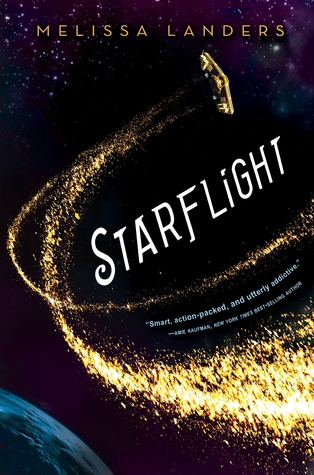
Starflight - Melissa Landers (Starflight #1)

Starflight (Starflight, #1)Starflight has been on my radar for the better part of a year, since I saw it on My Subscription Addiction as a book that came in a subscription box.  (I don't remember which box.)  It's a young adult sci-fi story with a slow-burn romance, which hooked my attention easily because I had recently finished reading the These Broken Stars trilogy, which I enjoyed immensely.

Starflight follows two main characters, Solara and Doran, in their flight across the galaxy.  Solara needs to find someone to hire her as a servant in exchange for paying her passage to the outer rim of the galaxy where there's a job waiting for her as a mechanic.  Doran, the guy who bullied her relentlessly in school, ends up hiring her, though he seems to have done it mostly to torment her even more.  But when he learns that Solara is a convicted felon and tries to toss her off the ship, Solara manages to switch their positions and get them onto another ship, with Doran suffering some memory loss and now in the position of Solara's servant, instead of the other way around.

This memory loss was my one big issue with the book.  It doesn't last long, but for the duration of it Solara gaslights Doran mercilessly, leading him to believe that he's a different person entirely.  Doran's memory comes back in full force and he's furious with her and everything gets resolved, of course, but this was very not cool of Solara to do in the first place.  I can think of a dozen other ways she could have gotten them off that ship and onto the Banshee without gaslighting Doran (even if she did still use the stunner on him) so the fact that she chose this method made me think a lot less of her, which wasn't a great way for the book to get started.

Overall, though, I really liked this book.  The Banshee's crew are fleshed-out and three-dimension with all of them having their own quirks and backgrounds, which serve purposes rather than just being there as props.  And there are sugar gliders!  And of course, not everything is exactly the way it seems to be when Solara and Doran depart the Zenith for the Banshee, and soon they're all renegades running across the galaxy and trying to figure out how they're going to clear their names or escape.  Everything in this book seems to serve a purpose; it's very well-crafted to that end.  And of course the slow-burn romance is wonderful.  And there are sugar gliders!  Well, a sugar glider.

And here's the thing... Yes, I'm going to do it.  I'm going to compare Starflight to Firefly.  Because that's basically what this book is: YA Firefly.  A ship full of misfits of questionable legality travel across the galaxy doing jobs along the way, with two paid passengers who aren't exactly what they seems, etc.  Some scenes draw upon Firefly very heavily; for example, a scene where a medical clinic is raided for supplies.  It goes down differently from the show, but the parallels are there.  And the Daeva seem to be somewhat like not-crazy versions of the Reavers.  And there's definitely a conspiracy going on, too!

This was a great YA sci-fi romance.  I really enjoyed it despite my doubts at the beginning because of Solara's actions--she really does redeem herself throughout the story, as does Doran.  I hope that the other young members of the crew feature as the main characters in the future books, however--I liked Solara and Doran, but at the same time I don't think they would be interesting as main characters for at least another two books.  I think relegating them to the supporting cast and elevating someone else to main is definitely the way to go.

4 stars out of 5.

Sunday, December 18, 2016

The Machinery - Gerrard Cowan (The Machinery #1)

The MachineryThe Machinery was recommended to me by a random person in the unofficial National Novel Writing Month Facebook group to fulfill my reading challenge category of "A book recommended by someone you've just met."  I put it off and put it off because there were just more intriguing things on my list, and honestly I'm glad I did because if I hadn't read it with a looming end-of-year deadline, I don't think I would have finished it.

The main draw of this book is the world.  The story takes place on one continent of the world (though it's made apparent the world is larger than that, and there has been some contact beyond this continent) where the government is chosen by something called the Machinery, which was created by a man known as the Operator.  The Strategist is the head of the government and he's supported by a number of Tacticians.  There are a group of people called Watchers who can see into your soul using their masks, also created by the Operator.  And then there is a string of suspicious deaths, starting with the current Strategist and expanding to involve some of the Tacticians, in the year in which the Machinery was prophesied to break down and not select a new beneficial government, but rather someone who will bring ruin.  And then there's Katrina Praprissi, the last of a once-powerful family, who watched her brother be stolen away by the Operator ten years ago and has spent the time since becoming a Watcher.

This is all a very interesting setup, but here's the thing... Nothing actually happens in this book.  A few people are discovered dead.  The people wait for new ones to be selected by the Machinery.  There is a lot of going to and from different places and describing different buildings and how impressive it is that they exist.  That's it.  Even the most promising bits, typically involving Katrina and, later, one of the Tacticians, tended to drag a bit, and then peter out into nothing at the very end.  But the end wasn't enough to redeem the sheer dullness of the rest of the book here.  Honestly, a lot of this could have just been cut and the end brought up further, giving room for things to actually happen.  But as it stands, I was pretty much bored out of my mind while reading this, and as I mentioned above, I think I would have abandoned it if I hadn't been on a deadline for my reading challenge.  There's really not that much else to say about it.

2 stars out of 5, for a promising world but a story that failed to live up to its full potential.

Wednesday, October 5, 2016

The Three-Body Problem - Cixin Liu (Three Body Problem #1)

The Three-Body Problem (Remembrance of Earth’s Past #1)The Three-Body Problem is a Hugo Winner.  That means that, in the sci-fi/fantasy category, it's good.  I will trust other people's judgment on that, for the most part, because I am not a connoisseur of "hard" sci-fi, which this is.  I'm more a StarDoc type of girl, personally, if I read sci-fi at all.  Time-travel isn't bad, either.  This...this was a little "hard" for me, but I still enjoyed it overall.

So, the story is about people making contact with aliens.  It jumps between a couple of timelines: the Cultural Revolution in China and modern-day China, when China and the rest of the world are secretly (as in, the militaries and governments are, but the people don't know about it) preparing for a war against said aliens.  The basic story is this: during the Cultural Revolution, Ye Wenjie is thought to be anti-revolutionary and is confined to a base called Red Coast atop a mountain called Radar Peak, for the big antenna located there.  She works on the systems at the base without really knowing what they do, other than that they broadcast and receive signals from space.  Eventually, she figures out some science that makes it more likely that any signals broadcast into space would be picked up by intelligent life, and sends out a signal because she is increasingly disillusioned by life on Earth.

In the current day, Wang Miao is asked by the military to infiltrate a group of scientists among whom suicide has been rampant.  He refuses, but when strange things start happening to him, including a countdown that only he can see, he relents and agrees.  Along the way, he encounters a strange virtual-reality video game called Three Body, which features a world that is plagued by unstable day/night and season cycles.  Wang sets out to solve the problem of Three Body, and of course gets sucked into the drama surrounding it.

I thought this book had some really interesting parallels between Earth and the alien civilization, Trisolaris, and I actually learned quite a bit about the Three-Body Problem itself, too.  It's a physics problem in which three bodies (in this case, stars) affect each other's gravity and orbits and those of anything else near them--like, oh, planets.  The thing is, no one has actually solved the Three-Body Problem and found a way to accurately predict the movements of every three-body system.  I think this was an interesting way to incorporate the alien civilization into the story, as a group trying to solve the problem for their own self-preservation.  The movement of the timeline between past and present also worked here.  I don't think the author held anything back from a misguided attempt to make us gasp with shock, but instead revealed things in a manner that was surprising, and interesting, but still sensible to both the characters and the reader.

I'm not sure if I'll continue this trilogy; I'm not opposed to it, per se, because this was clearly a very solid book, but I'm not quite sure if it was my cup of tea.  The actual "conflict" also doesn't seem to be very immediate to me, because it's removed by almost five centuries from the main characters, which makes it hard for me to just salivate at wanting to know what comes next.

Overall, I'm going to give it 3.5 stars.  It's well-written (and, I would guess, well-translated, which definitely helps) and has a solid base, but I wasn't totally engrossed.

Wednesday, August 10, 2016

Dust - Hugh Howey (Silo #3)

Dust (Silo, #3)Dust is the final volume in Hugh Howey's Silo trilogy, which began with Wool, jumped backward to prequel Shift, and has now returned to the "present" for the finale.  It picks back up with Jules and Silo 18, Jimmy/Solo and Silo 17, and the folks inside Silo 1.  Jules is engrossed in trying to burrow her way back to Silo 17 to rescue Jimmy and the kids, and all the while dissent is growing in her own silo because she's basically challenging the world order.  Jimmy is waiting for Jules, and then eventually unnerved by what has happened with the silos being connected.  And in Silo 1, the truth is starting to come out about who is awake, who is asleep, and who is dead...and what it might mean for all of them.

I don't think that Dust was the greatest conclusion to this series.  Wool and even Shift were so twisty and full of surprises, and Dust just...wasn't.  The story is pretty straight forward here, with everyone's intentions all out in the open after the drama after the first two books.  While the actual writing hasn't deteriorated in quality, the fact that there weren't as many "OH MY GOD" moments meant that this wasn't as riveting a book as the first two were.  I also had more problems with the logistics of this one; I let a lot go in sci-fi because I am not a scientist and am in no way qualified to nit-pick at the details, but the whole way in which the "apocalypse" had been contained, and that it was contained, just didn't make any sense to me.  I also wasn't sure if this was another thing in which the "apocalypse," such as it was, had only effected the United States, as seems to be the case in many, many books of this genre.

I think that's about all there is to say with this one; I mean, it's very...meh.  I don't think there's ever a big climax.  The most "climactic" event happens probably midway through.  Some people might have found the end, especially with Silo 1, surprising, but I've read another of Howey's books, Sand, which basically solves the same problem in the same way, so there wasn't really anything to turn my head there.  In fact, the repetition actually disappointed me a little.  I think Howey has some good ideas and some really creative settings and dilemmas, but I would have liked to see a different method of problem solving in the end here.

2.5 stars for this one; I enjoyed it, but only marginally more than it being "just okay."

Monday, May 9, 2016

Every Anxious Wave - Mo Daviau

Every Anxious WaveFor my reading challenge this year, one of the categories was "The first book you see in a bookstore."  Now, books are expensive these days and I wasn't going to shell out $20+ dollars for a book that I wasn't necessarily going to like.  So I did the next best, and comparable, thing: I went to the DC library website and grabbed the first book that popped up there.  That book happened to be Every Anxious Wave, which is about time travel.

Now, books about time travel and I don't get along, because there's just so much nonsense involved in them.  Time travel is a very complicated subject to tackle in fiction because of the very notion of time paradoxes.  Every Anxious Wave basically ignores these and just goes on its merry way, which really rubbed me the wrong way.  I think there are some very interesting things here, and the characters were intriguing, but time and time again the mechanics of it kept getting in the way of me actually enjoying the story.  Basically, I couldn't see the forest for the trees.  The very idea of a guy finding a wormhole in his closet, and then using that to get rich/get a girlfriend (kind of) was pretty lame, but once Lena entered the picture and started fiddling around it got more interesting.  I didn't actually think their relationship, or lack of thereof, was interesting, but what they were doing with time was...until they started to enter the whole "time paradox" territory, and then it put me off.  Alternate-Lena was more interesting to me, and I think Glory was probably the coolest character of all; the very concept of a girl who spends her entire life time-hopping to "fix" her life because of the mucking about her parents did could have been a compelling story on its own, about how our actions impact others, which was a very minor part of Every Anxious Wave.

The book definitely got better as it went on; at the beginning, Karl was pretty much insufferable to me, going on and on about his bar and his failed rock band and such.  Lena definitely made him a better person.  Watching him trying to stick to his morals while everything crumbled around him provided some unusual fodder, but then the story kind of deteriorated into "guy gets girl, guy loses girl, guy time travels to try to get girl back."  Honestly, I thought the chaos from their fiddling about should have been more pronounced if Daviau wanted to really hammer home the "appreciate what you have" aspects of the novel.  Instead, the general feeling was that mucking about with time travel didn't actually have any real repercussions; a few things changed and a few people went missing, but overall everything was better.  The parts of what people could and could not remember were strange, too; for example, Lena's sister gets "disappeared" and Lena no longer remembers her existence, but when a version of Lena herself disappears, someone other than the person responsible remembers her anyway.  The ripple effect is extremely confined in this book, when it seems like, logically, it would be much more pronounced in a "real" time travel situation.

So, overall, this book was frustrating.  I could see so many interesting components but never felt that they were truly put together or emphasized in the right way to make this an amazing story overall.  The impact here could have been huge, but I think that it ultimately came home to just a "meh."

2 stars out of 5.

Monday, May 2, 2016

Wool - Hugh Howey (Silo #1)

Wool Omnibus Edition (Silo, #1; Wool, #1-5)Guys this book has a prequel.  I am so happy about it.  Why?  Because I was having a really hard time finding books for "A book and its prequel" for my reading challenge, and this fits the bill!  This was originally going to be my "A science-fiction novel" selection, but I'm shifting it over to the book-and-prequel category (along with Shift, the second book/prequel) and I'll put something else in the sci-fi category, maybe The Windup Girl or maybe The Three-Body Problem.  I haven't quite decided.  Either way, I'm super psyched because I was going to end up reading Wizard's First Rule and The First Confessor for the book-and-prequel pairing, but I really didn't want to embark on a super-long series like the Sword of Truth is, so I'm very happy that an alternative just happened to present itself to me.  Whew!

So, on to the actual review.  I read a Hugh Howey book last year, Sand, and absolutely loved it.  And I really liked Wool was well.  I think Howey has a knack for writing post-apocalyptic scenarios.  In Sand, it was a world where water had mostly dried up and people went diving in the deserts that had taken over North America to find what was down there, all the while wondering what was causing the distant booms they could hear--booms that creeped me out more than I think was called for because sometimes you can hear distant booms from my apartment.  Yikes!  (The booms I can hear are the guns at Fort Myer, Virginia.)  In Wool, what exactly happened is a little up in the air, but I'm thinking it's a pretty safe bet it has to do with a nuclear apocalypse.  In the wake of whatever catastrophe it was, humanity--or what was left of it--went underground, living in a massive silo.  The outside is absolutely toxic, and it is a death sentence to step beyond the silo bounds, and so when someone commits a crime, they are sentenced to clean: to go outside and clean off the cameras that show the people of the silo the outside world.  Even though they can't go outside the silo, they are obsessed with the view, and cleanings are cause for both dread (for those who have to do them, and those who love them) and joy (for the people excited for the restoration of the view).  The book starts out with Holston, the sheriff of the silo, who is sentenced to clean himself because he expresses a desire to go outside.  His wife did the same thing three years before, and Holston is finally following her.  It's an absolutely stunning beginning to the book, and it definitely compelled me to keep reading.

Holston, however, is not our main character.  Our "main" character, if one can be determined because there's a little bit of an ensemble cast running about here, is Jules, a mechanic who was born in the middle levels of the silo but moved to the "down-deep" to work on the machinery that keeps the silo running.  She's selected to be Holston's successor, and it soon becomes clear to her and those who surround her that something is very rotten at the silo's heart, and what they've been told isn't necessarily what is true.

It's clear to us as reader's what going on from a very early time in the book, and watching the characters figure it out and survive is interesting.  The "dead" silo was an absolutely fascinating part of the story, and I think it was my favorite.  I wasn't so sure about the romance plot that Howey inserted; I like the characters on their own and don't think a romantic plot was really necessary in order to compel each of them to action.  I wanted to know more about the world outside and how it go there, and was a bit disappointed that information wasn't included, but that was before I realized that there was a prequel, so hopefully that will fill in some of the blanks for me.  The chapters I found the least interesting in this book were honestly the ones about the uprising, because I mean, it was an uprising.  I could kind of figure how that was going.  I wanted more focus on Jules and less on secondary characters, except Walker, because Walker was awesome.  His chapters were great and I think depicting the uprising from just his limited view would have been a really interesting way to go.

One final, quick note: there's a lot of chatter about the title of this book, because Wool does seem like a silly title.  Obviously the cleaners use steel wool to clean off the cameras that monitor the world beyond the silo, but I prefer to think of it in the metaphorical sense (and I'm sure I'm not the first and only one to do this) of the silo residents having had the "wool pulled over their eyes" in regards to what their world and lives are really like.  In that way, I think it's a fitting title and I'm perfectly fine with it, though there were certainly other good options out there.

Overall, a great sci-fi book but not one of my absolute favorites.  I do think Sand was a bit better, maybe because it was more self-contained and had a sweeping sense of scale and majesty that Wool, because of its space constraints, didn't.  4 stars out of 5.

Friday, March 11, 2016

The Water Knife - Paolo Bacigalupi

The Water KnifeThe Water Knife is basically a story of the people of the American southwest and what happens to them when water starts drying up, droughts begin taking over, and the scramble liquid becomes all-encompassing.  The "water knife" of the title is not an actual knife, but the main character, Angel.  He is a water knife in the sense that he "cuts" water; that is, he works for a woman named Catherine Case, known as the Queen of the Colorado River, who enforces the water rights of Las Vegas vehemently.  Angel is one of her posse who goes out and takes down anyone who's trying to siphon Case's water away, cutting off the flow by any means necessary and leaving people and places to die in his wake.  He is very, very good at what he does, which makes him the perfect candidate for a mission Case wants completed: find out what's happening with a rumored score in Arizona, and if there are water rights up for grabs, grab them.

Our other two main characters are Lucy and Maria, who live in Phoenix--Angel's destination.  Phoenix is slowly being devoured by the desert, dust storms coming more frequently and lasting longer, the water only for the very wealthy; those who aren't wealthy are basically living off the mercy of the Red Cross.  Everyone with sense and ability is getting out, but getting out is hard because the other states have closed their borders to refugees from the waterless states.  Maria is originally from Texas, which has been completely destroyed by natural disasters, and she wants to leave Arizona, too, but can't afford a "coyote" to smuggle her across the border into another state.  She and her friend Sarah are basically doing all they can just to stay afloat--Sarah by working as a prostitute, Maria by selling water from Red Cross pumps at hiked-up prices at a construction site.  Lucy, on the other hand, can leave whenever she wants; she's not from Arizon, but has moved there to further her career as a journalist and document Phoenix's descent, which she does quite faithfully via the hashtag #PhoneixDownTheTubes.  But Lucy gets more than she bargained for when one of her friends, who'd spent recent days talking about a big score and a way to California, turns up dead.  Furious, Lucy aims her pen at everyone she's resisted targeting for so long, completely disregarding her own safety in a city that has basically become a dog-eat-dog world.

As Angel searches for water rights and Lucy searches for the truth, their paths and that of Maria begin to weave in and out of each other.  It's an extremely dangerous place, Bacigalupi's Phoenix, People get shown, blown up, fed to hyenas, and all sorts of other unpleasant things.  This is a very violent book; I'd really say it's not for the faint-of-heart.  There is also an "attraction" plotline, which I hesitate to call a real romance because the characters like each other, are intrigued by each other, and are definitely attracted to each other, but they're still also perfectly willing to stab each other in the back if necessary, and neither of them is really sure what their involvement is.  "Romance" typically implies some sort of resolution, which this didn't have and I don't think will have, given that, to my knowledge, there's not going to a Water Knife #2.

The path of this book is twisty and turning, with things spiraling in around each other but everything still interlocking quite well.  I didn't see any gaping plotholes; Bacigalupi's world seems very tight.  This is, however, a book that lacks a lot of resolution.  There's no world-saving going on here, so if you're the type of person who likes to leave a book with everything wrapped up in a neat little package, this is not for you.  It's definitely a "it's the journey, not the destination" that counts type of book.  In the end, the world (or at least the American southwest) is still pretty much screwed, but I'd come to care about the characters and have hope for their individual futures more than I did for the world at large.  It was a type of ending that, yes, would suck if it were reality (which it very well could become; that is the scary part about books like this) but I think fit the narrative perfectly.  It also read, to me, as basically a prequel to Dust by Hugh Howey.  Put together, I think the two are a really good sci-fi story about what might happen when we start running out of water.  It is not, however, a book that goes along with the misleadingly-titled (but lovely) What the World Will Look Like When All the Water Leaves Us.

An excellent book, but a violent one and one that is scary in its foreboding of a likely reality.  Sensitive readers be warned!

4.5 stars out of 5.

Wednesday, February 24, 2016

For Darkness Shows the Stars - Diana Peterfreund (For Darkness Shows the Stars #1)

For Darkness Shows the Stars (For Darkness Shows the Stars, #1)Look at this cover.  Pretty girl in a pretty dress on a field of stars.  A review snipped that says it's a "beautiful, epic love story."  The promise of a society that dwells in faux-historical times but with a science fiction edge.  Can you see what I was looking for here?  I was looking for another These Broken Stars.  I didn't find it, and while I think this book had some strong points, overall I was very disappointed.

Disappointments first, so I can finish up with strong points and end on a positive note, okay?  First off, this is not a "beautiful, epic love story" like that quote says.  It hardly qualifies as a love story at all.  Supposedly, this book is based on Jane Austen's Persuasion, and while I can see the bones there based on Persuasion's description (I haven't read it) I think that Peterfreund could have adapted this so much better than she actually did.  Let me put forth my main problem with showing this book off as a Jane Austen/sci-fi love story: it's not a love story, or at least not one involving two worthy parties.  Kai is a complete ass for like 90% of the book, and all his sweet-talking and letter-writing in the end can't make up for how utterly abominably he treated Elliot throughout.  It seems like, in Persuasion, the heroine ditches the hero because her sister convinces her that he's not good enough for her to marry.  I can see someone being a bastard about that latter.  It's a pretty lame reason to call off an engagement.  But to be so utterly vicious in every way toward a former friend, whom you were never actually romantically involved with, even if the possibility was there, when she refused to run away with you into stars-only-know what sort of trouble when the two of you were fourteen, and instead decided to stay home, do her duty and help all of the people who, in one way or another, depended on her?  And to turn everyone you meet against her, too?  No.  Absolutely inexcusable.  I spent this entire book just praying that Elliot would realize how much better off she would be if without Kai, and get over him and move on, and I am so disappointed that Kai was actually presented as a realistic love interest here.  Not that there's much of a love story at all, because like I mentioned, the two were never actually romantically involved.  It was suggested that they might have been, if things had gone differently, but since things didn't go differently, they weren't.  And so it makes the constant angst and the sudden lovey-doveyness of the end just seem very out of place.

On more minor notes, the early worldbuilding in this drove me crazy, because exactly what all of these strange terms mean and how they came about is not made clear for quite some time, and it left me floundering.  Also, I could not for the life of me figure out where the heck this story was supposed to take place on our own world, geographically, and it drove me crazy.  Does anyone know where these mysterious two islands that survived the apocalypse are?  Anybody?  Bueller?

I think that the apocalypse scenario itself was strong, and that the moral implications of the characters' actions in relation to it, which are brought up time and time again, could very easily be the topic of an intense ethical debate all on their own.  What really is right in this scenario?  (Hint: it's not being emotionally abusive to someone you considered your best friend.  Yes, I am bitter over this.)  And I liked Elliot herself, and her grandfather, and the whole mystique of the Boatwright name and legacy, and the promise of what might be beyond the shores of the two islands.  Honestly, I think this world, and Elliot, had enormous potential in general, and that Peterfreund just went and absolutely slaughtered it with Kai.  He could have been changed in so many minor ways to make him palatable, and a hero worth rooting for, but honestly he really ruined the entire book for me.  I'm willing to put up with a lot of bastardly behavior from a hero if the romance is good and there's at least some logic, no matter how misplaced it is, behind his actions, but that was not the case here.  No delicious romance.  Not a single kiss!  If you're going to write a romance about two eighteen-year-olds, they are allowed to at least kiss at some point, especially after they throw off all the societal restraints confining them in every aspect of life.  One would think any taboos against kissing would go out right with them.  And certainly no logic.  Another possible way this could have been remedied: by having some chapters with Kai as a point-of-view character, instead of Elliot, so that we could see what was actually going on in his head.  This might have made misunderstandings more apparent and Kai more tolerable in general.  But that didn't happen, and so we only have Elliot's POV, and Kai was a total jerk to her all along the way.  There is no redemption here for this.

I plan on reading Across a Star-Swept Sea, Peterfreund's other book in this duology, because I do think there's so much potential here, but I sincerely hope that it offers a better hero, and hopefully more of a love story, than this book did.

2 stars out of 5.

Tuesday, January 12, 2016

Their Fractured Light - Annie Kaufman & Meagan Spooner (Starbound #3)

Their Fractured Light (Starbound, #3)After reading the first Starbound book, These Broken Stars, I carefully rationed myself before reading This Shattered World, the second book, in order to break up the time between reading Shattered World and the release of Their Fractured Light.  Unfortunately, This Shattered World was definitely a case of second-book slump for me, with the romance that had so captured me in Broken Stars being largely missing.  As a result, I bought Their Fractured Light on its release date, but I kind of put off reading it.  Partly it was because I had a stack of library books that I had to work through before their due dates, but it was also partly because I was afraid I'd be disappointed again, and I really didn't want to be.  LUCKILY, when I finally got around to reading it this past week, I was NOT disappointed at all!

Their Fractured Light moves the story to the city where it all began, from whence LaRoux Industries is based, from where the Icarus was launched, and where it all comes to an end.  Our heroine is Sofia Quinn, who we last saw fleeing Avon so she wouldn't be put into the foster system following her father's death at the hands of the whispers/the Fury.  She's been conning her way across the galaxy ever since.  And our hero is Gideon Marchant, the infamous hacker known as the Knave of Hearts and also the younger brother of another Marchant...who was also Lilac LaRoux's first love.  Dun dun DUN!  Gideon and Sofia's paths cross at the headquarters of LaRoux Industries, and they help each other escape when everything goes horribly awry.  There's instant chemistry, and when Gideon leaves, he gives Sofia his contact info in case she ever needs him again.  Which, of course, she does.

In short order, Sofia and Gideon find themselves on the run through and below Corinth, hiding from LaRoux's veritable army and trying to stop him from taking over the galaxy with the whispers as his main weapon.  Betrayals abound, safe havens do not, and through it all are scattered so many other characters that we've encountered along the way.  We also finally get to meet the infamous Monsieur LaRoux, the man behind it all...

My main complaint with This Shattered World was that it was greatly lacking in the romance department.  Jubilee and Flynn were great, they just weren't necessarily great with each other.  I didn't feel like they had the chemistry that Lilac and Tarver had.  Well, that wasn't a problem in Their Fractured Light.  Gideon and Sofia had that chemistry.  Of course, it's a very different dynamic than Tarver and Lilac, because Tarver and Lilac were never keeping secrets the way that Gideon and Sofia are--but that's good, because it means it's not just a repeat, it's a new story, and I felt that it was one that fit the world of Corinth and the story that Kaufman and Spooner built up around the setting and characters.  I'm not so sure about the technology stuff that was going on--sure, it's sci-fi, but some of it still read a little flimsy to me--but I excuse it on the basis that everything else was so good.  My only other issue was that the climax retreads ground a bit--I feel like the authors could have done something a little fresher to tie it all up.  Oh, and that I'm not sure the end would have been as neat and tidy as it came across.

Overall, though, Their Fracture Light definitely didn't suffer from the same slump that This Shattered World did.  It came full circle, tying together plots and characters and bringing everything to what was a satisfying (if a little sickly sweet) conclusion.  I really enjoyed this, and as a bonus, it fits the "Romance set in the future" category for my Popsugar 2016 Reading Challenge!

4 stars out of 5.

Saturday, December 19, 2015

Vellum - Hal Duncan (Book of All Hours #1)

Vellum (The Book of All Hours, #1)For a very long time, I thought I would never finish this book.  I've had it for close to a decade, I'd say, and never got much more than halfway through it.  It's a strange book, which is the main reason why, and looking at reviews I can see that a lot of other people have had a lot of frustration with it, too.  But I picked it back up recently to fulfill the Popsugar Reading Challenge category of "A book you started but never finished."  This certainly fulfilled that category for me, but it meant I had to finish Vellum this time around if it was going to count.  And I did.  And I liked it.

I think this is a book I really needed to come back to with a fresh pair of eyes.  Here's the thing: the book doesn't actually really make much sense.  There are a lot of timelines and a lot of characters, many of whom have the same names, but who don't always resemble each other a lot.  There are a lot of worlds and a lot of weird things in those worlds.  It all has to be looked at through the right lens in order to make sense, and I think I finally found that lens.  I call it the Cloud Atlas lens.  For those of you that haven't read Cloud Atlas, it's a bunch of different narrative styles that are patched together, one half of each and then the other halves in reverse order, that follow people who, as you eventually realize, are all the same people, throughout different lives in different times.  Vellum is like that, on a bigger scale.  Not only are these people the same people, through different times, but they're also different versions of the same people, in different worlds that are each a step different from our own, until they're getting weirder and weirder and farther and farther apart from our own reality.  All of these worlds are arrayed on a sort of meta-world called the Vellum, and characters escape to and travel across the Vellum for various reasons, looking for various things.  And these people can be changed by re-writing the coding of their own souls.  Phreedom/Anna/Imana is looking for her brother, Thomas.  Finnan is tied up in them because he made them unkin, immortal, able to do things like travel through the Vellum.  And then there's Metatron, one of the highest unkin, an "angel," who helps to lead the Covenant, which is sort of a banding together of unkin who want a certain type of order, against another bunch of unkin who want a different sort of order.  Metatron thinks Finnan and Thomas and Phreedom have something he wants, and so he and his lackeys are hunting them down--all while the end of the world swirls around them.

The farther into the book, the more things begin to come together, but I admit that it does take a long time for that to happen--and some things never come together as much as the others.  The prologue, for example, never really actually ties in with the rest.  Its events and narrator pop up throughout the "Errata" sections now and then, but they never link up with the Phreedom/Thomas/Finnan/Metatron story, which is really the main story.  Some story- and timelines are also more compelling than others.  I found the World War I story, for example, utterly boring, even though I get that it was important for Finnan's origins.  The part I probably found the most interesting was the bits about the archaeological expedition to find Kur and the source of the Cant, which is a sort of language that can change reality.  There are also some really weird stylistic choices with this book, and I have no idea what book stylist in his (or her) right mind agreed to set up a book with all of those stupid line breaks.  They're completely unnecessary and come across as someone trying to be more "arty" than the book actually calls for.  The different fonts I understood--they help distinguish the different lines when the sections sometimes appear intertwined with each other.  But the line breaks?  Completely stupid.  They appear what seems to be randomly, probably to make things seem more dramatic than they actually are.

I really enjoyed this.  I can see, however, why many people didn't, and also why I didn't in the past.  I think you really have to like stories about different versions of the same souls, different iterations of the same people, in order to like this, and you have to be willing to soldier on through a lot of weirdness in order to get to the parts that make sense.  I was willing to do that this time, and I think it paid off.  I'll definitely be reading the second part, Ink.  But this is definitely a love it or hate it type of book, and it's not for everyone.

4 stars out of 5.

Tuesday, November 3, 2015

This Shattered World - Annie Kaufman and Meagan Spooner (Starbound #2)

This Shattered World (Starbound, #2)
I'd been eking out the moments until I read This Shattered World, even though I wanted to devour it in the wake of These Broken Stars, which I read in March.  Coming off These Broken Stars, I was absolutely in love with Tarver and Lilac and their universe--because world is too small a world when it comes to settings like these--and TBS was just so good that I had to force myself to wait to read the next one.  See, when a series isn't completely published yet (and the conclusion to this one won't be out until December) I try to space out the extant books so that I can get a hit every now and then, instead of bingeing and then suffering until the next one comes out.  But with Their Fractured Light looming on the horizon, I decided it was time to read This Shattered World.
And I was disappointed.  Kaufman and Spooner wrote such a vivid world and such a breathtaking, heart-wrenching romance in These Broken Stars that I came to This Shattered World eager for the same.  I didn't get it.  I understand, in a way; I mean, not all of your stories can be the same, or else you're just writing the same thing over and over again.  But even if the plot was different and the characters were different, coming from different directions with different motivations, I still expected there to be that spark, that connection that drew Tarver and Lilac together and made them so fascinating to follow even when they seemingly couldn't stand each others' guts.  Instead, I got Jubilee the soldier and Flynn the rebel.  They were interesting characters, with great stories and motivations, and watching them learn to work together for a common cause that wasn't actually so common was interesting, but it just didn't work for me as a romance--which was the main thing I was looking for in this book.  Jubilee and Flynn are both so focused on their own ends that they only engage in thinking of relationships for brief periods of time.  Granted, those brief periods are great--some very steamy kissing happens during one of them.  But overall, they just came across as distant and awkward, and at the end of the book I remained unconvinced about them as a couple, especially when juxtaposed with how Tarver and Lilac were shown to be so strong together again in this one.
Jubilee was a strong character, and it was interesting to see a female character who's a total badass and a male who's a pacifist, when most fictions have those roles reversed.  But overall I thought the plot and the setting were just...lacking.  Again, this was in comparison to the first book.  In the first book, the Icarus and the planet the characters ended up on was strange and beautiful and terrible in all sorts of ways.  In comparison, Avon is just...meh.  It's a swamp, with will o' the wisps that occasionally show up and ultimately play a part but aren't really explored fully enough to be an enticing element of the setting.  The plot itself focuses on a shaky peace between the soldiers posted on Avon, who are subject to a killing madness called the Fury, and the natives of Avon, who want their planet to pass its inspections so they can have a voice but are constantly told it's "not ready" yet, and who have an ongoing revolt in response.  Ultimately, I felt like the ending was on shaky ground at best.  I didn't feel Jubilee and Flynn's actions would actually realistically result in a peace, no matter how uneasy, or that they would stop whatever fate was coming Avon's way from LaRoux industries.  Let's face it: Avon is a backwater that it's unlikely anyone would care about.  If we can't get people to care about crises a few thousand miles away on one planet, I find it unlikely that people light years away would care about a crisis on another.  Maybe that's just the cynic in me, but I found Tarver and Lilac's use of small-scale blackmail a much more feasible ending than Jubilee and Flynn's declaration.
I'm still looking forward to reading Their Fractured Light, mostly because one of the main characters is Sophia, who was introduced in This Shattered World and was really one of the highlights of it.  I want to see how her charm and harsh background intersect to bring the trilogy to its conclusion.  But for this one...meh.
2.5 to 3 stars out of 5.

Saturday, October 10, 2015

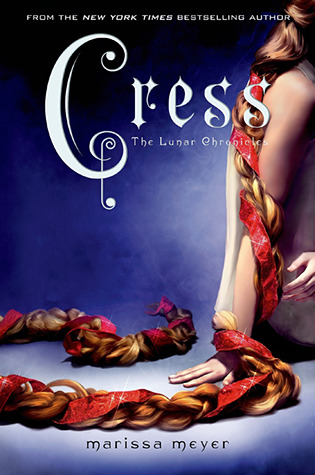
Cress - Marissa Meyer (Lunar Chronicles #3)

Cress (The Lunar Chronicles, #3)Oh, I love this series.  But let me tell you, I wasn't planning on reading Cress just yet--'til I got the email.  It was Goodreads "New Releases by Authors You've Read" email for October, and when I went to the full page, there it was: Winter.  The final book in Meyer's series.  It was marked as being released on October 13th.  And I went in a frenzy.  I hadn't read Cress yet!  I hadn't read Fairest yet!  I had to read them!  So I scurried off and bought Cress, and absolutely devoured it.  Eager for what was next, I went to check out Winter...and found that it's real release date is not October 13th, but November 10th.  Goodreads had lied to me!  How dare it?  Well, it looks like the first two chapters of Winter will be available for preview on October 13th, and that's what the email referred to--which is a pretty big cop-out, if you're asking me.  Now I have to get Fairest and make its short length last an entire month until I can get my hands on Winter and this series' luscious conclusion.

Because that's just what Cress was, just like the Cinder and Scarlet, the first two books in the series: luscious.  The characters, the relationships, the stories, the futuristic setting...It's all just wonderful.  In Cress, Meyer brings in her third heroine of the series, Crescent Moon--the titular Cress.  Cress is our Rapunzel.  She has spent seven years trapped in a satellite orbiting Earth with only an array of computers to keep her company.  A Lunar shell--that is, a Lunar without the gift of glamour, for those of you who haven't been reading along (you should be)--she should have been killed as an infant, but was kept alive by one of Queen Levana's lackeys.  Cress' computer skills are top-notch, and she's been doing Mistress Sybil's bidding for years, hacking Earthen systems and hiding Lunar ships.  Until recently, when a change of heart--or perhaps a realization that what she was doing was wrong--resulted in her switching sides and helping the renegade Cinder and her allies.  All Cress wants in return is for them to rescue her from her satellite and take her to Earth.

Of course, things can't be easy.  The rescue attempt goes wrong.  Cress and Thorne (one of Cinder's allies) end up separated from the rest of the group, castaways in the Sahara desert.  Scarlet ends up a captive of the Lunars.  Wolf is nearly dead.  And Cinder has to figure out how to fix it all and stop Emperor Kaito's marriage to Levana, which would result in pretty much the end of the world.  It's a lot for a teenage girl, even a cyborg princess teenage girl, to handle.  But she does, with aplomb, and you can't help but root for her.  Meanwhile, everything else just gets...worse.  Darker.  Human (Lunar?) trafficking, slavery, torture, and plague all feature in this book, and while it's aimed at young adults, Meyer definitely doesn't pull punches in the telling.

Meyer did something different with Cress' character.  Cinder and Scarlet are both solitary, strong-willed young women who have definite strengths and skills and have been exercising them for a long time.  While they may end up in unfamiliar situations, they're still on their own world (for the most part) and know how to deal.  For Cress, that isn't the case.  An exile for most of her life, her only knowledge of Earth coming through the internet, she's naive and a little immature.  She gets through situations by pretending she's someone else.  She desperately wants a fairytale romance, in opposition to Scarlet and Cinder, who might have love interests but are more concerned with more pressing matters.  Cress isn't as strong as Scarlet and Cinder.  She can't fight.  She can hack a computer, but that doesn't do her much good when she doesn't have one.  She can't navigate, she can't fix things, she has no real knowledge of her new surroundings.  Consequently, she has a very different character growth trajectory than Meyer's other heroines.  Cress has to gain confidence in herself, which is something that Cinder and Scarlet didn't struggle with as much.  It was different, and I liked it.  While Cress is definitely naive, she's not so in a way that made me want to slap some sense into her.  Instead, I cheered for her, watching her grow and develop and come into her own.  Cress isn't going to be a butt-kicker, but she's definitely an asset to Cinder's team and I look forward to seeing more of her.

And Thorne.  God, I loved Thorne.  Maybe that's because, for most of the book, he's not a point-of-view character and you only see him through Cress' perspective, but I loved him nonetheless.  I think Meyer did a great job fleshing him out in this one, making him more than the wacky criminal we'd met previously in Scarlet.

Speaking of Scarlet...I would have loved to see more of her and wolf.  They're greatly lacking in this book, and while I can see why, I still wanted more of them.  Meyer had to separate Scarlet and Wolf for the plot to work and to keep the tension in their relationship.  They got very intense very fast in Scarlet, and I think it might have gotten boring if they had just figured everything out in this one--which they inevitably would have done if they hadn't been separated.  But these are fairytale adaptations, and happily ever after can't come until the very end, so I suppose I'll just have to deal with it.

And Winter!  We got our first glance at Princess Winter here!  So awesome!  I can't wait to see more of her.  How am I going to go an entire month Winter-less?  I don't know.

I only have one complaint about Cress and this series in general.  I love that Meyer adds a new fairytale and a new heroine in every book, but when they're all being added to each other, it means that each one ends up getting progressively less page time.  It means the story has to jump around more in order to cover everyone.  By this point, there is a lot of stuff going on, and while it doesn't get convoluted or hard to follow, none of the girls really got the coverage I would have liked.  This might be a good thing--I liked Cress, but it's possible that too much of her would have driven me away, and the reduction of Scarlet's role sets up for the next book.  But...still.  I felt just a tiny bit like I was getting gipped out of page time with my girls because the book, even at almost six hundred pages, just wasn't long enough to contain the awesomeness of them all.

Here's the thing.  I read many books I like.  I even read a good number of books I love.  But Meyer's Lunar Chronicles fall into a separate category all together: books I will read again and again and again.  They're very different, and they're just good.  I love them, so, so much.  I can't wait until Winter comes out, and then hopefully a box set, because I have the Kindle editions but would love to have these in the flesh (print?).

4.5 stars out of 5.
Saturday, August 15, 2015

The Martian - Andy Weir

The MartianI am probably one of the last people on the planet to read this book.  Well, that's not true.  Once the movie comes out a lot more people will read it.  But I am probably one of the last people on the planet who noticed this before it became a big hotshot movie starring Matt Damon to read this book.  Whew.  What a mouthful.  Anyway, as most people probably know, The Martian is the story of astronaut Mark Watney, a member of the third expedition to go to Mars, who accidentally gets left behind when the rest of his crew leaves.  To be fair to the rest of the crew, they think he's dead--and honestly, he probably should be, but he's not, and now he has to figure out how to stay alive until someone can rescue him.  And then there are the people on Earth, who have to figure out how to do the rescuing.

Parts of this book are written in first person, in the form of Watney's log on Mars.  Others are in third person, covering the folks on Earth and on the Hermes spaceship, where the rest of Watney's crewmates are.  Occasionally there is even a third-person bit focusing on Watney himself.  It's a strange melding of perspectives, but it works, mostly.

Let me divert a bit.  I've had this book for ages but hadn't read it until this past week.  My boyfriend, however, did read it--a rare instance when he gets around to a book before me.  He found Watney "insufferable."  He thought Weir made Watney try to be too funny, and it came off as annoying.  Many other people disagree with view; they find Watney very funny.  I found myself squarely in the middle.  To me, Watney came off as a guy who isn't really that funny, but tries to use humor--successfully or not--as a way of diverting stress, which is pretty common.  I thought it was a necessary character trait, because if his way of dealing with stress had been to just shut down (a la yours truly) then this would have been a very, very short book.  There was one main exception to this, though: those third person chunks that focused on Watney.  There weren't many of them, and they weren't long, but at those points I found him insufferable, because it was at those points--and not when Watney himself was narrating--that Weir resorted to descriptions of fist-pumping and celebration dances that were more annoying than anything else.  Other than the very end, I think the third-person Watney segments were pretty much completely unnecessary.

There's one other main complaint I have about this book, and it's that I feel it has a lack of dramatic tension.  Here's the thing: Weir isn't George R. R. Martin.  He doesn't kill characters just to watch readers writhe in outrage.  Which means that, from the very beginning, you know that Watney is going to get off Mars.  After all, why write the whole book just to have a rescue go bad in the last four pages and have him die?  There wouldn't be much point to that.  The result is that, while the survival aspect of the book is very interesting, it's pretty much the only draw.  There's some tension of "will this work or won't it" but you know that, even if it doesn't work, something else will.  It's like the movie version of the Apollo 13 incident: as terrifying as it must have been in the moment, when you're watching the movie, you know they're gonna live.  (Except if you were one of the viewers who found the movie "too unrealistic" because apparently "no one would have survived" that scenario.  These people do exist.  They probably also believe Apollo 11 never landed on the moon.)

I think there's also a difficulty with pacing in this book, but I'm not sure how to get around it.  The fact of the matter is, this book takes place over a long amount of time--more than a year.  Which is a heck of a long time to be stuck on Mars.  But because of the way it's written, with skips in time, it feels like a much shorter period.  I'm not sure how I would have recommended fixing this, and I think it's a common problem in books that take place over a long span of time.  Pacing is, I think, one of the most difficult parts of writing, and when you're writing something that doesn't necessarily have action happening every single step of the way, it can get tricky.

Still, the survival aspects of this were awesome, and as most people have said, it's a very scientifically-accurate science-fiction book, which is one of the reasons it's so popular.  I liked it, found it interesting, and also found it easy to follow, even though I have pretty much zero scientific knowledge myself.  It worked, and I think the realism of the scenarios and solutions really helped propel this into the star that is has become.  I'm certainly looking forward to the movie, and I think this is a great intro to science fiction to those who are a little leery of the genre because of how weird it can get.

3.5 to 4 stars out of 5.