Pages

Showing posts with label ya. Show all posts

Sunday, March 27, 2016

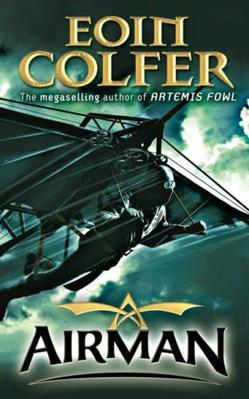
Airman - Eoin Colfer

File:Airman.jpgAirman by Eoin Colfer tells the story of Conor Broekhart, a young man living in the fictional mini-nation of the Saltee Islands.  (The Saltee Islands are a real place, but they are unihabited and everything about the Saltees in the book is fictional.)  All his life, Conor has been best friends with the Saltee princess, Isabella, and he has been tutored by a Frenchman obsessed with things such as fencing, karate, and above all aeronautics.  Conor is perfectly okay with this, because he was born in a balloon basket and flying is apparently his destiny.  Hm...

Okay.  I like Colfer.  At least, I remember liking Colfer; I read the Artemis Fowl books when I was younger and enjoyed them quite a bit, though I believe a few more have come out since then.  Those have a very different feel to them than Airman, but that isn't necessarily a bad thing.  Airman is...well, I guess it's kind of historical fiction, but it's also kind of steampunk.  All of the apparatuses Colfer includes are real, or closely based on real machines/inventions, but the setting of the Saltees, the prison, the diamond mind, etc. definitely gives a steampunk flavor.

Story-wise, I enjoyed this but it did not shine.  The plot revolves around Conor being thrown into prison for his supposed involvement in the death of King Nicholas, though really it's because he knows the truth behind the King's death and the Lord Marshall of the Islands, Bonvilain, wants to shut him up while maintaining control over Conor's family, who are very prominent in the Islands and could mess things up for him.  So, at the age of fourteen, Conor ends up in prison, befriends an inmate or two, and begins plotting his escape--which only takes up about half the book, because of course after he's free he has to make things right in the Islands.

Conor himself was an excellent character, as was Linus Wynter, the blind musician who becomes Conor's close friend.  Both seemed well-rounded with specific motives for everything they did, and Conor in particular changed in accordance with his experiences in prison.  That was good; he didn't exhibit any naivete that I might have expected from the hero of a YA novel.  The rest of the cast, though... Bonvilain was weak as a villain, really, because he wasn't any different from any other fictional villain.  He had no original twists, nothing, though I think Colfer TRIED to spice him up by making him part of the Knights of the Holy Cross (Knights Templar).  Isabella was supposed to be an excellent queen, but she kind of fell flat, literally needing to hold someone's hand in order to address her people or her employees.  And then suddenly at the end she's threatening to slice someone in three with a samurai sword.  Uhm, what?  Where did that come from?  And while we were meant to fell sympathy for Conor's parents, they really didn't get enough page time to build up their pain, and all we really saw was Conor's father magically recovering from his grief to aid Isabella.  There were an excess of comically inept side characters, ranging from Otto, the inmate whose greatest pride is his hair; to Pikes, Bonvilain's essentially useless sidekick; to Uncle, a boy who won't take a bath.  The side character with the most potential was probably Sultan, Bonvilain's poisons expert, but he was sadly underutilized and underdeveloped.  I also didn't feel like Isabella and Conor's relationship was believable; it was just kind of stated that it was there, and then Conor came back a completely different person and Isabella didn't have anything to say about that?

And what HAPPENED to Otto and all those diamonds, anyway?!

Overall, enjoyable but lacking some characterization.

3 stars out of 5.

Thursday, August 7, 2014

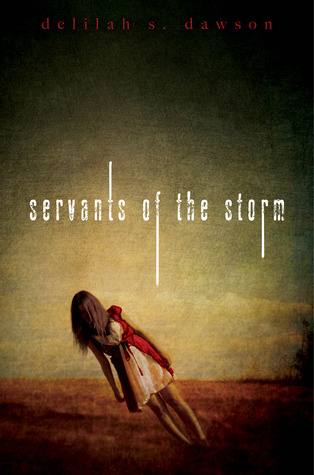
Servants of the Storm - Delilah S. Dawson

Servants of the StormI wish I hadn't read this book.  I really do.  Because dear lord, I loved it so, so much, and then I got to the end and was consumed by a fiery rage.  For the vast majority of the book, I was enthralled.  I loved Dovey, and Isaac, and kind of hated Baker because he was annoying, but overall the story reminded me of nothing more than Holly Black's Tithe and Valiant and Melissa Marr's Wicked Lovely, except it doesn't deal with faeries and it was set in the south, specifically Savannah.  It has the same deal of someone seeing what other people can't and getting pulled into a mess bigger than themselves and oh dear lord, I was loving it so, so much.It had a sort of post-apocalyptic feel to it, too, though it was actually a post-natural disaster setting, and that mixed with the supernatural aspect also had me thinking of Kresley Cole's Poison Princess, which I found annoying to begin with but was completely enthralled by when I got to the end.  It was set up to be a five-star book, to be read again and again, all the way.  This was going to be a book I was talking about for days, recommending to everyone I came across.  It was on its way to being a star.

And then the end.  This is a book that, if I had not been reading it on my laptop (it was Simon and Schuster's book of the week on their PulseIt website), I would have thrown it across the room in a fit of rage.  Is Dovey an unreliable narrator?  Is she not?  I don't know.  I HATE IT SO MUCH.  Is there a sequel?  Don't know.  It's set up like there should be, but since this book technically hasn't even been released for about a half hour after I'm writing this (11:30PM on August 4th, though this will likely be posted later) it's hard to say.  It's not listed as being in a series on either Goodreads or Amazon, though.  But then, I don't think Tithe was supposed to have sequel/companion books when it was first published, either, though I could be wrong about that.  But STILL.  I am so angry at Dawson right now that I can barely type.  I want some type of closure in my books, you know?  It doesn't even have to be closure that I like, though I obviously prefer closure that I like!  BUT THIS.  NO.  NOT EVEN A LITTLE.  In fact, this book has led me to create a new "rage-inducing" shelf on Goodreads, of which it is currently the only occupant.

I adored SO SO MUCH OF THIS BOOK and then absolutely HATED the ending, and not in the same way I hated the endings to other books, like Gods in Alabama.  With that, I felt disappointed that so much excellent storytelling had come to such a lackluster conclusion.  With this, I just feel cheated.  Cheated isn't a good way to leave your readers--or at least it's not a good way to leave me.  It makes me hold a grudge against you, dear Delilah S. Dawson.  How I wish you had chosen to do something else.  If a sequel to Servants of the Storm appears, I'll probably pick it up seeking the closure that I didn't get here--but I won't be reading any of Dawson's other books, because I'm not going to set myself up for that sort of disappointment again.

Seriously, guys.  Just go read Tithe instead.  It'll give you the same feeling of beauty and decay and creepiness and fantasy and romance--all of the good parts of this book--and in the end, you'll still have closure.

2.5 out of 5 stars, right in the middle, for both the beauty and rage.

Tuesday, November 19, 2013

Cornerstone - Kelly Walker (Souls of the Stones #1)

Cornerstone (Souls of the Stones, #1)Cornerstone by Kelly Walker is a young-adult fantasy novel, and it's absolutely nothing to write home about.  While there's a bit of intrigue involved, it doesn't actually unravel until the very end, and the plot barely had enough to keep me going to get to that point.  The writing style also isn't all that great.  Walker absolutely does not have a clear grasp of how grammar works with dialogue.  In her non-dialogue sentences, it's fine, but when it comes to dialogue she seems to have no idea where periods, commas, and quotation marks go in relation to each other and to line breaks.  Some of this might be typos, and that's excusable to a point; even the most professionally-published books usually have a typo or two.  But these grammatical slip-ups were absolutely rampant in Cornerstone.  Also, within the first couple of chapters, Walker feels the need to dump absolutely everything you need to know about the Three Corners (the trio of realms in the book) right into your lap through boring political dialogue.  Yawn.

In addition to the info dumping, there was a ton of completely unnecessary description and prose in this book.  Honestly, I don't care if Emariya (the heroine; we'll get to her in a second) likes the feel of fur against her cheek if it doesn't have anything to do with her development as a character or the plot as a whole.  I don't care what color dress she was wearing while out traipsing around the countryside; in fact, being told that she was wearing a white dress after days on the road without a bath or any hope of one just made me wonder if she was completely moronic.  Like, I know it's a medieval fantasy-based world, but there were only two people around.  I'm pretty sure the girl could have worn pants, or at least a simpler dress.

Okay, let's get to the plot.  So, the story revolves around Emariya, who's the daughter of an important lord in the realm of Eltar.  Eltar is under attack by Sheas, another realm, and doesn't really have the weapons or manpower necessary to fight off the attackers.  In order to get weapons and supporting troops, she agrees to marry the prince of the third realm, the name of which I don't remember.  Anyway, the prince's name is Torian, and that's the important part.  Emariya doesn't actually set out to marry Torian until a good chunk into the book, and even then, not a hell of a lot happens.  There's a lot of walking, and riding, and talking, and it's very Lord Of The Rings-esque in that there are tons of descriptions of scenery but not much actually going on.  So, the Lord-Of-The-Rings thing isn't actually a compliment.  I hated Lord of the Rings.  Emariya is a completely boring heroine.  Totally insipid.  Absolutely no flavor to her at all.  She's generic in every way, shape, and form.  She's beautiful, everyone's in love with her, she has a hidden power and dead parents, she's being forced into an arranged marriage, blah blah blah.  Nothing original here, folks.  Also, absolutely everybody except her seems to know she's got hidden powers, but somehow she never got clued in.  What?  I mean, the maids who work in the kitchen and the peasants living in the countryside know she has magical abilities, but her?  Noooooo.  Of course not.

Torian was boring, as well.  He falls in love with Emariya the moment she sees him, and the feeling's mutual.  She struggles against it a bit, because she doesn't think it's real or whatever, but Walker never actually gives us a reason to doubt the sincerity of either of their feelings.  There's not real struggle, no heart-rending moment when you think things might not work out.  Instead, the two of them just go sailing off in their blissful little romance.  It wasn't badly-written, necessarily... In fact, there were a few very good kissing scenes.  But as a whole, their romance just doesn't do anything except have gushy lines like, "But no one loves the moon."  "I do."  So, yeah.  The romance was just meh.  Torian doesn't really have that much depth to him, either.  He's got some cool family issues that I think had a lot of potential to make him a much more complex character, but Walker never elaborated on them.  I honestly liked him better when I thought he was a complete bastard, because it would have given him a dimension other than the standard cookie-cutter hero.

And then there's Garith.  Oh, Garith.  Who has been friendzoned so hard and knows it but is still in love with Emariya, and actually loves her all the more for it, because "his love is all he can give her."  Gag me with a spoon.  I'm not a huge fan of love triangles, but at least if Garith had posed some competition to Torian, the whole Torian/Emariya thing might have been a bit more interesting.

Also, why the hell did Walker pick a name like Russell for one of the characters?  The rest of the world is filled with Jessas, Emariyas, Torians, Rinks, and Gariths, and yet Russell is the name of a villain?  I think not.  THIS is Russell:


Anyway, at the end of the book I felt like I was where I should have been 1/3 or 1/2 of the way through.  The characters are just on the verge of setting out to encounter conflict; no real conflict has actually occurred yet.  The whole book is just set-up for the next one, and it shouldn't be.  Books in a trilogy should all strengthen each other, and yet should be able to stand alone.  This doesn't.

2 stars out of 5.

Monday, October 28, 2013

Beyond - Maureen A. Miller (Beyond #1)

BeyondOh, Beyond.  Oh, how I wanted to like you.  And I did.  It's just...you have some issues, and those really get in the way of the reading experience.  Logic is seriously lacking in parts of this book, and not in a way that can be covered by the typical "suspension of disbelief" we agree to when we read something like sci-fi or fantasy.

Here are the basic facts of the story, just to lay the foundation for the rest of the review.  One day, just after graduating high school, Aimee Patterson takes her dog Ziggy out for a walk and ends up abducted by aliens.  Well, kind of aliens, because they're not little green men, but are instead normal human beings from another planet called Anthum.  They are cruising the universe collecting samples from all kinds of different planets in hopes of finding a cure for a plague that has decimated their people.  Aimee is told that they can return her to Earth, but by the time that happens, almost five Earth-years will have gone by.

So, let's talk about the time line first, because that's one of the biggest problems here.  At one point Aimee works out that 90 Earth days equals one week on the Horus, the spaceship in the book.  Let's just equate that to three months, for simplicity's sake, even though it's not an exact conversion.  So, for every year on Earth, Aimee would experience approximately four weeks of time on the Horus.  She would be gone for a total of twenty weeks, so about four months.  The issue here is, the story on the Horus doesn't take place over what seems like a five-month period.  It takes place over what seems like a little under a week.  Granted, there's a point at which we're told Aimee was unconscious for approximately two weeks, but that still doesn't make up for the bizarre time gap.

Second, there's the plague.  I am not at all opposed to stories dealing with weird, alien, space-plagues.  Not at all.  This one, however, doesn't make sense.  Unfortunately, I'm going to have to reveal part of the plot here, so if you're interested in not spoiling part of (but not all of) this book, skip the rest of this paragraph.  As you might be able to guess, Aimee turns out to possess the cure to the plague in her biology.  Okay.  Except...there's a point at which she's told she is genetically identical to the "mecaws," AKA humans, of Anthum, so why would her body have the cure?  Doesn't make sense.  Then that is explained away by saying that, "Oh, the cure is actually an antioxidant in her saliva that comes from something she ate that was stored in her glands."  Your body, by the way, does not store extra antioxidants for future use, so good luck with making that one work logically.

Now let's talk about Aimee and Zak.  I liked the two together, I really did.  I didn't mind the instant attraction too much because, hey, you can be instantly attracted to someone.  It wasn't insta-love, at least.  Well...at least not at first, because suddenly that attraction turns into love about three days later.  Mushy, gooshy, yucky love.  Blah.  Not good.  Also, Zak was repeatedly described as a "warm haven," which was really only worthy of eye-rolling.

Now for a couple more minor things.  The "prologue" should have been the first chapter, but that's just semantics, really.  There is some inconsistent characterization with Aimee.  At one point, Aimee wishes she had her glasses--but then later, in the epilogue (which should have been just the last chapter, not an epilogue) her eyes are described as having never needed glasses.  That epilogue also seemed rushed, blowing through five years without much of a purpose.  Instead of being the end of this book, it seems more like it should have been the beginning of the next one.

Overall, it wasn't a completely awful read, but there wasn't enough cohesion to make it come across as Miller seems to have wanted it to.  It felt disjointed, and there wasn't a sense of time progressing as it should have.  If the basic story line--girl from Earth leaves Earth, visits other places in the universe, fights an alien plague to which she is strangely immune, falls in love along the way--then I recommend reading the Stardoc series by S. L. Viehl.  It's a little more graphic in the romance department, so be prepared for that, but overall it's a superior read.

Two out of five stars.

Thursday, July 25, 2013

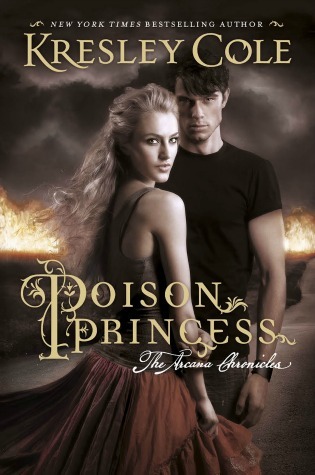
Poison Princess - Kresley Cole (Arcana Chronicles #1)

Poison Princess (The Arcana Chronicles, #1)
In a post-apocalyptic world, a guy named Arthur lures a girl named Evie into his home, promising food, drink, and safe rest in exchange for the story of how she got to his little crossroad.  Of course, Evie doesn't know that other girls have been lured here and have met gruesome deaths in Arthur's basement.  She wants the food, and the rest, and to have a shoulder to cry on, so she tells him her story.

Evie thinks she's crazy.  In fact, before the apocalypse (called "the Flash") left the planet barren, Evie had just gotten out of an asylum, where her mother placed her for her "hallucinations."  Actually, though, they're not hallucinations; they're visions of the future, and only Evie seems to know what's coming.

Okay, so, this was part high school drama, and part post-apocalyptic story.  The high school drama occupies the first 30% of the book, and it almost drove me crazy.  Evie struggles to fit in with the other kids at her school, even though she still hallucinates and has visions of the "red witch," whose design has essentially been lifted straight from Batman's Poison Ivy, though the witch's MO is different.  Kind of.  Considering Evie is supposed to be the Empress of the tarot deck, I don't really see where this came from.  See, this


does not bear a lot of resemblance to this


Evie deals with her issues by drawing, and not just any old stick-figure drawings.  She paints murals on her bedroom walls and has a whole sketchbook full of beautifully disturbing images.  This means that she is not only a Popular Cheerleader, but also an Artiste.  She is "friends with everyone," and also apparently thinks she knows better than everyone else.  For example, at one point, she says that "no girl walked the hall with a wardrobe malfunction under my watch," which she's trying to use as an example of how friendly she is, but really just comes across as her trying to force people into a form that she likes.  She is totally into slut-shaming, thinking Clotile is a slut because she wears short skirts and cutoff t-shirts and is "readily available for sex," and that other girls are "slores" because they are attracted to Evie's boyfriend Brandon.  Now, considering that Brandon is supposedly the most eligible guy ever, I'm pretty sure I would be attracted to him, too.  However, when Evie practically hooks up with another guy and wears clothes just like Clotile's, she is considered to be...practically Amish.  Not only that, but her teachers are "bitches" because they won't let her retake quizzes she failed--there is no mention of her ever giving a valid reason for wanting to retake it, other than she didn't know she would have a pop quiz, and she certainly doesn't explain her rather unique mental condition.

As for the other characters, there is the Sweet Boyfriend, Brandon; the Sassy Best Friend, Mel; the Overbearing Mother, Karen; and the Possessive Love Interest, Jack.  Who, by the way, Evie does not like because he is from the Wrong Side of Town and checked her out while she was in her boyfriend's car.  She got mad that he was checking her out when she stuck her butt up in the air in a moving convertible while wearing a skirt. Granted, some of the comments made after this incident were unnecessary, but really, she chose to do that.  He didn't touch her.  He didn't make any rude comments; those were made by one of his friends.

Anyway, the long and short of this is, if the entire story had been like the first part of the book, it would have driven me crazy.  Luckily, though, Cole started out with the creepy post-apocalyptic introduction starring Arthur, and that was intriguing enough for me to go on.  And while I'm not sure the PA part actually redeemed the first part (that would be hard to do) it was very, very good.  It shows what a brutal world earth is after the Flash, with no vegetation, no water, few animals, and even fewer women who survived.  Evie's struggle with her powers and identity was well-done.  I didn't really like how she was hating on Selena for being so secretive when Evie herself wouldn't tell anyone the truth, but Selena was kind of annoying... Actually, she was annoying in a cliche way, obviously intended to sway sympathies even more toward Evie.  However, I did understand Selena's secretive motives, while Evie's secret-keeping was only detrimental to all of her goals.  Finn and Matthew, though, I liked.

Now, about Jack... I like Jack, as a character.  I think his Cajun background was an interesting addition to the story and it will be interesting to see how his Catholic beliefs play with the supernatural happenings of Evie's new world.  The thing is, I don't like him as a love interest.  He's supposed to be Dark, because girls like Bad Boys, but it's just not...good.  I mean, sure, there should be some conflict; I don't expect it all to be sunshine and daisies.  But Jack is a violent alcoholic who wants to possess Evie to the point that she can't make her own decisions regarding her own life. Not cool.  Hopefully Jack will see some serious character growth in future books, because if he doesn't, I'm ashamed of Cole for putting him forth as a desirable boyfriend.

Obviously I had a lot of thoughts about this book; the long and short of it is that I liked the latter two-thirds quite a bit, and I'm interested to see where the series goes.  I'm not sure if I'll actually keep reading it, but that's primarily because I'm terrible about keeping up with series that aren't fully published by the time I get to it.  Still, this has enormous potential, and once you get past the infuriating high-school beginning, the new world and its inhabitants are a great read.

3.5 out of 5 stars.

Monday, July 22, 2013

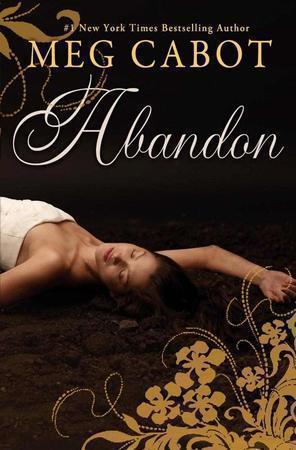
The Abandon Trilogy - Meg Cabot

Meg Cabot's Abandon trilogy is like candy, or soda, or popcorn absolutely smothered in butter and salt.  What I'm getting at here is that it's good, but it isn't good for you.  I really like Meg Cabot's paranormal romances (I adore the Mediator series, and I've also enjoyed the 1-800-Where-R-U books) and this trilogy was no different.  The idea of a modern retelling of the story of Hades and Persephone appealed to me, so I was eager to pick this up.  In some ways, it disappointed.  In others, it did not.  So, here is a brief summary of what I liked and did not like about the three books (Abandon, Underworld, Awaken) in this series.

I liked the setting of Isle Huesos.  This should not surprise me, because Cabot based the setting off Key West, which is one of my favorite places in the world.  Am I sure she captured the spirit of Key West?  I'm not really sure, but since she lives there part of the time, I'm going to assume she knows it much better than I do and put my faith in her basis.  I liked the characters, generally.  Some of them were a little one-dimensional, but the main characters were all pretty well-done.  I generally liked the plot, which revolves around the heroine, Pierce, coming to terms with her position as the queen of the underworld and battling against the evil forces of Furies.  I liked parts of her relationship with John, but certainly not all of it.

So, what did I not like?  Well, the first book in the trilogy is almost entirely setup, and the whole "relationship" aspect doesn't exactly make much sense.  Pierce says at the beginning that her heart is "broken," presumably by John, but she doesn't spend much of the book acting like she likes him.  In fact, she spends most of it terrified of him.  Which makes the sudden romance later a little weird.  The parents in these books also show a remarkable lack of involvement, considering their children are skipping school, disappearing from town entirely, and getting involved in murder investigations.  Seems unlikely to me, even with the "supernatural" aspect.  Also, for a series that is always going on about "consequences," there are remarkably few.  There is a controlling, possibly emotionally-abusive relationship.  There is unprotected sex.  There is an "imbalance" that never actually seems to get fixed, and what the hell is up with Pierce's necklace being purple, anyway?  That's never explained.  And half the plot of the third book appears to have been thrown in because Cabot had nothing better to write about for the first half of the book.  And the syrupy-sweet ending kind of made me sick.  All of these things are things that make these books not good for you.  You should not really encourage teenage girls to run off with guys they met when they were dead, especially when those guys have been stalking you and plan to keep you hostage in the underworld for the rest of, well, forever.  You shouldn't encourage the rampant lying to parents, the investigations into drug trafficking, the fear of the police.

But all that said, I still liked it.

3 stars out of 5.

Wednesday, July 17, 2013

Suite Scarlett - Maureen Johnson (Scarlett #1)

Suite Scarlett (Scarlett, #1)
Suite Scarlett is a book about a girl whose family owns a hotel.  All of the kids in the family help run the hotel, and receive a suite to care for when they turn fifteen.  Sounds glamorous, right?  Well, while the hotel might seem glamourous at first--designed by a famous Broadway set designer in the 20's, with plenty of history to accompany it and a beautiful appearance--it's kind of failing.  And by "kind of," I mean that Scarlett's family has had to fire their last paid employee, their cook, on the morning on her fifteenth birthday.  In addition to the terrible breakfast her parents make because of an absence of said cook, Scarlett gets some truly awful birthday presents, including a used lipstick sample and an expired ice cream coupon.  She's also given the Empire Suite to care for, and while this is the hotel's biggest, most prestigious suite, it's also rarely rented, suggesting that Scarlett's family doesn't really want her to interact with guests at all.  And THEN they tell her that, instead of getting a summer job, she's going to have to work at the hotel, without pay, for the foreseeable future.

This book also involves a bizarre Shakespeare performance, an eccentric guest, and of course a bit of romance.  The romance didn't sit well with me; Scarlett's love interest is in college, and it kind of skeeved me out to see a college guy going for  fifteen-year-old girl.  I just don't see that ending well, especially because he isn't exactly honest with her about the whole thing.  Johnson tries to redeem this near the end, but the whole thing was just a bit too creepy for my liking.  Oh, and Scarlett essentially falls in love with the guy the first moment she sees him.  Blah for insta-love.  I also wasn't terribly impressed with the supporting characters in this book.  They're all pretty flat, and while Johnson tries to throw in some stuff to make them more multi-dimensional, I wasn't convinced.  Even when Spencer was trying to be a good older brother, I couldn't take him seriously; I mean, his character introduction was him singing about having a butt while he was in the shower.  Marlene, Scarlett's younger sister, is a brat, pure and simple, and really needed a telling off.  She's a cancer survivor, which is the reason behind the hotel's failing state (cancer treatment is very expensive, after all) and one would THINK that she would be a little more clued into that, rather than just obliviously demanding that the world continue to revolve around her.  Mrs. Amberson was too strictly-eccentric to come off as sincere.  Lola, Scarlett's older sister, however, was well-done.  She really struggled with balancing her family, her boyfriend, and her job, and actually acted like a young woman of her age would.  She was very well-written, and I would have liked to see more of her and her boyfriend Chip, who seemed like he had a lot of unexploited potential.

This was a fun story to read, but it wasn't really deep enough to keep me going on the series.  I would honestly rather read about Lola than Scarlett, and while the writing itself wasn't bad, the entire cast of characters with the exception of Lola was too one-dimensional to hold my attention for long.  If you want to read some Maureen Johnson, I recommend Girl at Sea or 13 Little Blue Envelopes, which I believe are of higher quality.

2.5 stars out of 5.

Monday, July 15, 2013

Sunbolt - Intisar Khanani (Sunbolt Chronicles #1)

Sunbolt (The Sunbolt Chronicles, #1)Let me begin by telling you a story of my own.  Once upon a time, on a spring break not too long ago, my boyfriend contracted appendicitis.  We didn't know it was appendicitis, though, rather thinking it was a case of food poisoning brought on by a sketchy breakfast at a Best Western.  (I still have not entirely ruled out the possibility that the breakfast was, somehow, involved.)  As we thought he would get better in a day or two, we didn't go to the hospital and instead flew six hours home, where he was advised by the CVS Minute Clinic to stay in bed.  Ten days later, we were in the ER because he still wasn't better.  By this point, all they could really do was put him on heavy antibiotics because his whole abdomen was so inflamed that they couldn't operate.  I spent about a week and a half lying on a hospital bed next to him, and during that time I read Intisar Khanani's book Thorn, and it took my breath away.

The boyfriend lived (and, about three months after his appendix ruptured, he finally had it removed) and I fell in love with Khanani's writing.  When Sunbolt came out, it was obvious that I had to read it.  And I have to say, Khanani has done it again.  While significantly shorter than Thorn, Sunbolt is also a thing of beauty, and if you look at its reviews on Goodreads, you can see that pretty much everyone agrees with that.  It's very fast-paced, jumping from one event to the next, but it never actually seems "jumpy" or choppy.  Everything flows very well.  The heroine, Hitomi, is an orphan who possesses magical powers that she has to hide to avoid becoming a slave.  She works to help free the island of Karolene from the clutches of a dark mage along with the rest of the League of Shadows, led by the mysterious figure known only as "the Ghost." During an operation to save the lives of a powerful family, Hitomi is captured and begins looking for a way to escape.

Let me tell you, Hitomi has the worst luck when it comes to escape attempts.  Every single time she escapes, she gets captured again.  Eventually, she is given to one monster and imprisoned with another, and they have to work together to get free.  The world is rife with werewolves, vampires, and other non-human creatures, though they are referred to by alternate names.  I wasn't sure how this would work out, not being a fan of the werewolf/vampire craze that's swept young adult fiction lately, but this isn't really focused on those aspects.  And towards the end, with Val (a creature whose like I haven't encountered before) I was really, really rooting for them.  I am dying to see more of Hitomi and Val.  I hope he shows up in future books.  I wasn't sure that Sunbolt was going to hold up to Thorn, but it definitely did--however, I attribute that more to the second half of the book.  The first half, while enjoyable, was not as good as the second.  Hitomi's strength and spunk really come through in the second half, and she also has to face the consequences of her actions, which were masterfully handled.

Anyway, Khanani is a fabulous writer, and I can't wait to see more of her work.

5 stars out of 5.

Sunday, June 23, 2013

White Cat - Holly Black (Curse Workers #1)

White Cat (Curse Workers, #1)So, I really liked Holly Black's faerie stories, and I was hoping White Cat would be along those lines.  You know, kind of dark, twisty, surreal, and glamorous all at the same time.  Well, this isn't quite like the faerie books were, but it's not bad, either.  The story is about Cassel Sharpe, the only non-gifted member of a family of curse workers.  Black integrates curse workers into our world as if they've always been there, as a semi-functioning part of society--only semi-functioning because curse work was been illegal since about the time of the Prohibition.  Consequently, everyone, worker or not, wears gloves of some variety to prevent the working of curses (laying a curse requires touching someone with your hand) and many people wear charms designed to prevent curses from taking effect.  Because working is illegal, anyone who wants to work (in the US, at least) typically ends up working for mafia-like families who organize crime networks of workers.  Cassel's family is involved with the Zacharov family, though since Cassel doesn't have working abilities, he himself is left out of everything to do with workers and instead tries to make himself as normal as possible at his boarding school.
Like I said, Cassel doesn't have working abilities, but he has a secret of his own: he killed his best friend, Lila, three years ago, and his family helped cover it up.  Now, Cassel is having weird dreams of a white cat and is sleepwalking, leading to his suspension from his upper-class boarding school.  All he really wants to do is stop sleepwalking so he can go back, but while he's trying to figure out what's going on with him, this white cat (featured in his dreams) shows up in his life, and he begins to suspect that he has amnesia of a sort. Kind of a disappointing plot device, amnesia, but it worked.  There were a few things that were blatantly obvious from the very beginning, and I was actually embarrassed for Cassel that he didn't figure them out sooner.  But there were still a lot of great twists, which it's hard to talk about without revealing stuff, so just take my word that they were pretty good, though not nearly as enthralling in general as I found Tithe and its companions to be.  I was also hoping this would be along the lines of Tithe in that it could be read alone, but that's not really the case; where Valiant and Ironside were companion-books to Tithe, the Curse Workers books are actual sequels.

While the writing was good and the characterization was decent, one thing that did seem evident was a lack of consequences for the characters' actions.  Nothing seemed to have blowback except the curses themselves, and even that was relatively minor.  In the end, everything was just peachy keen, and no one really regretted...well, anything.  It seems like in a story where there were some morbid revelations, there should have been more consequences, at least on a psychological level.  Now, there was one kind-of consequence at the end, but I'm not really sure it can even be called that because it looks like it will be resolved in the other books.  All I'll say about that is:


Anyway, this was a pretty good book, but I feel like it could have been deeper and consequently better.  Overall, I did like it, but not as much as I was hoping to.

2.5-3 out of 5 stars.

Sunday, June 16, 2013

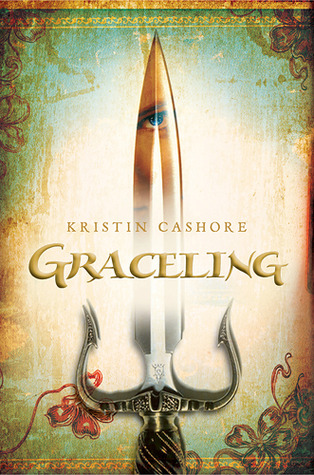
Graceling - Kristin Cashore (Graceling Realms #1)

Graceling (Graceling Realm, #1)Kristin Cashore's Graceling takes place in a fantasy world that appears to be without magic, but where some people are born with Graces, special skills of almost any variety.  These people, marked by their different-colored eyes, are abnormally gifted in random areas like swimming, fighting, cooking, dancing, or really anything under the sun.  The protagonist of the story, Katsa, is the niece of a king, and she is Graced with killing.  Her uncle uses her as his strongarm, forcing her to maim or kill people who cross him.  By night, however, Katsa and her friends work to right wrongs committed by Katsa's uncle and the other kings of the seven kingdoms.  On one such mission, they free the kidnapped father of one of the kings, and Katsa encounters another Graceling.  He shows up at Katsa's home court and reveals himself to be the grandson of the very man Katsa helped to rescue.  Greening, or Po, as he likes to be called, becomes quite close with Katsa, and after an upheaval at the court, they leave to find out why Po's grandfather was kidnapped.

First off, I really liked the characters in this book.  Katsa really struggled with coming to terms with herself, her Grace, and where she belonged in the scheme of things.  Po likewise struggled with his own Grace and what it meant for him.  Their relationship was extremely intense, and while it was pretty obvious it was going to happen from the start, it might have escalated form companionship to outright love a little too quickly for my taste.  I also hope that Giddon finds someone in the other two books in the series--I really liked him, and while Katsa was perfectly justified in not wanting to marry him, I'd like to see more of him in the future.  Bitterblue (strange name, even for a fantasy world) was very mature for her age...I AM kind of skeptical about that, but that kid went through some serious shit, so maybe that's behind her mental age?  Leck, as a villain, was weird and scary but not entirely believable because we never really learned anything about him.  Sure, Po and Bitterblue both said some stuff about him, but he only made two on-page appearances, one of which was only a few lines, so it's hard to actually grasp his motivations and how he came to be what he was.

I saw some weaknesses with the time with just Katsa and Bitterblue; it just wasn't that riveting.  And Katsa's constantly calling Bitterblue "child" was downright annoying.  I mean, yeah, Bitterblue's a little kid, but calling her "child" instead of calling her by her name or title ("Princess") just came across as weird.  Also, the similarities between Katsa and Katniss Everdeen from The Hunger Games (K-named warrior girls who are kind of naive about the world and are super good at archery) are striking, but since the books were published at about the same time, I'm pretty damn sure that's purely coincidence.  I think Graceling is also structured a lot better than The Hunger Games; it's self-contained, rather than straggling much longer than necessary across three books.

Probably my favorite non-plot part of the book, however (well, it WAS plot related, kind of) was the culture surrounding the ornaments of the Lienid people.  Absolutely beautifully done.  Well done, Ms. Cashore.  Well done.  The culture of the other six kingdoms, was kind of vague and they were all just lumped together.

Overall, Graceling was a lovely read full of fabulous characters.  It did have flaws, of course, but they were more than compensated for by its high points.  A wonderful book, and I am greatly looking forward to reading Fire.

4 stars out of 5.

Friday, June 14, 2013

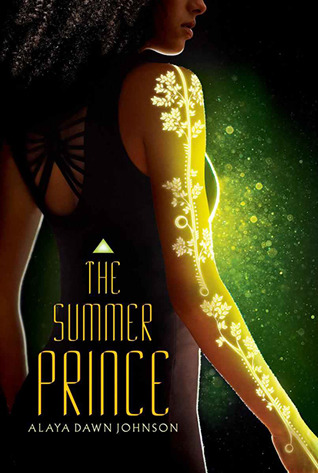
The Summer Prince - Alaya Dawn Johnson

The Summer PrinceI started this book thinking I would love it.  Then partway through I thought that I would like it, because it's very different, but I would be left confused.  And then it broke my heart.

The Summer Prince is the story of Enki and June, Enki and Gil, Enki and the City, and Enki and death.  Enki is the sun in this story, even though he's supposed to be a moon prince; everything revolves around him, completely and irrevocably.  For a long time, I didn't think that there was going to be any romance between Enki and June, that she was going to be sidelined by Enki and Gil, and I would have been okay with that, because it was different, and they were cute, and June was "aware this attachment I feel is the product of emotional investment in the largely stage-managed and manufactured spectacle of the royal election."  I admired her for that, for recognizing that in herself.  But that love transforms over the course of the story, and while, to some degree, I never really believed June and Enki would have a romance, it was so beautiful that I couldn't NOT want it.

I wouldn't say this book is about a revolution.  I would say that it's about art, and love, and inevitability, and the mistakes of history.  It was beautiful in all those ways.

Of course, it DID have flaws.  There are two instances of suicide in this book, and while one is barely mentioned, the other is glorified to what seems like an unhealthy degree.  There is also some lack of description that I find unsettling; I can't really get a clear picture of Palmares Tres in my head because there isn't really any solid description of it.  The whole sacrificial ritual also left me with some confusion; I feel like I absorbed a lot of knowledge about it that wasn't explicitly stated, but I'm still not sure if it's an annual thing or something that only happens every few years, and exactly how it evolved into what it is during the time of the book.  Still, the absolutely heartbreaking beauty of this more than outweighs it, and even parts I thought would be completely unnecessary, such as most of the last part of the book, turned out to fit into it so perfectly that I wouldn't wish them away for ANYTHING.

And the conclusion!  Wow...just...wow.  I sobbed like a baby in the middle of my workplace, but it was worth it.  Completely worth it.

5 stars out of 5.