Pages

Thursday, November 14, 2013

The Book of Lost Things - John Connolly

The Book of Lost ThingsThe Book of Lost Things is for those who like their stories with a heavy dose of fantasy influence, with a few twists but nothing that makes the underlying stories completely unrecognizable.  The story revolves around David and his experiences following the death of his mother.  With only his overworked father for company, David takes to reading.  His father meets a new woman, Rose, who becomes pregnant.  David and his father move in with her in her old family home.  David's room is filled with the books of the former occupant, and David can hear them speaking.  Not only that, but he's started to have fainting fits, and when he wakes up he had memories of a different place.  Oh, and did I mention The Crooked Man, who looks like something out of a nightmare, is stalking him?

One night, David crawls through a hole in the garden wall and finds himself in a strange land that's infested with monsters and creatures of myth and fairy tale.  His only hope of getting home, he's told, is to go see the king.  The king has a mysterious book called The Book of Lost Things, and it might hold the answer to David's safe return to his family.

The strange world in this book is heavily influenced by fairy tales, which was very cool.  Connolly subtly modified all of them to make them fresh and foreboding, but they were still recognizable enough that I could feel I was "in" on the secrets of the world without actually being there.  Also, not only well-known fairy tales are used.  Sure, there are elements of Snow White, Sleeping Beauty, and Little Red Riding Hood, but there is also The Goose Girl, The Three Army Surgeons, and a few things out of poetry and myth which haven't been as heavily represented in the current fad of retelling fairy tales.  The overall plot of the book isn't entirely ground-breaking; it's extremely reminiscent of the movie Labyrinth.  You know, the one with David Bowie as the Goblin King?


Yeah.  That one.  Anyway, The Book of Lost Things is definitely more about the journey than the destination, because honestly, I don't like the destination.  I don't like destinations like that in general, because, um...


That's why.  Awkward.  Also, some of the stuff in the book doesn't work the way it says it works, which was kind of weird.  Like the Loups.  Their presence is explained (via the Red Riding Hood story) but later on, they don't actually fit that story at all in their transformations.  It was kind of weird.  David's character seems kind of immature for his age, too; he's supposed to be around the age of twelve or thirteen, but he acts much longer.  I see this a lot in books; it's like authors have a couple of pre-conceived "child" characters and jump straight from the 8-year-old to the 17-year-old, with no shifts in behavior in between.  Still, though, a good read for the bulk of the book.  OH!  And it has this awesome section at the back where all of the "origin stories" of the fairy tales are laid out, so if you ever want to know more about one of the elements Connolly uses, he goes right on and tells you!  Very cool.  Kudos for that one.

Overall, good book.  I didn't like the ending, but I can forgive it because the body was so great.

4 out of 5 stars.

Monday, November 11, 2013

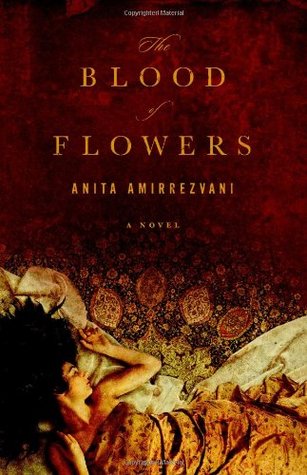
The Blood of Flowers - Anita Amirrezvani

The Blood of Flowers
So, this is one of those books where the heroine never gets a name.  I've seen this before, most memorably in Daphne DeMaurier's Rebecca, but I don't particularly like it.  I know the book is written in first person, so we shouldn't really need that much of a name, but I still like knowing how to refer to the main character.  However, I didn't actually realize she doesn't have a name until I wrote this review.  Throughout the entire book, I did keep wondering what her name is, but I just presumed that it was mentioned and I forgot about it.  So I guess it works, as long as you don't really want to discuss the main character with anyone.

This is the second book of Amirrezvani's that I've read, the first being Equal of the Sun.  Honestly, I liked EotS better.  The main characters were far more engaging, the setting more entrancing, and the plot actually moved.  Most of The Blood of Flowers involves the heroine wanting to get married, making rugs, drawing pictures, and being subjected to the whims of her wicked aunt.  While this isn't a bad lifestyle (hey, I've said it before and I'll say it again: I would be perfectly fine being a 50s housewife) it's not exactly the most thrilling to read about.  Most of the intrigue comes from the heroine's relationships with other people, but even those peter out and aren't as artfully dramatic as they could be.

I was expecting more of this book.  The back promises that the heroine "blossoms as a brilliant designer of carpets."  She doesn't.  She makes one good design throughout the entire book, and can't even pull that off without copious amounts of work from her uncle.  While I appreciate that Amirrezvani wanted to show her heroine stumbling, making mistakes, and learning from them, I just felt like some awesome storyline was being missed out on.  Something about the heroine's genius rug designs and using them to gain influence and power or make political statements or something like that.  Something, I don't know...more Equal of the Sun-like.  This was a completely different premise than EotS, and I can respect that, but that doesn't mean I particularly liked it.  While the writing is generally good, it tends to telling more than showing in some places, and the story just isn't as engaging as it could be.

On the other hand, I did learn a lot about making rugs.  So there's that, I guess.

2.5 stars out of 5.

Tuesday, November 5, 2013

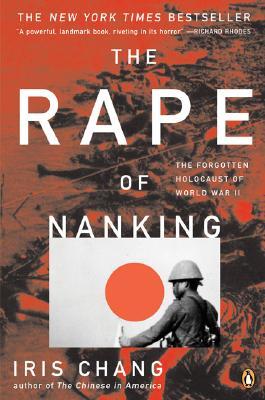
The Rape of Nanking - Iris Chang

The Rape of NankingThere's a saying that those who don't study history are doomed to repeat it.  There's also a saying that those who do study history are doomed to watch others repeat it.  Being a history major at a university that is very politically-focused, this is frequently made blatantly clear to me.  My politically-minded classmates wander about arguing foreign and domestic policy, spatting about how we should deal with Syria, or Egypt, or whatever crisis is in the news that day.  My historically-minded classmates and I wander about going, "But isn't it like when...?"  But it doesn't matter.  No matter how similar a situation is to the past, there will always be differences, and those differences will always stall action.  So, when dive into this book, let's keep a few things in mind, shall we?

-Iris Chang was not, by trade, a historian.  She was a journalist.  This means a few things.  Journalists, by nature of their work, can be very, very skilled at research, finding stories, and putting them together.  They're typically not so great at contextualizing those stories.  I'll talk more about this later.

-Chang was also the Chinese-American daughter of two Chinese immigrants who fled China during WWII with their families.

-Guilt is a slippery animal, and can't always be placed where we would like it.

-History is never one-sided, and in modern times, it is not written exclusively by the victors.

That all said, some people will not like what I have to say here, but I still feel a responsibility to say it in the interests of being as neutral as possible.

Okay, so, this is a good book for people who are not familiar with the Rape of Nanking and its place in WWII, but want to learn about it.  It's a narrative history, but not a terribly scholarly one; while there are notes included at the end of the book, there are no footnotes or endnote numbers directing you to those notes, and there's no way of knowing whether or not you'll be able to track down a reference for the piece of information that interested you.  This probably comes from Chang's journalistic, rather than historic, background.  That's not a bad thing.  "Popular history" books are all the rage these days, and I don't see anything wrong with that; they get people interested in history.  We just have to keep in mind that they're not as scholarly as some other books, and consequently don't usually analyze events as closely as they could.  For those wanting a quick overview of an event, this is fine.  For those hoping for a complete understanding, however, it can be problematic.  Chang's book is immensely readable, and I went through it in about two days.  It gives a quick history of what Chang apparently sees as the Japanese culture that led to the Rape, and then covers the lead-up to the Rape, the Rape itself, and the aftermath, as well as telling what foreign individuals did and what the rest of the world knew about the events as they were happening.  It's a good overview.  In the epilogue, though, it gets a bit preachy.  Chang talks about how Japan needs to sever ties with its past, acknowledge that the Rape was wrong, and embrace a new future.  She talks about that a lot.  And while she's not wrong, necessarily, she leaves out a lot of considerations.

First, as I mentioned above, we need to consider Chang's background.  She's Chinese-American and was raised in the Midwest of the USA, in the midst of an extremely individualistic culture.  Eastern cultures, such as China, Japan, and India, tend to be much more collectivistic than western ones.  That's not bad; it's just different.  It means their values are placed on the good of of the many, instead of the good of the few.  It's apparently worked for them for thousands of years, so I don't see a need to judge that.  What I do think we need to consider, though, is how something like the Rape of Nanking might be viewed in different cultures.  I'm not Japanese; I've never been to Japan.  I certainly can't speak for them.  However, as someone with a background in history, I have to say that when the Japanese say they saw what they did as necessary...well, they might not be lying, like Chang claims they are.  In hindsight, it's easy to see how horribly awry Japan's plans went.  But in the heat of the moment, it's also very easy to see how the Japanese army, massively outnumbered in most cases in Nanking, could have seen the situation as "them or us," and chosen, as most of us would, "us."  Chang mentions on repeated occasions that the Nanking natives, even unarmed, could have easily overwhelmed the Japanese through sheer numbers alone.  As horrible as the Japanese actions in Nanking were, and as reprehensible as they are from an outside perspective over half a century later, it's easy to see where, at the time, those actions might have seemed necessary for self-preservation.  (And let me clarify--I'm talking mostly about the killing, here.  The rampant raping and torture can't really be excused, but Chang does offer a pretty good psychological analysis for why this might have happened in the epilogue, so I'll let that speak for itself.)

Second, lets consider the aspect of guilt.  Who is guilty for the Rape of Nanking?  There are some easy to answers to that, and some not-so-easy ones.  It's hard to tell who knew what, who ordered what, who did what, especially when many documents have been destroyed and many victims refuse to speak.  There is definitely guilt to be laid out, those most of the people deserving of it are probably, by this point in time, dead.  Then there is the idea of collective guilt: that the youth of today's Japan are somehow responsible for the Rape of Nanking because they deny its reality and refuse to make reparations to the victims.  There's a whopping problem with this analysis, and that's that you can't hold Japan's youth responsible for denying the existence of something they don't know about.  I'm not sure how much has changed since Chang's book came out--it was published in 1997--but in the epilogue she talks at length about how the events of the Rape of Nanking have been censored from school curriculum, deleted from books, and shunned in the public sphere.  How are you supposed to correct something you don't know about?  Some people claim to have seen Bigfoot and to have evidence of his existence, but that doesn't mean I believe them.  While the Rape of Nanking isn't Bigfoot, and we know that objectively, it might be hard to comprehend in an environment where it has been treated as Bigfoot for decades.

My other main problem with this is that, well, Chang is American.  We Americans find it very easy to cast judgment against other peoples and refuse to do the same to ourselves.  Chang criticizes Japan for enshrining some of the people who are responsible for the Rape of Nanking and practically worshipping them.  I'm not going to get into the worshipping thing; that's a culture issue.  But the enshrinement of war criminals I'm not afraid to tackle.  Chang criticizes the emperor of Japan for knowing about the Rape and doing nothing about it--perhaps even approving of it.  Fine.  But if we're going to go down that path, we have to keep in mind that that's not just a Japanese trait.  In Washington DC, the Vietnam memorial contains the names of soldiers known to have committed atrocities in Asia, such as cutting off the ears of victims for trophies.  The Enola Gay, the plane that dropped the first atomic bomb, is preserved as a national treasure at the National Air and Space Museum's annex.  We condemn Iranians for flooding to the street chanting against the USA, but when Osama bin Laden was killed, thousands flooded the National Mall, White House, and 9/11 Memorial Site chanting "USA, USA" in a way that is unnervingly similar--we were, after all, celebrating someone's death.  I am not saying that enshrining war criminals is worthy of praise.  But I am saying that those in glass houses shouldn't throw stones, and if you're going to write about history, even an isolated event such as the Rape of Nanking, you still have to consider its place--and your conclusions--in a larger context.

Chang's book is a good introduction to the Rape of Nanking, but it is weak in the historiographical elements and modern context that are vital to actually understanding historical events in their entirety.  I enjoyed reading it, but I am a bit worried about the message that it could leave someone who read only this book and considered it the "all you need to know about the Rape of Nanking" book.  That message seems to be that the Chinese are all that is good, the Japanese are all that is bad, and the current generation needs to pay for the sins of their forefathers in order to move forward to a better world.  But if we're hoping to move forward to a better world, wouldn't holding grudges not be the way to go?  Honestly, the Japanese government as a whole probably should make some sort of apology or reparation to remaining survivors or the families of victims of the Rape of Nanking--but I don't think we should make the leap that this would magically solve the problem, and to some degree that seems to be what Chang implies.

3 stars out of 5.

Monday, November 4, 2013

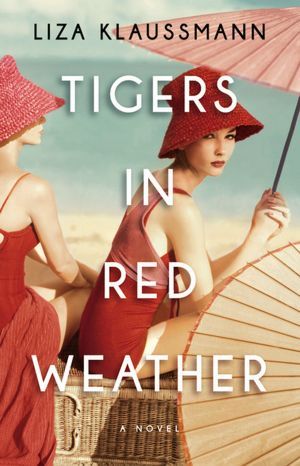
Tigers in Red Weather - Liza Klaussmann

Tigers in Red WeatherSo, this book isn't what I thought it would be.  The book jacket describes it as F. Scott Fitzgerald-like, and while I didn't particularly like The Great Gatsby as a book, it does have a lovely sense of atmosphere for the time period it's written in.  Oh, and there's that whole thing that popped up in past year or two about how "There ain't no party like a Gatsby party 'cause a Gatsby party don't stop until at least two people are dead and everyone is disillusioned with the Jazz Age as a whole."  I like that.  And to a degree, this did have that feel...but it still wasn't quite what I was looking for.

The book is about a pair of cousins, Nick and Helena, and their lives in the wake of World War II and the following decades.  Nick is married to a Navy man returning from the war; Helena's husband died early on in the war, and she is about to be remarried to a man from Hollywood.  Both cousins are leaving their wartime residence in Cambridge to meet up with their significant others and carry on with their lives.  Nick, however, isn't very happy in her new home in Florida and feels like her husband has changed drastically since he went to war--he isn't the man she married anymore.  As for Helena, her new husband isn't quite what he seemed when she married him, and her life in Hollywood quickly begins falling to pieces.

The story also introduces Nick's daughter Daisy and Helena's son Ed.  The book is broken up into five parts, each focusing on a different character.  The first four parts focus on Nick, Daisy, Helena, and Hughes, in that order, and are written in third person.  The last part is from Ed's perspective and is written in first person.  The sudden switch from third to first person was a bit jarring, and didn't really mesh well with me, though I could see the logical reasons why Klaussmann chose to use that style for the final part.  There isn't much retreading of plot in the parts--a few events are mentioned in more than one perspective, but for the most part we get new information in each part.  This is very much a character-driven novel, not a plot-driven one, except...

...except that Klaussmann tried to work a murder mystery in, too.  I don't know why.  While it provided a bit of intrigue for Daisy's part of the novel, it doesn't go much beyond that except in gossip, but it's still supposed to play a pivotal role in the overall plot as pertaining to the family.  It's just not explored enough to provide that forward motion, and when it finally is explored more, it's the end of the book and there isn't much more to be done with it.  This definitely could have been integrated more, had a larger impact on the lives of the characters, or else wise probably shouldn't have been included.

It's true that not much happens for a lot of this book.  It isn't very action-packed.  However, I didn't mind that at all.  The book's main goal seems to be to explore the characters and how they came to be who they are, and I think Klaussman does a good job with that for everyone except Ed, because with Ed it's just...uhm...well, let me put it this way: I'm not sure Klaussmann really knew how to get inside his head, and that's a good thing.

There are some loose ends that are never tied up, such as what happened to Helena's husband Avery, and I would have liked to see a bit beyond where the book ended--some sort of reveal to Daisy and Helena about what Ed did.  That didn't happen, and it was a bit disappointing, but not hugely detrimental to the overall quality of the book.

So, I liked it overall, for what it was: a good character sketch novel with a great atmosphere for the setting.  It wasn't what I was expecting--I was expecting a lot more drama and mystery--but I liked it all the same.

3 out of five stars.

Saturday, November 2, 2013

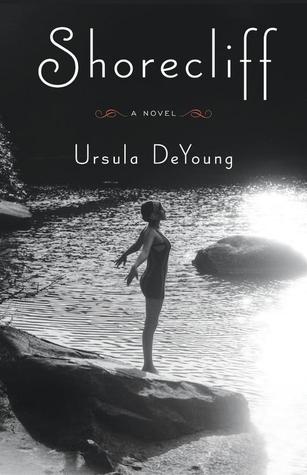
Shorecliff - Ursula DeYoung

Shorecliff
Honestly, I didn't really enjoy this much.  I've this out from the library for what seems like forever, because I just couldn't get into it.  It has something to do with the plot, something to do with the characters, and something to do with the writing style, which all combines to just make you go "bleh."

First, there are the characters.  The narrator, Richard Killing II, is a grown man talking about a summer he spent at his family's house in Maine, Shorecliff, with his extensive network of aunts, uncles, and cousins.  This extensive network is not good, because it means you have to keep up with upwards of twenty characters at any given time, and many of them are only distinguishable from each other by one particular trait.  For example, Isabelle is the gangly, awkward one, and Fisher is the one who likes birds, and Francesca is the beautiful one.  Lengthy physical descriptions of these characters are dumped in your lap during the first chapter, not in a very artful way, and then never mentioned again.  Their personalities and manners of speaking aren't very different from each other at all, and they tend to blur together and leave you wondering who exactly is doing what.  Also, Richard in the story is supposed to be 13 years old; he acts more like he's 8.  This might be because the book is set in 1928, but honestly there isn't much made of this setting and it's very easy to forget that the story doesn't take place in modern times, which leaves things a little squishy in your brain--and not in a good way.

Then there's the plot.  In the first chapter, one of the aunts--who are also apparently supposed to be indistinguishable from each other, for the most part--proclaims that Shorecliff is "ripe for incest."  This seems to be setting up the plot for the rest of the book, but really it isn't.  The plot is more along the lines of no plot at all; it's just a bunch of people rambling about in Maine during the summer and having issues with each other.  Sure, a couple of the cousins have things for each other or pretend to have things for each other, but none of it actually goes anywhere, and it seems like a huge potential conflict was left behind.  Narrator-Richard keeps talking about the "catastrophe" of the summer and DeYoung attempts to make it seem like all of the summer's events led up to that moment, but in reality it doesn't seem like they did.  The "catastrophe" was not a climax of events--it could have just as easily happened in the beginning of the book as the end, which doesn't make it seem very climatic at all.  The "mystery" of the loss of the family fortune also isn't very stunning, nor is Uncle Kurt, who's supposed to be a "mysterious" character.

The writing style is bland; there's a lot of telling and not a heck of a lot of showing, which is exasperating, and a ton of info-dumping that could have been done in a much more artful way.  Additionally, there's a ton of exposition at the end of the book, telling where each ended up and what they did for pretty much the rest of their lives.  That was boring, and for the most part unnecessary, because I didn't particularly care about these characters.  None of them were very lovable, and DeYoung didn't go out of her way to make me root for any of them.  They were just there, and I didn't care what happened to them in more than a, "Oh, that's vaguely interesting but I would have been just as happy not knowing" sort of way.

Overall, a pretty dull book that didn't get any better as it went on.

1.5 stars out of 5.

Wednesday, October 30, 2013

With True Love's Kiss - Jessica Woodard (Once Upon a Romance #3)

Let me preface this by saying that I have read Jessica Woodard's other two "Once Upon a Romance" books, and I enjoyed them quite a bit.  The Scottish accents in the second book were almost enough to drive me mad, because reading Scottish accents (or most accents, actually) is agonizing.  However, I still liked them.  And honestly, I liked this one, to...

...just not as much as I wanted to.  The main issue I found with this story was Bianca.  She's cute, she's charming, she's endearing, she's kind, she wants the best for her people...and she is completely and utterly boring.  Robin was cool.  I liked Robin.  I liked Queen Isabella, and I enjoyed the returning characters from other books.  But Bianca, as the main heroine, was just bland.  While I wanted her to succeed, I was simultaneously left feeling like I didn't care if she did or not.  In fact, if she failed, that would have opened up a whole new can of worms, which could have been quite interesting.

The ending wasn't my cup of tea, either.  It wasn't nearly as emotional as it could have been, and while it paves the way for future books, it didn't make me actually care about Robin and Bianca any more.  It felt more like a cop out than anything else.  I'm still interested in reading future books from Woodard, but I hope she returns to a style more like the first two books in the series.  I'm not sure how she'll do that, as I suspect the next book is Sleeping Beauty-themed, and it's kind of hard to make a girl who sleeps for most of the story into a great heroine, but I hope Woodard will manage.

Two out of five stars.

Monday, October 28, 2013

Beyond - Maureen A. Miller (Beyond #1)

BeyondOh, Beyond.  Oh, how I wanted to like you.  And I did.  It's just...you have some issues, and those really get in the way of the reading experience.  Logic is seriously lacking in parts of this book, and not in a way that can be covered by the typical "suspension of disbelief" we agree to when we read something like sci-fi or fantasy.

Here are the basic facts of the story, just to lay the foundation for the rest of the review.  One day, just after graduating high school, Aimee Patterson takes her dog Ziggy out for a walk and ends up abducted by aliens.  Well, kind of aliens, because they're not little green men, but are instead normal human beings from another planet called Anthum.  They are cruising the universe collecting samples from all kinds of different planets in hopes of finding a cure for a plague that has decimated their people.  Aimee is told that they can return her to Earth, but by the time that happens, almost five Earth-years will have gone by.

So, let's talk about the time line first, because that's one of the biggest problems here.  At one point Aimee works out that 90 Earth days equals one week on the Horus, the spaceship in the book.  Let's just equate that to three months, for simplicity's sake, even though it's not an exact conversion.  So, for every year on Earth, Aimee would experience approximately four weeks of time on the Horus.  She would be gone for a total of twenty weeks, so about four months.  The issue here is, the story on the Horus doesn't take place over what seems like a five-month period.  It takes place over what seems like a little under a week.  Granted, there's a point at which we're told Aimee was unconscious for approximately two weeks, but that still doesn't make up for the bizarre time gap.

Second, there's the plague.  I am not at all opposed to stories dealing with weird, alien, space-plagues.  Not at all.  This one, however, doesn't make sense.  Unfortunately, I'm going to have to reveal part of the plot here, so if you're interested in not spoiling part of (but not all of) this book, skip the rest of this paragraph.  As you might be able to guess, Aimee turns out to possess the cure to the plague in her biology.  Okay.  Except...there's a point at which she's told she is genetically identical to the "mecaws," AKA humans, of Anthum, so why would her body have the cure?  Doesn't make sense.  Then that is explained away by saying that, "Oh, the cure is actually an antioxidant in her saliva that comes from something she ate that was stored in her glands."  Your body, by the way, does not store extra antioxidants for future use, so good luck with making that one work logically.

Now let's talk about Aimee and Zak.  I liked the two together, I really did.  I didn't mind the instant attraction too much because, hey, you can be instantly attracted to someone.  It wasn't insta-love, at least.  Well...at least not at first, because suddenly that attraction turns into love about three days later.  Mushy, gooshy, yucky love.  Blah.  Not good.  Also, Zak was repeatedly described as a "warm haven," which was really only worthy of eye-rolling.

Now for a couple more minor things.  The "prologue" should have been the first chapter, but that's just semantics, really.  There is some inconsistent characterization with Aimee.  At one point, Aimee wishes she had her glasses--but then later, in the epilogue (which should have been just the last chapter, not an epilogue) her eyes are described as having never needed glasses.  That epilogue also seemed rushed, blowing through five years without much of a purpose.  Instead of being the end of this book, it seems more like it should have been the beginning of the next one.

Overall, it wasn't a completely awful read, but there wasn't enough cohesion to make it come across as Miller seems to have wanted it to.  It felt disjointed, and there wasn't a sense of time progressing as it should have.  If the basic story line--girl from Earth leaves Earth, visits other places in the universe, fights an alien plague to which she is strangely immune, falls in love along the way--then I recommend reading the Stardoc series by S. L. Viehl.  It's a little more graphic in the romance department, so be prepared for that, but overall it's a superior read.

Two out of five stars.