Pages

Thursday, August 31, 2017

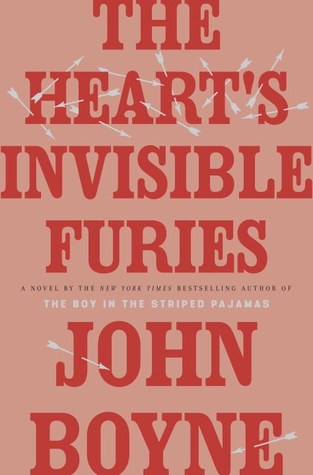
The Heart's Invisible FuriesAnyone who's thinking of reading this book might want to read up on the Bury Your Gays page on TV Tropes, but for those who don't want to or don't have the time, let me sum it up for you: it's quite the cliche in works of fiction that gay characters don't deserve happy endings, and that's basically this book summed up.

Following Cyril Avery from before his birth through to just a few months before his death in seven-year increments, the story is basically that of how a gay man born in 1945 Ireland just after the end of World War II is utterly undeserving of happiness.  Cyril is, of course, not actually undeserving of happiness, but Boyne seems to think he is, and rains down a lifetime of woes upon him.  While Ireland is a country that has traditionally been extremely conservative because of strong Catholic influences, not all of the book takes place there, and yet even in the parts that don't, Cyril is pursued by a cloud of ill fortune.  Just when you think things are starting to look up for Cyril, something else slams down, and usually a succession of somethings.  This is supposed to be spun as a story of the endurance of the human spirit, but really it comes off as another story of, "Oh, isn't it tragic to be gay and to never be able to find true love, or hold it if you do?"

Here's the thing: if this book had just been the first part, I totally would have been onboard with this, tropey as it is, because of the time and place.  1940s to 1960s Ireland was not a great place to be a gay person, particularly a gay man.  It's not that hard to see that.  And if the story had been about Cyril persevering through these conditions to find fulfillment in some way--it didn't necessarily have to be romantically--it would have been good.  But once the story moved on to later times and to places that were more accepting, such as Amsterdam and New York (albeit during the period when AIDs was terrifying the populace) the amount of punishment Boyne heaped on Cyril for being gay and then for accepting who he was seemed utterly excessive.

That said, there were pieces of this that I liked.  We can infer early on in the story that Cyril eventually finds out who his birth mother is, even though he's raised by adoptive parents and constantly told that he's "not a real Avery."  But seeing Cyril and his mother frequently and unwittingly cross paths was charming and a way to keep the narrative going, sometimes drawing in other past characters to reinforce the story's "web."  I liked the scope of the story in its journey through times and place, and the wide variety of characters that Boyne brought in.  But the overall tone of the story seriously struck a wrong note with me, and that's something that I can't really let slide, and honestly I'm disappointed that Book of the Month put this out as a selection.

2 stars out of 5.

Wednesday, August 30, 2017

Heartburn - Nora Ephron

HeartburnThis book is essentially the epitome of chick-lit.  Dating back to the 80s, it's apparently semi-autobiographical; the main character, Rachel, is pregnant when she finds out that her second husband is having an affair, which evidently parallels some points of Ephron's own life.  I've never actually seen a Nora Ephron movie, at least not all the way through, and had no idea who she was before starting this, so this is my first real judgment of her.  And it wasn't pretty.

Heartburn reads not so much as a novel or a story as a long, rant-y journal entry that goes on and on and on about being Jewish, the lack of delicatessens in Washington, DC, hatred for Washington (the city, not the government) in general, and basically about how awesome Rachel is and how scummy her husband and his mistress are.  Rachel writes cookbooks, or books that involve recipes, for a living, and also appears on TV to demo said recipes.  Recipes are spattered throughout the book but the really good-sounding ones, like the bagels and lox and eggs, aren't given; instead she gives recipes for stuff like crispy potatoes.  But the main thing that dragged this book down for me was that I didn't like Rachel.  Yes, being pregnant and finding out that your spouse is cheating on you would suck.  But Rachel knew her husband was a cheater before she even married him; this wasn't the first time he'd had an, erm, indiscretion.  Cheaters gonna cheat, girl, and you should have known what you were getting into--especially because it was the second marriage this had happened to, though she wasn't pregnant in the first one.  And, though I allow that she's upset, she deals with her emotions like a passive-aggressive child rather than a functional adult.  For example, she notes that she and her husband keep their finances separate, all the time, and yet when he doesn't pay for her plane ticket, she gets pissed off at him.

Meryl Streep reads the audiobook edition of this and, while she is an excellent narrator, even she can't make Rachel truly likable.  I was glad that the book ended the way it did, because at least it showed some backbone, but honestly I just didn't like it overall.  Apparently it's also a movie that Meryl Streep stars in as Rachel, which is a good deal better than the book.  I should hope so; the book itself is vapid and eye-roll-worthy and isn't even really good as a trashy beach read, which is what it had been recommended to me as by the folks over at Buzzfeed.  Liars, Buzzfeed.  Liars.  Meryl Streep is too excellent to waste on a vapid movie, so I hope my fellow reviewers are right about the quality of the movie over the book.  It just feels like Ephron wanted to vent about this failing of her marriage--but that doesn't mean she had to put it out there for everyone to read.  Additionally, there's some incredibly racist stuff in here--she actually refers to a Latin American woman as a "refried taco," which is just--really?

2 stars out of 5, and that's mostly for the recipes that were included and how Ephron talks about food in general.

Tuesday, August 29, 2017

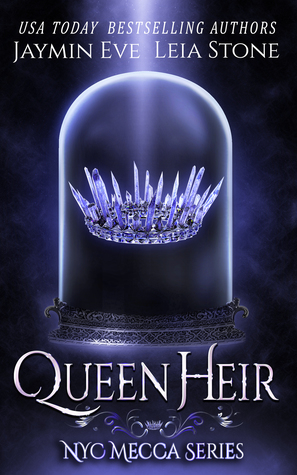
Queen Heir - Jaymin Eve and Leia Stone (NYC Mecca #1)

Queen Heir (NYC Mecca #1)Queen Heir was the monthly book pick for the Unapologetic Romance Readers on Goodreads, though it probably wasn't best-suited for the group because it's not really a romance; the romantic interest doesn't even show up on the page until almost halfway through the book.  It focuses on Arianna, one of the heirs of the wolf-shifter queen in New York, who finds herself fighting for the crown after the queen is murdered.

Arianna is pretty much insufferable.  She is, of course, gorgeous.  She has platinum blond hair and gorgeous eyes but oh, her dad might have been Polynesian so she has dark eyebrows and eyelashes even though otherwise she is pale, pale, pale!  She is the strongest of the heirs, has the best familiar (and the only one that is a wolf), is the best at fighting, the best at magic, the best the best the best.  And the only one who can solve the queen's murder!

The writing here is very clunky and the world building is scattered at best.  For example, the authors once use "ferreted" instead of "ferried," and the magic system was apparently created by the Tuatha De Danann, which makes no sense.  Why not, you ask?  Well, for starters, the Tuatha De Danann are a "race" of Irish/Celtic god-like beings, who the authors here instead label as fae.  But they're specifically linked to Ireland.  Here, the authors decide that New York conveniently has a magic system called "the mecca," which again, good job for either mis-appropriating religious aspects or not understanding what words really mean, which was created by the Tuatha De hundreds of years before humans were there and which conveniently aligns exactly with New York's buroughs.  And can be used for teleportation.  Oh, yes.  They also appear to be lumping together the Tuatha De Danann, who are traditionally considered "good," with the Fomoire, who are generally bad.  Either that or they can't tell the difference between these groups and the Sidhe, which are related to but not the same as the Tuatha De Danann, and are more along the lines of what people sometimes call the "Seelie and Unseelie" faeries.  All of this can be gleaned from a quick perusal of Wikipedia, so I'm not really sure there's an excuse for butchering things this badly.

Now, don't get me wrong, I love adaptations of mythology that are twisted up and made new, but most authors at least try to do it with some respect for and understanding of the sources they're pulling on, rather than just going, "Oh hey, that sounds cool, let's do it!" and diving in without any preliminary research or handling source material without any semblance of tact.  Combined with the annoying main character and the sub-par writing, which was also rife with info-dumping, this book was pretty blah.  The pretty cover lured me in, and I liked Kade quite a bit, but I don't think there were enough redeeming qualities in Kade to keep the rest of the series on the top of my interest list.  I think I'd probably be better of going back to the Kate Daniel books for a paranormal romance featuring a sexy shapeshifter.

2 stars out of 5.

Monday, August 28, 2017

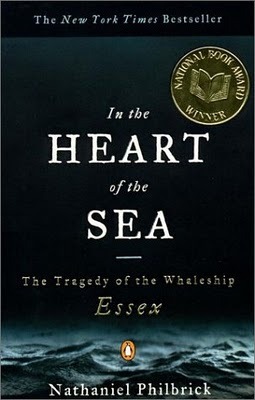
In the Heart of the Sea - Nathaniel Philbrick

In the Heart of the Sea: The Tragedy of the Whaleship EssexThe story that inspired Moby Dick (which no, I have not read), the sinking of the Essex, a whaleship out of Nantucket, seems like something that could only have been made up.  A whale sinks a ship designed to hunt it and the crew are left as castaways in a trio of boats for three months, sailing around the Pacific with dwindling rations and deteriorating vessels, succumbing to despair, dehydration, starvation, and eventually resorting to cannibalism so that some of the crew may survive.

Nathaniel Philbrick uses two main narratives written by survivors, first mate Owen Chase and cabin bow Thomas Nickerson, to construct the main story here, though he also relies on other resources, such accounts of the story told by Captain George Pollard, letters that were written, and other documents from the time.  He provides context of what life was like in Nantucket at the time, some history of the Essex--which was known as an unusually lucky ship, prior to its ill-fated prior journey which seemed plagued by bad luck from the start--as well as information on what happened after the survivors of the wreck were rescued.  At first, I thought that the narrative was ending remarkably early, but all of that information on what came after was so important to showing the slide of affairs in the whaling industry and to, ultimately, make the tale more believable.  For example, no ship had ever been sunk by a sperm whale prior to the Essex, at least not that anyone knew of--but Philbrick includes information on how, in the decades after the Essex sank, whalers reported that whales were becoming scarier, and several other ships were sunk or heavily damaged by whales.

Apparently I'm super into survival stories recently, since this is the second one in a row I've tackled, after Unbroken (yes, the reviews sometimes show up out of order based on how I schedule them!) and I have Robinson Crusoe lined up for the near future, as well--though that one is fiction.  But it's interesting to see the differences between them; for example, while both this and Unbroken are stories of survival and both feature exiles at sea, In the Heart of the Sea seems to come across as more realistic than Unbroken, even though the circumstances are so much more extraordinary.  It definitely has something to do with the writing; Philbrick's seems so much more matter-of-fact than Hillenbrand's, which felt more sensational.  I do think this one was actually referenced in Unbroken, which might have been what put it in my head to begin with.  Additionally, I did this one as an audiobook; the narrator was excellent for this and I think really contributed to the overall feel of the story.  And it was a piece of history that I hadn't been familiar with, though I had heard of it before, so learning about it was great!  The denouement was a bit long-winded, even including all of the excellent extra information, but I think that was probably the book's only big detractor.

Overall, I really liked this one; I would definitely recommend it to anyone interested in history, nonfiction, survival stories, any of that!

4 stars out of 5.

Friday, August 25, 2017

Unbroken - Laura Hillenbrand

Unbroken: A World War II Story of Survival, Resilience, and RedemptionUnbroken was my latest audiobook, following Missoula as a selection to listen to while walking to and from work some days and while running.  It had been on my to-read list for a while, but wasn't high-priority, so it seemed like a good audiobook choice.  It's the story of Louis Zamperini, an American bombardier in World War II who competed in the 1936 Olympics as a runner, was expected to be the first person to break the four-minute mile, and who ultimately survived the crash of his plane, an extended time in a life raft, sharks, and a series of prison camps in Japan and its territories, including under the reign of a nightmare of a man known to the prisoners as The Bird.  There's also a little nod to Hillenbrand's other book, Seabiscuit--namely that, upon seeing Louis run, someone said that Seabiscuit was the only one that could beat him.

It's an incredible story; Louis had a bit of a misspent youth, and his brother (who was sometimes his co-conspirator, though Louis seemed to be the only one to ever get caught) helped straighten him out by turning him into a runner.  Louis ended up competing in the 5,000 meter event in the 1936 Olympics in Berlin, running in an event that he'd only practiced a few times before his arrival in Germany.  Though he didn't medal, he seemed to be set for the next Olympics as a competitor for the mile--until the US was pulled into World War II and Louis was drafter into the Army Air Force, where he'd briefly enlisted before.  When his plane crashed during a search and rescue mission, Louis and two crewmates survived and found themselves stranded in a life raft that was abysmally poorly provisioned; the three men only had two bars of chocolate and a few cans of fresh water.  Eventually, two of them survived to be picked up...by a Japanese ship, and they promptly became prisoners of war, except without any of the rights accorded to prisoners of war by the Geneva Convention.  Spending time in three different prison camps and never registered with the Red Cross, Louis was lost; his family thought he was dead, and at times, he probably wished he was.

This is a truly amazing story, but I'm ultimately not sure that "Unbroken" is a good title for it.  Louis survived his imprisonment, yes, but he was very, very broken after it.  With a nasty case of PTSD that led him into alcoholism, an obsession with finding and killing The Bird, and nightmares that once had him waking up strangling his wife, Louis certainly didn't walk away from his imprisonment in Japan "unbroken."  Additionally, while it's certainly a story of survival and resilience, I'm not entirely sure where "redemption" plays into it, unless you're counting it as in "The Redeemed Captive" sense, where it means being brought back.  Louis didn't really have anything to be redeemed from; is Hillenbrand trying to get at his religious conversion and eventual comeback from his PTSD, at least to some extent?  Because that's not something that he really needed to be "redeemed" from.  So, yes, probably not the best titling there.

It's an intriguing book and story of survival, but it does drag on a bit.  Every single detail that Hillenbrand seems to have been able to unearth is listed here; every beating, every beating that other prisoners suffered, multiple accounts of how Louis' family was pining away in America for him, though nothing ever changed between these sidebars until it was discovered Louis was, in fact, alive.  Additionally, the final part of the book that detailed Louis' life after the war seemed to drag on.  It really hammers home that PTSD is not a "new" thing, as some people make it out to be, but it also goes into sometimes agonizing detail about what The Bird was up to and how he didn't feel responsible for his actions or that said actions were really bad to begin with.  I understand wanting to have the story be "complete," but it seemed so much slower and dragged on so much more than the earlier parts of the book.  This clearly isn't the "main" story and I feel like it could have been wrapped up in a much shorter section than it was truly given.  It was probably meant to hammer on the "redemption" theme that Hillenbrand was apparently going for, but I really wasn't feeling it.

Overall, this was a good book, but it's nothing I'd be reaching for again.  The pacing was strange and it sometimes seemed over-sensationalized; it was an amazing story on its own, so it didn't really need all of the "look at how amazing this is!" hammering that Hillenbrand laid on it.  It's also not a story of someone remaining unbroken; everyone has a breaking point, everyone, and Louis definitely hit his during his captivity.  His survival was remarkable, but I think Hillenbrand actually blew it up and made it too "larger than life" for it to come off as sincere here.

3 stars out of 5.

Wednesday, August 23, 2017

Grin and Beard It - Penny Reid (Winston Brothers #1)

Grin and Beard It (Winston Brothers, #2)I confess: I only read this book because I wanted to read the one after it.  The second book in the Winston Brothers series, the hero in this one is Jethro, the oldest of the brothers and the one who, despite his checkered past, interested me the least.  While the heroine, Sienna, seemed promising, I really really wanted to read more about Cletus!  But he's the subject of the third book, and so I had to get through this one first.

Sienna is a plus-sized actress and script writer who is in Tennessee filming her latest movie, which she both wrote and is starring in.  Unfortunately, Sienna has a terrible sense of direction and ends up stranded on a mountain road, only to be rescued by Jethro.  The two are immediately attracted to each other, though Jethro has no idea who Sienna is, and even ends up under the impression that her name is Sarah.  But having someone interested in for her for reasons other than her fame is one of the things that makes Jethro attractive to Sienna.  The mistaken identity thing does get sorted out fairly quickly, but it also puts a wedge between them, as does the morass of people surrounding them and thinking their relationship is/would be a bad idea--mostly on Sienna's side.

They of course have chemistry, Reid's couples always do, and I appreciated a character with Sienna's background--she's Latina and a female comedian and plus-sized to boot, and while she appreciates that she's blazing a trail, she also just kind of wants to be left alone, as her life is running her ragged.  She's an atypical heroine, and that was nice to see.  But I honestly just didn't find her and Jethro to be that interesting.  I think too much about Jethro was already hammered out in other books, whether it be Truth or Beard or Beauty and the Mustache, and so there wasn't a ton of interesting stuff left to learn about him.  Sure, we found out he likes to do woodworking, but that was pretty much it.  His lasting guilt and Dark Past had already been established and we'd already seen his path to redemption, so that didn't really add anything to this story.  Sienna brought light and sparkle, but there wasn't a lot else going on and that meant she had a lot of lifting to do essentially on her own, and I'm not convinced she entirely pulled it off.

For me, this was a book to conquer to get on to another one, but I still had hopes for it.  Unfortunately, it also felt like a book that had to be gotten through in order to move on to bigger and better things.  Did I like it?  Yeah.  But it's not one I'd be going back to, and I think I can breathe easy knowing Jethro will now be relegated to side-character status once again.

3 stars out of 5.

Monday, August 21, 2017

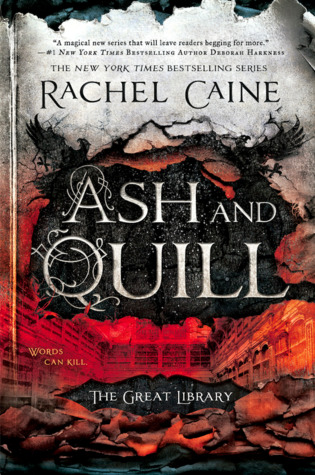
Ash and Quill - Rachel Caine (The Great Library #3)

Ash and Quill (The Great Library #3)
No one with a book is ever alone, even in the darkest moments.

Oh dear.  Oh dear oh dear oh dear.  You know that point where a series starts to go downhill?  A series that you absolutely love?  That you want to succeed more than anything in the world?  I think this might be that point in this series.  Here's the thing.  Ink and Bone was amazing.  Paper and Fire was great.  But Ash and Quill?  It was...good.  And that's all.

This picks up right where the second book left off, with Jess and his band of misfits appearing in Philadelphia, the main Burner stronghold in the American Colonies, after fleeing the Library in Europe.  This change of setting had great promise, but unfortunately the book didn't really deliver.  Jess and his friends spend probably half the book imprisoned in Philadelphia, plotting their escape, and the other half of the book fleeing Philadelphia and trapped in a second location, which they also must plot to escape.  Their plan to fight against the Great Library does not really go anywhere.  Thomas and Jess build not one, but two printing presses.  They build a weapon.  They survive Greek fire attacks on Philadelphia by the High Garda.  There's a sense of pieces moving in the larger world beyond the characters, such as the revolt of several countries, but the main characters don't actually accomplish much, and that leaves this book feeling very much like filler--a third book suffering from second book syndrome, if you will.

The sense of world here is still wonderful, but our characters, with one exception, seem to have stagnated.  Jess and most of his band have failed to evolve in the face of their new circumstances.  They are not allied with the Library or the Burners, but want a middle path, and so find themselves surrounded by enemies.  But Morgan, Jess' love interest and the one possessing magical powers in the group, is the only one who seems ready to rise and twist and change to suit the things that arise in their paths.  Additionally, while the world itself is still interesting Philadelphia is not as riveting a location as Alexandria, Rome, London, etc. have been in the series.  It's pretty much stuck in colonial times, with a few exceptions, and without many of the library technologies seen throughout the rest of the world.  It's a city under siege, but this is never really examined and the city seems to lack the depth of the other locales.  And I'm a bit concerned about the end; it seems very likely the group is going to split up and the next book will need to include multiple perspectives rather than sticking with just Jess, and that seems like it could get messy quickly.

I liked this book, but I didn't love it.  It didn't keep me turning pages or gasping for the next one at the end--a good thing, I guess, since the next one probably won't be out until around this time next year, but a bit disappointing at the same time because it just didn't have the same sparkle as the other volumes did.  The diverse cast remains a draw, but I wish they'd grow a bit more as characters instead of remaining essentially the same people we met in the first book.  Some changes came about in the second book, but in this one... None.  This one wasn't bad, but I do still hope that the next one will be better.

3 stars out of 5.